
Font size
 Worksheets
DNA Structure and Replication
Total questions: 65
Worksheet time: 33mins

Which of the following is found in the cells of all living things?
chloroplasts
nucleus
mitochondrion
genetic material
Which of the following molecules holds the information needed to direct cellular processes?
phenylalanine
adenosine triphosphate
chlorophyll
deoxyribonucleic acid
The information in DNA is written according to the genetic code and carried by the -
sequence of nitrogen bases/nucleotides
direction of the phosphate groups
hydrogen bonds between nitrogen bases
enzymes which unwind the double helix
What do we call the shape a DNA molecule takes?
double-stranded
double helix
sugar-phosphate backbone
pentagon
What are the names of the large structures of DNA which are used to package the genetic information within cells?
enzymes
ribosomes
chromosomes
vitamins
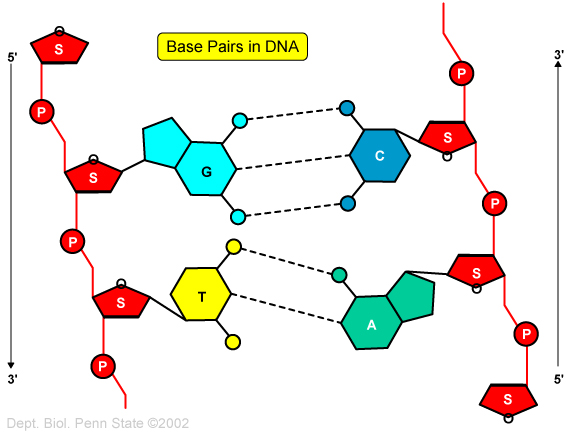
Which of the following is the correct pairing of nitrogen bases?
A-T, G-C
A-G, T-C
A-C, G-T
A-A, T-T

Directs all cell activities through the DNA located there.
Endomembrane System
Nucleus
Ribosomes
Mitochondria
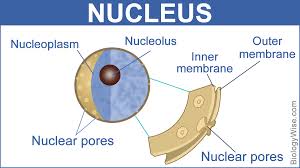
Made up of two layers (an inner and an outer), this acts like a cushiony outer shell of protection.
nucleoplasm
nuclear pores
nuclear membrane
nucleolus
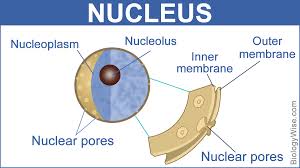
Tiny holes in the nuclear membrane that allow different cellular materials to come in and go out of the cell.
nucleus
nucleoplasm
nucleolus
nuclear pores
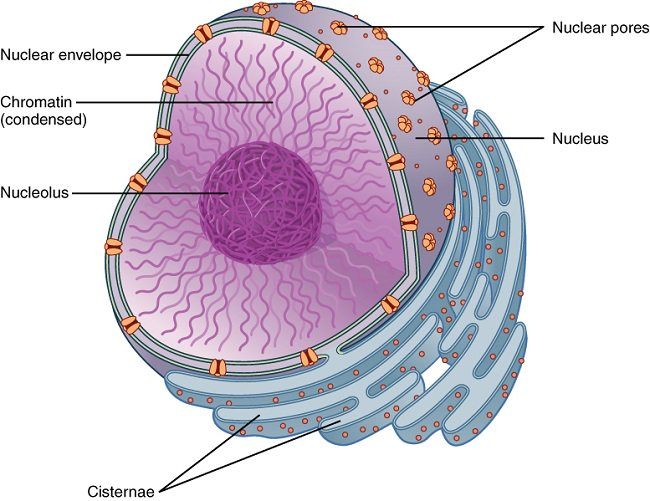
Helps assemble ribosomes, which are combinations made of protein and RNA (ribonucleic acid ).
nuclear membrane
nuclear pores
nucleoplasm
nucleolus
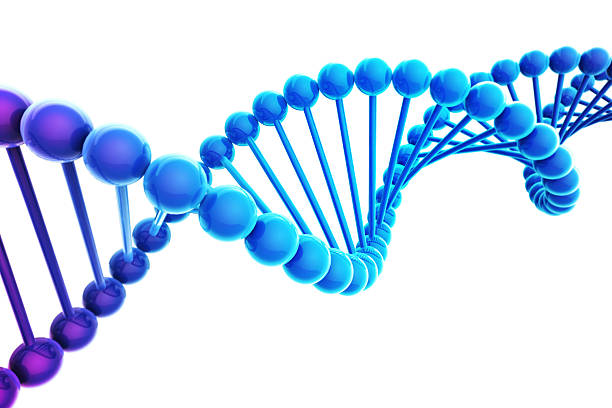
A double stranded helix that holds the code for all the cells in the body.
RNA
DNA
Chromatin
Nucleus
What are the three components of a nucleotide?
phosphate group, sugar, nitrogen base
phospate group, water, nitrogen base
glycerol, sugar, nitrogen base
adenine, thymine, cytosine
What is the outside of the DNA called?
sugar-phosphate backbone
sugar-phosphate skeleton
sugar-phosphate scapula
sugar-phosphate humerus
True or False: The genetic code is different for every organism.
True
False
Chromatin is made of
DNA
Histones (proteins)
Glucose
Amino Acids
Which scientists created a 3-D model of DNA?
Chargaff
Watson and Crick
Griffith
Avery, McCarty, and McCleod
What sugar is found in DNA?
Deoxyribose
Ribose
Sucrose
Glucose
What type of bond holds the two sides of DNA together?
Ionic
Covalent
Hydrogen
What creates the RUNGS of the DNA ladder?
Sugar
Phosphate
Nitrogen containing base
What are the 3 JOBS of DNA?
Store information
Copy information
Transmit information
Move materials across the cell membrane
DNA replication occurs prior to what cell process?
Photosynthesis
Cellular respiration
Cell division
What enzyme helps to add the correct bases AND proofread the DNA strands?
Ligase
DNA polymerase
Helicase
Catalase
ATG TGA CAG



The picture below shows the steps of DNA replication beginning with step one and ending with step three.
Because you are reusing the old, or parent, DNA strand DNA replication is said to be
Semi- Conservative
Semi-discontinuous
Continuous
Fully-Conserveative

The picture below shows an enzyme unwinding and unzipping DNA.
What is the name of this enzyme?
DNA Helicase
DNA Ligase
DNA polyermase
RNA Polymerase
Which enzyme is responsible for adding the free nucleotides to the replicating DNA?
DNA Helicase
DNA Ligase
DNA polyermase
RNA Polymerase

Which letter in the picture below depicts the leading strand in DNA replication?
A
C
B
None of the above
Which letter in the picture below depicts the lagging strand in DNA replication?
A
C
B
None of the above
DNA replication runs from ______' to _____' and is said to be ______________________
5, 3, antiparallel
3, 5, antiparallel
5, 3, parallel
3, 5, parallel
Okazaki fragments appear on which strand of DNA during DNA replication?
lagging
leading
DNA polymerase is able to build the new DNA ______ along the leading strand.
continuously
only in short fragments
very slowly
prokaryotically
Helicase
DNA Polymerase
Ligase
Primase
Which enzyme is responsible for checking DNA for errors, and fixing it?
DNA Polymerase
Primase
Helicase
RNA Polymerase
Where does the DNA molecule unzip at during DNA replication?
Between the sugar and phosphate
Between the sugar and nitrogen bases
Between the nitrogen bases
Which part of a DNA molecule is responsible for the direct coding of specific traits in an organism?
The number of hydrogen bonds that hold the strands of DNA together
The number of carbons in the DNA molecule.
The sequence of nucleotide bases in the DNA molecule
The sequences of phosphates along each DNA strand
The ends of the chromosome are hard to replicate. They are called:
Centromeres
Telomeres
Comeres
Promeres
Since the ends of the chromosome are hard to replicate, and must be copied in short pieces, the enzyme ________________ helps out.
Telomerase
DNA polymerase
Ligase
Helicase

Which sequence of DNA bases would pair with this template strand
ATG TGA CAG
The enzyme that unwinds and unzips the DNA to prepare for replication is:
it has proteins that code for genes
it has genes that code for proteins which result in traits

The two strands of DNA are
Parallel: run in the same direction
Antiparallel: run in opposite directions
Structure: What are the parts of a nucleotide?
phosphate, sugar, base
A, T, G, C
Nucleic Acids
two base pairs connected
What is the difference between leading and lagging strands?
DNA is synthesized in a 5' to 3' direction on the lagging strand and a 3' to 5' direction on the leading strand
DNA is synthesized in a 3' to 5' direction on the lagging strand and a 5' to 3' direction on the leading strand
DNA is synthesized continuously on the leading strand and discontinuously on the lagging strand
DNA is synthesized discontinuously on the leading strand and continuously on the lagging strand
Which enzyme is responsible for unwinding the DNA strands?
helicase
DNA polymerase
topoisomerase
ligase

After DNA replication, the 2 DNA molecules are EACH made of
1 original and 1 new strand
2 original strands
2 new strands

