

wayground logo

Free Printable Worksheets

NEW

Font size

S
M
L
XL
Worksheets

Prokaryotic and eukaryotic cells

Total questions: 67

Worksheet time: 3hrs 13mins
Name
Class
Date
1.
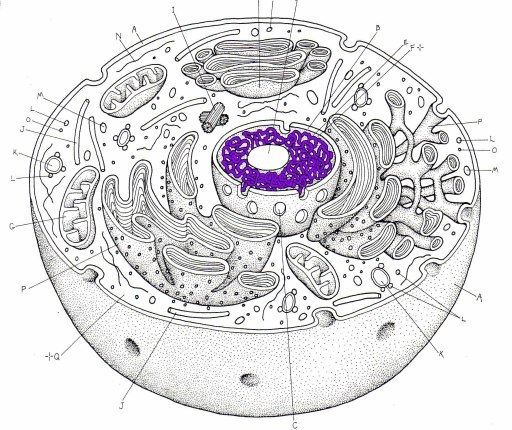
What kind of cell is this?
a)
Eukaryotic
b)
Prokaryotic
2.
Cells can only be seen with the help of a...
a)
hand lens 
b)
magnifying glass
c)
3D glasses 
d)
microscope 
3.
What is unicellular? 
a)
one cell 
b)
many cells 
c)
no nuclues 
d)
DNA 
4.
What is multicellular? 
a)
one cell 
b)
no cells 
c)
many cells 
d)
no nucleus 
5.
All cells come from other...
a)
cells 
b)
plants 
c)
nucleus 
d)
microscopes 
6.
What type of cell has a nucleus? 
a)
eukaryotic
b)
prokaryotic 
7.
What type of cell does not have a nucleus?
a)
eukaryotic 
b)
prokaryotic 
8.
Plants and animal cells are examples of ___ cells 
a)
prokaryotic cells 
b)
eukaryotic cells 
9.
Bacteria is what kind of cell?
a)
Eukaryotic
b)
Prokaryotic
10.
Bacteria are unicellular
a)
True
b)
False
11.
What type of cell is pictured?
a)
Prokaryotic
b)
Eukaryotic
c)
Plant
d)
Animal
12.
First type of cell to appear on Earth?
a)
Plant
b)
Animal
c)
Prokaryotic
d)
Eukaryotic
13.
Which of the following in NOT a characteristic of eukaryotic cells?
a)
DNA is separated from the cytoplasm by a nuclear membrane
b)
Large
c)
Complex 
d)
Lack membrane-bound organelles
14.
How is this organism best classified?
a)
unicellular & eukaryotic
b)
multicellular & eukaryotic
c)
unicellular & prokaryotic
d)
multicellular & prokaryotic
15.
Which of the following is NOT a type of eukaryotic cell?
a)
mushroom cell
b)
pea leaf cell
c)
bacterial cell found in Swiss cheese
d)
alligator stomach cell
16.
Which of the following would be found in both eukaryotic AND prokaryotic cells?
a)
chloroplast
b)
cytoplasm
c)
nucleus
d)
endoplasmic reticulum
17.
Some prokaryotes and eukaryotes have a cellular structure called a flagella.  What is the purpose of the flagella?
a)
to transport molecules across the cell membrane
b)
to propel the cell through liquid
c)
to collect food for the cell
d)
to tell the cell the direction of a food source
18.
Prokaryotic and eukaryotic cells have many differences, but they also share some common features.  Which of the following may be found in either type of cell?
a)
Golgi bodies
b)
ribosomes
c)
mitochondria
d)
nucleus
19.
Which is true of prokaryotic and eukaryotic cells?
a)
Prokaryotic cells are larger than eukaryotic cells.
b)
Eukaryotic cells do not have nuclei, and prokaryotic cells do have nuclei.
c)
Prokaryotic cells lack membrane-bound organelles, and eukaryotic cells contain membrane-bound organelles.
d)
Eukaryotic cells are simpler than prokaryotic cells.
20.
Proteins are produced at which cellular structures?
a)
nuclei
b)
ribosomes
c)
mitochondria
d)
chloroplasts
21.

What is the only organelle without a cell membrane?

a)

nucleus

b)

ribosomes

c)

chloroplast

d)

mitochondria

22.

All of the following are Eukaryotic EXCEPT . . . .

a)

animal cells

b)

plant cells

c)

fungi

d)

bacteria

23.

Where is DNA found in a Eukaryotic cell?

a)

in the nucleus

b)

in the cell wall

c)

in the vacuole

d)

in the mitochondria

24.

What part of a plant cell stores water?

a)

lysosome

b)

vacuole

c)

golgi body

d)

ribosomes

25.

What is G?

a)

chloroplast

b)

endoplasmic reticulum

c)

ribosomes

d)

DNA

26.

What is F?

a)

Golgi complex

b)

mitochondria

c)

vacuole

d)

flagella

27.

What is K?

a)

protist

b)

cell wall

c)

cilia

d)

mitochondria

28.

What is L?

a)

chloroplast

b)

Golgi complex

c)

ribosome

d)

mitochondria

29.

What is H?

a)

endoplasmic reticulum

b)

flagella

c)

cytoplasm

d)

fungi

30.

What is E?

a)

nucleus

b)

lysosome

c)

cell membrane

d)

DNA

31.

What is E?

a)

cell wall

b)

cell membrane

c)

cilia

d)

flagella

32.

What is A?

a)

cytoplasm

b)

nucleus

c)

DNA

d)

vacuole

33.

What is D?

a)

cilia

b)

cytoplasm

c)

ribosome

d)

flagella

34.

Which is true of prokaryotic and eukaryotic cells?

a)

Prokaryotic cells are larger than eukaryotic cells.

b)

Eukaryotic cells do not have nuclei, and prokaryotic cells do have nuclei.

c)

Prokaryotic cells lack membrane-bound organelles, and eukaryotic cells contain membrane-bound organelles.

d)

Eukaryotic cells are simpler than prokaryotic cells.

35.
Type of cell shown?
a)
Eukaryotic
b)
Prokaryotic
c)
Bacterial
d)
Plant
36.
Proteins are produced at which cellular structures?
a)
nuclei
b)
ribosomes
c)
mitochondria
d)
chloroplasts
37.
What type of cell is pictured?
a)
Prokaryotic
b)
Eukaryotic
c)
Plant
d)
Animal
38.
Prokaryotic and eukaryotic cells have many differences, but they also share some common features.  Which of the following may be found in either type of cell?
a)
Golgi bodies
b)
ribosomes
c)
mitochondria
d)
nucleus
39.
All living things are made of...
a)
atoms 
b)
cells 
c)
bacteria 
d)
plants 
40.
Which structures are found in every living cell?
a)
cell membrane and cytoplasm
b)
chloroplasts and mitochondria
c)
a cell wall and nucleus
d)
chloroplasts and cell wall
41.
Cells with a nucleus and membrane-bound organelles are called ____________________.
a)
prokaryotes
b)
eukaryotes
c)
bacteria
d)
protists
42.
Who was the first  person to see cells under the microscope and give them their name?
a)
Mattias Schleiden
b)
Robert Hooke
c)
Theordor Schwann
d)
Anton van Leeuwenhoek
43.

An organism that is made of a prokaryotic cell is called ....

a)

mold

b)

mushrooms

c)

plants

d)

bacteria

44.

Tiny membrane-bound structures inside a cell that function like organs of a body are called....

a)

cell wall

b)

cell membrane

c)

organelle

d)

organ

45.

Which of the following is a characteristic of both eukaryotic and prokaryotic cells?

a)

contains ribosomes

b)

contains a nucleus

c)

contains several membrane bound organelles
46.

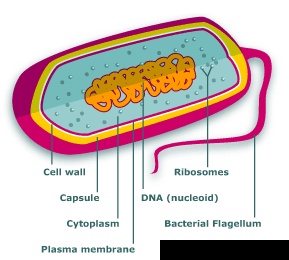
What type of cell is in the diagram?

a)

Prokaryote

b)

Eukaryote

47.

What kind of cell is in the diagram?

a)

Eukaryotic

b)

Prokaryotic

48.
The main difference between prokaryotic and eukaryotic cells? 
a)
Prokaryotic cells have a cell membrane but eukaryotic cells do not.
b)
Eukaryotic cells contain DNA in a nucleus while prokaryotic cells do not.
c)
Eukaryotic cells have flagella but prokaryotic cells do not.
d)
Prokaryotic cells contain membrane-bound ribosomes while eukaryotic cells do not. 
49.

Animal cells can be distinguished from plant cells easily because of which of the following?

a)

Animal cells have mitochondria and plant cells do not.

b)

Plant cells have lysosomes and animal cells do not.

c)

Only plant cells have centrioles around their nucleus.

d)

Only plant cells have large central vacuoles and cell walls.

50.

Jared observes a cell in biology lab with the light microscope. The cell has the following structures: nucleus, cell wall, and chloroplast. Identify the type of cell that Jared is observing.

a)

animal

b)

plant

c)

fungus

d)

bacteria

51.

Hair and nails are mostly filled with the protein keratin. Keratin is produced by keratinocytes. The cells must contain several of which of the following organelles?

a)

mitochondria

b)

endoplasmic reticulum

c)

ribosomes

d)

lysosomes

52.

Identify this type of cell.

a)

animal

b)

plant

c)

protist

d)

bacteria

53.

Carrie observes an electron micrograph of a cell during biology lab. The cell has a flagellum, ribosomes, cell wall, and no apparent nucleus. Which of the following is likely true of the cell that Carrie is observing?

a)

The cell also contains mitochondria.

b)

The presence of the organelles proves that the cell is eukaryotic.

c)

The cell is a plant because of the cell wall.

d)

The cell is prokaryotic.

54.

Look at the cell organelles. Which of these organelles transports organic molecules that are responsible for providing structure and controlling cellular processes?

a)

endoplasmic reticulum

b)

mitochondria

c)

ribosomes

d)

Golgi apparatus

55.

Which of the following best describes the function of smooth endoplasmic reticulum?

a)

Modifies carbohydrates and proteins, placing them into vesicles

b)

Manufactures proteins and nucleic acids using the DNA code

c)

Modifies and transports proteins after the ribosome makes them

d)

Manufactures lipids and then transports them to a new location

56.

What are the small protein structures that unicellular organisms like the paramecium use as tiny paddles to swim around with?

a)

cilia

b)

pseudopodia

c)

flagella

d)

cytoskeleton

57.

Which structure in the cell destroys invaders such as bacteria and viruses, while also helping with the digestion of food particles?

a)

cell membrane

b)

endoplasmic reticulum

c)

Golgi apparatus

d)

lysosomes

58.

Which of the following best describes the function of the Golgi apparatus?

a)

It modifies and transports proteins after the ribosome makes them.

b)

It manufactures lipids and then transports them to a new location.

c)

It manufactures proteins and nucleic acids using the DNA code.

d)

It modifies lipids and proteins and places them into packages.

59.

Prokaryotes do not have a nucleus. Which of the following organelles is also NOT found in a prokaryote?

a)

cell wall

b)

ribososme

c)

flagellum

d)

mitochondria

60.

Due to energy needs, muscle cells usually have a lot of which organelle?

a)

ribosomes

b)

mitochondria

c)

Golgi apparatus

d)

lysosomes

61.

The salivary glands secrete saliva that contains salivary amylase. Salivary amylase breaks down carbohydrates. Which of the following organelles would have the greatest numbers in a salivary gland?

a)

ribosomes

b)

Golgi apparatus

c)

endoplasmic reticulum

d)

lysosomes

62.

Which structure within the cell plays an important role in energy production for the cell?

a)

ribosome

b)

endoplasmic reticulum

c)

mitochondria

d)

Golgi apparatus

63.

The cytoskeleton provides a cell with internal shape and support. The cytoskeleton is made up of several different cell structures. Which of the following make up the cytoskeleton of a eukaryotic cell?

a)

Microtubules and microfilaments

b)

Golgi apparatus and vesicles

c)

Ribosomes and rough endoplasmic reticulum

d)

Cell membrane and cell wall

64.
What structure is in  plant cells but not animal cells. 
a)
cell membrane
b)
mitochondria
c)
cell wall
d)
vacuole
65.
the most important part of a plant cell and coordinates  the cells activates.
a)
vacuole
b)
cytoplasm
c)
nucleus
d)
chloroplast
66.
Which part of the cell contains DNA?
a)
The cell wall
b)
The mitochondria
c)
The Vacuoles
d)
The Nucleus
67.
Photosynthesis happens in this part of the plant cell.
a)
The cell wall
b)
The vacuoles
c)
The nucleus
d)
The chloroplast
