
NEW
Font size
 Worksheets
Photosynthesis, Cellular Respiration and Enzymes
Total questions: 37
Worksheet time: 32mins
Can ALL enzymes catalyze ALL substrates?
Yes
No
Which of the following describes "Anaerobic Respiration"?
Respiration that requires Oxygen to be present
Respiration that does NOT require Oxygen to be present
Which of the following describes "Aerobic Respiration"?
Respiration that does NOT require Oxygen to be present.
Respiration that requires Oxygen to be present.
What gas FROM the atmosphere do plants need for photosynthesis?
Glucose
Oxygen
Carbon Dioxide
ATP
What gas do plants release into the atmosphere?
Glucose
Carbon Dioxide
Oxygen
ATP
What is the main source of energy that plants need to perform photosynthesis?
Glucose
ATP
Light Energy
ADP
What is the main source of energy that plants need to perform Cellular Respiration?
Light Energy
Glucose
Oxygen
Carbon Dioxide
How does the process of photosynthesis compare to the process of cellular respiration?
They are the exact same process. Same reactants and same products.
Organisms that go through photosynthesis CANNOT go through cellular respiration.
Photosynthesis and Cellular Respiration are opposite processes.
What unit is this?
Identify the correct format for a chemical equation:
Products Yield Reactants
Reactants Yield Products
Identify the reactants of Photosynthesis:
Glucose + Oxygen
Carbon Dioxide + Water + Glucose
Glucose + Carbon Dioxide
Carbon Dioxide + Water + Light Energy
Identify the products of Photosynthesis:
Glucose + Oxygen
Carbon Dioxide + Water + Glucose
Glucose + Carbon Dioxide
Carbon Dioxide + Water + Light Energy
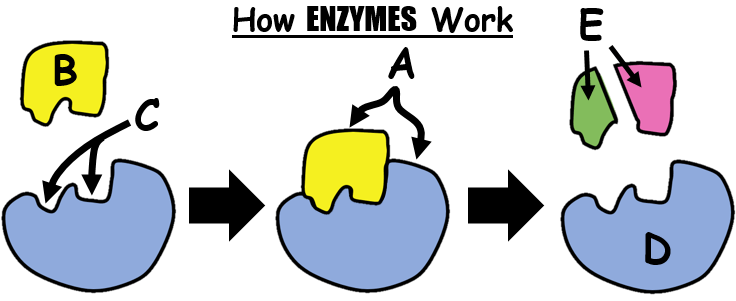
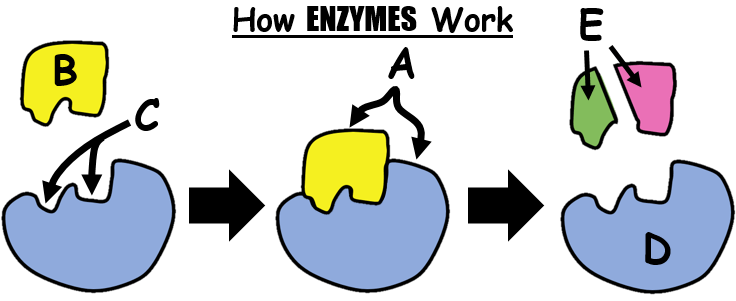
How do enzymes affect the activation energy for a chemical reaction?
Enzymes raise the activation energy.
Enzymes lower the activation energy.
result of
What is ATP?
A molecule that stores fat
A molecule that stores genetic information
A molecule that stores enzymes
A molecule that stores energy
Which organelle is responsible for cellular respiration?
Chloroplast
Mitochondria
Lysosome
Nucleus
What are the stages of cellular respiration?
Light Dependent Reactions and Light Independent Reactions
Lactic Acid Fermentation and Alcoholic Fermentation
Glycolysis, Krebs Cycle, and Electron Transport Chain
Interphase and Mitosis
What are the reactants of cellular respiration?
6CO2 and C6H12O6
6O2 and 6H2O
6CO2 and 6H2O
6O2 and C6H12O6
What are the products of cellular respiration?
6CO2 and 6H2O
6CO2 and C6H12O6
6O2 and C6H12O6
6O2 and 6H2O
In the absence of oxygen, the cell can continue to make ATP through which process?
Photosynthesis
Fermentation
Osmosis
Mitosis
A baker uses yeast to make bread dough. This is an example of...
Lactic acid fermentation
Alcoholic fermentation
Aerobic respiration
Photosynthesis
Enzymes are an example of
Lipids
Carbohydrate
Protein
Nucleic Acid

Exit: Carbon dioxide
Exit: Glucose
Exit: Oxygen
Exit: Water vapor
Why do leaves change color in the fall?
The chlorophyll turns from green to yellow
The Chlorophyll breaks down and the other pigments in the plant become easier to see
chlorophyll dies and there is no other pigments in the plant
because my momma said so....
Cellular respiration happens
Only in plants
Only in animals
In both plants and animals
In dogs fur

