wayground logo

Free Printable Worksheets

Font size

S
M
L
XL
Worksheets

Review Environmental First Half of the Year

Total questions: 85

Worksheet time: 1hrs 20mins

Name
Class
Date
1.
A series of steps used by scientists to solve a problem or answer a question. 
a)
scientific method
b)
recipe
c)
data collection
d)
metric system
2.
A testable explanation to a problem that has not yet been tested. 
a)
data
b)
theory
c)
hypothesis
d)
fact
3.
This variable in an experiment is the one being changed by the scientist. 
a)
dependent variable
b)
independent variable
c)
data
d)
control group
4.
The name of the information that you get from your experiment (you organize it into charts and graphs).
a)
observations
conclusion
b)
data
c)
variables
d)
hypothesis
5.
An experiment is performed on plants to see how different liquids affect plant growth. Each plant in the experiment is given a different liquid; water, apple juice, or milk. Each plant has the same amount of soil, sunlight, and listens to the same music. In this investigation, the independent variable is ...
a)
The type of plant
b)
The amount of sunlight
c)
The type of music
d)
The type of liquid
6.
Dependent variable means
a)
the scientist controls what to test
b)
educated guess
c)
ask a question
d)
what is being measured
7.
If you increase the amount of spinach you eat, then you will increase the iron in your blood. 
What's the dependent variable?
a)
increase the amount of iron in your blood
b)
spinach you eat
8.
If I ride my bike to school instead of walking, then I will get to school faster. What is the dependent variable?
a)
True
b)
How fast you get to school
c)
Riding a bike or walking
d)
False
9.
Will a construction paper air plane fly faster than an airplane made from notebook paper? Choose the best hypothesis.
a)
If I make a paper airplane from notebook paper, then it will fly faster than construction paper.
b)
Yes.
c)
No.
d)
I think the construction paper air plane will fly faster.
10.
If I study for my scientific method test, then I will have a better test score. What is the dependent variable?
a)
Scientific Method
b)
Studying
c)
Independent variable
d)
Test score
11.
If I listen to Mr. Castro's instructions, then I will have less accidents in the lab. What is the independent variable?
a)
Yes
b)
Maybe
c)
Listening or not listening to instructions
d)
Likelihood of having an accident in lab 
12.
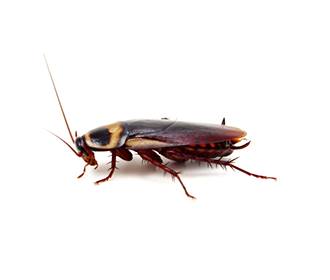
Johathan’s data showed that household cockroaches moved away from raw cucumber slices.
a)
recognize a problem
b)
test the hypothesis with an experiment
c)
form a hypothesis
d)
draw conclusions
13.
What is the outermost layer of the Earth?
a)
Outer core
b)
Inner core
c)
Mantle
d)
Crust
14.
What type of crust is the thickest?
a)
ocean
b)
continental
15.
What is the thickest layer of the Earth?
a)
crust
b)
mantle
c)
outer core
d)
inner core
16.
Which layer of the core is mostly liquid?
a)
inner core
b)
outer core
17.
What is caused when the tectonic plates slip?
a)
thunderstorms
b)
hurricanes
c)
tornadoes
d)
earthquakes
18.

On which layer can we find the tectonic plates?

a)

Lithosphere

b)

Asthenosphere

c)

Lower Mantle

d)

Upper Mantle

19.
Are the same waves that travel through Earth's interior during an earthquake.
a)
Sound
b)
Water
c)
Seismic
d)
Infrared
20.
Extends from the center of the core to the surface of the crust.
a)
Geosphere
b)
Atmosphere
c)
Hydrosphere
d)
Biosphere
21.
The measure of the energy released by an earthquake is called ____________________.
a)
Magnitude
b)
Seismic Waves
c)
Force
d)
Vectors
22.
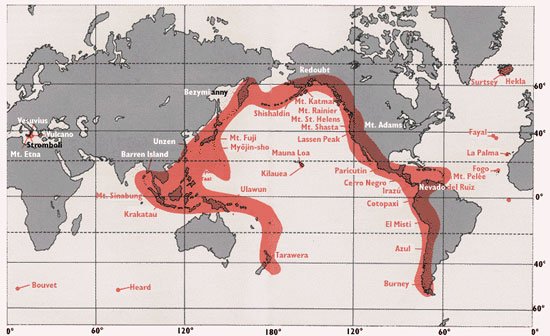
This is the name for the chain of volcanos around the edge of the Pacific Plate.
a)
Circle of Fire
b)
Ring of Lava
c)
Ring of Fire
d)
Circle of Magma
23.
The thinnest layer of Earth is the 
a)
Inner Core
b)
Mantle
c)
Crust
d)
Outer Core
24.
The upper mantle is also known as the 
a)
Lithosphere
b)
Asthenosphere
c)
Mesosphere
d)
Core
25.
Which is made up mostly of iron and nickel.
a)
Inner Core
b)
Outer Core
c)
Crust
d)
Mantle
26.
Is the layer of rock between the Earth's crust and core.
a)
Lithosphere
b)
Mantle
c)
Core
d)
Mesosphere
27.
Continental crust is thicker than oceanic crust
a)
True
b)
False
28.

Life exists in the

a)

hydrosphere

b)

atmosphere

c)

geosphere

d)

all of the avove

29.

How did the Himalayan Mountains form?

a)

convection

b)

glacial movements

c)

colliding tectonic plates

d)

erosion

30.

What layer is found underneath the lithosphere? This layer consist of pliable material which allows tectonic plates to move.

a)

mesosphere

b)

lithosphere

c)

asthenosphere

d)

core

31.

_________________ is the mixture of gases that make up the air we breath.

a)

crust

b)

mudflow

c)

atmosphere

d)

erosion

32.

The inner core is solid because

a)

it absorbs heat from the sun.

b)

it is under tremendous pressure.

c)

it is influenced by global warming.

d)

the movement of tectonic plates causes friction.

33.

How does air pressure change as you climb a mountain?

a)

it decreases (less air pressure)

b)

it increases (more air pressure)

c)

stays the same

d)

the temperature gets warmer

34.
Elevation, or how high up you are, is also called ...
a)
altitude
b)
atmosphere
c)
height
d)
decreasing
35.
A layer of air that surrounds Earth to keep us warm is called ...
a)
atmosphere
b)
Sun's rays
c)
ozone layer
d)
air pressure
36.

Which temperature of air weighs more?

a)

warm

b)

cold

37.

What protects Earth from ultraviolet rays from the sun?

a)

ozone layer

b)

mesosphere

c)

air pressure

d)

troposphere

38.
In what layer would you find the ozone layer?
a)
troposphere
b)
stratosphere
c)
mesosphere
d)
thermosphere
39.
The Northern Lights occur in which layer?
a)
mesosphere
b)
exosphere
c)
thermosphere
d)
stratosphere
40.
What layer comes next:
Troposphere - 
stratosphere -
?????
a)
mesosphere
b)
exosphere
c)
thermosphere
d)
ionosphere
41.

What gas makes up the majority of the atmosphere?

a)

oxygen

b)

nitrogen

c)

water vapor

d)

carbon dioxide

42.

What layer of the atmosphere is closest to outer space?

a)

mesosphere

b)

exosphere

c)

troposphere

d)

stratosphere

43.
In what layer of the atmosphere would you find clouds and weather?
a)
troposphere
b)
stratosphere
c)
mesosphere
d)
thermosphere
44.

Lowest layer of the atmosphere

a)

lifting

b)

troposphere

c)

wind funnel

d)

nitrogen

45.

"atmo-" means

a)

gas or vapor

b)

water

c)

Earth or rocks

d)

life

46.

Earth's atmosphere is mostly made up of which 2 gases? CHOOSE 2!!!!!!

a)

nitrogen

b)

oxygen

c)

ozone

d)

water vapor

47.
Which statement most accurately describes the temperature trend in the Troposphere? Temperatures...
a)
rise with increasing altitude above the Earth
b)
rise then fall with increasing altitude above the Earth
c)
decrease with increasing altitude above the Earth
d)
remain constant with increasing altitude above the Earth
48.
Where we live.
a)
stratosphere
b)
thermosphere
c)
troposphere
d)
mesosphere
49.
The hottest layer.
a)
troposphere
b)
thermosphere
c)
exosphere
d)
mesosphere
50.
What does the earth's atmosphere do?
a)
help to regulate the temperature on Earth
b)
Help UV rays to reach the Earth's surface
c)
Creates meteors in the sky
d)
Keep ocean waters cold
51.
As you go higher in the troposphere, the temperature _______________.
a)
decreases
b)
increases
c)
stays the same
d)
gets very hot
52.
What is the function of the ozone layer?
a)
to allow UV rays to get to Earth
b)
to block UV rays from getting to Earth
c)
To keep oxygen in
d)
to allow meteors to get to Earth
53.
This is the layer where most commercial jet airliners fly.
a)
Troposphere
b)
Stratosphere
c)
Mesosphere
d)
Thermosphere
54.
The higher you go, the air becomes _____ _____.
a)
More dense
b)
Less dense 
55.
In which layer of the atmosphere would you find the top of Mount Everest?
a)
Troposphere
b)
Stratosphere
c)
Mesosphere
d)
Thermosphere
56.
What do we use water for the most? 
a)
mining
b)
agriculture
c)
drinking water
d)
transportation
57.
How much of the earth's water is freshwater?
a)
50 %
b)
3 %
c)
97 %
d)
93 %
58.
Why is MOST of the freshwater on Earth not available for our use?
a)
All freshwater on Earth is easily accessible for use.
b)
It is frozen in the icecaps and glaciers.
c)
It is surface water.
d)
It is underground.
59.
Two types of water currents are
a)
local and global
b)
sea and land
c)
surface and deep
d)
warm and cold
60.
Which of the following is not a process that decreases the salinity of seawater?
a)
runoff from land
b)
icebergs melting
c)
precipitation
d)
evaporation
61.
Surface currents are caused by ________ and deep currents are caused by __________. 
a)
wind, density
b)
density, wind
c)
whales, Earth's rotation
d)
tides, wind
62.
How does the warm waters of the Gulf Stream affect the climate in North Carolina? 
a)
It makes it colder and drier
b)
It makes it warmer and wetter
c)
It makes it colder and wetter
d)
It makes it warmer and drier
63.
The measurement of how salty a body of water is...
a)
Conductivity
b)
pH
c)
Salinity
d)
Turbidity
64.
Study the graph below.  What is the dissolved solid that is most commonly found in Earth's oceans?
a)
calcium
b)
magnezium
c)
sulfur
d)
sodium chloride (salt)
65.
Certain stages of the water cycle are most likely occurring under certain weather conditions.  Which stage is most likely going to occur on a warm, sunny day?
a)
precipitation
b)
condensation
c)
evaporation
66.
Global winds are created by the unequal heating of the earth.  Warm air at the equator rises and cooler air from the poles...
a)
also rises
b)
sinks (swoops in to replace hot air)
c)
never moves and stays at the poles
67.
What is NOT an example of freshwater?
a)
Rivers
b)
Lakes
c)
Oceans
d)
Groundwater
68.
Why is freshwater important?
a)
So we can have lakes and Rivers
b)
There is no such thing as freshwater.
c)
We need it to survive.
69.
When water goes from being a liquid to a gas (water vapor), that process is called
a)
Condensation
b)
Evaporation
c)
Precipitation
d)
Transpiration
70.
The scientific name for water in its gas phase
a)
Precipitation
b)
Evaporation
c)
Water Vapor
d)
Transpiration
71.
The process that cycles water around Earth and it's atmosphere is called 
a)
The Natural Cycle
b)
The Carbon Cycle
c)
The Water Cycle
72.

All the water contained on Earth is called __________.

a)

the hydrosphere

b)

groundwater

c)

surface water

d)

the atmosphere

73.

The constant movement of water between the Earth and its atmosphere is called ___________.

a)

transpiration

b)

the water cycle

c)

groundwater

d)

surface water

74.

Water vapor is invisible until it ____________.

a)

condenses

b)

evaporates

c)

transpirates

d)

precipitates

75.

The system that contains all living things on Earth.

a)

Biosphere

b)

Atmoshpere

c)

Hydrosphere

d)

Geosphere

76.

The effects of people and their actions on the biosphere is called

a)

human impact

b)

biome

c)

environmental change

77.

The biosphere includes plants and animals that live

a)

on land

b)

on land and in the water

c)

on land, in water, and in the air

d)

in water

78.

What type of interact is occurring in this picture?

a)

Geosphere & Hydrosphere

b)

Hydrosphere & Biosphere

c)

Biosphere & Atmosphere

d)

All of the above

79.

Which systems are effected by this event? Choose ALL that apply.

a)

Geosphere

b)

Hydrosphere

c)

Biosphere

d)

Atmosphere

80.

Which systems are effected by this event? Choose ALL that apply.

a)

Geosphere

b)

Hydrosphere

c)

Biosphere

d)

Atmosphere

81.

Which systems are effected by this event? Choose ALL that apply.

a)

Geosphere

b)

Hydrosphere

c)

Biosphere

d)

Atmosphere

82.

Which systems are effected when humans build cities? Choose ALL that apply.

a)

Geosphere

b)

Hydrosphere

c)

Biosphere

d)

Atmosphere

83.

When water wears away parts of the geosphere causing it to change it is called

a)

erosion

b)

lifting

c)

wind funnel

d)

hydropshere

84.

Which of the following areas would support the MOST life?

a)
b)
c)
d)
85.

Which of the following areas would support the LEAST life?

a)
b)
c)
d)