wayground logo

Free Printable Worksheets

Font size

S
M
L
XL
Worksheets

8th Grade Space Test Review

Total questions: 91

Worksheet time: 1hrs 6mins

Name
Class
Date
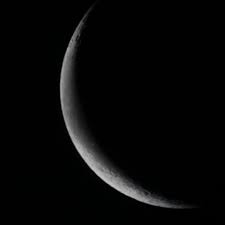
1.
What Moon phase is this?
a)
Old Moon
b)
Far Side of the Moon
c)
New Moon
d)
Waxing Gibbous
2.
What Moon phase is this?
a)
Old Moon
b)
Far Side of the Moon
c)
New Moon
d)
Waxing Gibbous
3.
What Moon phase is this?
a)
Waning Crescent
b)
Waxing Crescent
c)
Waxing Gibbous
d)
Waning Gibbous
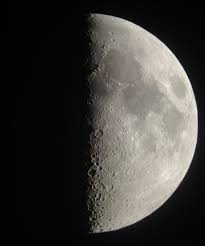
4.
What Moon phase is this?
a)
Full Moon
b)
Waxing Gibbous
c)
New Moon
d)
Half Moon
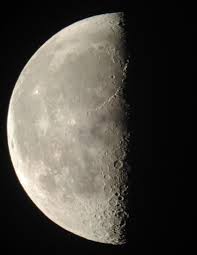
5.
What Moon phase is this?
a)
Waxing Crescent
b)
Waning Gibbous
c)
Waning Crescent
d)
Waxing Gibbous
6.
What Moon phase is this?
a)
Waxing Gibbous
b)
Waning Crescent
c)
Waning Gibbous
d)
Full Moon
7.
Name the moon phase
a)
waning crescent
b)
waxing crescent
c)
waning gibbous
d)
waxing gibbous
8.
Name the moon phase
a)
First Quarter
b)
Last Quarter
c)
New Moon
d)
Full Moon
9.
Name the moon phase
a)
First Quarter
b)
Last (3rd) Quarter
c)
New Moon
d)
Full Moon
10.
What is illuminating the Moon?
a)
Nuclear Fusion
b)
Sunlight
c)
Mirrors
d)
Flashlights
11.
Which moon phases are "crescents"?
a)
1 and 5
b)
2 and 8
c)
4 and 6
d)
3 and 7
12.
Which moon phases are "gibbous"?
a)
1 and 5
b)
2 and 8
c)
4 and 6
d)
3 and 7
13.
Which moon phases are "waning"?
a)
1 and 2
b)
2 and 4
c)
6 and 8
d)
1 and 5
14.
Which moon phases are "waxing"?
a)
1 and 2
b)
2 and 4
c)
6 and 8
d)
1 and 5
15.
The Moon ________ around the Earth.
a)
moves parallel
b)
rotates
c)
doesn't move
d)
revolves
16.
As the moon's shape appears to get smaller, we say that the moon is _________.
a)
swelling
b)
waxing
c)
waning
d)
disappearing
17.

The cycle of the moon lasts about ___________.

a)

15 days

b)

7 days

c)

27-28 days

d)

30-31 days

18.
What moon phase would be seen from Earth when the moon is at position 5? 
a)
new moon
b)
first quarter
c)
full moon
d)
third quarter
19.
What phase of the moon would be visible when the moon is at position 3? 
a)
new moon
b)
first quarter
c)
full moon
d)
third quarter
20.

What is a high tide?

a)

Sea pulled TOWARD the moon where Earth is CLOSEST to the moon

b)

Sea pulled AWAY from the moon where Earth is FARTHEST to the moon

c)

Sea pulled AWAY from the moon where Earth is CLOSEST to the moon

21.
Which body has the greater effect on Earth's tides?
a)
Sun
b)
Saturn
c)
Moon 
d)
Venus
22.

Wha type of tide would this arrangement of earth-moon-sun create?

a)

full moon tide

b)

new moon tide

c)

neap tide

d)

spring tide

23.
What type of tides would this arrangement of earth-moon-sun create?
a)
neap tide
b)
spring tide
c)
new moon tide
d)
full moon tide
24.
Tides are caused by
a)
strong winds that blow over ocean waters.
b)
the interaction of Earth, the moon and the sun.
c)
the shifting of the plates on the ocean floor.
d)
variations in the salinity of ocean water
25.
What is gravity?
a)
A force
b)
Energy
c)
A push
d)
All of them
26.
Without gravity we would________. 
a)
Float away
b)
Stay in the ground
c)
Nothing would happen.
d)
I don't know
27.
Why a ball falls to the ground?
a)
Earth's force of gravity is GREATER than the ball's, so the ball gets attracted to the ground. 
b)
Earth's force of gravity is LESS than the ball's, so the ball gets attracted to the ground. 
28.
Two factors effecting the magnitude of force of gravity between 2 objects are...
a)
weight and mass 
b)
distance and weight 
c)
mass and matter 
d)
mass and distance 
29.
Gravity attracts all objects towards one another. 
a)
True
b)
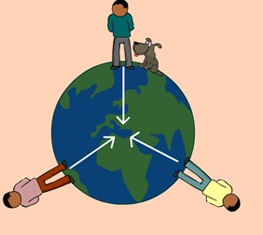
False 
30.
____ comes before Winter in the Southern hemisphere. 
a)
summer
b)
spring
c)
fall
31.
Australia is in the ____ hemisphere. 
a)
northern
b)
southern
32.
The next season in the Northern hemisphere after spring is ____. 
a)
fall
b)
summer
c)
winter
33.
Object orbiting another object. 
a)
revolution 
b)
rotation
34.
23.5 degrees
a)
axis
b)
day
c)
tilt
d)
rotation
35.
If its ____ in the Northern hemisphere, then its fall in the Southern hemisphere. 
a)
spring
b)
summer
c)
fall
d)
winter
36.
If its ____ in the Northern hemisphere, then its summer in the Southern hemisphere. 
a)
spring
b)
summer
c)
fall
d)
winter
37.
In winter, the axis of the earth is pointed away or toward the sun?
a)
towards
b)
up
c)
down
d)
away
38.
In summer, the axis of the earth is pointed away or toward the sun?
a)
towards
b)
up
c)
down
d)
away
39.
Why is it warmer in the summer?
a)
Closer to the sun
b)
More direct light from Earth's tilt
c)
Stronger light from the sun
d)
Earth spins slower
40.
Why is the Equator warmest?
a)
Because it is closest to the sun.
b)
Because it receives the most direct sunlight
c)
Because no clouds form here.
d)
Because it is far from the sun
41.
What season is depicted in the picture?
a)
summer
b)
winter
c)
fall 
d)
spring
42.
What season is depicted in the picture?
a)
summer
b)
winter
c)
fall 
d)
spring
43.
If differences in air pressure produce winds, what can you conclude about temperature and air pressure based on the figure?
a)
As warm air rises, it creates an area of lower pressure, and cooler air flows in as wind
b)
Warm air is denser than cold air is, creating an area of high pressure the produces wind.
c)
Winds flow from areas of low pressure to areas high pressure when temperature is warmer
d)
Air pressure decreases at night because temperature is lower, producing land and sea breezes
44.
At the seashore late in the afternoon on a hot day, a person often feels a strong breeze coming from the ocean because...
a)
the pounding waves generate air currents
b)
warm air over the ocean rushes in to replace the cool air that rises over the land
c)
the heavy, cool air over the ocean rushes in to replace the warm air that rises over the land
d)
there are no clouds to block the wind coming in from the ocean
45.
The cycle that powers the ocean currents, weather, and tectonic plates it called
a)
conduction current
b)
radiation
c)
condition current
d)
convection current
46.
Energy for convection on the Earth comes from...
a)
The sun
b)
The moon
c)
Solar winds
d)
The ocean
47.
In convection, COOL air
a)
Rises
b)
Sinks
48.
In convection, WARM air
a)
Rises
b)
Sinks
49.
A collection of stars, dust, and gas bound together by gravity is...
a)
Universe
b)
Solar System
c)
Planet
d)
Galaxy
50.
Which comes first in the following sequence of stars?
a)
Main Sequence Star
b)
Red Giant
c)
White Dwarf
d)
Black Dwarf
51.
What is the graph that shows the relations between a star's surface temperature and absolute magnitude?
a)
H-R Diagram
b)
Star Cluster Map
c)
Einstein's Diagram
d)
Newton's Chart of Stars
52.
The Hertzprung Russell Diagram consists of two axis that are labelled...
a)
Luminosity and Size
b)
Luminosity and Temperature
c)
Luminosity and Age
53.
In the diagram given, what happens as we move to the left?
a)
Stars Get Larger
b)
Stars get Colder
c)
Stars get hotter
54.
Which of these stars is hottest?
a)
Red Star
b)
Yellow Star
c)
Orange Star
d)
Blue Star
55.
Which star is the coldest?
a)
Yellow Star
b)
Red Star
c)
Orange Star
d)
Blue Star
56.
Compared to the rest of the stars, our sun is considered...
a)
Extremely Large and Cold
b)
Small with a medium temperature
c)
Medium size with medium temperature
57.
Which category is our Sun located in?
a)
White Dwarfs
b)
Supergiants
c)
Main Sequence
d)
Giants
58.
What is a large celestial body that is composed of gas and that emits light?
a)
Nebula
b)
Star
c)
Galaxy
d)
Planet
59.
As a whole, Giants are considered hotter than White Dwarfs.
a)
True
b)
False
60.
What type of galaxy is this?
a)
Spiral
b)
Elliptical
c)
Irregular
d)
Irrational
61.
What type of galaxy is this?
a)
Spiral
b)
Elliptical
c)
Irregular 
d)
Irrational
62.
What type of galaxy is this?
a)
Spiral
b)
Elliptical
c)
Irregular
d)
Irrational
63.
What type of galaxy is this?
a)
Spiral
b)
Elliptical
c)
Irregular
d)
Irrational
64.
How are galaxies held together.
a)
gas
b)
dust
c)
stars
d)
gravitational attraction
65.
Our Galaxy is called the
a)
M38
b)
Milky Way Galaxy
c)
Andromeda Galaxy
d)
Pinwheel Galaxy
66.
All stars begin as a __________?
a)
giant
b)
black hole
c)
white dwarf
d)
nebula
67.
Which electromagnetic waves have the highest frequencies and the shortest wavelengths?
a)
microwaves
b)
visible light
c)
gamma rays
68.
Which type of waves are used in broadcasting?
a)
radio waves
b)
infrared rays
c)
x-rays
69.
Which of the following lists the electromagnetic waves in order of increasing wavelength?
a)
X-rays, visible light, radio waves
b)
gamma rays, microwaves, UV rays
c)
infrared rays, radio waves, x-rays
70.
A wave with a large wavelength will have a ______ frequency and _____ energy
a)
high, low
b)
high, high
c)
low, high
d)
low, low
71.
Which has the LONGEST wavelength and, therefore, the lowest frequency/energy
a)
Gamma Rays
b)
Radio Waves
c)
Visible Light
d)
Infrared rays
72.
Which has the SHORTEST wavelength and, therefore, the highest frequency/most energy
a)
Radio waves
b)
Ultraviolet Rays
c)
Gamma Rays
d)
X-rays
73.

The color of emitted light with the LONGEST wavelength is

a)

violet

b)

green

c)

red

d)

indigo

74.

The color of emitted light with the SHORTEST wavelength is

a)

violet

b)

green

c)

red

d)

indigo

75.

The unknown emissions spectra belongs to the element

a)

Hydrogen

b)

Mercury

c)

Neon

d)

Sodium

76.

The unknown emissions spectra belongs to the element

a)

Hydrogen

b)

Mercury

c)

Neon

d)

Sodium

77.

The unknown emissions spectra belongs to the element

a)

Hydrogen

b)

Mercury

c)

Neon

d)

Helium

78.
a)
Warm Front
b)
High Air Pressure
c)
Cold Front
d)
High Temperatures
79.
a)
Low Clouds
b)
Low Temperatures
c)
Light Wind
d)
Low Air Pressure
80.
a)
High Air Pressure
b)
High Temperatures
c)
Heavy Rain
d)
Hail
81.
a)
High Pressure
b)
Warm Front
c)
Cold Front
d)
Mountains
82.
High Pressure is associated with this type of weather...
a)
Cloudy/Overcast Weather
b)
Cold Weather
c)
Warm Weather
d)
Fair Weather
83.
Low Pressure is associated with this type of weather...
a)
Cloudy/Overcast Weather
b)
Cold Weather
c)
Warm Weather
d)
Fair Weather
84.
Is this a land or a sea breeze?
a)
land breeze
b)
sea breeze
85.
A cold front is approaching Minneapolis. What will happen to the air temperature?
a)
stay the same
b)
increase
c)
decrease
86.
A hurricane rotates _____.
a)
Clockwise
b)
Counterclockwise 
87.
In order for a hurricane to form, the water must be ________.
a)
Cool
b)
Warm
c)
Cold
d)
Hot
88.
What makes a hurricane lose energy?
a)
Land
b)
Increased low pressure
c)
Meteorologists 
d)
Superman flying the other direction
89.
What is the name of the star in our solar system?
a)
Venus
b)
Sun
c)
Jupiter
d)
Mars
90.
Most stars are made of which elements?
a)
Hydrogen only
b)
Hydrogen and Lithium
c)
Hydrogen and Sodium
d)
Hydrogen and Helium
91.
A supergiant might explode and become a_____.
a)
main sequence stars
b)
white dwarf
c)
supernova
d)
nebula