
 Worksheets
Insane Interim Review
Total questions: 94
Worksheet time: 8hrs 50mins




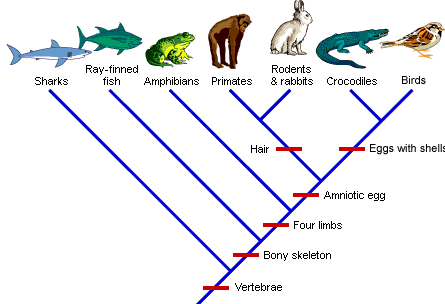

What separates a salamander from a turtle in this cladogram?
four walking legs
amniotic egg
hair
jaws



Ctenodiscus crispatus (Mud Starfish)


The diagram shows two single-celled organisms. Which taxonomic group do the organisms in the diagram fall under?
Fungi, since they lack a cell wall and nucleus.
Fungi, since they are multicellular autotrophs.
Protists, since they are unicellular with a nucleus.
Protists, since they are multicellular heterotrophs.

A student observes that mushrooms and plants can grow from the ground and do not move. The student’s science teacher conducts an experiment to help the student better understand how mushrooms and plants differ. The following is the data from the experiment. After observing the data, which of the following is the BEST conclusion the student could make from the data?
Mushrooms belong to the plant kingdom because they require water to grow.
Mushrooms belong to the plant kingdom because they require light to grow.
Mushrooms do not belong to the plant kingdom because they can grow without light.
Mushrooms do not belong to the plant kingdom because they need the same amount of water as plants.

A group of students is creating a dichotomous key to classify organisms. Their teacher gives them this chart of organisms and tells them they are all fish. Which of these is the MOST useful question to include in their key?
Is it smaller than a whale?
Does it swim in the water?
Does it have any fins or tail on its body?
Does it have a long, narrow body shape?
The answer to what question would allow you to determine if a population of organisms was more likely a result of natural or artificial selection?
Were the organisms produced by sexual or asexual reproduction?
Do the organisms have traits that are valuable to humans but are poorly suited to the wild?
How many different traits are there in the population of organisms?
How similar are the organisms to their parents?
A student wants to know if a Kangaroo rat (Diapodomys compactus) and a Kangaroo (Macropus osphranter) have the same genus. Based on the provided names, what can the student conclude about the organisms and relation to the genus?
Both species have kangaroo in their common name, so they are from the same genus.
Both species have a two-part scientific name, so they are from the same genus.
Both species’ first portion in their scientific name is different, so they are from different genus groups.
Both species’ second portion in their scientific name is different, so they are from different genus groups.
Early classification systems placed plants and fungi in the same kingdom. After further studying these organisms, taxonomists moved fungi into a separate kingdom. What question would have led scientists to separate plants and fungi into two distinct kingdoms?
Does the organism have cells?
Does the organism reproduce?
Does the organism grow on the ground?
Does the organism use sunlight to make food?
The teacher gives a group of students a mystery species to investigate. The teacher wants students to determine the mystery species’ kingdom. The teacher provides the following clues:
● The mystery species can perform photosynthesis.
● The mystery species is multicellular.
● The mystery species has a cell wall.
After receiving the clues, the students start to eliminate the kingdoms into which the mystery species does not belong. Which of the following explanations is accurate?
Students can eliminate the animal kingdom because animals are multicellular but do not perform photosynthesis.
Students can eliminate the animal kingdom because animals have cell walls but cannot perform photosynthesis.
Students can eliminate the protist kingdoms because protist can perform photosynthesis but do not have cell walls.
Students can eliminate the protist kingdom because protists are multicellular but cannot perform photosynthesis.

The evolution of the horse is the most complete fossil record we have of a single organism. Using the picture, what can you conclude happened to the horse over time?
The horse grew larger and lost its toes
The horse shrank and lost its toes
The horse grew larger and gained toes
The horse shrank and gained toes

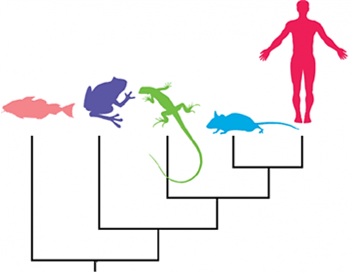
According to this phylogenetic tree, which creature is the least related out of all pictured?
Fish
Frog
Salamander
Human
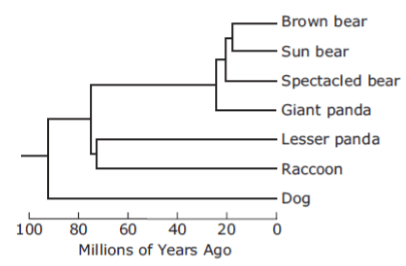
Based on this phylogenetic tree, which statement is true?
Lesser pandas are more genetically similar to giant pandas than they are to raccoons
Brown bears are more genetically similar to giant pandas than they are to sun bears
Lesser pandas are more genetically similar to raccoons than they are to giant pandas
The bear species are all more genetically similar to dogs than they are to giant pandas

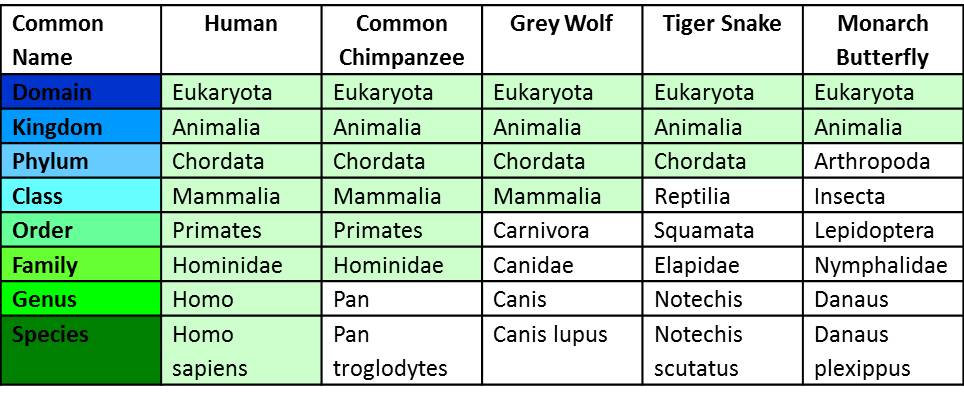
Who is most closely related to Taxidea taxus?
Lutra lutra
Panthera pardus
Canis latrans
Canis lupus

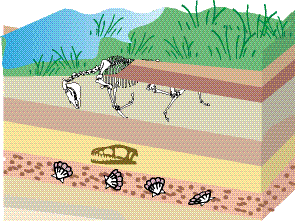
According to the law of superposition, the oldest fossils are found
At the top of the rock layers
Near the bottom of the rock layers
Somewhat near the surface
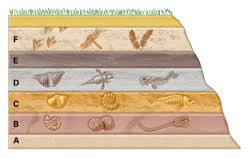
Which rock layer contains the newest fossils?
B
C
D
E
F
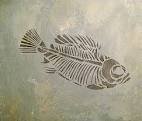
If scientists found this fossil, what could they infer?
what fish are like today
that this fish lacked oxygen
that water once covered the area where this fossil was found

The model shows changes in an insect population over multiple generations. Which of the following statements best explains how the first generation lady beetle from the above model changed in the later generations?
In the first generation, the beetles with the dark spotted trait had a better chance of survival. The beetles changed their color to better adapt to their environment, and the species evolved to have a lighter color.
In the first generation, the beetles with the dark spotted trait had a lower chance of survival. The beetles changed their color to better adapt to their environment, and the species evolved to have a lighter color.
In the first generation, the beetles with the dark spotted trait had a better chance of survival. The trait mutated over time, causing the beetles with that trait to be darker, and the species evolved to have a darker color.
In the first generation, the beetles with the dark spotted trait had a lower chance of survival. The trait mutated over time, causing the beetles with that trait to be lighter, and the species evolved to have a lighter color.

Two 7th grade students made models of a population of bacteria before and after they were treated with an antibiotic for several generations. Use the models to answer the question. Which statement below is the best explanation regarding the accuracy of the student’s models?
Student A has the model that is most accurate, the model shows how some bacteria changed themselves in the initial population of bacteria which led to those bacteria surviving the antibiotic while the other bacteria died off.
Student A has the model that is most accurate, the model shows variation in the initial population of bacteria which led to some bacteria surviving the antibiotic and reproducing while the other bacteria died off.
Student B has the model that is most accurate, the model shows how some bacteria changed themselves in the initial population of bacteria which led to those bacteria surviving the antibiotic while the other bacteria died off.
Student B has the model that is most accurate, the model shows variation in the initial population of bacteria which led to some bacteria surviving the antibiotic and reproducing while the other bacteria died off.

If a sick person takes an antibiotic but it doesn't kill all of the bacteria causing the sickness, what might explain this?
Variations in the bacteria allowed some organisms to be less affected by the antibiotic?
Bacteria cannot be killed by antibiotics
You cannot cure a bacterial infection
Bacteria do not cause sicknesses

One female salmon can lay hundreds of eggs. Why doesn't the salmon population increase dramatically?
Salmon reproduce asexually
Most offspring do not grow up to reproduce
Salmon eggs don't hatch
Salmon are extinct
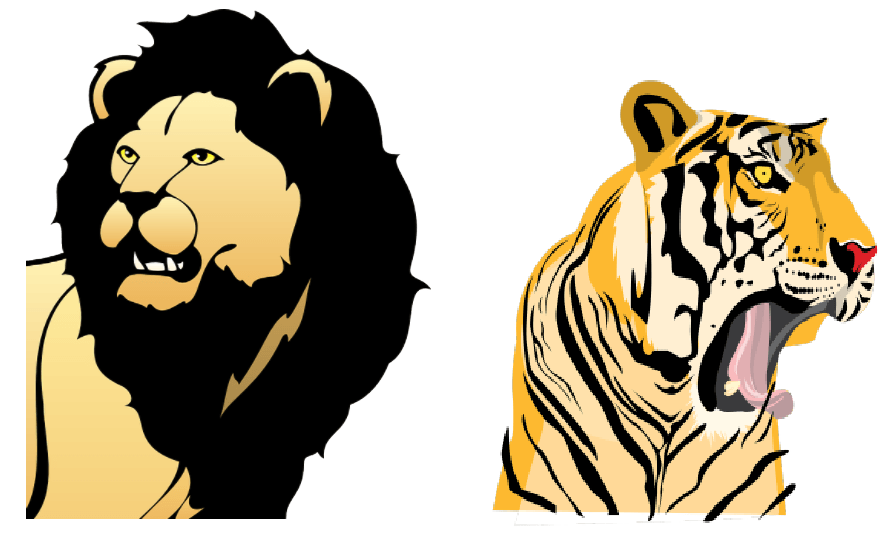
Organisms of the same species can no longer interbreed therefore creating two species.
Gene Pool
Genetic Drift
Gene Frequency
Speciation

The graph shows a change in beak depth of the medium ground finch over a period of years. Based on the theory of natural selection, which of the explanations best describes the change in the beak depth of the medium ground finch during the dry years?
The beak depth of the individual finch declined during dry years due to the survival and reproduction of finches with beak depths greater than 11.6 mm.
The beak depth of the finch population increased during dry years due to the survival and reproduction of finches with beak depths greater than 9.6 mm.
The beak depth of the individual finch declined during dry years due to the survival and reproduction of finches with beak depths less than 11.6 mm.
The beak depth of the finch population increased during dry years due to the survival and reproduction of finches with beak depths less than 9.6 mm.

The chart shows data from butterfly populations over a four-year period. Use the data in the chart to answer the question that follows. Which of the following statements is a valid conclusion based on the data table?
In year 5 the red population will decrease because a change in the habitat occurred in year two that favored red butterflies.
In year 5 the blue population will decrease because a change in the habitat occurred in year two that favored blue butterflies.
In year 5 the red population will increase because a change in the habitat occurred in year two that favored red butterflies.
In year 5 the blue population will increase because a change in the habitat occurred in year two that favored blue butterflies.
Why might it be helpful for a species to have a lot of variations?
They can't be seen by predators
If the environment changes, they might be better able to adapt
It is helpful in asexual reproduction
They don't recognize each other

Use the model to answer the question that follows.What most likely caused the change in the mouse population?
The lighter mice were less successful in finding food in the environment than the darker mice, which resulted in fewer of the lighter mice being able to survive.
The lighter mice were more successful in finding food in the environment than the darker mice, which resulted in fewer of the darker mice being able to survive.
The lighter mice were more visible to predators than the darker mice, which resulted in fewer of the lighter mice reaching reproductive age.
The lighter mice were more visible to predators than the darker mice, which resulted in more of the lighter mice reaching reproductive age.
Select the correct statement below:
Mutations cause variations, and variations that help the organism survive may go on to persist in the gene pool of the population
Mutations may cause variations, which are always harmful and lead to the destruction of the species
Mutations occur after organisms adapt the their environment.
Mutations in the DNA cause adaptations which harm a population and can lead to extinction of the species.
How does the fossil record help to support the theory of evolution?
the fossil record shows that organisms slowly change over time
The fossil record shows that species evolve very quickly
The fossil record does not support the theory of evolution

