
 Worksheets
Unit 2 Test Review
Total questions: 75
Worksheet time: 53mins
This law restricted colonists from moving past the Appalachian Mountains because Native Americans were attacking English settlers.
The Townshend Acts
The Intolerable Acts
The Proclamation of 1763
The Declaratory Act
This law placed a tax on all printed material in the colonies including wills, contracts, newspapers, and playing cards.
The Declaratory Act
The Stamp Act
The Intolerable Acts
The Coercive Acts
This act stated colonists must be responsible for housing and provisions for British soldiers.
The Quebec Act
The Stamp Act
The Declaratory Act
The Quartering Act
These acts placed a tax only on imported goods like paper, glass, tea, and lead.
The Intolerable Acts
The Coercive Acts
The Townshend Acts
Writs of Assistance
What was the COLONIAL name for the acts that closed Boston Harbor, banned town meetings, and other harsh penalties following the Boston Tea Party protest?
The Coercive Acts
The Townshend Acts
The Intolerable Acts
The Proclamation of 1763
What was a main reason(s) for the fight over the land west of the Appalachian Mountains?
Both France and Britain wanted control over the Ohio River Valley and France wanted to stop the British from going further.
Spain wanted to ally with France to gain more land.
Spain felt that Florida was too small for their trade routes.
They did not want any more Native American tribes to have any land, so France and Britain joined together to fight the Native Americans.

What happened following the French and Indian War?
English settlers were attacked by Natives led by Pontiac when they tried to settle in the Ohio River Valley
France lost control of its territory in North America
The Proclamation of 1763 was passed
Great Britain won the right to claim the Ohio River Valley without France interfering

Why did some Natives ally with the French?
The French forced them to fight because the Indians were enslaved by them.
The British attacked the Indians first, and the French decided to help the Indians.
The French and Natives had been trading furs for years and taught each other many techniques for survival.
The French were fighting the Indians in the war.... The Indians didn't help the French at all.
Militia means....
taking no side
a military force made up of ordinary citizens
a group of Native American nations in eastern North America joined together under one general government
partnership
The Iroquois Confederacy is....
a group of Native American nations in eastern North America joined together under one general government
partnership
an illness that affects large numbers of people
the permanent movement of people into one country from other nation
Alliance means....
taking no side
a military force made up of ordinary citizens
a group of Native American nations in eastern North America joined together under one general government
partnership

Why did Britain seek to tax the colonists in the 1760s?
The colonists were wealthier than most British citizens.
Britain needed money to pay their debt from the French and Indian War.
The British wanted to punish the colonists for rebelling against the Proclamation.
Britain needed money to protect the colonists from the French.

(usually biased) Ideas and information designed to help or harm a cause
Propaganda
Debate
Newspaper
Political Cartoons

This rendering of the events on March 5, 1770 is considered ____________ by some because it is biased and only shows one perception of the Boston Massacre.
propaganda
historical
fallacy
fact

This painting of the Boston Massacre shows Crispus Attucks dying as a martyr for the cause of independence. This image was created by abolitionists decades later. However, this supports a different story: where __________ soldiers claimed they were attacked by colonists.
British
Colonial
Patriots
Which well-known Patriot represented the British soldiers in a trial after the Boston Massacre because he wanted to prove that even a British soldier could get a fair trial in America.
Sam Adams
John Hancock
Paul Revere
John Adams

Who Organized the Boston Tea Party?
Colonists
Sons of Liberty
The British
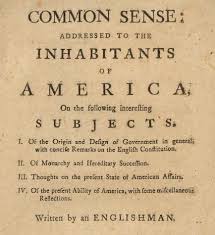

What is the connection between natural rights and government?
government is meant to provide services
people have the right to alter government
people have certain unalienable rights
government is meant to protect peoples' natural rights
Bonus: Jefferson included a section attacking the slave trade. However all mention of slavery was removed from the Declaration because delegates from Georgia and __________ would not sign it if it was in there.
South Carolina
Iowa
Hawaii
Alaska
The men who signed the Declaration knew that it was a dangerous thing to do. If the war was lost they could be tried for treason. What is treason?
helping your country win a battle
disagreeing with your king
betraying your country
Which of the following was a grievance (complaint) against the King?
He suspended trial by jury in many cases
He sent too many soldiers to the colonies to enforce the laws
He let the rich people not pay taxes
He had too much representation for the colonists
He interfered with their ability to trade
What are unalienable rights?
Rights that government cannot take away
Rights that government takes away
rights for aliens
Government is needed to promote equality
Why were the colonists being taxed so heavily?
To pay for the French and Indian War
Because the King felt like it
Because they wanted a revolution
They owed a lot of money to China
Money charged by a government to provide services for its citizens
Parliament
debt
repeal
Taxes

The phrase "No Taxation without Representation" was shouted by colonist who felt what?
They needed a tax collector
That they had no colonial representatives in Parliament
That they wanted their tax check
That Parliament had heard them


To petition means to...
pay taxes
ask the government to change things
organize a militia
Tyranny means
fairness and equality
cruel or oppressive rule
committing treason
Parliament:
England's law-making body
Trials by jury
A court system
A powerful military
a movement that emphasized reason and science as the paths to knowledge
Great Awakening
Freedom of Speech
Enlightenment
John Peter Zenger's trial set the precedent for _____________ in the colonies
Fair trade
Freedom of the press
High taxes
John Peter Zenger was tried for "seditious libel". This meant he was accused of...
reading a newspaper
printing lies and statements that were critical of the government
operating a business without paying taxes
a religious movement that swept through the colonies and welcomed all people into the churches
Great Awakening
Enlightenment
American Revolution
Freedom of the Press
How did the Enlightenment influence American colonists?
It introduced ideas of natural rights and government by the people.
It abolished slavery in the colonies and ended the slave trade.
It gave women the right to vote and own property.
It inspired colonists to help others and start homes for orphans.
Why were the Enlightenment and the Great Awakening so important?
They caused the colonists to question authority e.g. Parliament and the church
They raised taxes and many people fell into debt
They were not important in the colonies
Which statements described life in the colonies?
Higher literacy rates
More religious and ethnic diversity
Larger middle class
Highest taxes in the world
An abundance of land in the colonies led to land being cheaper so more people could purchase it. This then led to...
colonists earning money and moving up the social classes (social mobility)
more landowners participating in government through voting
England getting angry and demanding colonists stop harvesting natural resources
slavery decreasing
Convention of delegates called together from the 13 Colonies, became the governing body of America during the American Revolution.
Sons of Liberty
Continental Congress
Minutemen
Patriots
Legal document that enabled officers to search homes and warehouses for goods that might be smuggled.
Writs of Assistance
Petition
Propaganda
Privateer
Group of "rebel" colonists led by Samuel Adams who terrorized British tax collectors, hung effigies, and promoted rebellion against British occupation
Sons of Liberty
Samuel Adams
Propaganda
Paul Revere
During the American Revolution, George Washington...
was a loyalist
participated in the Boston Tea Party
was Commander in Chief of the Continental Army
wrote the Declaration of Independence
Which British Act governed trade between the colonies and Britain?
Bribe Act
Smuggling Acts
Triangular Trade
Navigation Acts
Which was a violent form of protest?
Petition
Tarring and Feathering
Boycott
Smuggling
An Act passed in British Parliament
is a part in a play
can not be enforced in the colonies
is unlawful
is a law
Which is a peaceful colonial protest?
Boycott
Tar and feathering
Boston Tea Party
Burning of British warship
Who is responsible for your education, words, and actions?
me
my parents
my teachers
Who is going to do well on this test?
Me!
I am!
I will!
Why were boycotts so effective?
They are peaceful (non-violent)
They hurt merchants financially who then pressured Parliament to repeal the acts
Both women and men participated in this form of protest
Boycotts were not effective

