Wayground logo

Free Printable Worksheets

Font size

S
M
L
XL
Worksheets

Phylum Cnidaria & Ctenophora

Total questions: 40

Worksheet time: 20mins

Name
Class
Date
1.

What is the name of the jelly matrix of a Cnidarian?

a)

epidermis

b)

calyx

c)

mesoglea

d)

epiglea

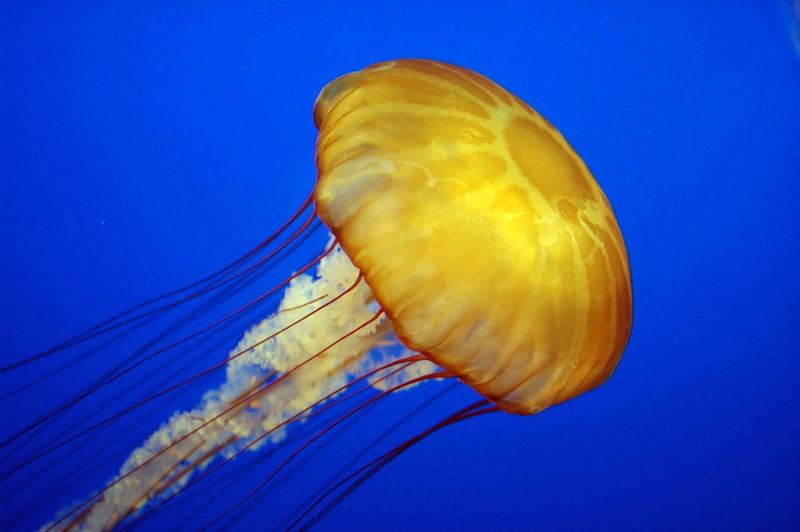
2.

This picture is which of the two main body forms of a Cnidarian?

a)

polyp

b)

zooanthellae

c)

larvae

d)

medusa

3.

The Cnidarian nervous system is very simple. Instead of a developed brain with a complex nervous system they have a:

a)

nerve net

b)

nerve circle

c)

brain net

d)

nerve polyp

4.

Organisms that produce both male and female gametes are called:

a)

trioecious

b)

dioecious

c)

monoecious

d)

bioecious

5.

What is the name of the stinging cells from which this phyla gets its name?

a)

cnidogametes

b)

cnidocytes

c)

cnidogemmules

d)

cnidoecious

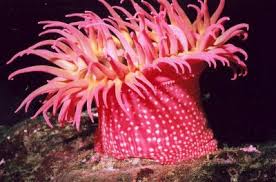
6.

This picture is which of the two main body forms of a Cnidarian?

a)

polyp

b)

gemmule

c)

medusa

d)

larvae

7.

Which Cnidarian class contains the box jellyfish?

a)

Anthozoa

b)

Cubozoa

c)

Scyphozoa

d)

Hydrozoa

8.

What is the name of Cnidarian larva?

a)

pupa

b)

pupae

c)

planula

d)

plastron

9.

What Cnidarian class contains true corals, sea anemones, and sea pens?

a)

Anthozoa

b)

Cubozoa

c)

Hydrozoa

d)

Scyphozoa

10.

What is the most abundant of the freshwater Cnidarians?

a)

box jellyfish

b)

hydra

c)

coral

d)

anthozoa

11.

What has a mutualistic relationship with coral and lives within its tissues?

a)

small fish

b)

larvae

c)

hydra

d)

zooanthellae

12.

Which Cnidarians have the most economic importance to humans?

a)

sea anemones

b)

jellyfish

c)

reef-building corals

d)

sea pens

13.

Which class of Cnidarians contains Hydra, and Portuguese Man-of-War?

a)

Hydrozoa

b)

Anthozoa

c)

Cubozoa

d)

Scyphozoa

14.

Cnidarians have what type of gastrovascular cavity, or coelenteron?

a)

closed gut

b)

complex gut

c)

formed gut

d)

blind gut

15.

Cnidarians are most abundant in what type of environment?

a)

warm, polar, deep marine environments

b)

warm, tropical, shallow marine environments

c)

cold, polar, shallow marine environments

d)

cold, tropical, deep freshwater environments

16.

Through what process does a polyp produce medusae?

a)

fission

b)

budding

c)

strobilation

d)

zooid

17.

What is the name of the organelle of Cnidarians that contains a tiny, coiled, tubular filament?

a)

nematocyst

b)

nematoblast

c)

cnidariacyst

d)

cnidariablast

18.

What class of Cnidarians contains the true jellyfish?

a)

Cubozoa

b)

Anthozoa

c)

Hydrozoa

d)

Scyphozoa

19.

The skeleton, and the calyx, of corals is made out of what substance?

a)

silica

b)

calcium carbonate

c)

silica carbonate

d)

phosphorous

20.

What phylum do comb jellies belong in?

a)

Cnidaria

b)

Porifera

c)

Chordata

d)

Ctenophora

21.

Which pylum: stinging cells, many have zoozanthellae living symbiotically

a)

Cnidaria

b)

Echinodermata

c)

Chordata

d)

Mollusca

22.
When light hits a jellyfish, it responds to the stimuli using its _______________.
a)
Brain
b)
Skin Cells
c)
Epidermis
d)
Nerve Net
23.
Organisms in Phylum Cnidaria and Phylum Ctenophora have what kind of symmetry?
a)
Asymmetry
b)
Bilateral 
c)
Radial
d)
Colateral
24.
What trait gives jellies in the Phylum Ctenophora their common name? 
a)
Box shape
b)
Combs
c)
Tentacles
d)
Polyps
25.
What kingdom do jellyfish belong to?
a)
Cnidaria
b)
Animalia 
c)
Scyphozoa
d)
Porifera
26.
Which Cnidarian class is known for containing the most venomous animal on Earth?
a)
Cubozoa 
b)
Scyphozoa
c)
Anthozoa 
d)
Hydrozoa
27.
Cnidarians have two body layers: epidermis and ________________. 
a)
Vascodermis
b)
Gastrodermis
c)
Microdermis
d)
Innerdermis 
28.
Cnidarians have a trait called dimorphism. This means that....
a)
They can change size whenever they are being chased.
b)
They camouflage to blend in with various organisms.
c)
They have three body forms.
d)
They have two body forms.
29.
Which of the following is a reason that coral reefs populations are dying?
a)
Pollution
b)
Human Activity
c)
Global Warming
d)
All of the Above
30.
After a cnidarian has stung it's prey, it uses it's tentacles to pull the food into the hollow space inside of it's body. This space is called the __________________. 
a)
Mesohyl
b)
Mesoderm
c)
Gastrovascular Cavity
d)
Coelovascular Cavity
31.
When corals become stressed due to poor environmental conditions, they expel the colorful xoozanthellae that live on their surface, causing the corals to appear white. This is called...
a)
Coral Reversion
b)
Coral Bleaching
c)
Coral Basking
d)
Coral Variation
32.
One reason that coral reefs are so important, is that they provide a home for many other organisms. Some of the species that live on coral reefs can't be found anywhere else in the world. This means they are ___________ to coral reefs. 
a)
Endemic
b)
Epistemic
c)
Evident
d)
Exothermic
33.
Polyps are ______, while medusa are ______. 
a)
sessile, motile
b)
motile, sessile
c)
both motile and sessile, just motile
34.
Instead of ctenophora having stinging cells, they have sticky cells called
a)
cnidoblasts
b)
colloblasts
c)
nematocysts 
d)
stickacytes 
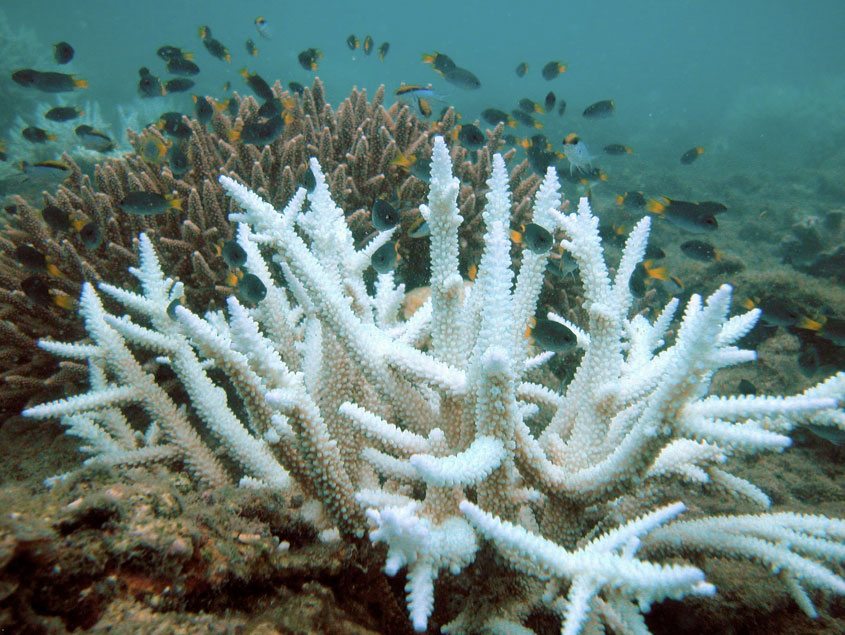
35.
What is wrong with this coral?
a)
It hasn't been to sunseekers in over a month
b)
Warming of water made it bleach
c)
Coral mining caused it to sufficate
d)
The loss of fish caused it to die
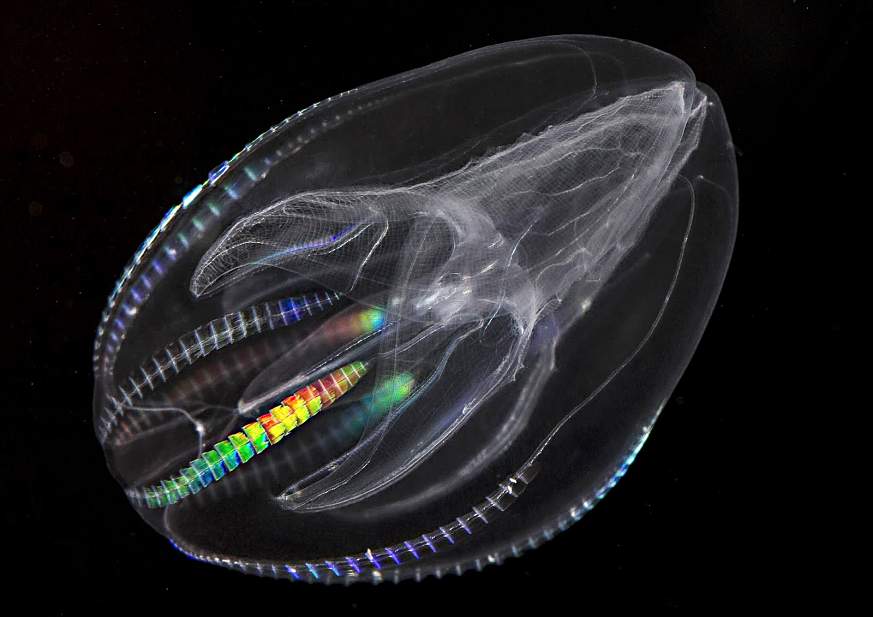
36.
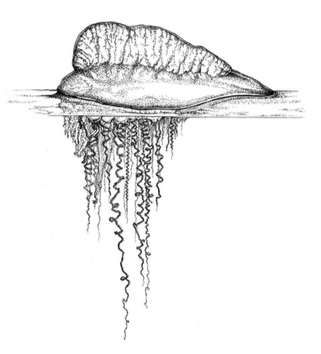
What is this organism?
a)
jellyfish
b)
Portuguese man-of-war
c)
hydra
d)
coral
37.
What is a defining characteristic between a cnidarian and a ctenophore?
a)
Ctenophores are freshwater and cnidarians are marine
b)
cnidarians have stinging cells and ctenophores  don't 
c)
ctenophores have stinging cells and cnidarians don't
d)
ctenophore is another name for cnidarian
38.
How do jellyfish move around?
a)
They beat fused cilia on their bodies like oars on a ship
b)
pushing off with their tentacles
c)
shooting air out of their mouths
d)
through rhythmic contractions of muscles in their bells
39.
A colonial cnidarian is...
a)
coral
b)
comb jellies
c)
jellyfish
d)
sea anemones
40.

Which part of a cnidarian's body is waste dispelled from?

a)

the gastrodermis

b)

the tentacles

c)

the mesoglea

d)

the gastrovascular cavity