wayground logo

Free Printable Worksheets

Font size

S
M
L
XL
Worksheets

Chem Midterm Review

Total questions: 176

Worksheet time: 11hrs 12mins

Name
Class
Date
1.

An electron is

a)

positively charged

b)

neutral

c)

negatively charged

2.
Burning a piece of paper 
a)
Chemical Change 
b)
Physical Change 
3.
A _________ is a substance made of two or more DIFFERENT elements chemically combined. 
a)
mixture
b)
compound
c)
substance 
4.
A bar of gold is made of only one ______
a)
Plasma 
b)
Mixture 
c)
Element 
d)
Compound
5.
Anything that takes up space and has mass is known as _______________.
a)
Matter
b)
Molecules
c)
Compounds
d)
Stuff
6.
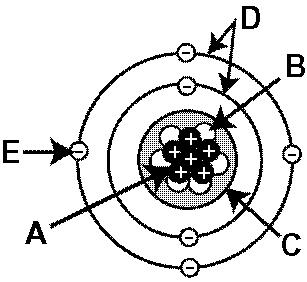
In the atom diagram shown, E is pointing to
a)
An electron
b)
a proton
c)
a neutron
d)
the nucleus
7.
Which of the following is found in the nucleus of an atom?
a)
electrons
b)
neutrons
c)
The center of an atom, composed of protons and neutrons
d)
molecules
8.
An ionic bond forms when 
a)
Valence electrons are shared
b)
a sea of mobile electrons surround the cations
c)
valence electrons are transferred between atoms
d)
none of the above
9.
In chemical compounds, covalent bonds form when
a)
the electronegativity difference between two atoms is very large.
b)
electrons are completely transferred between two atoms.
c)
pairs of electrons are shared between two atoms.
d)
ions are held together by opposite charges.
10.
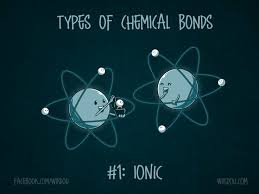
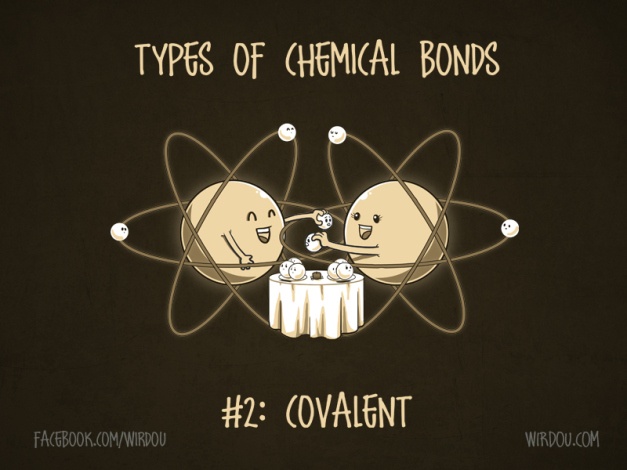
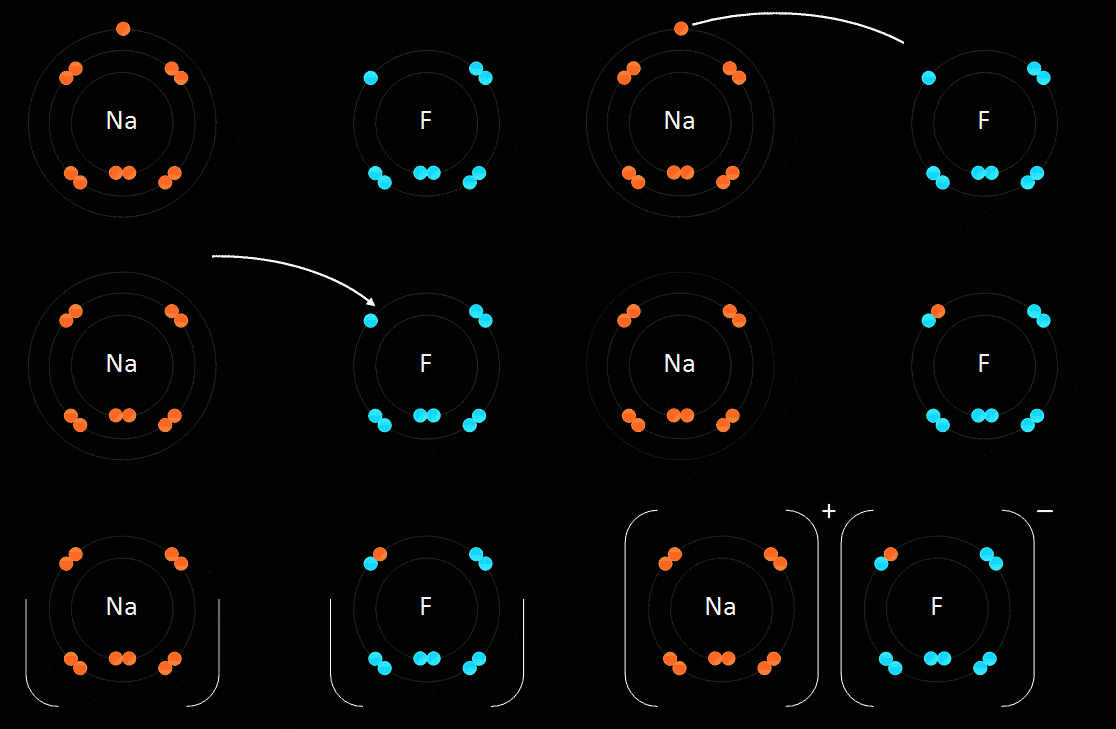
Why type of bond is forming between the atoms in the diagram?
a)
Ionic
b)
Covalent
11.

What quantities vary between isotopes of an element?

a)

protons, electrons, and atomic mass

b)

protons, electrons, and atomic number

c)

neutrons and electrons

d)

neutrons and atomic mass

12.
What kind of change is a phase change?
a)
Physical - it's still the same substance
b)
chemical - it's made of chemicals 
13.
The Modern Periodic Table of Elements is arranged by
a)
atomic mass
b)
atomic number
c)
valence electrons
d)
number of isotopes
14.
What is this element? 
1s22s22p63s23p6
4s23d104p6
a)
Argon
b)
Krypton
c)
Selenium
d)
Bromide
15.
What atom matches this electron configuration?
[Xe] 6s2 4f14 5d9
a)
Mercury
b)
Gold
c)
Platinum
d)
Thallium
16.
If an atom has 4 protons, how many valence electrons will it have?
a)
4
b)
6
c)
2
d)
0
17.

Name this formula:

KNO3

a)

Potassium Nitrogen Oxide

b)

Potassium Nitride

c)

Potassium Nitrate

d)

Potassium (I) Nitrite

18.

Name the compound NH4OH

a)

ammonium hydroxide

b)

ammonia oxyhydride

c)

mononitrogen tetraoxihydride

d)

hydrogen nitrate

19.
During which phase are the particles of a substance most tightly packed?
a)
Solid
b)
Liquid
c)
Gas
20.
During which phase do the particles of a substance have the most energy?
a)
Solid
b)
Liquid
c)
Gas
21.
During which phase do the particles of a substance take the shape of the container, but do not fill the container?
a)
Solid
b)
Liquid
c)
Gas
22.
Atomic number is always equal to...
a)
The number of protons
b)
The number of electrons
c)
The number of neutrons
d)
The mass number
23.
The atomic number of a neutral atom is equal to...
a)
The number of protons only
b)
The number of electrons only
c)
The number of protons and electrons
d)
The number of protons + electrons
24.
An electron has....
a)
no mass, negative charge
b)
mass and a negative charge
c)
no mass, positive charge
d)
mass and a positive charge
25.
The mass of an atom is equal to...
a)
protons
b)
neutrons
c)
protons + neutrons
d)
protons + neutrons + electrons
26.
An atom with an overall charge is called...
a)
An ion
b)
An isotope
c)
A molecule
d)
A Noble Gas
27.
Negative ions are formed when...
a)
electrons are lost
b)
electrons are gained
c)
protons are lost
d)
protons are gained
28.
How many protons are in an atom of Potassium?
a)
15
b)
19
c)
40
d)
41
29.
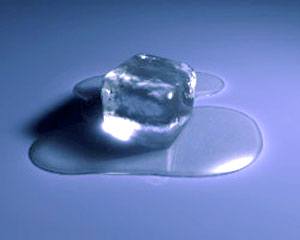
When ice turns into water, the amount of energy _________ so this process is considered ___________.
a)
increases, endothermic
b)
increases, exothermic
c)
decreases, endothermic
d)
decreases, exothermic
30.
What is the name of the compound LiCl
a)
Lithium Chloride
b)
Lithium Chlorine
c)
Lithide Chloride
d)
Lithium MonoChloride
31.
What is the oxidation state of Zinc in the compound ZnO?
a)
+1
b)
+2
c)
-1
d)
-2
32.
Where are nonmetals found on the periodic table?
a)
Left
b)
Right
c)
Middle
d)
Staircase
33.
Which group on the periodic table all have 8 valence electrons?
a)
Alkali Metals
b)
Alkaline Earth Metals
c)
Halogens
d)
Noble Gases
34.
Which substance contains a metal and a nonmetal?
a)
AlCl3
b)
CO2
c)
H2O
d)
SiO2
35.
What are these?
a)
Beaker Tongs
b)
Tongs
c)
Spatula Tongs
d)
Pincers
36.

A compound is:

a)

two or more elements combined in a fixed ratio

b)

two or more elements

c)

an element

d)

a mixture

37.

In a chemical reaction, matter is :

a)

neither created nor destroyed

b)

created

c)

destroyed

d)

converted to energy

38.

In a chemical reaction, energy is :

a)

neither created nor destroyed

b)

created

c)

destroyed

d)

converted to matter

39.

Has a definite shape and volume

a)

solid

b)

liquid

c)

gas

d)

plasma

40.

The ability to react (undergo a chemical change) is a:

a)

Chemical property

b)

Physical property

c)

trait

d)

characteristic

41.

Can be observed or measured without changing the substance:

a)

Chemical property

b)

Physical property

c)

trait

d)

characteristic

42.

Gold has a mass number of 197 amu and an atomic number of 79. It has:

a)

79 neutrons

b)

197 electrons

c)

118 neutrons

d)

197 protons

43.

Which subatomic particles are found in the nucleus?

a)

protons

b)

neutrons

c)

protons and neutrons

d)

protons and electrons

44.

S orbitals are shaped like a:

a)

sphere

b)

dumb bell

c)

4 leaf clover

d)

flower

45.

P orbitals are shaped like a:

a)

sphere

b)

dumb bell

c)

4 leaf clover

d)

flower

46.

The alkali metals and alkaline earth metals make up the _____ block

a)

s

b)

p

c)

d

d)

f

47.

The poor metals, metalloids, and nonmetals make up the _____ block.

a)

s

b)

p

c)

d

d)

f

48.

The transition metals make up the _____ block.

a)

s

b)

p

c)

d

d)

f

49.

A period is a:

a)

row

b)

column

c)

block

d)

triad

50.

A group is a:

a)

row

b)

column

c)

block

d)

triad

51.

Alkali metals are in

a)

Group 1

b)

Group 2

c)

Group 17

d)

Group 18

52.

Alkaline earth metals are in

a)

Group 1

b)

Group 2

c)

Group 17

d)

Group 18

53.

Halogens are in

a)

Group 1

b)

Group 2

c)

Group 17

d)

Group 18

54.

Noble gases are in

a)

Group 1

b)

Group 2

c)

Group 17

d)

Group 18

55.

An elements' valence electrons:

a)

Are its outermost electrons

b)

Determine its chemical behavior and bonding

c)

Are shown by its location on the periodic table

d)

all of the above

56.
How many electrons does an atom generally need in its outer level to be the most stable
a)
4
b)
8
c)
10
d)
12
57.
The atomic number tells you what?
a)
number of electrons
b)
number of protons
c)
number of neutrons
d)
both electrons and protons in an atom.
58.

Which type of element likes to give away electrons and become positive in a chemical reaction?

a)

metal

b)

nonmetal

c)

metalloid

59.

The majority of elements on the periodic table are:

a)

metals

b)

nonmetals

c)

metalloids

d)

synthetic

60.

The element with the electron configuration [Ar] 4s23d5 is

a)

chromium

b)

manganese

c)

technetium

d)

molybdenum

61.

Where is the p block?

a)

Groups 1 & 2

b)

Groups 13-18

c)

Group 18

d)

Groups 3-12

62.

What type of reaction is this?

Al + Na2CO3

a)

Double replacement

b)

Combustion

c)

Metal carbonate

d)

Single replacement

63.
The molar mass of an element is equal to its...
a)
Atomic mass
b)
Atomic number
c)
Oxidation number
d)
Valence electrons
64.
What is the molar mass of sodium?
a)
11
b)
23
c)
45.98
d)
3
65.
What is the mass of one mole of aluminum?
a)
27 g
b)
13 g
c)
54 g
d)
14 g
66.
What is the molar mass of table salt (NaCl)?
a)
116.886 g/mol
b)
35.453 g/mol
c)
22.990 g/mol
d)
58.443 g/mol
67.
What is the molar mass of NaOH?
a)
40 g/mol
b)
38.989 g/mol
c)
23.998 g/mol
d)
57.004 g/mol
68.
What is the molar mass of CO2?
a)
12
b)
16
c)
32
d)
44
69.

Calculate the molar mass of Ba(C2H3O2)2

a)

255.3 g/mol

b)

237.3 g/mol

c)

228.3 g/mol

d)

196.3 g/mol

70.

What is the molar mass of the diatomic element nitrogen?

a)

7 g/mol

b)

14 g/mol

c)

28 g/mol

71.
What is the mass in grams of 5.90 mol C8H18?
a)
.0512 g
b)
19.4 g
c)
673 g
d)
389 g
72.
What is the mass of 2.50 mol of oxygen gas O2?
a)
40 g
b)
80 g
c)
16 g
d)
32 g
73.
N2 +  3H2 → 2NH3 
How many moles of hydrogen are needed to react with 2 moles of nitrogen?
a)
6
b)
2
c)
3
d)
1
74.
What is the mole ratio in the following reaction:
2CO  +  O2  → 2CO2
a)
2:1:2
b)
1:1:1
c)
1:2:1
d)
Have no clue what a mole ratios is!!
75.
Find the percentage composition of  Mg in Mg3(PO4)2.
   

a)
27.75% Mg
b)
23.57% Mg
c)
48.68% Mg
d)
13.45% Mg
76.

The ___ is the part of the solution being dissolved

a)

solute

b)

solvent

77.

___________ refers to the amount of solute dissolved in a given amount per volume of solution

a)

Concentration

b)

Dilution

c)

Precipitation

d)

None of the above

78.

What is the percent by mass of a solution made by dissolving 10.0 g of NaCl into 180.0 g of water?

a)

5.26 %

b)

5.56 %

c)

180.0 %

d)

20.0 %

79.

What is the percent concentration of sugar in pink lemonade if 28.0 g of sugar is added to 209 g of water?

a)

14.7 %

b)

5.14 %

c)

13.4 %

d)

11.8 %

80.

What is the molarity of a solution containing 4 moles of KCl in 2.5 L of solution?

a)

1.6 M

b)

0.63 M

c)

10 M

d)

2.6 M

81.

What volume is needed to make a 2.45 M solution of KCl using 0.50 mol of KCl?

a)

4.9 L

b)

0.20 L

c)

1.2 L

82.

How many moles of NaCl are needed to make 5.25 L of a 0.25 M solution?

a)

1.3 mol

b)

21 mol

c)

0.048 mol

83.

What is the molarity of a solution containing 4.26 g of KCl in 1.25 L of solution? *Change g to mol first, molar mass of KCl = 74.55 g/mol*

a)

3.41 M

b)

0.0457 M

c)

0.0571 M

d)

0.0714 M

84.
Determine the molarity of 2.25 mole of sulfuric acid, H2SO4, dissolved in 725 mL of solution.
a)
322.2 M
b)
3.1 M
c)
0.32 M
d)
2.25 M
85.
What is the molarity of 3 mole of hydrochloric acid in 3 L of water. 
a)
3
b)
1
c)
6
d)
9
86.
How many liters would you need to make a 1 M solution if you have 6 mol of Sodium Hydroxide? 
a)
2
b)
3
c)
4
d)
87.
What is the concentration, in percent by volume, of 15.3 mL of solute in 2.65 L of solution?
a)
0.58%
b)
0.0058%
c)
5.8%
88.
What is the percent by mass of oxygen in MgO?
a)
20%
b)
40%
c)
50%
d)
60%
89.
What is the percent by mass of magnesium in MgO?
a)
20%
b)
40%
c)
50%
d)
60%
90.
What is the percent by mass of sodium in NaCl?
a)
39%
b)
61%
c)
35%
d)
65%
91.
What is the percent by mass of chlorine in NaCl?
a)
39%
b)
61%
c)
35%
d)
65%
92.
What is the percent composition by mass of sulfur in the compound MgSO4 (gram formula mass = 120 g/mol)?
a)
20%
b)
27%
c)
46%
d)
53%
93.
What is the percent composition by mass of oxygen in the compound MgSO4 (gram formula mass = 120 g/mol)?
a)
20%
b)
27%
c)
46%
d)
53%
94.
In which compound is the percent composition by mass of Cl equal to 42%?
a)
HClO (gram formula mass = 52 g/mol)
b)
HClO2 (gram formula mass = 68 g/mol)
c)
HClO3 (gram formula mass = 84 g/mol)
d)
HClO4 (gram formula mass = 100 g/mol)
95.
The pH scale is a range from:
a)
1-7
b)
0-14
c)
1-5
d)
1-20
96.
A(n) ______ is a substance with a pH less than 7
a)
Acid
b)
Alkaline
c)
Base
d)
Buffer
97.
A(n) _______ is a substance with a pH greater than 7.
a)
Base
b)
Acid
c)
Buffer
d)
Water
98.
What is the only substance with a neutral pH of 7?
a)
Milk
b)
Orange Juice
c)
Water
d)
Blood
99.
Complete the sentence.
A substance that is more basic has a _____ pH than a substance that is acidic.
a)
lower
b)
higher
c)
the same
d)
none of the above
100.

In a test of pH levels, a baking soda has a pH of 9 and bleach has a pH of 12. What is true about there relationship?

a)

Both of the solution are Bases

b)

Both of the solution are Acids

c)

The Baking soda is an acid and the Bleach is a base

d)

The baking soda is a base and the Bleach is an Acid.

101.

An acid

a)

is a substance that releases H+ ions when dissolved in water

b)

is a substance that does not release any ions when dissolved in water

c)

is a substance that releases OH- when dissolved in water

d)

releases an equal amount of OH- and H+ ions when dissolved in water

102.

Water has a neutral because

a)

it has more H+ ions than OH-

b)

it has more OH- ions than H+

c)

it does not produce any ions

d)

it has an equal amount of H+ and OH- in solution

103.
According to the pH range which substance is more acidic than lemon juice
a)
Hydrochloric acid
b)
cabbage
c)
milk
104.
Bleach is a strong base, what is the pH level of bleach?
a)
13
b)
14
c)
1
d)
2
105.
A solution has a pH of 7.0.  What would happen to the pH if H ions were added?
a)
pH would go up
b)
pH would go down
c)
pH would stay the same
d)
None of these
106.
A solution has a pH of 7.0.  What would happen to the pH if OH ions were added?
a)
pH would go up
b)
pH would go down
c)
pH would stay the same
d)
None of these
107.

Which of the following is the strongest acid?

a)

1

b)

5

c)

3

d)

8

108.
Bases will turn litmus paper __________, while acids will turn litmus paper __________.
a)
blue.....red
b)
red.....blue
c)
pink.........colourless
d)
colourless..........pink
109.

Which of the following elements will form a cation?

a)

Arsenic

b)

Copper

c)

Bromine

d)

Fluorine

110.

Which of the following will form an anion?

a)

Titanium

b)

Iron

c)

Calcium

d)

Sulfur

111.

Which of the following will form a cation?

a)

Aluminum

b)

Sulfur

c)

Iodine

d)

Nitrogen

112.

Which of the following will form an anion?

a)

Tin

b)

Lead

c)

Chlorine

d)

Zinc

113.
How many protons are in Beryllium?
a)
4
b)
9
c)
5
d)
2
114.

What is the atomic mass of Neon?

a)

10

b)

20.18

c)

10.18

d)

9.82

115.
What is the atomic mass of Gold?
a)
79
b)
196.9665
c)
117
d)
275
116.
How many electrons does an Iodine atom have?
a)
53
b)
126
c)
73
d)
179
117.
How many electrons are in a gold atom?
a)
79
b)
196
c)
117
d)
275
118.
What number is circled?
a)
Number of Neutrons
b)
Number of Protons
c)
Atomic Mass
d)
Number of Electrons
119.
In an exothermic reaction, heat is ...
a)
taken in
b)
given out
120.

In an endothermic reaction, heat is ...

a)

taken in

b)

given out

121.
In an endothermic reaction the system is releasing energy.
a)
True
b)
False
122.

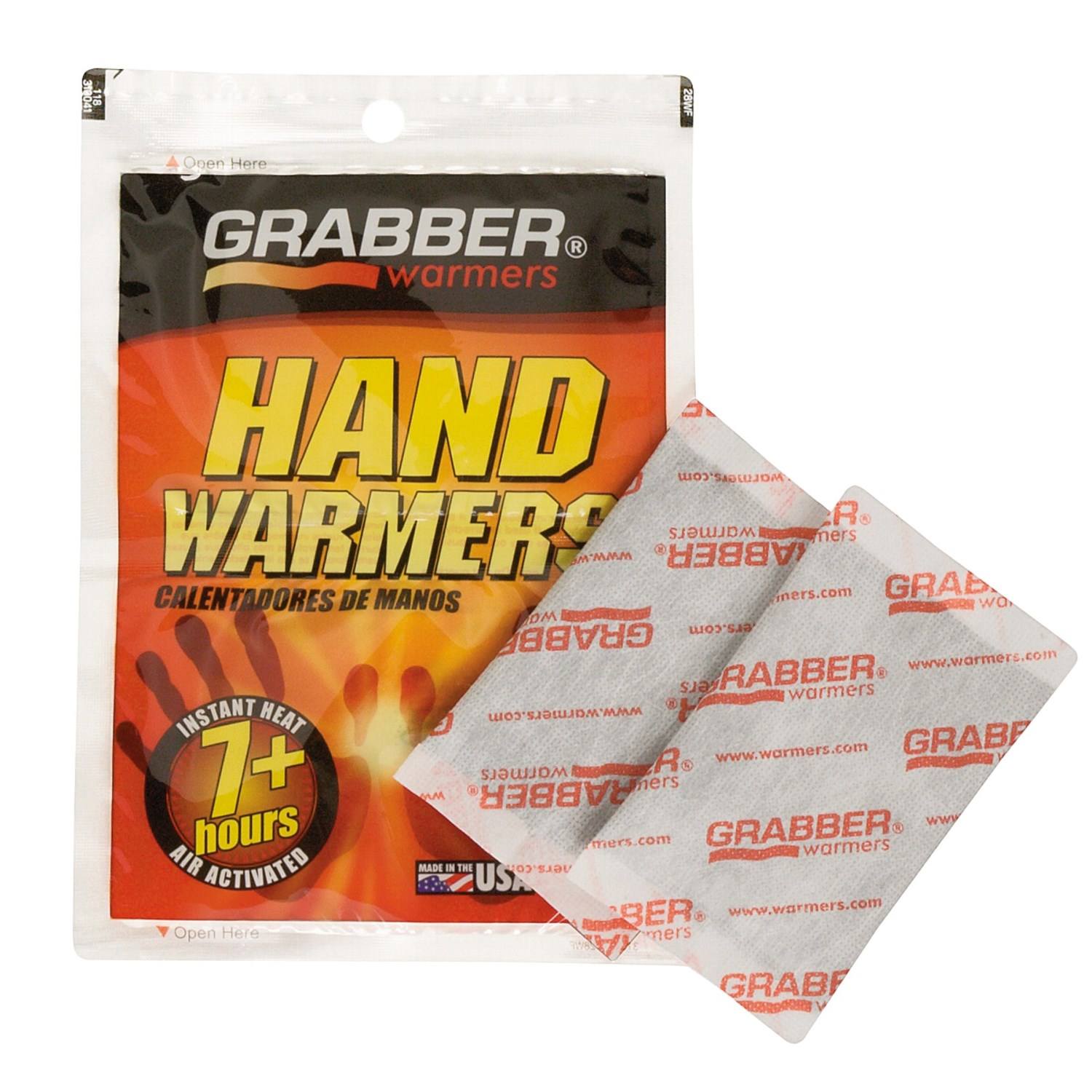
What type of reaction occurs in a hand warmer?

a)

exothermic

b)

endothermic

123.
Mole ratios are obtained from the
a)
balanced chemical equation
b)
periodic table
c)
molar mass
124.
For the reaction represented by the equation Cl2 + 2KBr → Br2 + 2KCl, how many grams of potassium chloride can be produced from 356 grams potassium bromide?
a)
749 g
b)
225 g
c)
479 g
d)
814 g
125.
Identify the limiting reagent when 6.00 g HCl combines with 5.00 g Mg to form MgCl2.
 
Mg +  2HCl --> MgCl2  +  H2   
 
a)
Mg
b)
H2
c)
MgCl2
d)
HCl
126.
Balance the following reaction :
 
CaC₂(s)   +   H₂O(l)   -->   C₂H₂(g)   +   Ca(OH)₂(aq)
a)
1,2,2,2
b)
1,2,1,1
c)
2,1,1,1
d)
2,1,2,1
127.
Using the following equation:
Fe2O3(s) + 3H2(g) → 2Fe(s) + 3H2O(l)
How many moles of iron can be made from  6 moles H2
a)
4 moles Fe
b)
6 moles Fe
c)
9 moles Fe
d)
2 moles Fe
128.
What is the right ratio of chemicals for the BCE (Balanced Chemical Equation)?__Na + __H2O --> __NaOH + __H2
a)
2,2 --> 2,1
b)
4,4 --> 4,1
c)
1,2 --> 2,4
d)
1,2 --> 2,1
129.

What is the right ratio of chemicals for the BCE (Balanced Chemical Equation)?

__Ca + __H2O --> __Ca(OH)2 + __H2

a)
2,1 --> 2,1
b)
1,2 --> 1,1
c)
1,2 --> 2,4
d)
1,2 --> 2,1
130.
What is the right ratio of chemicals for the BCE (Balanced Chemical Equation)?__CO + __Fe2O3--> __Fe + __CO2
a)
3,1 --> 2,3
b)
3,2 --> 1,1
c)
3,2 --> 2,4
d)
3,2 --> 2,1
131.
What is the right ratio of chemicals for the BCE (Balanced Chemical Equation)?__CH4 + __O2 --> __CO2+ __H2O
a)
2,1 --> 2,1
b)
1,2 --> 1,1
c)
1,2 --> 1,2
d)
1,2 --> 2,1
132.
What is the right ratio of chemicals for the BCE (Balanced Chemical Equation)?__AgNO3 + __H2S --> __Ag2S+ __HNO3
a)
2,1 --> 1,2
b)
1,2 --> 1,1
c)
1,2 --> 1,2
d)
1,2 --> 2,1
133.
What is the right ratio of chemicals for the BCE (Balanced Chemical Equation)?__MnO2 + __HCl --> __MnCl2 + __H2O __Cl2
a)
4,1 --> 2,1,2
b)
1,2 --> 1,1,4
c)
1,4 --> 1,2,1
d)
1,4 --> 2,2,1
134.

Convert 35⁰F to Celsius (5/9 x (0F - 32))

a)

1.6⁰

b)

1.7⁰C

c)

2.0⁰

d)

16.6⁰C

135.

Convert 72⁰F to Celsius (5/9 x (0F - 32))

a)

2.2⁰C

b)

222⁰C

c)

22.2⁰C

d)

161.6⁰C

136.

Convert 103°F to Celsius (5/9 x (0F - 32))

a)

39°C

b)

394°F

c)

75°C

d)

39.4°C

137.
Convert: 253 C to K:
a)
526 K
b)
625 K
c)
0 K
d)
186 K
138.
Which of the following is nitrate?
a)
NO-
b)
NO2-
c)
NO3-
d)
NO4-
139.
What is the name of Al(NO3)3?
a)
Aluminum trinitrate
b)
Monoaluminum nitrate
c)
Aluminum (III) nitrate
d)
Aluminum Nitrate
140.
What is the name of Mg(OH)2?
a)
Magnesium Hydride
b)
Magnesium Dihydride
c)
Magnesium Dihydroxide
d)
Magnesium Hydroxide
141.
Ammonium
a)
NH4+
b)
NO3-
c)
NO2-
d)
MnO4-
142.
Hydroxide
a)
Cr2O4-2
b)
Cr2O4-2
c)
O3-2
d)
OH-
143.
Na2S
a)
Sodium Sulfide
b)
Sodium Sulfate
c)
Sodium Sulfite
d)
Disodium Sulfide
144.
What is the formula for magnesium chloride?
a)
MgCl
b)
Mg2Cl
c)
MgCl2
d)
Mg(ClO3)2
145.

Name CCl4

a)

tetracarbon chloride

b)

carbon tetrachloride

c)

monocarbon tetrachloride

d)

Carbon chloride

146.
Name BCl3
a)
boron chloride
b)
boron (III) chloride
c)
boron trichloride
d)
boron chlorine
147.
Give the formula for phosphorus trifluoride
a)
P3F
b)
PF
c)
PF3
d)
P3F3
148.
Name SO2
a)
monosulfur dioxide
b)
sulfur dioxide
c)
sulfur oxide
d)

sulfur (II) oxide

149.
Disulfur trioxide
a)
S3O2
b)
SO
c)
S2O3
d)
S2O
150.
4Si + S8 --> 2Si2S4
a)
Synthesis
b)
Decomposition
c)
Single displacement
d)
Double displacement
151.
3Ca + 2AlCl3 --> 3CaCl2 + 2Al
a)
Synthesis
b)
Decomposition
c)
Single diplacement
d)
Double displacement
152.
3KOH + H3PO4 --> K3PO4 + 3H2O
a)
Synthesis 
b)
Decomposition
c)
Single displacement
d)
Double displacement
153.
3Mg + N2 --> Mg3N2
a)
Synthesis 
b)
Decomposition
c)
Single displacement
d)
Combustion
154.
2NO2 --> N2 + 2O2
a)
Synthesis
b)
Decomposition
c)
Single displacement
d)
Combustion
155.
a)
Boron
b)
Osmium
c)
Bromine
d)
Bismuth
156.
a)
Aluminum
b)
Magnesium
c)
Astatine
d)
Argon
157.
What formula is this?
a)
Sugar
b)
Salt
c)
Ozone
d)
Carbon Dioxide
158.
a)
Chloride
b)
Chlorine
c)
Cobalt
d)
Carbon
159.
C  is the chemical symbol for which element that makes a diamond when pressurized at high heat.
a)
Chloride
b)
Carbon
c)
Chromium
d)
Cobalt
160.

Be

a)

Beryllium

b)

Berillium

c)

Berkelium

d)

Barium

161.

sodium

a)

So

b)

S

c)

Sd

d)

Na

162.

Mg

a)

Manganese

b)

Magnesium

c)

Iron

d)

Mercury

163.
What is the symbol for Potassium?
a)
P
b)
K
c)
Pb
d)
Pd
164.
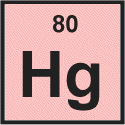
What is the name of this element?
a)
Helium
b)
Rubidium
c)
Hydrogen
d)
Mercury
165.
Which one of these is not a noble gas?
a)
Helium
b)
Radon
c)
Iodine
d)
Krypton
166.
What is the atomic number of Oxygen?
a)
6
b)
7
c)
8
d)
9
167.
Which one of these is the symbol for lead?
a)
Rb
b)
Pb
c)
Li
d)
Au
168.
What element is being Oxidized?
a)
N
b)
H
c)
O
d)
S
169.
What element is being Reduced?
a)
N
b)
H
c)
O
d)
S
170.
What element is being Oxidized?
a)
I
b)
H
c)
S
d)
O
171.
What is oxidation number of H in H2O?
a)
0
b)
-2
c)
-1
d)
+1
172.
What is oxidation number of Cr in Cr2O72-?
a)
-2
b)
+2
c)
+6
d)
+12
173.
What is oxidation number of H in CaH2?
a)
+1
b)
-1
c)
0
d)
+2
174.
What is oxidation number of O in O2 ?
a)
0
b)
-2
c)
+1
d)
+2
175.
If in a reaction, copper is reduced; its number of electrons has:
a)
Increased
b)
Decreased
c)
Remained Constant
d)
Varies Randomly
176.
If an atom loses electrons during a chemical reaction, the atom was:
a)
Oxidized
b)
Reduced
c)
Neutralized
d)
Precipitated