wayground logo

Free Printable Worksheets

Font size

S
M
L
XL
Worksheets

Biology Unit 5 Genetics Review

Total questions: 60

Worksheet time: 3hrs 0mins

Name
Class
Date
1.

Different forms of a gene.

a)

alleles

b)

DNA

c)

proteins

d)

RNA

2.

An organism’s set of genes that determine traits

a)

Genotype

b)

Phenotype

3.

An organism’s set of observable traits

a)

Genotype

b)

Phenotype

4.

An allele that codes for the phenotype we see, and masks the allele that codes the other phenotype.

a)

dominant

b)

recessive

c)

genotype

d)

phenotype

5.

An allele that codes for a phenotype we only see when it is homozygous.

a)

genotype

b)

phenotype

c)

dominant

d)

recessive

6.

What's the probability an offspring will have the dominant brown fur in this Punnett Square

a)

25%

b)

50%

c)

75%

d)

100%

7.

differences in the alleles found in individuals of a population can be described as

a)

phenotype

b)

genotype

c)

gene

d)

genetic variation

8.
If a plant with the genotype Pp is allowed to self-pollinate, what are the possible genotypes of the offspring
a)
PP, pp, pp, PP
b)
Pp, Pp, Pp, Pp
c)
Pp, PP, pp, PP
d)

PP, Pp, Pp, pp

9.

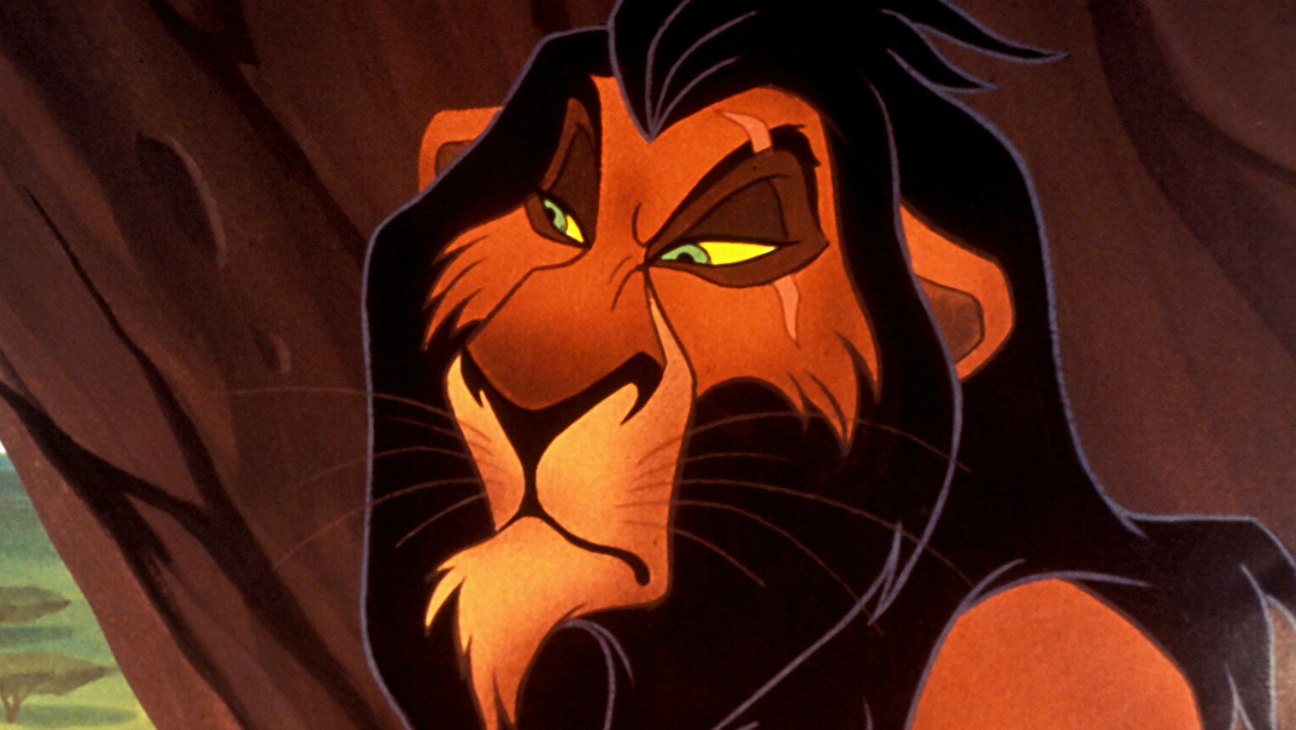
Why does Scar have a scar but his brother Mufasa does not?

a)

Mufasa did not inherit it

b)

The scar gene skipped a generation

c)

The scar is an environmental trait

d)

Mufasa is not his brother

10.
In pea plants, the tall allele is dominant to the short allele. What key would demonstrate this?
a)
Tall = T
Short = S
b)
Tall = T
Short = t
c)
Tall = t
Short = T
d)
Tall = TT
Short = tt
11.
A heterozygous long-tusked elephant is crossed with a homozygous recessive short-tusked elephant. What is the probability of the offspring having short tusks?
a)
0%
b)
25%
c)
50%
d)
75%
12.
Leonardo bet his friend Olivet that two heterozygous green-eyed sea monsters could not have a recessive blue-eyed baby sea monster. Olivet said they can have a blue-eyed sea monster.
Who wins the bet?
a)
Leonardo
b)
Olivet
c)
Both
d)
Neither
13.

An ewok couple have 12 babies. 9 ewok babies have black fur, while 3 ewok babies have brown fur. What are the probable genotypes of the parents?

a)

BB and bb

b)

BB and Bb

c)

Bb and Bb

d)

Bb and bb

14.
Jabba the Hutt has finally decided to settle down and have a family. He has undergone genetic testing and learned that he is heterozygous for Hutt Fungal Syndrome, which is caused by recessive alleles. He is worried that his children might suffer from this syndrome. His Hutt mate has undergone genetic testing and discovered she is homozygous dominant for the syndrome. Should Jabba be worried?
a)
Yes
b)
No
15.
What gamete possibilities could come from this parent's genotype?
a)
AB, AB, aB, aB
b)
Ab, AB, Ab, ab
c)
Ab, Ab, Ab, Ab
d)
AB, aB, ab, aB
16.

What goes in box 3

a)

Aabb

b)

AABB

c)

AAbb

d)

aaBb

17.
Based off this punnett square, what fraction of the offspring will have wrinkled, yellow seeds?
a)
9/16
b)
3/16
c)
1/16
d)
16/16
18.
What genotype is missing from this Punnett Square?
a)
RrYy
b)
RRYY
c)
rryy
d)
RrYY
19.

This image is an example of a _____________ cross.

a)

Monohybrid

b)

Dihybrid

c)

Purebred

d)

Pure Breeding

20.
What proportion of the offspring in Figure 11-4 would be expected to have white, smooth hair?
a)
9/16
b)
3/16
c)
4/16
d)
1/16
21.

A white mouse with red eyes is crossed with a black mouse with brown eyes. The white mouse is recessive for both of its traits. The black mouse is dominant for both of its traits.

This cross would be

a)

BBEE x bbee

b)

BBEe x BbEe

c)

BbEE x BbEe

d)

BBee x BBEE

22.

What is a gamete? (Select all that apply)

a)

Haploid

b)

Diploid

c)

Egg cell

d)

Skin cell

e)

Sperm cell

23.
Hemophilia is a recessive x-linked disorder.
Which genotype represents a male with hemophilia?
a)
XHXh
b)
XhXh
c)
XHY
d)
XhY
24.
In a pedigree, what shape represents a male?
a)
circle
b)
square
c)
triangle
d)
diamond
25.
Imagine the shaded individuals are those WITH a "hitchhikers thumb." What must be the genotype of individual II-1?
a)
TT
b)
tt
c)
Tt
d)
Impossible to tell
26.
Is this trait (the shaded individuals) dominant or recessive?
a)
dominant
b)
recessive
27.
What do we use pedigrees for?
a)
To look at families
b)
To make determinations about the offspring
c)
To track traits in families
d)
Nothing
28.
Why do all the daughters in Generation II carry the colorblind gene?
a)
Because mom passed on the gene.
b)
Because dad passed on the X chromosome.
c)
Because their brother has it.
d)
Because their brother gave it to them.
29.

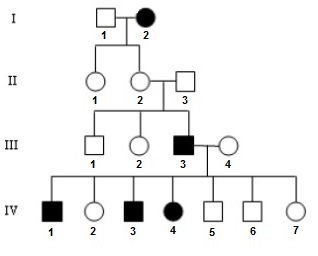
If this pedigree shows a recessive disorder, what MUST the genotype of individual 4 be?

a)

HH

b)

Hh

c)

hh

30.
How many generations are shown in this pedigree?
a)
1
b)
2
c)
3
d)
4
31.
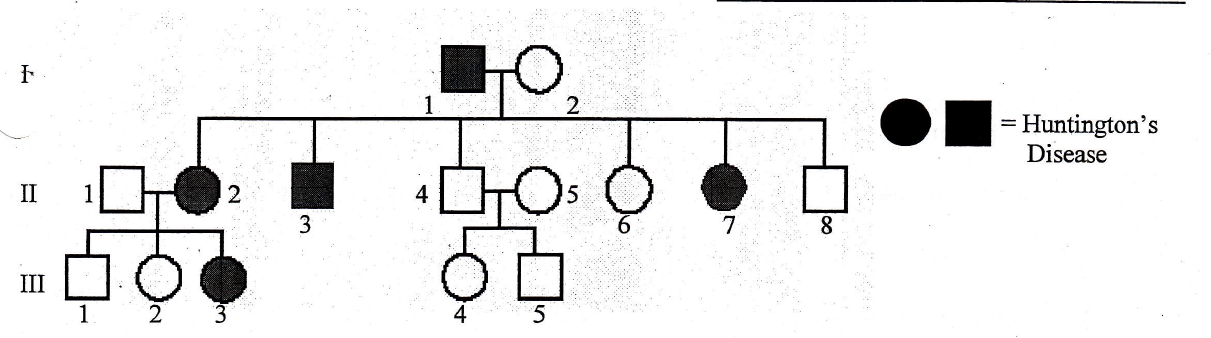
There are no carriers for Huntington's Disease- you either have it or you don't. Is Huntington's disease caused by a dominant or recessive trait?
a)
Dominant
b)
Recessive
32.
How are individuals I-2 and III-5 related?
a)
Grandpa and grandson
b)
Mom and son
c)
Uncle and nephew
d)
Grandma and grandson
33.
This pedigree represents the inheritance of hemophilia in this family. How many of the females have the hemophilia trait?
a)
8
b)
5
c)
2
d)
3
34.
Huntington's Disease is a dominant trait.
What is the correct genotype for individual I-2?
a)
HH
b)
Hh
c)
hh
d)
H_
35.

Jim has type AB blood. It is possible for his dad to be type O.

a)

True

b)

False

36.
If one of your parents is blood type A and the other is type B, which of the following blood types would you likely be?
a)
O
b)
AB
c)
A or B
d)
Any
37.
An individual's blood type is determined by
a)
environment
b)
genetics
c)
both environment and genetics
d)
your children's blood type
38.

What is the probability two parents, both with Type A blood, could have offspring with type O blood?

a)

0 %

b)

75%

c)

50%

d)

25%

39.
The sex of a child is determined by
a)
whether the father's sperm contains an x or y chromosome
b)
whether the mother's egg contains an x or y chromosome
c)
the age of the parents
40.
Hemophilia is a recessive x-linked disorder.
Which genotype represents a female who is a carrier for hemophilia?
a)
XHXh
b)
XhXh
c)
XHXH
d)
XhY
41.
Colorblindness is a sex-linked recessive disorder. If the daughter of a couple is colorblind, what are the two possible genotypes of her mother?
a)
XAXA and XAXa
b)
XAXA and XaXa
c)
XAXa and XaXa
d)
Cannot be determined
42.
What percentage of the female offspring will be a carrier for this recessive disease?
a)
0%
b)
50%
c)
100%
d)
25%
43.
Vitamin D resistant rickets (deformed bone formation) is a sex-linked DOMINANT trait.  According to the Punnett square, what percentage of female offspring will have the disorder?
a)
0%
b)
25%
c)
50%
d)
100%
44.
This is an example of ___________?
a)
Incomplete dominance
b)
Co-Dominance
45.
This is an example of ___________.
a)
 Incomplete Dominance
b)
 Codominance
46.
How are Incomplete Dominance and Co Dominance different than a normal Mendelian cross?
a)
There is no difference
b)
The heterozygous genotype has a unique phenotype
c)
There is no heterozygous genotype
d)
There is only one phenotype regardless of genotype.
47.

Radishes come in three colors, red, pink and white.


If you crossed a white radish with a pink radish, how many red radishes could you get?

a)

3 red

b)

2 red

c)

1 red

d)

none

48.

A beautiful species of flower comes in three colors: red, white, and white with red stripes.

What would we get if we crossed a red flower with a white flower?

a)

1 red, 2 striped, 1 white

b)

2 red, 2 white

c)

4 striped

d)

1 red, 1 striped, 2 white

49.

During what process does independent assortment and segregation of alleles occur?

a)

Mitosis

b)

Meiosis

c)

Fertilization

50.

What is the relationship between phenotype and genotype?

a)

The phenotype determines the genotype.

b)

The genotype determines the phenotype.

c)

There is no relationship between phenotype and genotype.

51.

A Punnett square shows all of the following EXCEPT

a)

All possible results of a genetic cross.

b)

The possible genotypes of the offspring.

c)

The alleles in the gametes of each parent.

d)

The actual genotypes of the offspring.

52.
What causes genetic variation in meiosis?
a)
chromosomes lining up
b)
crossing over of chromosomes
c)
separation of chromosomes
d)
chromosomes pulling apart
53.
Diploid Cells are represented by
a)
2n
b)
n
c)
4n
d)
1/2 n
54.
If the Diploid number of Carrots is 18, the haploid number is
a)
18
b)
9
c)
27
d)
36
55.
The chromosomes that pair up during meiosis, are called __________ chromosomes.  
a)
homozygous 
b)
asexual
c)
homologous
d)
genes
56.
Crossing over creates
a)
male genotype
b)
genetic variation (differences)
c)
DNA replication
d)
mitosis
57.
Which of the following best describes meiosis?
a)
It is carried out in all tissues theat require cell replacement
b)
It occurs only in cells in the reproductive structures of an organism
c)
It happens in all of the tissues except the brain and spinal cord
d)
It is the first stage of mitosis
58.
products of meiosis are genetically
a)
different
b)
identical
59.
Which of the following represents chromosome # during fertilization?
a)
n+n=2n
b)
n=n
c)
2n=n+n
d)
2n=2n
60.
How many daughter cells does Meiosis create?
a)
2
b)
4
c)
8
d)
1