wayground logo

Free Printable Worksheets

NEW

Font size

S
M
L
XL
Worksheets

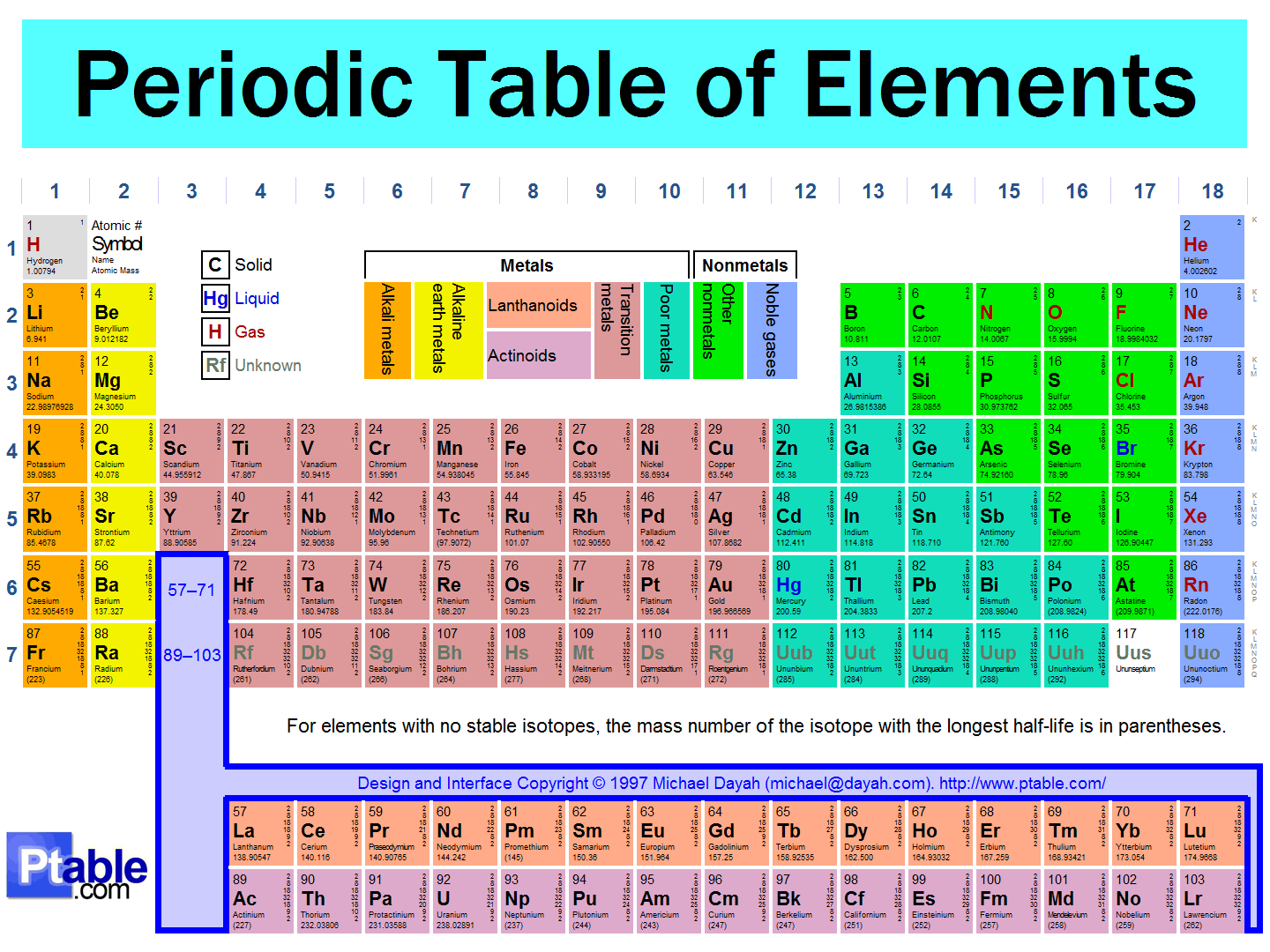
Periodic Table

Total questions: 40

Worksheet time: 25mins
Name
Class
Date
1.

The vertical (up and down) columns in the Periodic Table are called

a)

groups

b)

towers

c)

periods

d)

atomic numbers

2.
The Modern Periodic Table of Elements is arranged by
a)
atomic mass
b)
atomic number
c)
valence electrons
d)
number of isotopes
3.
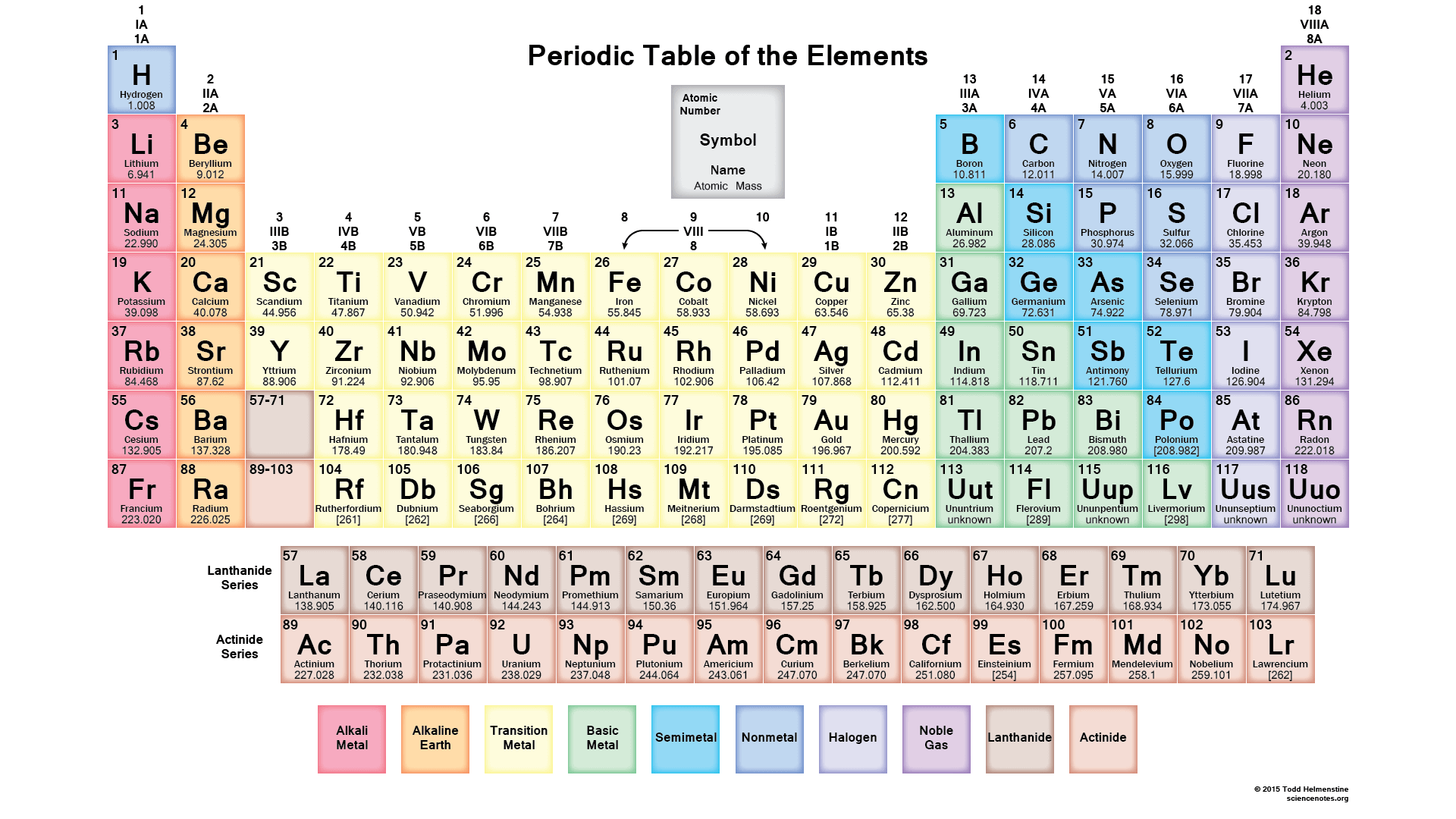
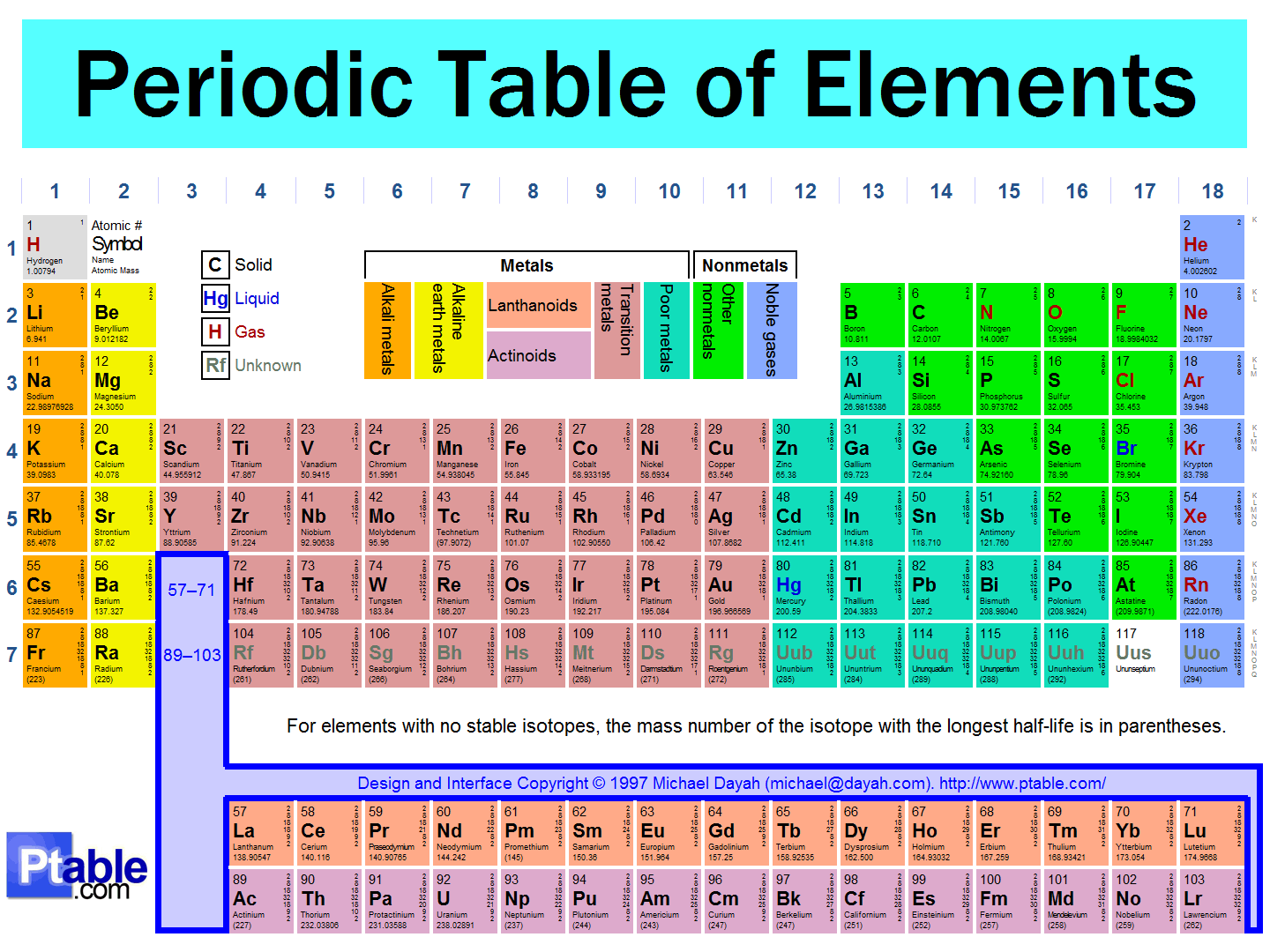
Sodium (Na) is found in period 
a)
3
b)
2
c)
4
d)
1
4.
Sodium (Na) is found in group 
a)
1
b)
2
c)
3
d)
4
5.
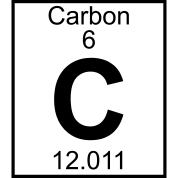
What does the 6 represent?
a)
atomic mass
b)
atomic number
c)
element name
d)
chemical symbol 
6.
What does 12.011 represent?
a)
atomic mass
b)
atomic number
c)
element name
d)
chemical symbol 
7.
These are found on the Periodic Table.
a)
Compounds
b)
Elements
c)
Mixtures
8.

The horizontal (side to side) rows in the Periodic Table are called

a)

groups

b)

families

c)

periods

d)

atomic numbers

9.

a grouping of elements based on similar properties, arranged by columns in the periodic table; also known as a group

a)

family

b)

period

c)

row

d)

isotope

10.
Which one of these is not a noble gas?
a)
Helium
b)
Radon
c)
Iodine
d)
Krypton
11.
What family is Sodium a part of?
a)
Transition Metals
b)
Halogens
c)
Alkali Metals
d)
Alkaline Earth Metals
12.
What family is silver a part of?
a)
Transition Metals
b)
Noble Gases
c)
Alkali Metals
d)
Alkaline Earth Metals
13.
What family is Cadmium a part of?
a)
Noble Gases
b)
Metalloids
c)
Transition Metals
d)
Actinoids
14.
Silicon is a 
a)
Metal
b)
Nonmetal
c)
Metalloid
d)
Halogen
15.
__________ would have some characteristics of metals and some characteristics of nonmetals.
a)
Gold
b)
Sodium
c)
Arsenic
d)
Bismuth
16.
___________ is the only metal that is a liquid at room temperature.
a)
Platinum
b)
Water
c)
Tin
d)
Mercury
17.
Which element that starts with a B is an Alkaline Earth Metal?
a)
Barium
b)
Boron
c)
Bread
d)
Bromine
18.

what is the biggest group on the table

a)

metals

b)

nonmetals

c)

metaloids

d)

halogens

19.

how many rows are on the table

a)

4

b)

5

c)

6

d)

7

20.

what is the name of group number 1

a)

halogens

b)

noble gases

c)

alkali

d)

alkaline earth

21.

what is the name of group number 2

a)

transition metals

b)

halogens

c)

metaloids

d)

alkaline earth

22.

what is the big group of metals called found within the metals

a)

transition metals

b)

nonmetals

c)

noble gases

d)

halogens

23.

where are the metaloids found

a)

far left, vertical

b)

stair step/diagonal

c)

far right horizontal

d)

at the bottom

24.

what group number are the halogens

a)

8

b)

1

c)

2

d)

7

25.

what group number are the noble gases

a)

17

b)

18

c)

14

d)

15

26.
What element is will have the most similar physical and chemical properties to the element Sulfur (S)?
a)
Carbon (C)
b)
Phosphorous (P)
c)
Oxygen (O)
d)
Neon (Ne
27.
What element is will have the most similar physical and chemical properties to the element Lithium (Li)?
a)
Sodium (Na)
b)
Magnesium (Mg)
c)
Beryllium (Be)
d)
Calcium (Ca)
28.
What element is will have the most similar physical and chemical properties to the element Bromine (Br)?
a)
Fluorine (F)
b)
Carbon (C)
c)
Krypton (Kr)
d)
Selenium (Se)
29.
What element is will have the most similar physical and chemical properties to the element Nitrogen (N)?
a)
Phosphorous (P)
b)
Carbon (C)
c)
Oxygen (O)
d)
Sulfur (S)
30.
Elements that are arranged in __________ have the most similar physical and chemical properties to each other.
a)
periods
b)
groups
31.

found in group one of the periodic table; highly reactive

a)

Non-metals

b)

Transition Metals (Groups 3-12)

c)

alkali metals (group 1)

d)

metalloids (semimetals)

32.

not able to conduct heat or electricity, little to no metallic luster

a)

Non-metals

b)

metals

c)

atomic mass

d)

Neutron

33.

Found in group two of the periodic table; highly reactive

a)

period

b)

Alkali Earth Metals

c)

metalloids

d)

alkali metals

34.

The electrons in the outermost shell (main energy level) of an atom; these are the electrons involved in forming bonds

a)

alkali metals (group 1)

b)

Halogens (Group 17)

c)

atomic number

d)

valence electrons

35.

Halogens (Group 17)

a)

gas at room temperature, low boiling point.

b)

most reactive nonmetals

c)

The electrons in the outermost shell (main energy level) of an atom; these are the electrons involved in forming bonds

d)

Number of protons and neutrons

36.

gas at room temperature, low boiling point.

a)

atomic mass

b)

atomic number

c)

Non-metals

d)

noble gases

37.

metalloids (semimetals)

a)

Elements that occur in vertical columns on the periodic table.

b)

an element that has both metallic and nonmetallic properties

c)

not able to conduct heat or electricity, little to no metallic luster

d)

found in group one of the periodic table; highly reactive

38.

How many valence electrons does a carbon atom have?

a)

8

b)

4

c)

2

d)

6

39.

Why are halogens so reactive?

a)

They want to get rid of their only valance electron

b)

They only need one more electron

c)

They are non reactive, they have a full shell

40.
What group of elements don't have individual names?
a)
Alkaline-earth Metals
b)
Transition Metals
c)
Alkali Metals
d)
Halogens