
 Worksheets
EES Meteorology - Fronts
Total questions: 39
Worksheet time: 22mins
An air mass has similar
temperature and moisture
cold and wind
rain and temperature
warm and dry
What happens when two air masses meet?
a hurricane occurs
a dog barks
a front is created
warm air enters

Which front does this show?
cold front
warm front
stationary front
occluded front
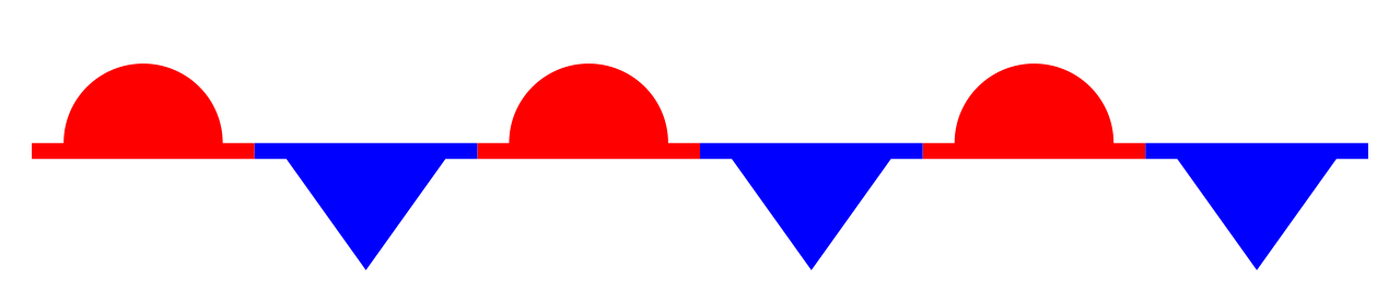
What is the name this front?
warm front
cold front
stationary front
occluded front
cold air pushes into warm air
cold
warm
stationary
occluded
Fast temperature drop with short-lived, heavier rain.
cold
warm
stationary
occluded
Warm air pushes into cold air
cold
warm
stationary
occluded
Temp warms, then cools. Significantly heavier rain due to the combination of two fronts.
cold
warm
stationary
occluded
Warm and cold air meet, but neither pushes the other out of the way. Usually lighter rain that lasts for a long time.
cold
warm
stationary
occluded
Slow temperature rise with long-lasting, lighter rain.
cold
warm
stationary
occluded
When a warm front occurs, what type of weather does it bring?
thunderstorms
warmer
hail
clouds and heavy rains
Which front is there little to no movement?
warm front
cold front
occluded front
stationary front
What kind of front(s) commonly result(s) in thunderstorms? (select all that apply)
warm front
cold front
occluded front
stationary front
fast-moving cold front pushes into existing slow-moving warm front
cold
warm
stationary
occluded
Warm air is forced to rise (select all that apply)
cold
warm
stationary
occluded
A wide blanket of stratus clouds is created.
This front moves the slowest (of these options).
cold
warm
occluded

A _____________ weather front occurs when a cold air mass moves forward, pushing the warm air mass up.
Cold
Warm
Stationary
Occluded

A _____________ weather front occurs two cold air masses meet and push/force the warm air in the middle upwards.
Cold
Warm
Stationary
Occluded
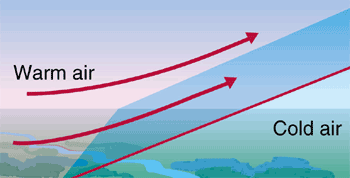
Why does warm air rise above cold air?
Warm air is less dense
Warm air is more dense
Cold air is stronger than warm air

Which front is in this picture?
Warm front
Cold front
stationary front
occluded front

A _____________ weather front occurs when a cold air mass and a warm air mass meet, but cannot move one another so they both stay still for several days.
Cold
Warm
Stationary
Occluded

What type of front is over Texas?
warm front
cold front
stationary front
occluded front
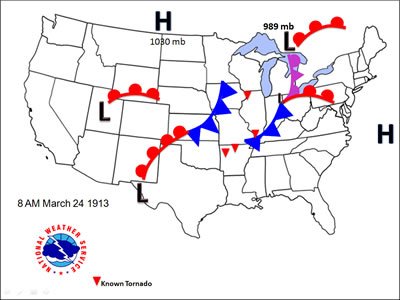
What type of front is over Michigan and the Great Lakes?
Warm front
Cold front
Occluded front
Stationary Front

What location represents a cold air mass? (select all that apply)
A
B
D
E
What location represents a warm air mass? (select all that apply)
A
B
C
D
E
Point D is moving toward what direction?
North
South
East
West
Point B is moving toward what direction?
North
South
East
West
Point E is moving toward what direction?
Northeast
Southeast
South
North
This L pressure system is moving in what direction?
clockwise
counterclockwise
What type of front is about to form at the (L) in the northern part of the map?
cold
warm
stationary
occluded
E
Which location is currently cloudy and warm, but about to become colder, very quickly?
A
B
C
D
E

