
NEW
Font size
 Worksheets
Adv. Bio. Ch. 4 Study Guide
Total questions: 80
Worksheet time: 44mins
The type of intercellular junction that functions as a rivet or "spot weld" is a(n)
desmosome
gap junction
tight junction
ion channel.
The type of intercellular junction that forms tubular channels is
a desmosome.
a gap junction.
a tight junction.
found in the blood-brain barrier.
Intercellular junctions connect
cell membranes.
cell nuclei.
blood cells.
microtubules.
The type of intercellular junction that consists of fused membranes is a(an
desmosome.
gap junction.
tight junction.
ion channel.
Epithelial tissue functions in
secretion, absorption, and protection.
contraction, movement, and reflexes.
reacting to stimuli, thinking, and remembering.
nourishing and hydrating tissues.
The tissue through which gases are exchanged between the blood and the air in the lungs is
stratified squamous epithelium.
simple squamous epithelium.
simple cuboidal epithelium.
simple columnar epithelium.
A (An) ______ gland does not branch before reaching the glandular cells or secretory part.
simple
compound
tubular
alveolar
A (An) _______ gland branches repeatedly before reaching the glandular cells or secretory part.
simple
compound
tubular
alveolar
Areolar tissue contains
many adipocytes filled with fat.
collagenous fibers, elastic fibers, and gel-like ground substance.
chondrocytes and lacunae.
osteocytes, osteoblasts, and canaliculi.
Tendons and ligaments are composed primarily of
dense irregular tissue.
reticular connective tissue.
muscle tissue.
dense regular connective tissue.
Cartilage tissues are likely to be slow in healing following an injury because
chondrocytes cannot divide.
chondrocytes do not have direct blood supplies.
the intercellular material is semisolid.
cartilage cells are immersed in fluids.
Bone cells form concentric circles around longitudinal tubes called
osteons.
central canals.
lacunae.
canaliculi.
_______ produce connective tissue fibers.
Macrophages
Mast cells
Fibroblasts
Osteoblasts
A general characteristic of connective tissue is that it
consists of cells with much extracellular material.
has no blood supply.
covers the outside of organs.
lines organs.
Adipose tissue is a form of
epithelium.
muscle.
nervous tissue.
connective tissue.
Epithelial membranes are typically composed of
connective tissue and underlying muscle tissue.
epithelium and underlying connective tissue.
connective tissue and underlying epithelium.
epithelium and underlying muscle tissue.
A _______ membrane lines tubes and cavities that open to the outside of the body.
serous
cutaneous
synovial
mucous
A serous membrane consists of a
layer of simple squamous epithelium and a thin layer of areolar tissue.
layer of pseudostratified epithelium and a thick layer of areolar tissue.
layer of simple squamous epithelium and a thick layer of dense connective tissue.
layer of simple squamous epithelium and a thick layer of cartilage.
"Cutaneous membrane" refers to
skin
bones
cartilage
mucus
There are __ types of muscle cells.
2
3
4
5
Involuntary muscle tissues are
smooth muscle tissue and skeletal muscle tissue.
cardiac muscle tissue and skeletal muscle tissue.
smooth muscle tissue and cardiac muscle tissue.
smooth muscle tissue, skeletal muscle tissue, and cardiac muscle tissue.
Muscle cells with more than one nucleus are
smooth muscle cells and skeletal muscle cells.
cardiac muscle cells and smooth muscle cells.
skeletal muscle cells only.
smooth muscle cells only.
The muscle tissue that can be consciously controlled is
smooth muscle tissue.
skeletal muscle tissue.
intestinal muscle tissue.
cardiac muscle tissue.
Cardiac muscle is found in the wall of the
stomach
intestine
heart
blood vessels
Smooth muscle is found in the wall of the
stomach.
intestine.
stomach and intestine.
kidney and liver.
The type of muscle tissue in blood vessels is
cardiac muscle tissue.
smooth muscle tissue.
skeletal muscle tissue.
voluntary muscle tissue.
Neurons can send messages to
only other neurons.
only other neurons and neuroglia.
other neurons, glands, and muscles.
other neurons and skeletal muscle only.
Functions of neuroglia include which of the following?
They guide neurons to muscles, then pass neurotransmitters to the muscle cells.
They serve as glue and scaffolding for neurons but have no physiological role.
They sense changes in the environment and respond by sending electrical impulses.
They support and bind nervous tissue and provide nutrients and growth factors to neurons by connecting them to blood vessels.
Which of the following is not true about the extracellular matrix?
It is the same in all tissues.
In epithelium it consists of a basement membrane and interstitial matrix.
In many body parts it includes various glycoproteins.
It may include integrins.
Tissues are groups of cells that have a common overall function, yet are distinctive in their characteristic cell types and the molecules that the cells produce.
TRUE
FALSE
The wall of the heart is made up of three layers, including the middle layer responsible for the heart's pumping action. These layers are all the same tissue type, epithelium.
TRUE
FALSE
Intercellular junctions include gap junctions, tight junctions, and desmosomes.
TRUE
FALSE
Usually epithelial tissues do not have blood vessels.
TRUE
FALSE
The tissue that forms the outermost layer of the skin is a type of connective tissue
TRUE
FALSE
Blood is composed of red blood cells, white blood cells, and platelets suspended in a fluid extracellular matrix called plasma.
TRUE
FALSE
A synovial membrane is entirely connective tissue.
TRUE
FALSE
Skin is a mucous membrane.
TRUE
FALSE
Cardiac muscle can function without nervous stimulation but skeletal muscle cannot.
TRUE
FALSE
A neuron is a type of neuroglia.
TRUE
FALSE

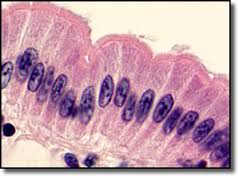


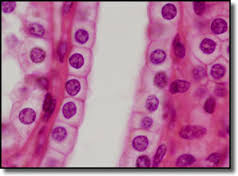
The lining of the bladder contains which type of epithelium?
Simple Cuboidal
Simple Columnar
Transitional
Psuedostratified Columnar

Simple squamous cells are found lining the alveoli of the lungs due to being small and flat, what is likely their function?
Diffusion
Secretion
Absorption
Fight infection

Goblet cells secrete
oil
sweat
mucus
acid

Which type of membrane junctions allow for transfer of nutrients or waste and communication between cells?
Tight junctions
Desmosomes
Gap junctions


Which type of cellular junction forms a "seal" that won't leak between cells?
Tight junctions
Desmosomes
Gap Junctions

This junction are anchoring junctions that use protein filaments to buttonlike thickenings of adjacent membranes.
Desmosomes
Tight Junctions
Gap Junctions
Plasmodesmata


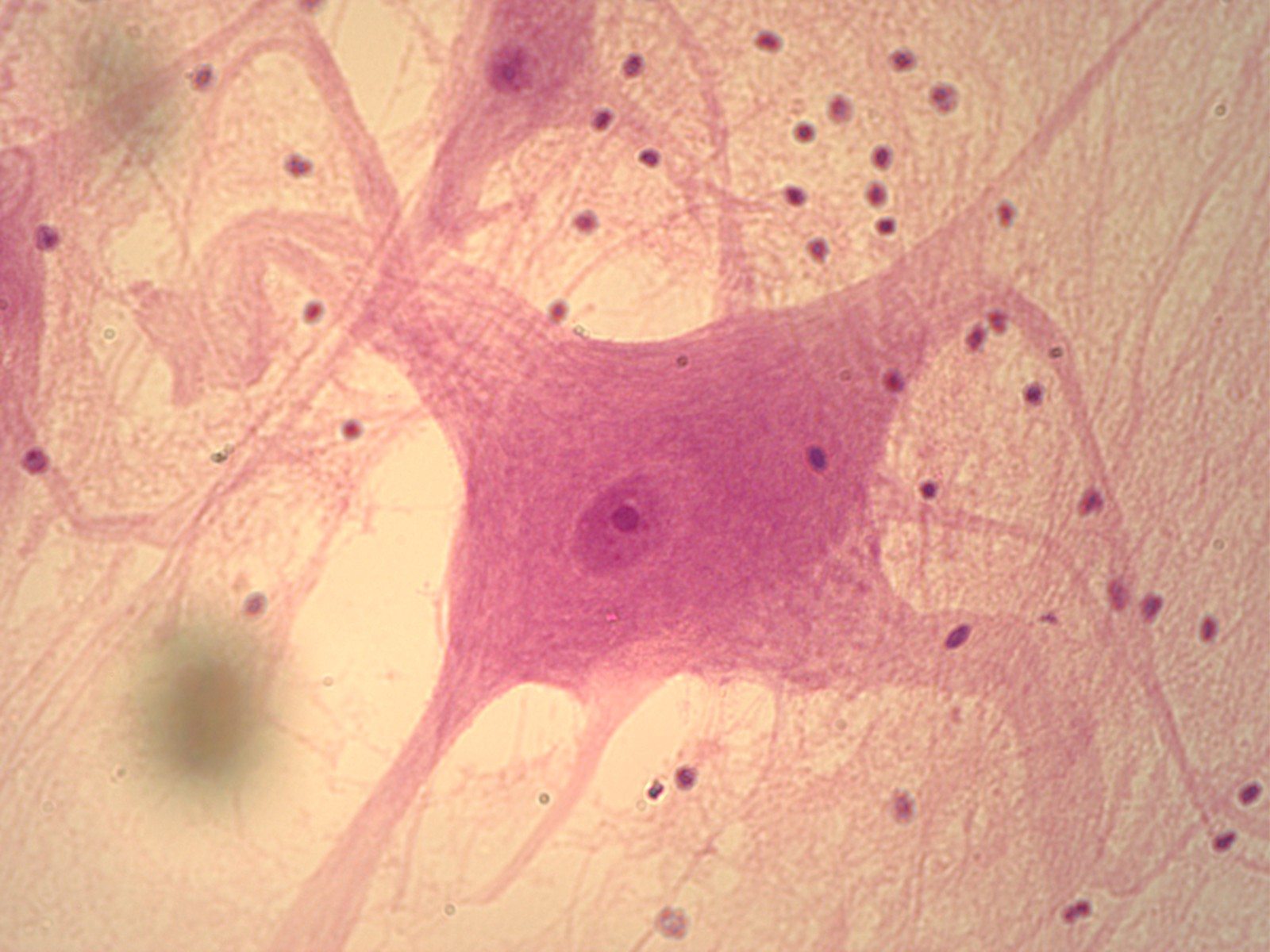


Platelets are small cellular fragments that have no nucleus. Their job is to clot together at tears and cuts in the skin to prevent bleeding out of the organism. Which type of junction would you expect to form between platelets?
Gap
Tight
Adhering
Plasmodesmata

