NEW
Font size
 Worksheets
Evolution
Total questions: 63
Worksheet time: 1hrs 22mins
Which of the following assumptions or observations is NOT part of Darwin's idea of natural selection?
Whether an organism survives and reproduces is almost entirely a matter of random chance.
Heritable traits that promote successful reproduction should gradually become more common in a population.
Populations produce more offspring than their environment can support.
Organisms compete for limited resources.
A dog breeder wishes to develop a breed that does not bark. She starts with a diverse mixture of dogs. Generation after generation, she allows only the quietest dogs to breed. After 30 years of work she has a new breed of dog with interesting traits, but on average, the dogs still bark at about the same rate as other dog breeds. Which of the following would be a logical explanation for her failure?
There is no variation for the trait (barking).
The tendency to bark is not a heritable trait.
The selection was artificial, not natural, so it did not produce evolutionary change.
There was no selection (differential reproductive success) related to barking behavior.
Which of the following statements best describes the process of natural selection?
inheriting traits that improve reproductive success
inheritance of acquired characteristics
a learned response due to need
a process of constant improvement, leading eventually to perfection
If you were just diagnosed with a serious bacterial disease, which of these would predict the most positive outcome for treatment? The disease was acquired
in a hospital, where most of the bacteria are probably already weakened by antibiotics in the environment.
in a livestock barn where the animals have been treated with antibiotics.
in a big city where antibiotics are routinely prescribed by doctors.
in a remote, sparsely populated area where the bacteria have not been exposed to antibiotic drugs.
A news article discussing the evolution of domestic dogs from wolves included this statement: "On its way from pack-hunting carnivore to fireside companion, dogs learned to love—or at least live on—wheat, rice, barley, corn, and potatoes." What is a more scientifically accurate way to state what happened with dogs?
Dogs mutated to be able to eat wheat, rice, barley, corn, and potatoes.
Some wolves may have had variants/variations/mutations in their digestion that allowed them to eat wheat, rice, barley, corn, and potatoes and so were able to survive with humans.
Being around humans represented an advantage, so wolves were able to take advantage of that by changing their digestion to be able to eat wheat, rice, barley, corn, and potatoes.
Dogs were created at the same time as wolves.
During a study session about evolution, one of your fellow students remarked, "The giraffe stretched its neck while reaching for higher leaves; its offspring inherited longer necks as a result." Which statement is most likely to be helpful in correcting this student's misconception?
Characteristics acquired during an organism's life are generally not passed on through genes.
Spontaneous mutations can result in the appearance of new traits.
Only favorable adaptations have survival value.
Disuse of an organ may lead to its eventual disappearance.
Which of these conditions are always true of populations evolving due to natural selection?
Condition 1: The population must vary in traits that are heritable.
Condition 2: Some heritable traits must increase reproductive success.
Condition 3: Individuals pass on most traits that they acquire during their lifetime.
Condition 1 only
Condition 2 only
Conditions 1 and 2
Conditions 2 and 3
A farmer uses triazine herbicide to control pigweed in his field. For the first few years, the triazine works well and almost all the pigweed dies; but after several years, the farmer sees more and more pigweed. Which of these explanations best explains what happened?
The herbicide company lost its triazine formula and started selling poor-quality triazine.
Natural selection caused the pigweed to mutate, creating a new triazine-resistant species.
Triazine-resistant pigweed has less-efficient photosynthesis metabolism.
Triazine-resistant weeds were more likely to survive and reproduce.
Cotton-topped tamarins are small primates with tufts of long white hair on their heads. While studying these creatures, you notice that males with longer hair get more opportunities to mate and father more offspring.
To test the hypothesis that having longer hair is adaptive in these males, you should
test whether other traits in these males are also adaptive
look for evidence of hair in ancestors of tamarins
determine if hair length is heritable
test whether males with shaved heads are still able to mate
Within six months of effectively using an antibiotic to treat the bacterial S. aureus infections in a community, all new infections were caused by a resistant strain of bacteria. How can this result best be explained?
S. aureus can resist vaccines.
A patient must have become infected with the resistant strain from another community.
In response to the drug, S. aureus learned to become drug resistant.
Some drug-resistant bacteria were present at the start of treatment, and natural selection increased their frequency.
Which of the following pieces of evidence most strongly supports the common origin of all life on Earth?
All organisms have undergone evolution.
All organisms use essentially the same genetic code.
All organisms reproduce.
All organisms show heritable variation.
Horse skeleton fossils indicate that the size of horses increased over time. Which statement best explains this fossil record?
Smaller horses bred with larger horses, creating hybrids.
Smaller horses were infected by a fatal virus early in their history.
Larger horses consumed the food supply of the smaller horses.
Larger horses produced a slightly greater number of surviving offspring.
According to fossil evidence, whales evolved from 4-legged ancestors. The modern baleen whale has forelimbs, but inspection of its skeleton reveals only tiny vestigial (left over from ancestors) hind limbs. What is the best explanation for this loss of hind limbs in the baleen whale?
The hind limbs adapted into flippers to help the whale swim faster.
Random chance and genetic drift led to the reduction in size of hind limbs.
Whales with the shorter hind limbs swam faster than those with longer hind limbs.
Some whales lost longer hind limbs to predators and passed that trait to their offspring.
Scientists have found similarities in the proteins of turtles and sharks. What do these similarities suggest about turtles and sharks.
they share the same habitat.
they share different habitats.
they share a common ancestor
they share different ancestors.
Which of the following must exist in a population before natural selection can act upon that population?
sexual reproduction
asexual reproduction
variation among individuals caused by genes
variation among individuals caused by environmental factors
After using pesticide to kill cockroaches there were many dead roaches. Days later a few live roaches were noticed. Why were there still living cockroaches after using pesticide?
A few roaches developed pesticide resistance after contact with it.
A few roaches detected the pesticide and avoided the sprayed areas.
A few roaches developed pesticide resistance through contact with other resistant roaches.
A few roaches exhibited pesticide resistance due to natural variability within the population of roaches.
Organisms on islands are different from, but closely related to similar organisms found on the nearest continent. This is evidence that
the islands were originally part of the continent
the island organisms and mainland organisms are converging
common environments are inhabited by the same organisms
island organisms and mainland organisms descended from common ancestors
Can mutations be passed down to offspring?
Yes
No

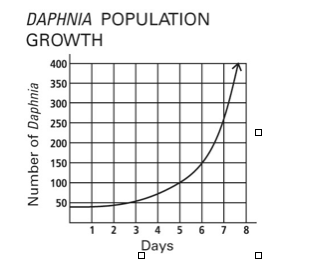
A population of rabbits grows rapidly from one year to the next. Then one year, a disease strikes approximately one fourth of the adult rabbits. The disease remains with the population in the years that follow.
As explained by Darwin’s theory, which of these conditions allows the rabbit population to evolve by natural selection?
The disease affects adult and juvenile rabbits equally.
The disease reduces the ability of the rabbits to reproduce.
Some rabbits are resistant to the disease, and they pass the resistance to their offspring.
No rabbits are resistant to the disease, and all die when the disease strikes them.

Study the graphs below that show changes in crab color at one beach.
Which of the following is most likely to have caused the change in the distribution?
A new predator arrived that preferred dark-tan crabs.
A new predator arrived that preferred light-tan crabs.
A change in beach color made medium-tan crabs the least visible to predators.
A change in beach color made medium-tan crabs the most visible to predators.
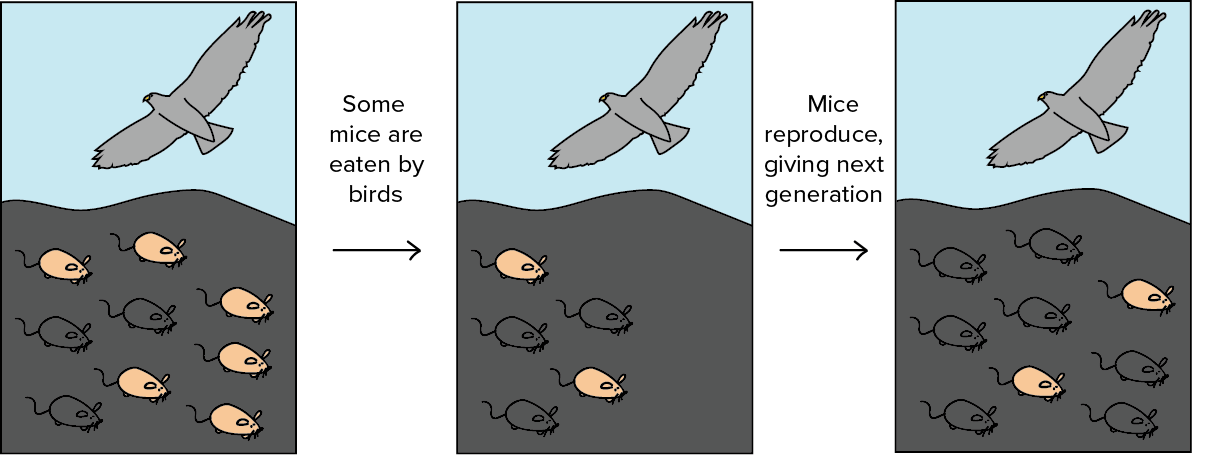
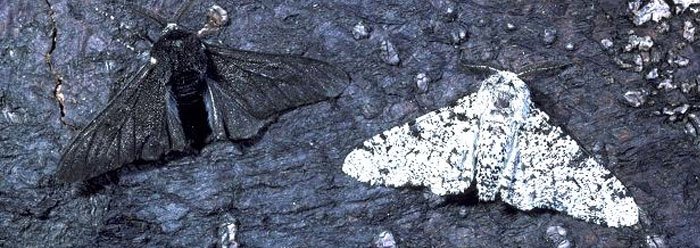
Study these pictures in sequence. Why did the mice populations change over time?
The light mice can reproduce more successfully than the dark mice
The hawks eat more dark mice than light mice because the dark mice taste better
The hawks eat more light mice than dark mice because they can see the light mice more easily
The hawks eat more dark mice than light mice because they can see the dark mice more easily

The more genetic variation a population has,
the more likely it is for some individuals to
evolve
migrate
survive
mutate
Mutations are important because they bring about
death of the organism in which they develop
genetic variation needed for a population to evolve
benefits for the individual, not for the population
changes in genotype, but not phenotype
Why is competition important for natural selection?
It shows which variations are more successful, allowing the organisms with those variations to survive.
It causes organisms, regardless of which traits they have, to die out, reducing the population size.
It causes organisms to get stronger due to having to outcompete other species.
Competition is not important for natural selection.
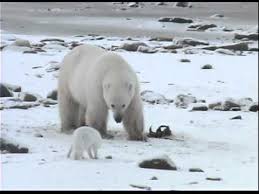
Two arctic fox are fighting with a polar bear for a sea lion carcass. One fox distracts the bear while the other eats. What type of limiting factor is the polar bear?
Predator-Prey Relationships
Competition
Herbivory Effect
Weather

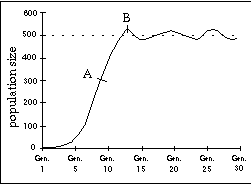

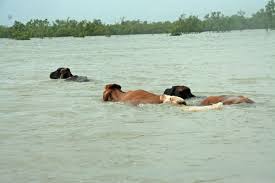
True or false, natural disasters can be considered limiting factors? Which type?
true: density independent limiting factors
false; natural disasters are not limiting factors
true: density dependent limiting factors
false: because Ms. Beall said
Limiting factors that impact the size of a population no matter how large that population is are called
Density Independent Limiting Factors
Density Dependent Limiting Factors
Carrying Capacity
Exponential Growth
A lion and a cheetah attempt to occupy the same niche. The more aggressive lion survives; the cheetah does not. Which limiting factor does this describe?
Density-Dependent: Competition
Density-Independent: Competition
Density-Dependent: Predator-Prey
Density-Independent: Predator-Prey
Coyotes cross the winter pack ice and enter Newfoundland. The moose population starts to decline. Which limiting factor does this describe?
Density-Dependent: Competition
Density-Independent: Competition
Density-Dependent: Predator-Prey
Density-Independent: Predator-Prey
A severe frost wipes out 50% of the coffee crop in Brazil. Which limiting factor does this describe?
Density-Dependent
Density-Independent
A severe flood in the Red River Valley causes a decline in the deer population. Which limiting factor does this describe?
Density-Dependent
Density-Independent
Travelers who visit a crowded African village become infected with a disease caused by parasites. Which limiting factor does this describe?
Density-Dependent
Density-Independent
Fish on a coral reef stake out their territory and chase away any younger fish that try to live there. Which limiting factor does this describe?
Density-Dependent
Density-Independent

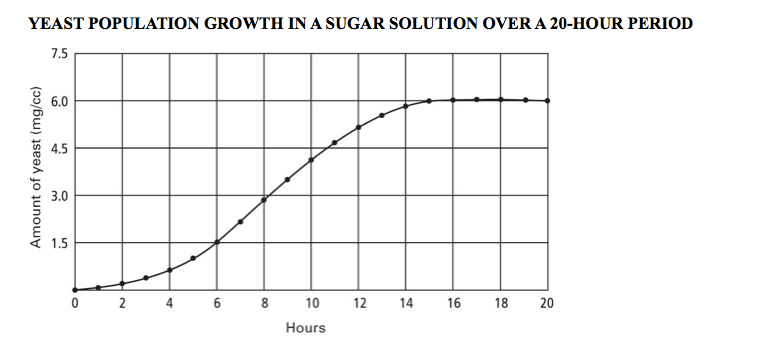
Which statement best explains section X?
competition does not occur between members of different species in the same habitat
energy is used for interbreeding between members of different species
the population has reached the carrying capacity of its environment
a predator recycles the remains of dead organisms

The harvest mouse population is
decreasing. A reason for this
decrease might be that ____.
the song sparrow population has increased.
the smelt population has decreased.
the marsh hawk population has increased.
the snail population has decreased.

What would happen if the population of hawks suddenly increased? How would it affect the other organisms in the ecosystem?
The snakes would decrease due to more hawks eating them
All of the population of organisms would increase
The biotic factors in the ecosystem would increase
The hawks predators would decrease
Which of the following could be a density-independent limiting factor in the desert?
number of prey
food supply
parasitism
rainfall

When individuals join or move into a population this is called
Aliens
migration
Immigration
Emigration
How can a population grow?
Emigration and death
Immigration and death
Immigration and birth
Emigration and birth