
 Worksheets
Cell cycle, mitosis, and meiosis
Total questions: 73
Worksheet time: 54mins
Which of the following best describes cancer?
absence of cyclins in the DNA
Multiple gene mutations on a chromosome of DNA
Uncontrolled cell growth caused by mutations in genes that control the cell cycle.
Presence of genetic defects caused by hereditary disorders.


Which of the following is not a cell that can go through mitosis?
Heart cell
skin cell
Sperm
Liver cell


metaphase
Anaphase
Telophase
Prophase


Chromosomes are made up of two identical sister _____________.
chromatin
nuclei
chromatids
genes
There are a TOTAL of ___ chromosomes in human somatic cells.
23
46
92
scientists don't know
The three stages in cell division are:
Interphase
Mitosis
Cytokenesis
All of the above
A chromosome is composed of two identical sister
centromeres
chromatids
autosomes
somatic cells
Chromosomes contain genetic information in the form of
DNA
histone
centromere
karyotypes
Sister chromatids are held together by a
histone core
chromatin
nucleosome
centromere


Spindle fibers attach to these on the chromatids and move the chromosomes around.
histone core
chromatin
nucleosome
kinetochores
The chromosomes that pair up during meiosis I, are called __________ chromosomes.


What is the difference between cell 1 and cell 2?
Chromosomes in cell 2 have been replicated, but they have not been in cell 1.
There are 4 chromosomes in cell 1 and 8 chromosomes in cell 2
When a haploid sperm fertilizes a haploid egg, the resulting cell will be diploid. What is the name of the resulting cell?
sex cell
germ cell
zygote
baby cell

In humans, the haploid number of chromosomes is ____.
23
46
69
92

In which stage of MEIOSIS does crossing over occur? (The exchange of genetic material between chromosomes in a tetrad.)
Anaphase I
Metaphase I
Prophase I
Telophase I
Which of the following are CORRECT observations about the differences between MITOSIS and MEIOSIS? (Check all that apply.)
Mitosis produces cells that identical to the parent cell.
Meiosis produces cells that have half the number of chromosomes as the parent cell.
All cells go through INTERPHASE as part of the cell cycle, whether it goes to mitosis or meiosis next.
In both types of cell division, the chromosomes are only duplicated once.
Only in Mitosis, do you see chromosomes pair up to form a tetrad.
Which part of MEIOSIS is identical to MITOSIS?
Meiosis I
Meiosis II

What phase is this?
Prophase I
Metaphase II
Anaphase I
Telophase II

What phase is this?
Telophase I
Prophase II
Metaphase I
Anaphase II

What phase is this?
Metaphase I
Prophase II
Telophase I
Anaphase II

What phase is this?
Metaphase II
Prophase II
Telophase I
Anaphase I

What phase is this?
Metaphase II
Prophase I
Telophase I
Anaphase I

What phase is this?
Metaphase II
Prophase I
Telophase I
Anaphase II

What phase is this?
Telophase II
Anaphase II
Telophase I
Anaphase I

What phase is this?
Anaphase II
Telophase I
Telophase II
Anaphase I
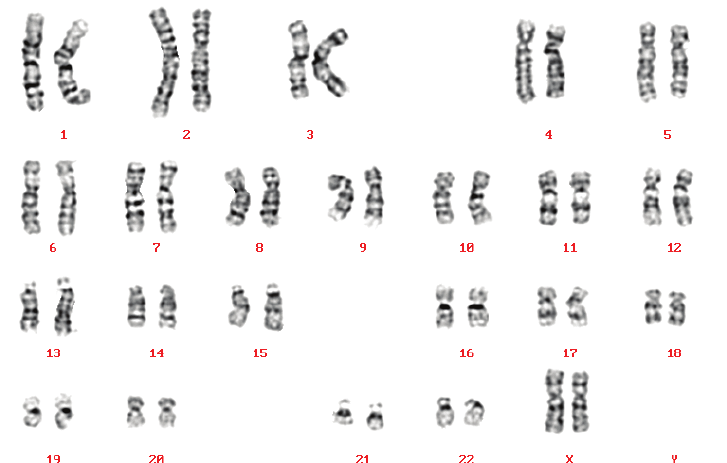
By looking at the chromosomes how can you tell that this person is biologically female?
Because there are two X chromosomes
Because there are more chromosomes than in a male
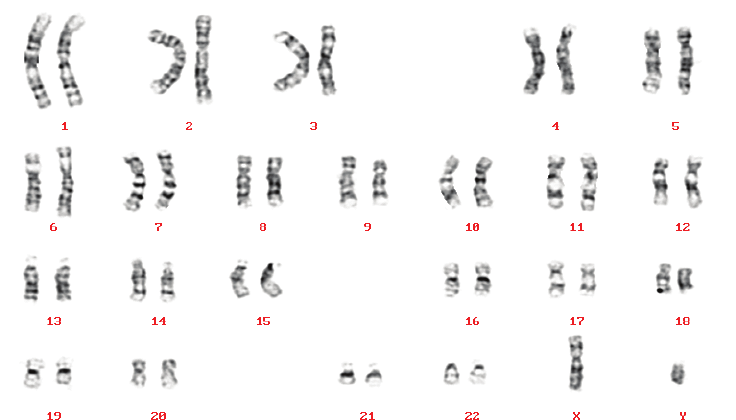
By looking at the chromosomes is this individual biologically male or female? How do you know?
Female, because they have two X chromosomes
Male, because they have one X and one Y chromosome
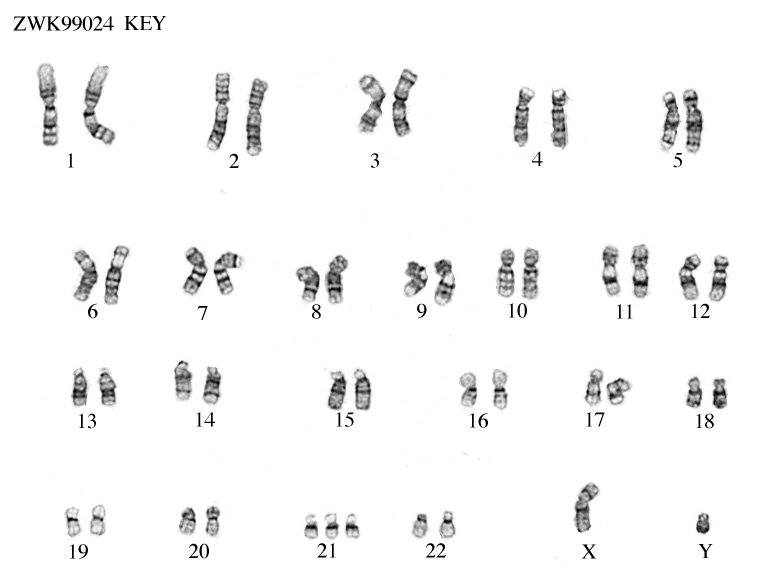
What is the mutation in this persons chromosomes?
There is only one X
7 is shaped like a hockey stick
There's an extra 21
1 is too curved
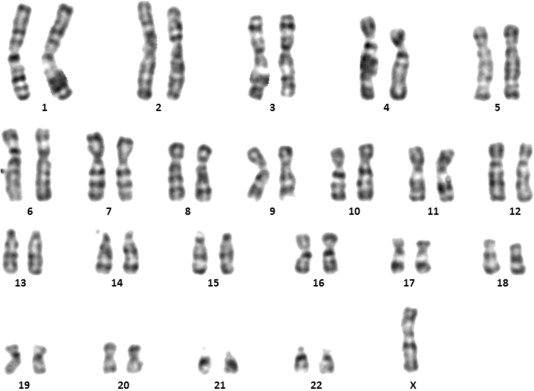
This is called Turners syndrome, can you notice the mutation in the chromosomes?
Both chromosomes 1 are bent
There are too many chromosomes
There are too many of chromosome 3
There is no Y chromosome
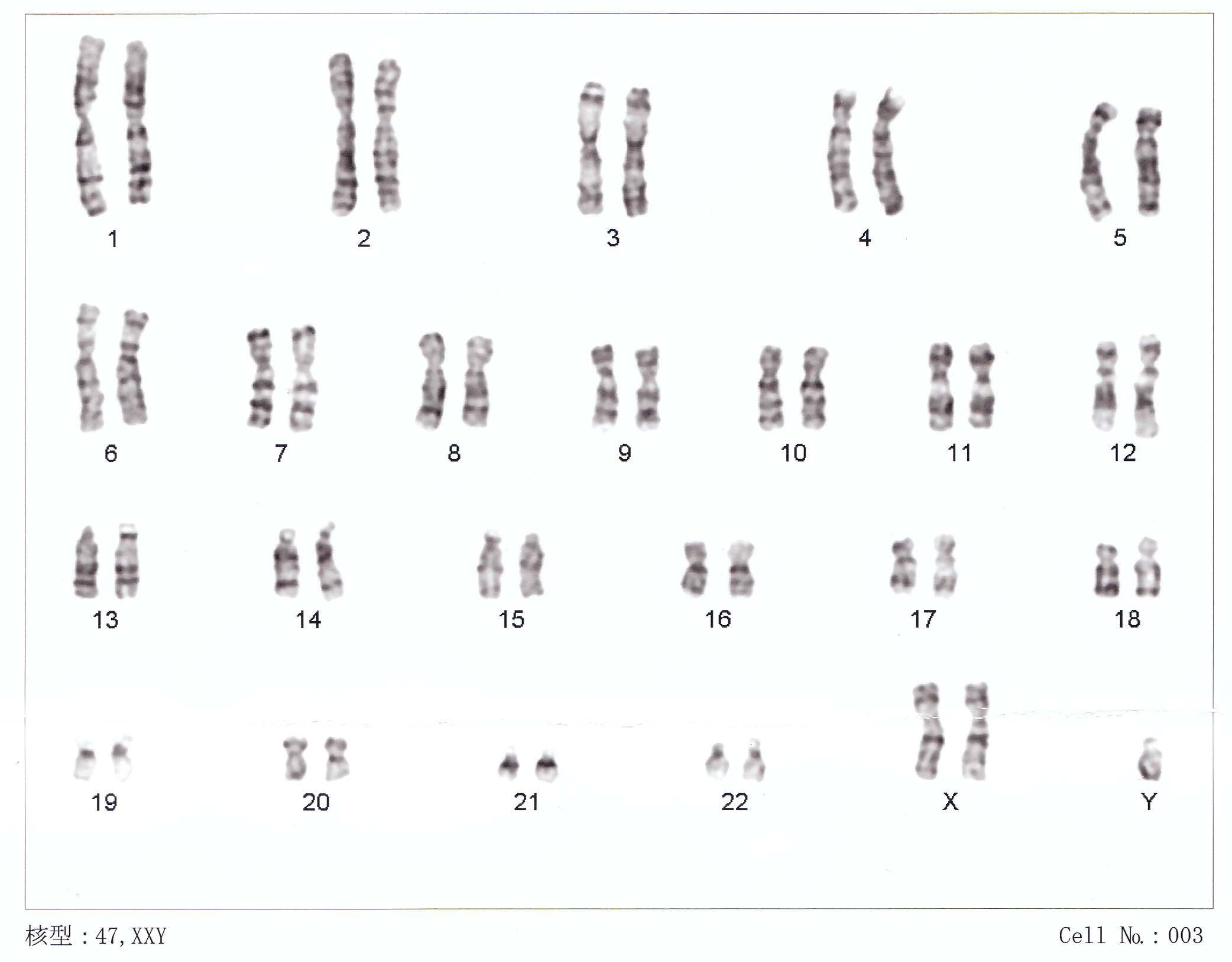
These are the chromosomes of someone with Kleinfelters syndrome. What is different about their chromosomes?
There is only one Y chromosome
One of the 5th chromosomes is too curved
There is an extra X chromosome
There are too few chromosomes
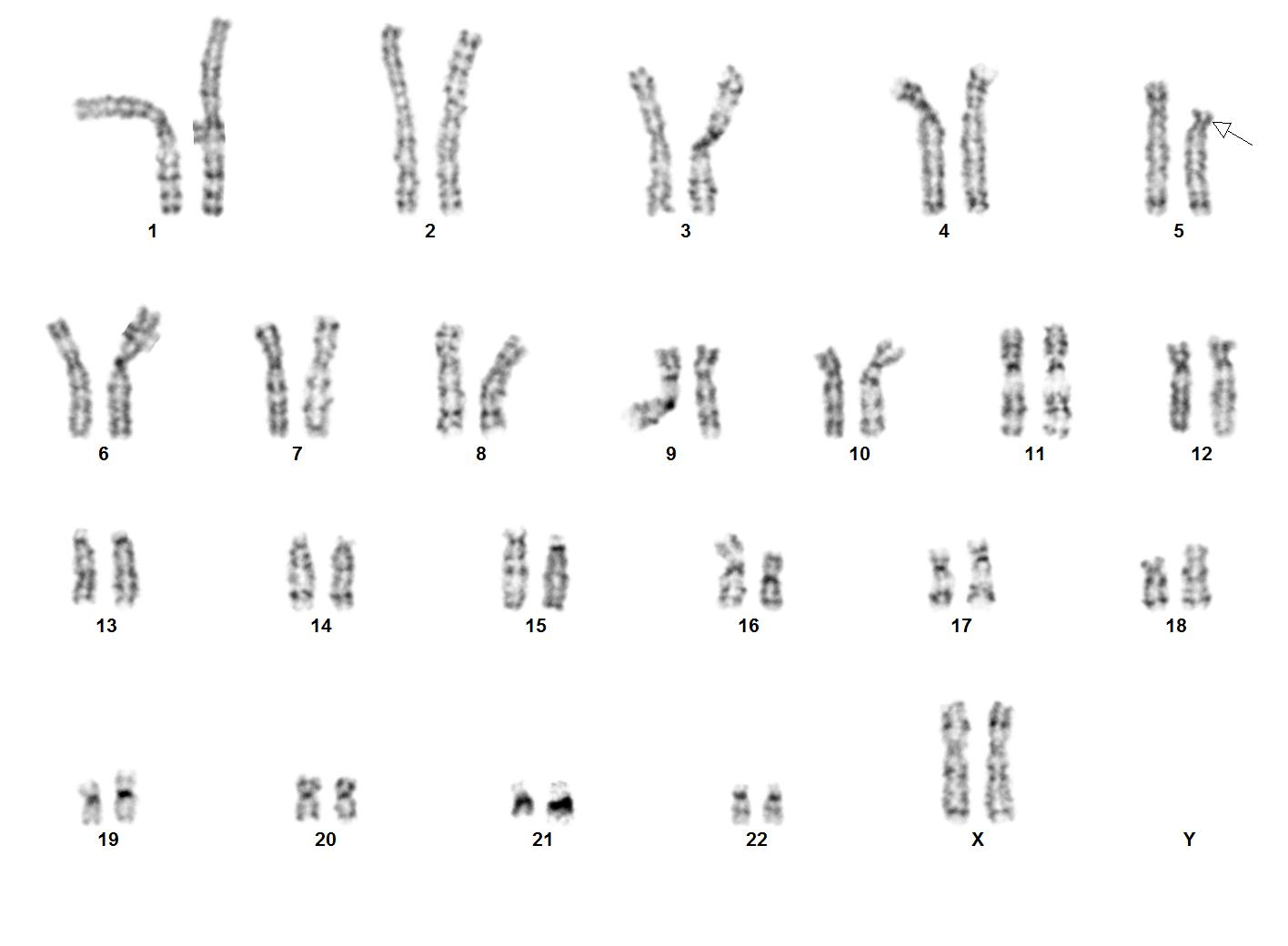
This disorder is called "Cry of the cat", can you find the chromosomal mutation?
There are too many chromosomes
They are missing the Y chromosome
Chromosome 1 is bent
Chromosome 5 is too short (missing a piece)
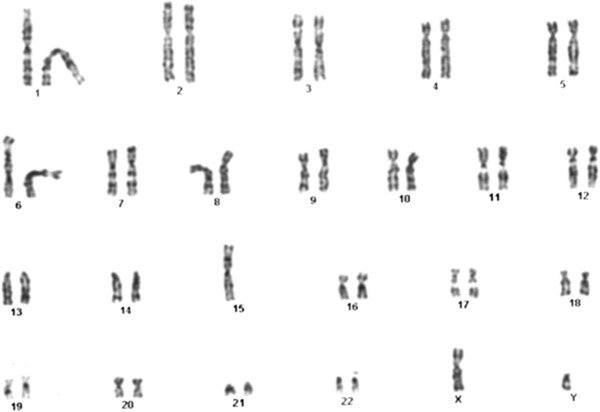
This person has Angel Mans syndrome. What is different about their chromosomes?
Chromosome 1 is misshapen
Chromosomes 21 is too small
They are missing one of chromosome 15
Chromosomes 7 and 8 look weird
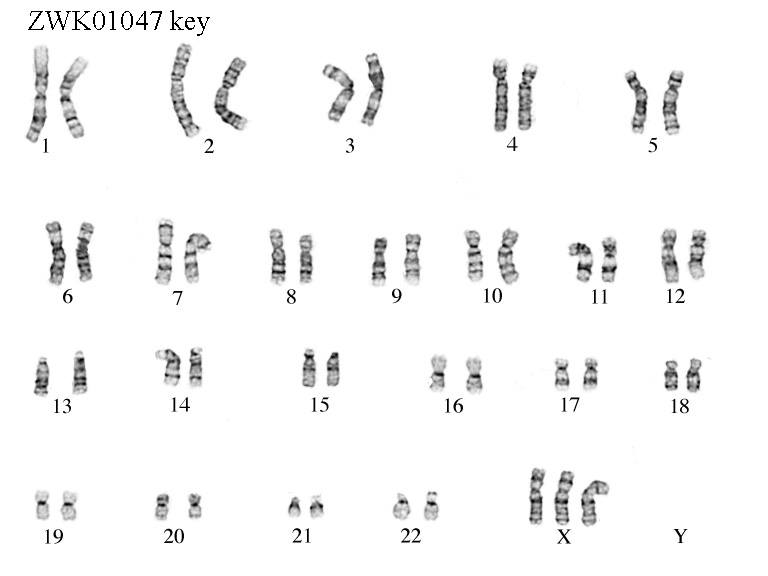
Based on the karyotype, can you guess the name of this genetic disorder?
Curvy 3
Jacob's syndrome
Triple X
Superwoman syndrome
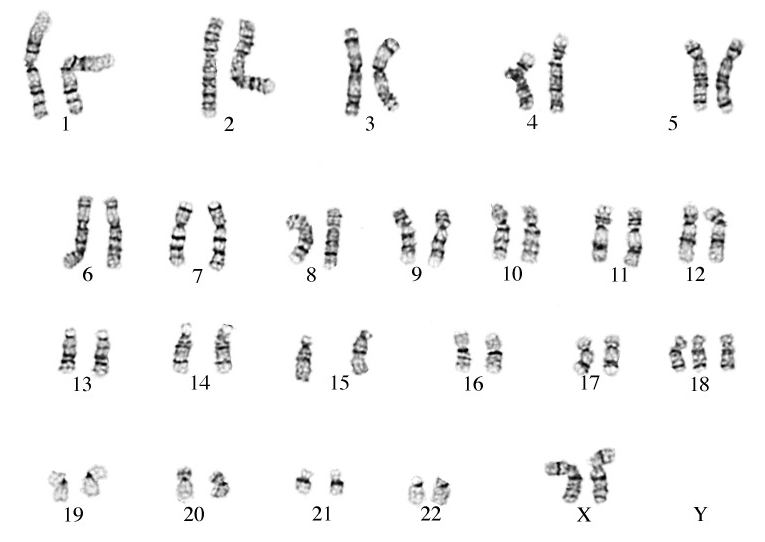
This is known as Edwards Syndrome, can you identify the chromosomal mutation?
Chromosomes 1 and 2 are bent
There is no Y chromosome
This persons chromosomes are normal
There are 3 of chromosomes 18
Full set of chromosomes of a cell arranged with respect to size, shape, and number.
chromatin
karyotype
phenotype
genotype
Constricted region of a mitotic chromosome that holds sister chromatids together.
centromere
nucleosome
telomere
arm
the number of the chromosome in the human somatic cells is ...
(a)
How many chromosomes does the human haploid set include?
(a)
What kind of chromosome called autosome?
the chromosomes which have the different structure
this is a pair of chromosomes, which differ chromosomal sets of men and women
this is a pair of chromosomes, which are identical in chromosomal sets of men and women
What are a set of chromosomes called that are the same size with the same DNA.

