Wayground logo

Free Printable Worksheets

Font size

S
M
L
XL
Worksheets

Chapter 2 Review

Total questions: 49

Worksheet time: 59mins

Name
Class
Date
1.
What is an isotope? 
a)
A charged atom
b)
An atom with different amounts of neutrons
c)
An atom with different amounts of protons
d)
A neutral atom
2.
Different isotopes have...
a)
different masses
b)
different atomic numbers
c)
different electrons
d)
different protons
3.
How many neutrons does an Oxygen-19 isotope have?
a)
19
b)
8
c)
11
d)
10
4.
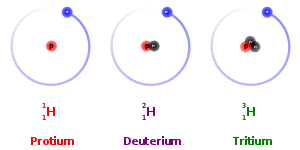
What is the atomic mass of the pictured isotope?
a)
2
b)
4
c)
6
d)
Hehehehe
5.
What is the name of the pictured isotope?
a)
Carbon-12
b)
Carbon-13
c)
Carbon-14
d)
Carbon-15
6.
How many neutrons does the isotope of lithium have?
a)
8
b)
3
c)
4
d)
5
7.
How many neutrons in C-14?
a)
6
b)
7
c)
14
d)
8
8.
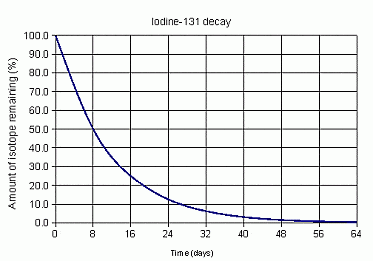
What is the half-life of iodine-131?
a)
32 days
b)
8 days
c)
16 days
d)
24 days
9.
If a fossil is found to have one-eighth of Carbon-14 remaining then how old is the fossil?
a)
11,460 years
b)
5,730 years
c)
28,650 years
d)
17,190 years
10.
What percent of carbon-14 would be left after 5730 years?
a)
100%
b)
75%
c)
50%
d)
25%
11.
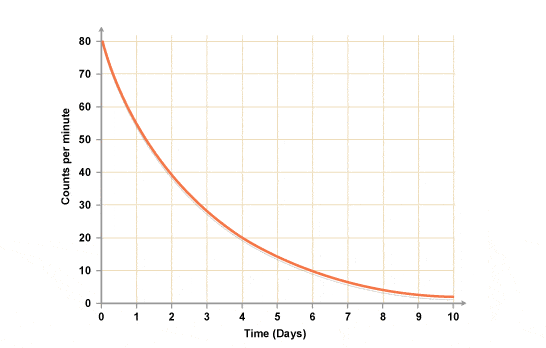
what's the half life of this substance?
a)
1 day
b)
2 days
c)
3 days
d)
4 days
12.
146C has a half life of 5730 years, how many years would it take the 4.0 g sample to decay to 0.25 g?
a)
4 years
b)
5730 years
c)
22,920 years
d)
28,650 years
13.

What is at the center of every atom?

a)

An electron

b)

A compound

c)

A molecule

d)

A nucleus

14.
Which two particles make up the nucleus of an atom?
a)
Protons and Electrons
b)
Protons and Neutrons
c)
Molecules and Compounds
d)
Neutrons and Electrons
15.
What is the role of an electron in an atom?
a)
Electrons live inside the nucleus and carry a neutral charge.
b)
Electrons circle the nucleus and have a positive charge.
c)
Electrons circle the nucleus and have a negative charge.
d)
Electrons live inside the nucleus and have a negative charge.
16.
In an atom, what is the number of protons equal to?
a)
The number of electrons.
b)
The number of neutrons.
c)
The number of molecules.
d)
The number of nuclei.
17.
What forms when two atoms combine?
a)
A molecule.
b)
A nucleus.
c)
A proton.
d)
An electron.
18.

What is a compound?

a)

The center of an atom that is formed by neutrons, protons, and electrons.

b)

A tiny particle that makes up all matter.

c)

A molecule that is formed from two or more different types atoms.

d)

A molecules that is formed from the same type of atoms.

19.
A proton is a _____ charged particle.
a)
Negatively
b)
Positively
20.
An electron is a _____ charged particle.
a)
Positively
b)
Negatively
21.
The atoms of any given element ____ have the same number of protons.
a)
sometimes
b)
always
c)
never
22.
Each element ___ its own atomic number.
a)
has
b)
does not have
c)
sometimes has (depends on the element)
23.
What charge does a neutron have?
a)
positive
b)
negative
c)
no charge
d)
neutral
24.
The number of protons plus neutrons.
a)
Mass number
b)
Mass Weight
c)
Atomic number
d)
Atomic weight
25.
all matter is made of what 
a)
energy 
b)
atoms 
c)
electrons 
d)
compounds 
26.

A Goiter is a disease which can be classified as...

a)

Having too much phosphorus in the body which can lead to a in increase of cells

b)

A lack of iodine in the body which can cause an inflammation of the thyroid gland.

c)

A lack of sodium in the body which can cause an inflammation of the thyroid gland.

d)

Having too much sodium in the diet which causes an increase in blood pressure

e)

A lack of iron in the body which can disrupt the how oxygen is transported in the body

27.
What is in toothpaste that helps keep teeth strong?
a)
Water
b)
Fluoride 
c)
Sugar
d)
Mint
28.
How do covalent bonds form?
a)
Donating & receiving valence e- between atoms.
b)
Opposite slight charges attract each other between compounds.
c)
Scientists are still not sure how they form.
d)
Sharing valence e- between atoms.
29.
What do we call a covalent bond where electrons are shared UNEVENLY or UNEQUALLY?
a)
Ionic
b)
Polar Covalent
c)
Nonpolar Covalent
d)
Van der Waals Force
30.
Share electrons
a)
Ionic Bonds
b)
Covalent Bonds
c)
Both bonds
d)
Neither bond
31.
Gain or lose electrons
a)
Ionic Bonds
b)
Covalent Bonds
c)
Both bonds
d)
Neither bond
32.
This picture shows a...
a)
Ionic Bond
b)
Covalent Bond
c)
Both bonds
d)
Neither bond
33.
This picture shows a...
a)
Ionic Bond
b)
Covalent Bond
c)
Both bonds
d)
Neither bond
34.

Oxidation is the _________ of electrons.

a)

loss

b)

gain

c)

sharing

d)

transfer

35.

Reduction is the ___________ of electrons.

a)

loss

b)

gain

c)

sharing

d)

transfer

36.
A(n) ______ is a substance with a pH less than 7
a)
Acid
b)
Alkaline
c)
Base
d)
Buffer
37.
If the [H3O+1] < [OH-1] the solution is...
a)
acidic 
b)
basic
c)
neutral
38.
Stomach acid with a pH of 2 is _____X more acidic than milk with a pH of 7. 
a)
5X
b)
10X
c)
1000X
d)
100,000X
39.

Which of the following properties of water is due primarily to the polarity of the water molecule?

a)

its lack of color

b)

its lack of taste

c)

its ability to dissolve substances

d)

its ability to produce buoyant forces

40.
Large bodies of water, such as lakes and oceans, do not quickly fluctuate in temperature. What is the reason for this phenomenon?
a)
Water is an acid.
b)
Water is a versatile solvent.
c)
Water has a high heat capacity.
d)
 Water acts as a buffer.
41.

A drop of water placed on a smooth, dry surface will form a dome-shaped droplet instead of flowing

outward in different directions. Which of these best explains this observation?

a)

The bonds between hydrogen and oxygen atoms are very strong.

b)

The electrons in the atoms attract the electrons in the other atoms.

c)

The molecules at the surface strongly cohere to the other molecules on the surface with them

d)

Water molecules near the surface produce more buoyant force than water molecules within the

liquid.

42.

some climates have temperatures that drop below freezing point of water for several months. which is a unique property of water that allows life on earth to exist in aquatic environments in these types of climates?

a)

Water has adhesive properties that lower its freezing point allowing it to stay in liquid form longer.

b)

The density of water changes when it freezes so solid water is less dense than liquid water allowing it to float.


c)

Water has a high boiling point allowing it to evaporate and condense into clouds providing more

liquid precipitation.

d)

The melting and freezing points of water shift based on latitude, allowing it to stay in liquid form

longer in higher latitudes.

43.
 Small insects can walk across the surface of calm water. Their feet push the surface of the water down slightly, somewhat like a person walking across a trampoline, but they do not break the surface. What is the best explanation for why this happens?
a)
The insects are light enough so that they do not break the hydrogen bonds holding the water molecules together
b)
The insects actually use their wings to hover slightly above the water's surface and they only skim it with their feet
c)
The insects' feet are non-polar, so they are repelled by the polar water molecules and are pushed away from the water's surface
d)
The insects are small enough to see the individual water molecules, so they are able to step carefully from one molecule to the next
44.
What word describes when water is attracted to other substances?
a)
cohesion
b)
adhesion
c)
capillary action
d)
surface tension
45.
Attractions between water molecules are called
a)
Covalent bonds
b)
Ionic bonds
c)
Polar bonds
d)
Hydrogen bonds
46.
Why can water have no net charge but have slight charges in different parts of the molecule?
a)
The oxygen end is slightly negative and the hydrogen end is slightly positive
b)
The hydrogen end is slightly negative and the oxygen end is slightly positive
c)
The hydrogen and oxygen ends change in polarity
d)
Because it is hydrophobic
47.
Which is NOT a unique property of water?
a)
Frozen water floats on liquid water.
b)
Water covers most of the Earth’s surface and retains a large amount of heat.
c)
Water molecules stick to each other through hydrogen bonds.
d)
Water cools very rapidly.
48.
2H2 + O2 ----> 2H2O What is the product?
a)
------>
b)
2H2O
c)
2H2+ O2
49.
Which types of compounds dissolve easily in water?
a)
Polar and Nonpolar
b)
Polar and Ionic
c)
Nonpolar and Ionic
d)
Covalent and Nonpolar