wayground logo

Free Printable Worksheets

Font size

S
M
L
XL
Worksheets

Semester Test - 8th Grade

Total questions: 50

Worksheet time: 1hrs 2mins

Name
Class
Date
1.
The highest point on a wave is:
a)
the crest
b)
the trough
c)
the top
d)
the coast 
2.
The lowest point on a wave is the:
a)
Amplitude
b)
Crest
c)
Trough
d)
Wavelength
3.

Amplitude is the distance between

a)

the crest and the trough

b)

each wave

c)

the middle point of a wave and the clouds

d)

the crest or trough and the middle point of the wave

4.

The distance from one crest to the next crest in a wave is

a)

wavelength

b)

crest

c)

trough

d)

amplitude

5.

What is the electromagnetic spectrum?

a)

The entire range of light that exists. From radio waves to gamma rays, most of the light in the universe is, in fact, invisible

b)

Something made up to confuse me.

c)

A chart of waves that do nothing

d)

The entire range of earthquake waves.

6.

How often a wave occurs is the wave's __________________. It is measured in hertz (Hz).

a)

crest

b)

frequency

c)

wavelength

d)

resting point

7.

What is a wave?

a)

A disturbance of the peace

b)

Disturbance that moves through matter and space and carries energy.

c)

Disturbance of the ocean

d)

Disturbance of the Earth that moves in earthquakes.

8.

Mechanical waves, including light waves, that moves particles in matter perpendicular (right angles) to the direction the wave is traveling

a)

Electromagnetic Spectrum

b)

Transverse Waves

c)

Medium

d)

Light Waves

9.

What is the time it takes to complete one cycle. The standard unit is in seconds, and it is inversely proportional to the frequency of a wave, which is the number of cycles of waves that occur in one second.

a)

wavelength

b)

frequency

c)

Period

d)

Hertz

10.

What is the pattern of disturbance caused by the movement of energy traveling through a medium (such as air or water) as it moves away from the source.

a)

Heat Wave

b)

Congressional wave

c)

transverse Wave

d)

Sound wave

11.

What type of mechanical wave has particles that move parallel to the wave's direction of travel. It is also called a longitudinal wave. It has compressions and rarefactions.

a)

Transverse Wave

b)

Congressional Wave

c)

Sound Wave

d)

Earthquake Wave

12.

What is the medium of a wave?

a)

Only water carries the wave or through which the wave travels

b)

Only air carries the wave or through which the wave travels

c)

any substance that carries the wave or through which the wave travels

d)

Only students carries the wave or through which the wave travels

13.
What does the Law of Conservation of Mass state?
a)
Matter cannot be gained or lost in a chemical reaction.
b)
Matter can only be lost in a chemical reaction.
c)
Matter can only be gained in a chemical reaction.
d)
Matter can be gained and lost in a chemical reaction. 
14.
What is the little number after an element in a chemical equation called.
Example: H2
a)
Coefficient 
b)
Subscript
c)
Atom
d)
Equation
15.

Newton's 1st law states that if the ____ ________ acting on an object is zero, the object will remain at rest or move in a straight line with a constant speed.

a)

total force

b)

Net force

c)

Natural force

d)

zero force

16.

Newton's 3rd Law states that for ever action there is an equal and opposite ________.

a)

reaction

b)

satisfaction

c)

fraction

d)

transaction

17.

A ______ is a push or pull on an object.

a)

force

b)

speed

c)

acceleration

d)

velocity

18.

A force that causes an object to slow down when it touches another object is _________.

a)

gravity

b)

friction

c)

inertia

d)

Newton

19.

Newton's 2nd Law says the acceleration of an object depends on its _______ and ______. (Choose two answers)

a)

force or applied force

b)

weight

c)

gravity

d)

mass

20.

if an object stays still or continues moving at the same speed and in the same direction, it is a _______ force.

a)

weak

b)

strong

c)

balanced

d)

unbalanced

21.

Net force is a combination of all ________ acting on an object.

a)

forces

b)

speeds

c)

accelerations

d)

velocities

22.

What kind of forces are unequal and cause movement?

a)

Unbalanced forces

b)

Balanced forces

c)

Friction

d)

Terminal velocity

23.
What law is best described by inertia?
a)
1st
b)
2nd
c)
3rd
24.
Objects tendency to resist change
a)
Friction
b)
Inertia
c)
Force
d)
Gravity
25.
Objects attraction to one another - like us to earth. 
a)
Friction
b)
Inertia
c)
Force
d)
Gravity
26.

Which law states that the acceleration of an object depends on the force exerted on it and its mass?

a)

1st Law

b)

2nd Law

c)

3rd Law

27.

Which law is most associated with motion?

a)

1st law

b)

2nd law

c)

3rd law

d)

none

28.
In an endothermic reaction, heat is ,,,
a)
taken in
b)
given out
29.
What type of reaction occurs in a hand warmer
a)
exothermic
b)
endothermic
30.
If a chemical reaction is EXOTHERMIC, the temperature would....
a)
Stay the same
b)
Increase
c)
Decrease
31.
When iron nails get rusty, heat is released.  What process is this?
a)
Exothermic
b)
Endothermic
32.
Is the combustion of gasoline endothermic or exothermic?
a)
Endothermic
b)
Exothermic
33.
Is photosynthesis an exothermic or endothermic reaction?
a)
Endothermic
b)
Exothermic
34.
During an endothermic reaction in a beaker if we are part of the surroundings and touched the beaker, it would feel _______. 
a)
Warm
b)
Cold
35.
Is respiration an Endothermic or an Exothermic reaction?
a)
Endothermic
b)
Exothermic
36.
If they energy required to break the bonds is greater than the energy given out by making new bonds the reaction is
a)
Exothermic
b)
Endothermic
c)
Neutralisation
37.
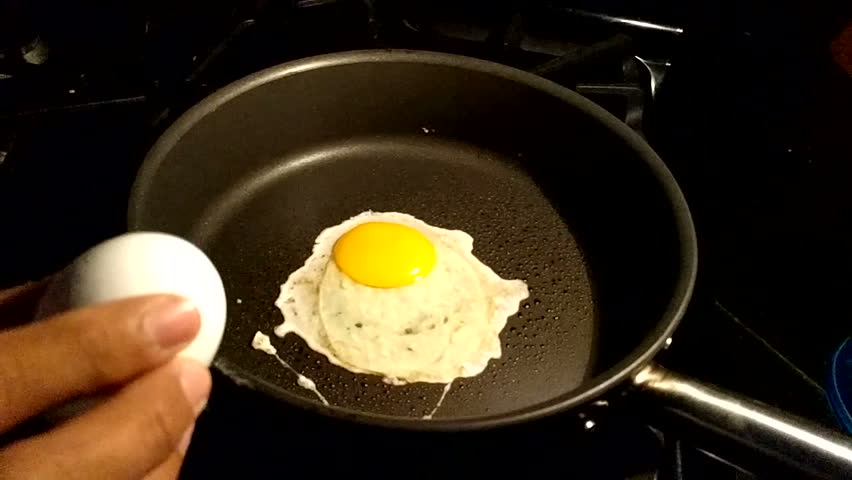
Baking bread and cooking an egg are examples of....?
a)
Endothermic processes
b)
Exothermic processess
c)
None of these 
38.
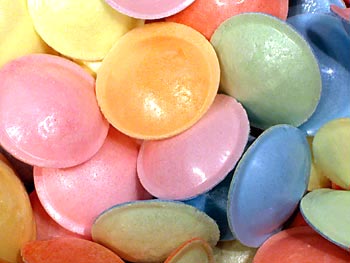
Have you ever eaten sherbet sweets candy? They fizz in your mouth and your tongue feels cold. Why do you think that is?
a)
It is an exothermic reaction
b)
It is an endothermic reaction
c)
It is made of ice
d)
It is dissolving your mouth
39.
Is water melting a physical or chemical change?
a)
Physical
b)
Chemical
40.
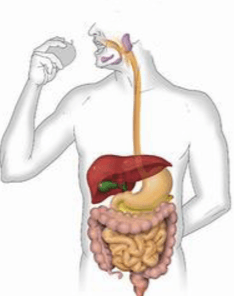
Is digesting your food a physical or chemical change?
a)
Physical
b)
Chemical
41.
Is getting a tan a physical or chemical change?
a)
Physical
b)
Chemical
42.
Is melting iron a physical or chemical change?
a)
Physical
b)
Chemical
43.
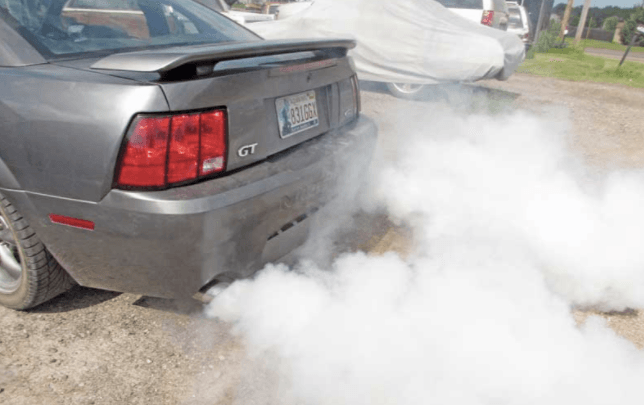
Is a car using fuel a physical or chemical change?
a)
Physical
b)
Chemical
44.
Is sour milk a physical or chemical change?
a)
Physical
b)
Chemical
45.
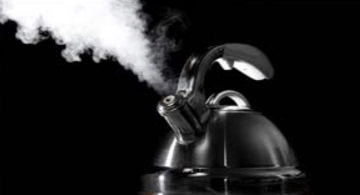
Is steam a physical or chemical change?
a)
Physical
b)
Chemical
46.
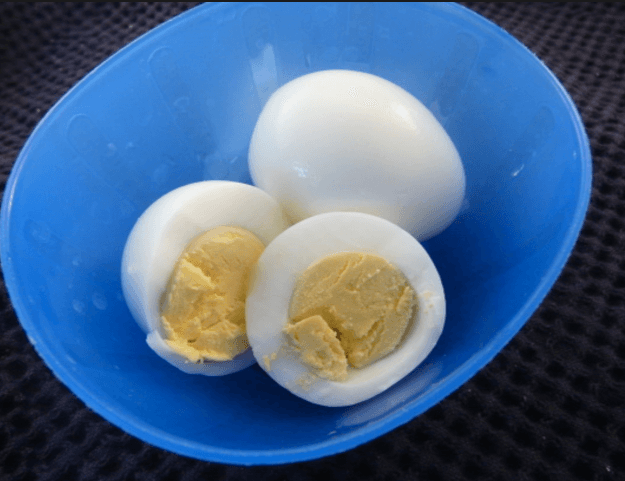
Are hard boiled eggs a physical or chemical change?
a)
Physical
b)
Chemical
47.
Is melting butter a physical or chemical change?
a)
Physical
b)
Chemical
48.
When baking soda and vinegar mix it creates a bubbly mess. Is this a chemical or physical change?
a)
Physical
b)
Chemical
49.
If liquid nitrogen is brought to a boil, is this a physical or chemical change?
a)
Physical
b)
Chemical
50.
If a new substance is formed would this be a physical or chemical change?
a)
Physical
b)
Chemical