wayground logo

Free Printable Worksheets

Font size

S
M
L
XL
Worksheets

ACP Review

Total questions: 80

Worksheet time: 5hrs 23mins

Name
Class
Date
1.
Which of the following is a chemical property of water?
a)
Reacts with pure sodium.
b)
Boils at 100 oC.
c)
Dissolves sugar easily. 
d)
Has a density of 1 gm/mL
2.
Which of the following is a sign that a chemical reaction has occurred?
a)
change in shape
b)
melting
c)
formation of a gas
d)
dissolving
3.
Which of the following is NOT an example of a physical change?
a)
crumpled paper
b)
pencil sharpening
c)
shrunken clothing
d)
sour milk
4.
Which is a physical change?
a)
burning match 
b)
vinegar in baking soda 
c)
melting butter
d)
cooking an egg
5.
Which form of matter does not take the shape of its container?
a)
liquid
b)
gas
c)
solid
d)
air
6.
How is a gas defined?
a)
Indefinite shape, indefinite volume
b)
Definite shape, definite volume
c)
Found in stars
d)
Definite volume, indefinite shape
7.
Particles of a liquid
a)
are tightly packed together and stay in a fixed position.
b)
have no viscosity.
c)
decrease in volume with increasing temperature.
d)
are free to move around one another but still touch.
8.
Particles (molecules) in a ______________________ have more energy than the other states of matter.
a)
gas
b)
solid
c)
liquid
9.
Which state of matter has the lowest compressibility?
a)
Solid
b)
Liquid
c)
Gas
d)
Plasma
10.
Define a liquid.
a)
Indefinite shape, indefinite volume
b)
Definite shape, definite volume
c)
Found in stars
d)
Definite volume, indefinite shape
11.

An element is?

a)

Chemically combined

b)

Pure substances that can be broken down

c)

Pure substances that cannot be broken down into simpler substances

d)

One or more elements chemically combined.

12.

The properties of a compound are different from the elements that make them up.

a)

True

b)

False

13.

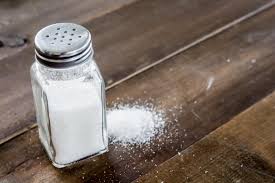
Salt

a)

Mixture

b)

Compound

14.

Saltwater

a)

Mixture

b)

Compound

15.

Sand

a)

Mixture

b)

Compound

16.

Heterogeneous mixture

a)

A mixture with a composition that varies from point to point

b)

A mixture with a uniform composition and appears visually the same throughout
17.

Homogeneous mixture

a)

A mixture with a composition that varies from point to point

b)

A mixture with a uniform composition and appears visually the same throughout

18.

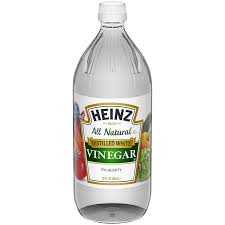
Vinegar

a)

Homogeneous mixture

b)

Heterogeneous mixture

19.

Which of the following materials should be classified as a mixture?

a)

Air

b)

Carbon

c)

Salt

d)

Water

20.

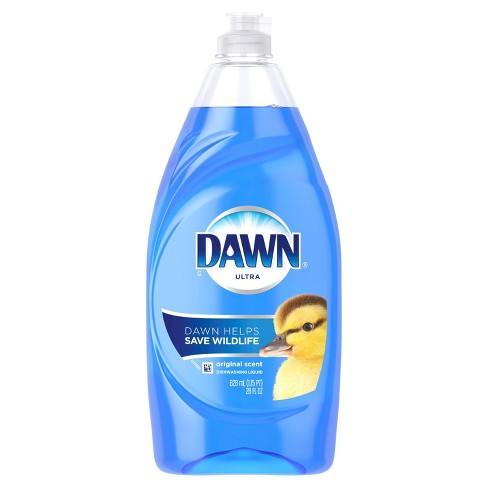
A bottle of dishwashing detergent contains a clear, viscous liquid. The label has a long list of ingredients, including water, sodium lauryl sulfate, fragrance, and Blue dye #5.

What can you infer about the material in the bottle from this label and the appearance of the liquid?

a)

It is a pure substance.

b)

It is a compound.

c)

It is a heterogeneous mixture.

d)

It is a homogeneous mixture.

21.

A 14-karat gold ring consists of 14 parts gold and 10 parts copper. This alloy can be separated by density when melted. Which type of matter is the 14-karat gold ring?

a)

Compound

b)

Pure Substance

c)

Homogeneous Mixture

d)

Heterogeneous Mixture

22.
24.1% of all the isotopes of a an element have a mass of 75.23 amu, 48.7% have a mass of 74.61 amu, and 27.2% have a mass of 75.20 amu.
What is the average mass of this element?
a)
74.92 amu
b)
24.97 amu
c)
75.01 amu
d)
74.51 amu
23.
An element has two naturally occurring isotopes. One is 10.013 amu and is 19.9% abundant. The other is 11.01 amu and is 80.1% abundant. What is the average atomic mass? What element is it?
a)
9.012, Beryllium
b)
12.011, Carbon
c)
6.941, Lithium
d)
10.812, Boron
24.
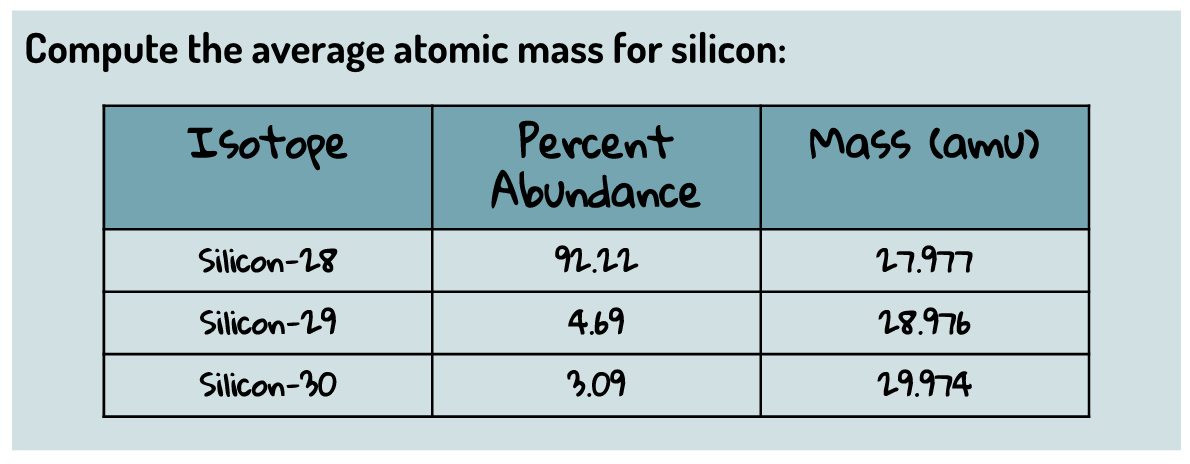
Compute the average atomic mass for silicon:
a)
27.977
b)
28.09
c)
28.976
d)
The average mass cannot be determined from provided information.
25.
4.35% of all X atoms have a mass of 39.946 amu. 83.79% have a mass of 41.941 amu, 9.50% have a mass of 42.941 amu, and 2.36% have a mass of 43.939 amu. What is the average atomic mass of atom X?
a)
41.97 amu
b)
42.19 amu
c)
10.43 amu
d)
40.04 amu
26.

What were John Dalton three contributions to atomic history?

a)

Created the atomic theory

b)

Discovered that the atom is mostly empty space

c)

Believed that atoms of a given element are identical

d)

Hypothesized that the atom is a tiny, hard sphere

e)

Believed that the universe was made of tiny "uncuttable" particles

27.

What were J. J. Thomson's three contributions to the atomic theory?

a)

Discovered the electron

b)

Discovered the nucleus -did the gold foil experiment

c)

Used the cathode ray tube in his discovery

d)

Created a model of the atom with electrons moving around the nucleus in fixed orbits

e)

Created the "plum pudding" model of the atom

28.

What is Neils Bohr's contribution to the atomic theory?

a)

Created the atomic theory

b)

Created a model of the atom with electrons moving around the nucleus in a fixed orbits

c)

Discovered that the proton had a positive charge

d)

Believed that atoms of a given element are identical

e)

Discovered the electron

29.

What were Ernest Rutherford's three contributions to atomic theory?

a)

Discovered that the atom is mostly empty space

b)

Discovered the nucleus- did the gold foil experiment

c)

Used the cathode ray tube in his discovery

d)

Discovered the electron

e)

Discovered that the proton had a positive charge

30.

Which of these is the correct electron configuration for oxygen?

a)

1s2 2s2 2p11s^2\ 2s^2\ 2p^1

b)

2p22p^2

c)

1s2 2s2 2p41s^2\ 2s^2\ 2p^4

d)

2p42p^4

31.

What can you infer about elements that are in the

same group?

a)

They will have the similar chemical properties.

b)

They will contain the same number of protons.

c)

They will display similar atomic masses.

d)

They will emit X rays of similar frequency.

32.

Which of the following groups/families contain at least

one element that is gaseous at room temperature?

a)

alkali metals and alkaline earth metals

b)

alkali metals and transition metals

c)

noble gases and transition metals

d)

noble gases and halogens

33.

When this element was discovered, it exhibited luster

and malleability, and it reacts vigorously with water. This

element is never found as a free element in nature and

always exists in a compound. To which group does this

element most likely belong?

a)

alkali metals

b)

halogens

c)

noble gases

d)

transition metals

34.

Atoms of the noble gases are generally not reactive

because-

a)

they are neutral atoms

b)

they are charged

c)

their outer electron (valence) level is filled

d)

they are too large to react

35.

Which of the following trends can be identified on the

periodic table?

a)

atomic radii increase from left to right across a period

b)

ionization energy increases from top to bottom within

a family

c)

electronegativity decreases from left to right across a

period

d)

atomic radii increase from top to bottom of a group

36.

In general ionization ____ as you go down a group,

and ____ as you go across the periodic table.

a)

decreases, decreases

b)

decreases, increases

c)

increases, decreases

d)

increases, increases

37.
Which of the following will have a larger radius than Zinc?
a)
Gallium
b)
Aluminum
c)
Magnesium
d)
Strontium
38.
Which of the following will have a higher electronegativity than arsenic (As)?
a)
Carbon (C)
b)
Neon (Ne)
c)
Antimony (Sb)
d)
Germanium (Ge)
39.
Which of the following will have a lower ionization energy than Scandium (Sc)?
a)
Helium (He)
b)
Titanium (Ti)
c)
Calcium (Ca)
d)
Magnesium (Mg)
40.
As you move down the periodic table atoms get bigger.  This is because ____________.
a)
The atoms have more mass.
b)
The atoms have more protons.
c)
The atoms have more energy levels
d)
The atoms have more neutrons
41.
As you move across the periodic table atoms tend to get smaller because, ______________.
a)
the atoms have more mass.
b)
the atoms have less mass
c)
the atoms have more protons.
d)
the atoms have less electrons.
42.
Electronegativity is...
a)
the ability of an atom to attract/ accept electrons
b)
the ability of an atom to lose electrons
c)
the energy required to remove an electron from a specific atom
d)
how easy it is to make friends. 
43.
Ionization energy is...
a)
the energy required to add an electron to a specific atom
b)
how much energy it takes to remove an electron from an atom
c)
the energy required to shield the outer electrons from the nucleus
d)
a measure of the ability of an atom to attract electrons
44.
What atom matches this electron configuration?
1s22s22p63s23p64s23d10
a)
Zinc
b)
Copper
c)
Nickel
d)
Germanium
45.
Which electron configuration belongs to Chlorine (Cl)?
a)
1s2s2p3s3p5
b)
1s2s2p3s3p6
c)
1s2s2p3s3p7
46.
This orbital diagram represents:  
a)
C
b)
B
c)
N
d)
O
47.
What is this element?
1s22s22p63s2
a)
Neon
b)
Magnesium
c)
Aluminum
d)
Potassium
48.
What is this element? 
[Ne] 3s23p64s2
a)
Calcium
b)
Sodium
c)
Scandium
d)
Titanium
49.
What is the noble gas configuration for Sulfur?
a)
[Ar] 3p4
b)
[He] 3s2 3p4
c)
[Ne] 3s2 3p4
d)
[Na] 3s2 3p4
50.
According to the octet rule most elements need _______ valence electrons.
a)
2
b)
8
c)
6
d)
18
51.
Which of the following is the correct Lewis dot structure for the molecule fluorine (F2)?
a)
A
b)
B
c)
C
d)
D
52.
What is the correct structure for BF3?
a)
Option A.
b)
Option B. 
c)
Option C.
d)
Option D.
53.
Which compound's name includes the Greek numerical prefixes di- and tri-?
a)
Al2O3
b)
Mg3(PO4)2
c)
S2O3
d)
Cr2S3
54.
Which of the following compounds contains the Fe3+ ion?
a)
FeS
b)
FeCl
c)
Fe2O3
d)
FeO
55.
Which formula is correctly paired with its name?
a)
NaCl --  sodium chlorine
b)
FeBr2  --  iron (II) bromide
c)
P2O5 --  dipotassium pentoxide
d)
MgSO4  --  magnesium sulfide
56.
What is the correct name for the compound with the formula Cr2SO4?
a)
chromium (IV) sulfate
b)
chromium (IV) sulfide
c)
chromium (I) sulfate
d)
chromium (I) sulfide
57.
What is the formula for calcium sulfate?
a)
CaS
b)
CaSO4
c)
Ca2S2
d)
Ca2(SO4)2
58.
What is the correct chemical formula for magnesium nitride?
a)
MgN
b)
Mg3N2
c)
MgNO3
d)
Mg(NO3)2
59.
What is the correct chemical formula for nickel (II) nitride?
a)
NiN
b)
Ni(NO3)2
c)
NiNO3
d)
Ni3N2
60.
What is the correct name for the S2- ion?
a)
sulfate ion
b)
sulfur ion
c)
sulfide ion
d)
sulfite ion
61.
Calcium is a group 2A metal.  Which ion does Ca typically form?
a)
Ca1-
b)
Ca1+
c)
Ca2-
d)
Ca2+
62.
Which set of chemical name and chemical formula for the same compound is correct?
a)
magnesium sulfate, MgS
b)
chromium (III) phosphate, CrPO4
c)
sodium carbonate, NaCO3
d)
calcium hydroxide, CaH2
63.
What is the ending for the names of all binary compounds, both ionic and covalent?
a)
-ide
b)
-ite
c)
-ade
d)
-ate
64.
In naming a binary covalent compound, the number of atoms of each element present in the formula is indicated by __________.
a)
Roman numerals
b)
superscripts
c)
prefixes
d)
suffixes
65.

How many molecules are in 2.5 mol of NaCl?

a)

1.51x10²³

b)

146

c)

4.15

d)

1.51x1024

66.
How many water molecules are in 5.2 moles of water?
a)
6.02 x 10²³
b)
5.2
c)
3.1304 x 1024
d)
8.638 x 10⁻²⁴
67.
How many grams are in 1.2 x 1024 atoms of C?
a)
28 grams
b)
24 grams
c)
6.02 grams
d)
1.2 grams
68.
How many moles are in 3.01 x 10²² atoms of magnesium?
a)
0.050 moles
b)
1.81 x 1046 moles
c)
5.00 x 10²¹ moles
d)
5.00 moles
69.
How many moles are in 16.94g of water?
a)
16.94 mol H2O
b)
0.9401 mol H2O
c)
305.3 mol H2O
d)
1.063 mol H2O
70.
What is the mass in grams of 5.90 mol C8H18?
a)
.0512 g
b)
19.4 g
c)
673 g
d)
389 g
71.

PCl5 + ___ H2O → ___ HCl + H3PO4

a)

4, 5

b)

1, 6

c)

3, 8

d)

2,2

72.

__ Al + __ FeO → Al2O2 + __ Fe

a)

1, 1, 2

b)

2,1,2

c)

2, 2, 2

d)

2,4,2

73.
 Mg  +  ___ HCl  →   MgCl2  +   H2
a)
1
b)
2
c)
3
d)
4
74.
Which problem is balanced?
a)
PbO2 + 2H2
b)
SO2 + H20 --> H2SO4
c)
2Na + 2H2O --> 2NaOH + H2
75.
Is the equation balanced?: 2H2O + O2 --> 4MgO + 3Fe
a)
Yes
b)
No
76.
Balance this equation.
_CH4 + _O--> _CO+ _H2O
a)
1,2,1,1
b)
2,1,2,1
c)
1,2,1,2
d)
0,2,0,2
77.
How many atoms of aluminum are on each side of the following equation: 4Al + 3O--> 2AlO3
a)
2
b)
6
c)
1
d)
4
78.
What is the percent by mass of oxygen in MgO?
a)
20%
b)
40%
c)
50%
d)
60%
79.
What is the percent by mass of sodium in NaCl?
a)
39%
b)
61%
c)
35%
d)
65%
80.
What is the percent by mass of calcium in CaF2 (gram-formula mass = 78 g/mol)?
a)
24%
b)
49%
c)
51%
d)
65%