
 Worksheets
Semester 1 Final Review
Total questions: 44
Worksheet time: 53mins
What happens to a sample of gas when it is cooled?
The particles speed up; thermal energy goes up
The particles slow down; thermal energy goes up
The particles speed up; thermal energy goes down
The particles slow down; thermal energy goes down
If you were to climb up a mountain, what would happen to the mercury level in a barometer?
It wouldn't change
It would go up
It would go down
It would go up and down
What happens to atmospheric pressure as you climb up a mountain?
It stays the same
It goes up
It goes down
Colorado has a higher or lower atmospheric pressure compared to Indiana?
Higher
Lower
If the volume of a gas decreases, at constant temperature pressure will
increase
decrease
stay the same
cannot predict the change
If the temperature of a gas increases inside a closed container, the pressure will...
go up
go down
stay the same
Liquid particles move ______ than gas particles
faster
slower
the same
What happens to thermal energy during a phase change?
it increases then decreases
it decreases then increases
it increases
it decreases
it stays the same
If you boil a sample of water, what is inside the bubble?
H2 and O2
H2O
air
empty space
When you freeze ice cream...
the ice cream absorbs energy from the surroundings
the ice cream releases energy to the surroundings
the ice cream particles are arranged in an orderly pattern
the ice cream particles break apart
When you put a cold spoon in hot tea, when does the heat stop transferring to the spoon?
when the tea cools down
when the spoon heats up
when the spoon and tea are the same temperature
when the spoon and tea temperatures change by the same amount
This substance cannot be broken down by physical or chemical means.
mixture
element
compound
pure mixture
True or false: in a physical change a new substance is formed
True
False
Which is not true about a mole of helium atoms?
It would weigh 4.0 grams
It contains 6.02 x 10²³ atoms
It would weigh the same as a mole of hydrogen
It has the same number of atoms as a mole of hydrogen
How many calcium atoms are in: Ca3(PO4)2
2
3
5
6
What is the molar mass of (NH4)2CO3?
144
138
96
78
A sample of hydrogen at 1.5 atm had its pressure decreased to 0.50 atm producing a new volume of 750 mL. What was its original volume?
245 ml
345 ml
123 ml
250.mL
1. A sample of carbon dioxide occupies a volume of 3.50 liters at 125 kPa pressure. What pressure would the gas exert if the volume was decreased to 2.00 liters?
219 KPa
222 KPa
567 KPa
654 KPa
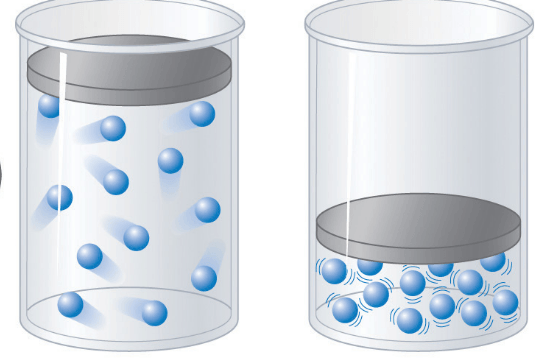
A gas is at a pressure of 95 kPa. What is its pressure in atmospheres?
1.5 atm
1.09 atm
0.94 atm
0.82 atm
How much heat is required to melt 26.0 g of ice at 0∘C? The heat of fusion is 334 J/g
5880 J
8680
109 J
0 J
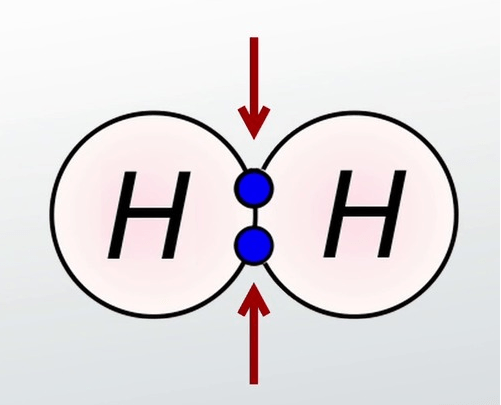
Which of the following is NOT considered a diatomic element?
Carbon
Nitrogen
Chlorine
Iodine
What is the melting point of water in Kelvin?
0 K
100 K
273 K
373 K
Complete the following calculations. Round off your answers as needed.
52.6 g + 309.1 g +77.214 g
438.9
438.914
438.91
4.38914 x 10²
Complete the following calculations. Round off your answers as needed.
245.01 km x 2.1 km
5.14521 x 10²
510
514
514.521


How many bars of energy are being absorbed by the ice?
1
2
3
4

How many bars of phase energy would a liquid have?
1
2
3
4
What is the empirical formula if you have 74.83% carbon and 25.17% hydrogen?
C3H8
CH4
C2H2
C4H10

