Wayground logo

Free Printable Worksheets

Font size

S
M
L
XL
Worksheets

Chemistry end of semester extra credit

Total questions: 70

Worksheet time: 1hrs 6mins

Name
Class
Date
1.
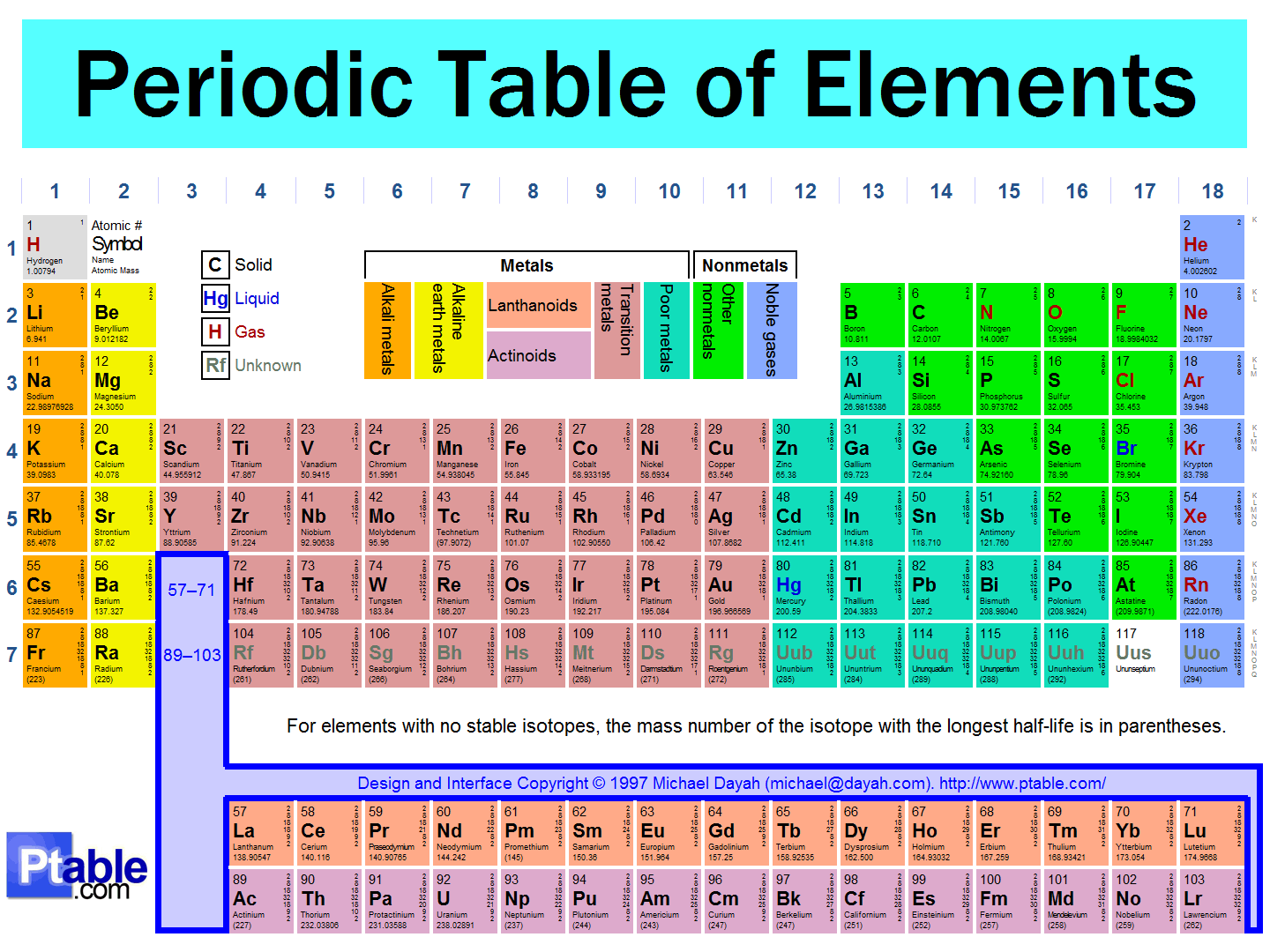
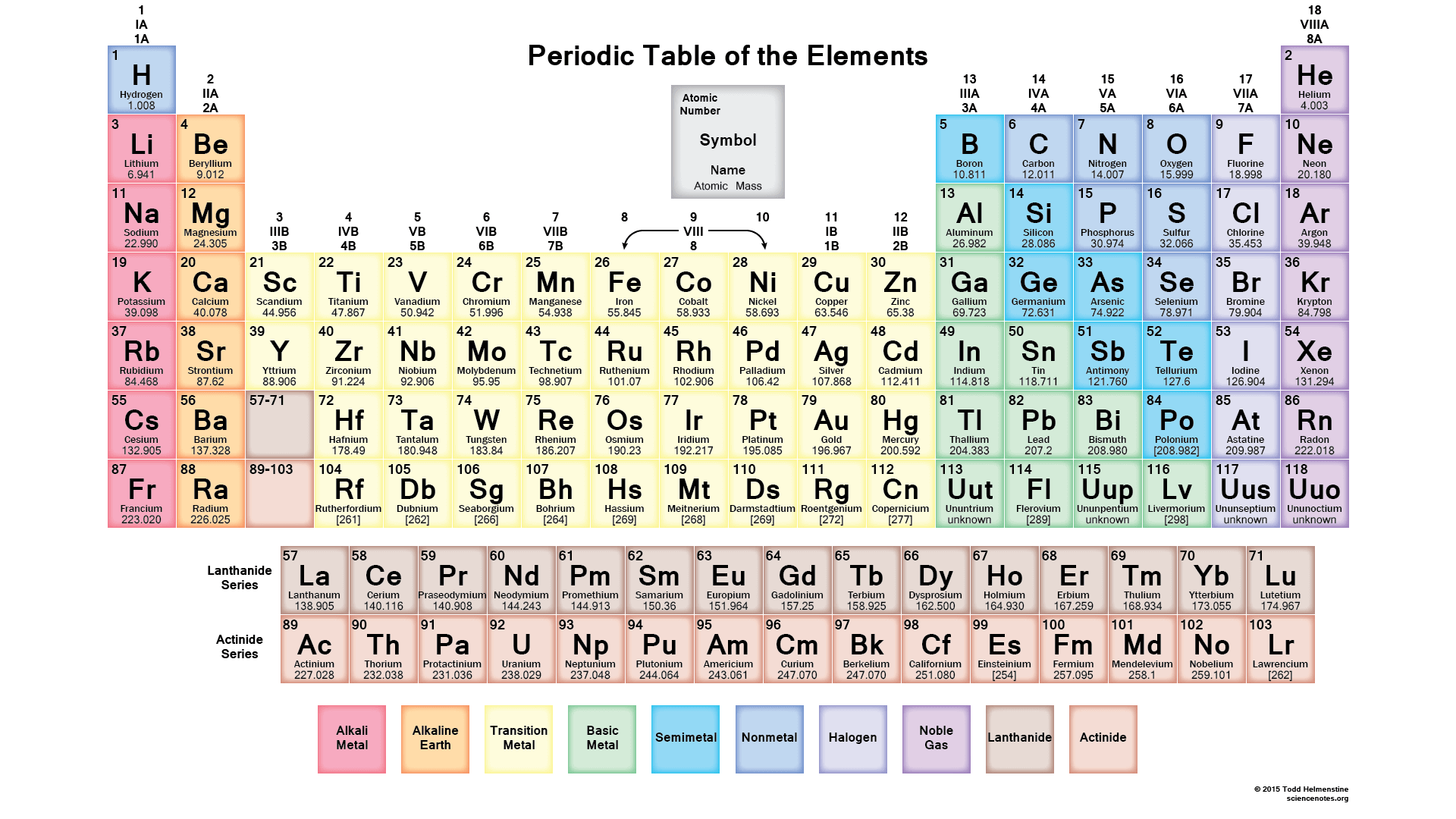
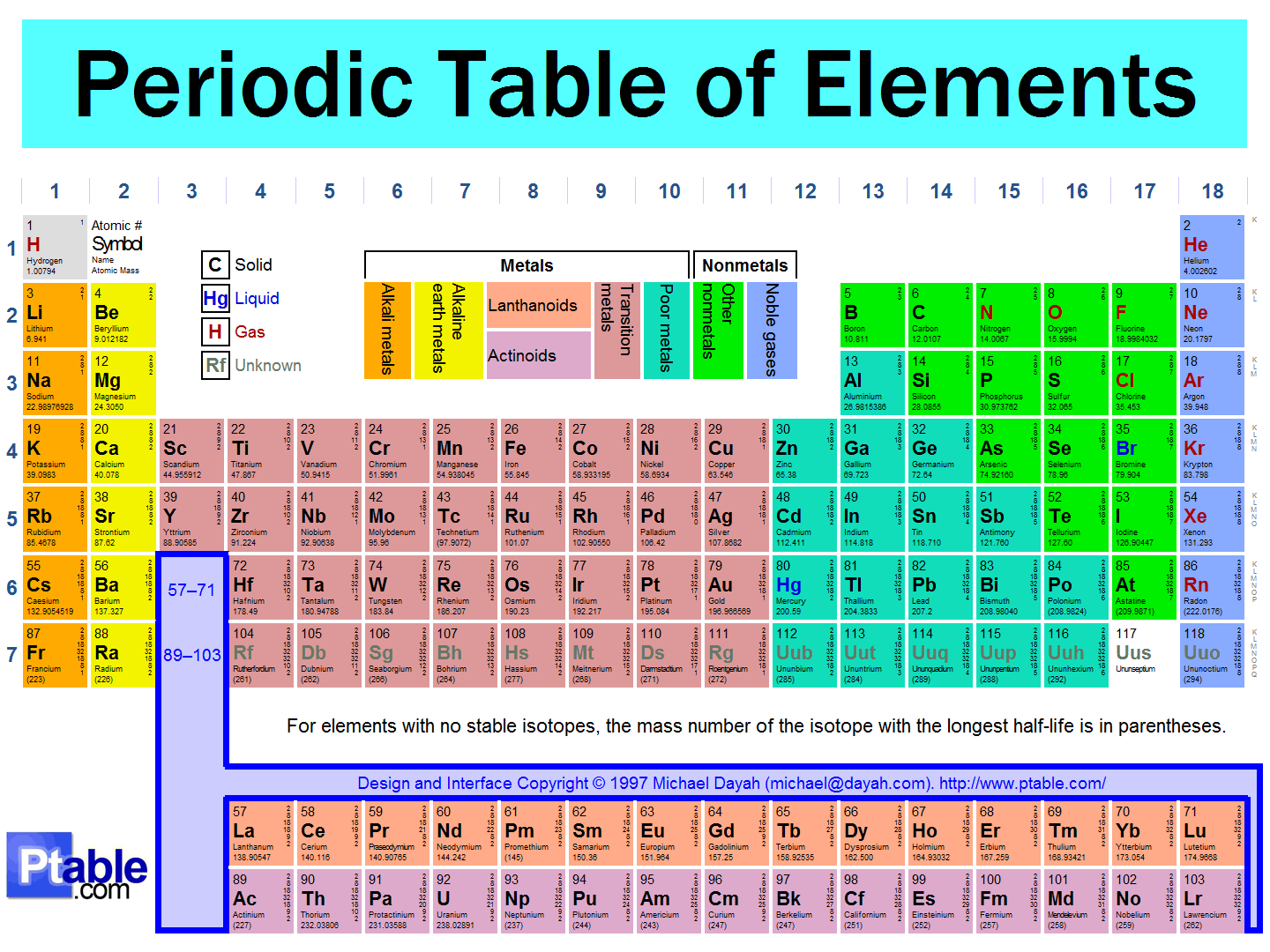
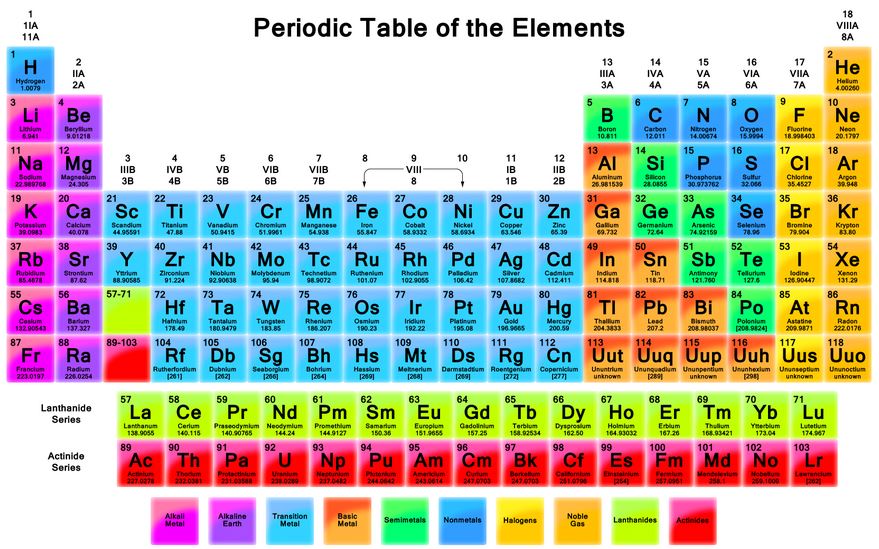
What is the chemical symbol for mercury?
a)
Hg
b)
Mc
c)
My
d)
C
2.
When two or more elements chemically combine
a)
element
b)
compound
c)
mixture
d)
solution
3.

The vertical (up and down) columns in the Periodic Table are called

a)

groups

b)

towers

c)

periods

d)

atomic numbers

4.
The Modern Periodic Table of Elements is arranged by
a)
atomic mass
b)
atomic number
c)
valence electrons
d)
number of isotopes
5.
Sodium (Na) is found in period 
a)
3
b)
2
c)
4
d)
1
6.
Sodium (Na) is found in group 
a)
1
b)
2
c)
3
d)
4
7.
The phases of the moon are __________ because they repeat in a pattern.
a)
periodic
b)
group
c)
awesome
d)
halogens
8.
The atomic number tells you what?  READ THE ANSWERS CAREFULLY
a)
only the number of electrons
b)
 only the number of protons
c)
only the number of neutrons
d)
the number of both electrons and protons in an atom.
9.
What does the atomic mass tell you? 
a)
Basically,the number of electrons and protons
b)
The number of neutrons
c)
Basically, the number of protons and neutrons
d)
The number of protons.
10.
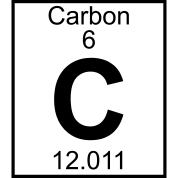
What does the 6 represent?
a)
atomic mass
b)
atomic number
c)
element name
d)
chemical symbol 
11.
What does 12.011 represent?
a)
atomic mass
b)
atomic number
c)
element name
d)
chemical symbol 
12.
What does the C represent?
a)
atomic mass
b)
atomic number
c)
element name
d)
chemical symbol 
13.
These are found on the Periodic Table.
a)
Compounds
b)
Elements
c)
Mixtures
14.

The horizontal (side to side) rows in the Periodic Table are called

a)

groups

b)

families

c)

periods

d)

atomic numbers

15.

the basic structural unit of matter

a)

atom

b)

matter

c)

element

d)

nucleus

16.

a collection of atoms of one type that cannot be broken down into simpler substances by ordinary chemical or physical means

a)

element

b)

subatomic particle

c)

electron

d)

matter

17.

the positively charged subatomic particle contained in the nucleus of an atom

a)

proton

b)

neutron

c)

electron

d)

matter

18.

a subatomic particle, contained in the nucleus of an atom, having the same mass as a proton but no electrical charge

a)

proton

b)

neutron

c)

electron

d)

matter

19.

a grouping of elements based on similar properties, arranged by columns in the periodic table; also known as a group

a)

family

b)

period

c)

row

d)

isotope

20.

an atom or group of atoms that has gained or lost one or more electrons and is now either positively or negatively charged

a)

isotope

b)

ion

c)

orbital

d)

nucleus

21.
Which of the following has a full valence shell?
a)
Oxygen
b)
Neon
c)
Barium
d)
Carbon
22.
Elements on the LEFT side of the periodic table will most likely form:
a)
Positive ions
b)
Negative ions
c)
Neutral Ions
d)
None of these
23.
An ionic bond forms when atoms ___________ electrons.
a)
gain
b)
share
c)
increase
d)
transfer
24.
All chemical bonds involve two atoms sharing electrons.
a)
True
b)
False
25.
Chemical bonds form when atoms
a)
combined nuclei
b)
give up neutrons
c)
gain protons
d)
share or transfer electrons
26.
If an atom loses two electrons what charge will it have?
a)
+ 2
b)
 - 2
c)
+1
d)
-1
27.
If an atom gains one electron what charge will it have?
a)
-2
b)
-1
c)
+1
28.
Covalent compounds
a)
Share electrons
b)
transfer electrons
c)
contain a sea of electrons
d)
conduct electricity
29.
What is the number of valence electrons for Oxygen?
a)
8
b)
6
c)
2
d)
1
30.
How many valence electrons in this structure?
a)
6
b)
5
c)
4
d)
7
31.
A bond that forms when electrons are transferred is called a/an
a)
ionic bond
b)
covalent bond
c)
hydrogen bond
32.
Atoms joined together by SHARING electrons are?
a)
Ionic bonds
b)
Covalent bonds
c)
Metallic Bonds
d)
James Bonds
33.

1. Are the atoms more stable when they are bonded together or when they are apart?

a)

Bonded Together

b)

Apart

34.

2. Ionic Bonding involves:

a)

The transfer of protons

b)

The transfer of neutrons

c)

The transfer of electrons

d)

None Of the above

35.
Which has the greater EN: 
Cl or Al?
a)
Cl
b)
Al
36.
Which has the greater EN: 
N or C?
a)
C
b)
N
37.
Which has the greater EN: 
H or F?
a)
H
b)
F
38.
Which of the following will have a larger radius than Zinc?
a)
Gallium
b)
Aluminum
c)
Magnesium
d)
Strontium
39.
Which of the following will have a higher electronegativity than arsenic (As)?
a)
Carbon (C)
b)
Neon (Ne)
c)
Antimony (Sb)
d)
Germanium (Ge)
40.
Which of the following will have a lower ionization energy than Scandium (Sc)?
a)
Helium (He)
b)
Titanium (Ti)
c)
Calcium (Ca)
d)
Magnesium (Mg)
41.
As you move down the periodic table atoms get bigger.  This is because ____________.
a)
The atoms have more mass.
b)
The atoms have more protons.
c)
The atoms have more energy levels
d)
The atoms have more nuetrons
42.
Which atom has the largest atomic radius?
a)
potassium
b)
rubidium 
c)
francium
d)
cesium
43.
Electronegativity is...
a)
how good an atom is at attracting electrons
b)
the ability of an atom to lose electrons
c)
the energy required to remove an electron from a specific atom
d)
how easy it is to make friends. 
44.
Ionization energy is...
a)
the energy required to add an electron to a specific atom
b)
how much energy it takes to remove an electron from an atom
c)
the energy required to shield the outer electrons from the nucleus
d)
a measure of the ability of an atom to attract electrons
45.
The atom with the largest atomic radius in Group 18 is - 
a)
Ar
b)
He
c)
Kr
d)
Rn
46.
Which statement correctly and completely identifies a trend?
a)
Atomic radius decreases across a period and increases down a group.
b)
Electronegativity decreases across a period and decreases down a group.
c)
Ionization energy increases across a period and increases down a group.
d)
Ionic radius increases across a period and increases down a group.
47.
What is scientific notation?
a)
A long way to write really short  numbers
b)
A short way to write really long numbers
c)
I don't know...
d)
None of the above
48.
Scientific Notation is made up of two number parts. The second part is a power of base 10.
a)
True
b)
False
49.
When writing a number in scientific notation, the first number must be greater than 1, but less than 10.
a)
False
b)
True
50.
The rule of scientific notation is to write all exponents with a base of ____.
a)
50
b)
5
c)
100
d)
10
51.
UNDERSTANDING
If the exponent is a positive number...
a)
you will get a large number
b)
you will get a smaller number
52.
UNDERSTANDING
If the exponent is a negative number...
a)
you will get a large number
b)
you will get a small number
53.
What is it called when you go from this form to this next form?
0.0088 to 8.8 x 10³
a)
Standard form to scientific notation
b)
Scientific notation to regular form
c)
Scientific notation to standard form
d)
Standard form to regular form
54.
When your exponent is negative, you move your decimal....
a)
to the right
b)
to the left
c)
to both sides
d)
nowhere.... the decimal goes nowhere
55.
Write in standard form: 
8 x 10⁴
a)
8,000
b)
80,000
c)
.00008
56.
How would you write 4.3756 x 10⁴ in standard form?
a)
437,560,000
b)
0.00043756
c)
43,756
d)
4,3756
57.
Which number is correctly written in scientific notation?
a)
5.67 x 10⁵
b)
56.7 x 10³
c)
0.567 x 10⁶
58.
Write in scientific notation: 
0.0000378 
a)
3.78 x 10⁻⁵
b)
3.78 x 10⁻⁶
c)
0.378 x 10⁻⁵
59.
Which of the following is correct scientific notation?
a)
20.35 x 10⁴
b)
.2035 x 104
c)
2035 4
d)
2.035 x10⁴
60.
What is the standard form?
1.245 x 10³
a)
0.001245
b)
12.45
c)
1245
61.
How would you write 4.3756 x 10⁴ in standard form?
a)
437,560,000
b)
0.00043756
c)
43,756
62.
Convert to scientific notation:
520,000,000  
a)
52 x 107
b)
5.2 x 10⁷
c)
5.2 x 10⁸
d)
0.52 x 10⁹
63.

True or false? In naming ionic compounds,

the cation is always named first and the anion

second.

a)

True

b)

False

64.

The correct name for LiCl is _______.

a)

lithium monochloride

b)

lithium(I) chloride

c)

monolithium chloride

d)

lithium chloride

e)

monolithium monochloride

65.

The correct name for FeO is _____.

a)

iron oxide

b)

iron (II) oxide

c)

iron (III) oxide

d)

iron (IV) oxide

e)

iron (I) oxide

66.
What is the formula for copper (II) sulfate?
a)
Cu2SO4
b)
CuSO3
c)
CuS
d)
CuSO4
67.
What is the formula for iron (III) chloride
a)
FeCl
b)
FeCl3
c)
FeClO3
d)
Fe3Cl
68.
Name this compound: 
NH4F
a)
Ammonia fluoride
b)
Ammonium fluorite
c)
Ammonia fluorate
d)
Ammonium fluoride
69.
What is the formula for lead (II) iodide
a)
PbI
b)
PbI2
c)
Pb2I
d)
LbI2
70.
Which of the following gives the correct chemical formula for the compound Dinitrogen Monoxide?
a)
NO
b)
N2O
c)
N2O2
d)
O2N2