wayground logo

Free Printable Worksheets

Font size

S
M
L
XL
Worksheets

NR

Total questions: 80

Worksheet time: 2hrs 3mins

Name
Class
Date
1.
All of the following are nonrenewable resources EXCEPT
a)
Coal
b)
animals
c)
petroleum (oil)
d)
natural gas
2.
I am-*a solid*mined from the ground*made from ancient dead trees*a nonrenewable resourceWhat am I?
a)
natural gas
b)
coal
c)
plants
d)
water
3.
Which of the following means of transportation uses a renewable resource for its energy source?
a)
solar powered car
b)
coal powered steam train
c)
natural gas car
d)
gasoline truck
4.
What should be pictured in picture 2 to show a renewable resource?
a)
young trees which have just been  planted
b)
level land with stumps removed
c)
a pond fish live in
d)
a log cabin that the trees were used to build
5.
Which of the following is a way a person could conserve natural resources?
a)
recycling waste materials like plastic, glass, paper, and aluminum
b)
limiting water use when showering, brushing teeth, and shaving
c)
using rechargeable batteries
d)
all of the above are good conservation practices
6.
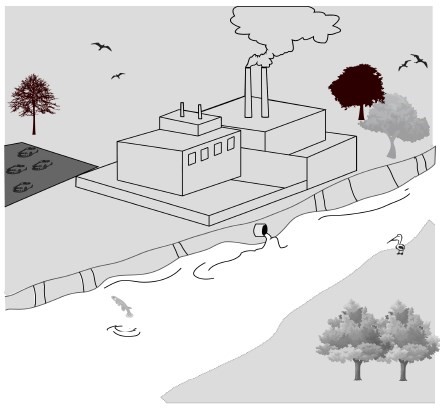
If the factory in this diagram was NOT practicing good environmental conservation, what effect would be produced?
a)
air and water pollution
b)
good fishing for recreation
c)
plentiful animals in the river
d)
purified drinking water
7.
Any useful material that is found in nature:
a)
Natural Resource
b)
Human Resource
c)
Plants
8.
Biodiversity refers to
a)
extinct species
b)
the variety of species on Earth
c)
nonrenewable resources
d)
the rate of species decline
9.
When taken to a new habitat, non-native plants often threaten native plants of the new habitat.  Why do they do this?
a)
Non-native plants are able to mutate rapidly
b)
Non-native  plants cause native animals to relocate
c)
Non-native plants are able to be used for medicine
d)
Non-native plants compete with native plants for resources
10.
What effect will an invasive species have on the carrying capacity of an ecosystem?
a)
The carrying capacity will increase
b)
The carrying capacity for everyone will decrease
c)
The carrying capacity will only decrease for those in competition for same resource
d)
The carrying capacity for all animals will stay the same
11.
How did the zebra mussels end up in the Great Lakes?
a)
In ballast tanks of ships
b)
They were intentionally released
c)
They have always been in the Great Lakes
d)
That's not a zebra mussel
12.
1. What makes a species invasive?
a)
Moving to a new ecosystem and taking resources from natives 
b)
Not having papers
c)
Species that can't adapt
d)
Plants that take up too much space
13.
What kind of organisms can become invasive? 
a)
Lions, Tigers, Bears
b)
Plants, Animals, or Pathogens 
c)
Animals
d)
Plants
14.
If a blue catfish is introduced and eats the large fish who eat the smaller fish, what will happen to the population of the smaller fish?
a)
Increase
b)
Decrease
c)
Stay the same
d)
No affect on smaller fish
15.
What is a native specie?
a)
A specie that is local and has lived in the same place
b)
A specie who has come from another state or country
c)
A specie that has no "home" and travels for its whole life
d)
None of the above
16.
What do invasive species do to the habitat they move into? (paragraph 2)
a)
crowd out local plants and animals
b)
eat all the mice and deer
c)
create a food chain
17.

The part of the economy that is owned by individuals and is operated for their personal benefit is known as.....

a)

Private Sector

b)

Public Sector

c)

Profit

d)

Individual Decision Making

18.
Individuals who take the risk of producing a product for a profit are.....
a)
Consumers
b)
Producers
c)
Chief Executive Officer (CEO)
d)
Entrepreneurs
19.

Lands managed by agencies of the government

a)

National Parks

b)

National Rivers

c)

Public Lands

d)

Restricted-use Lands

20.

This agency manages fish, wildlife, and habitats.

a)

US Forest Service

b)

US Fish and Wildlife Service

c)

National Oceanic and Atmospheric Administration

d)

Bureau of Reclamation

21.

This agency manages about 253 million acres of America's public lands as well as 700 million acres of subsurface mineral estate.

a)

U.S. Department of Agriculture

b)

Bureau of Land Management

c)

National Park Service

d)

US Department of the Interior

22.

This agency is managed by the US Department of Agriculture and manages the 155 National forests and 20 National grasslands.

a)

US Forest Service

b)

US Fish and Wildlife Service

c)

National Oceanic and Atmospheric Administration

d)

Bureau of Reclamation

23.
Which of the following is found in plant cells but not in animal cells? 
a)
Cytoplasm
b)
Mitochondria
c)
Cell Wall 
d)
Ribosomes 
24.
What plant organelle is used to make sugars?
a)
Cell wall 
b)
Mitochondria 
c)
Chloroplast 
d)
Vacuole
25.

Asexual reproduction like mitosis produces

a)

Two offspring cells with the same genetic material as the parent cell.

b)

Two offspring cells with half genetic material as the parent cell.

c)

Four offspring cells with the same genetic material as the parent cell.

d)

Four offspring cells with half the genetic material as the parent cell.

26.

A mode of reproduction by which an organism arises from a single organism and inherit the identical genes of that parent

a)

Asexual Reproduction

b)

Sexual Reproduction

c)

Genetic Variation

d)

Alleles

27.
The offspring from asexually reproduced organisms are?
a)
Different than their parents
b)
Identical to parents
c)
Like a combination from both parents
d)
A different species
28.

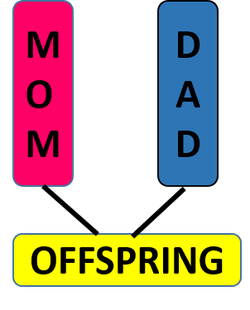
Requires two parents

a)

sexual

b)

asexual

29.

A mode of reproduction in which an organism arises from two organisms and inherits half of its DNA from each parent

a)

Sexual Reproduction

b)

Asexual Reproduction

c)

Cloning

d)

Fragmentation

30.

Why are fire fighters in danger on the job?

a)

They could be trapped in the fire.

b)

Heat exhaustion

c)

Both 1 and 2

d)

Neither 1 or 2

31.

True or False: Fire clears away old trees to make room for new plants and trees.

a)

True

b)

False

32.

True or False: Rangers allowed the fires to burn at first because fire has always been a vital part of the forest ecology.

a)

True

b)

False

33.

What is a prolonged period of dry weather?

a)

habitat

b)

drought

c)

firestorm

d)

drought

34.
Identify this animal.
a)
bobcat
b)
lynx
c)
mountain lion
d)
jaguar
35.
Identify this animal.
a)
bobcat
b)
lynx
c)
mountain lion
d)
coyote
36.
Identify this animal.
a)
mink
b)
otter
c)
muskrat
d)
weasel
37.
Identify this animal.
a)
screech owl
b)
burrowing owl
c)
great horned owl
d)
common barn owl
38.
What animal is this?
a)
Sage Grouse
b)
Mallard Duck
c)
Canada Goose
d)
Wood Duck
39.
What animal is this?
a)
fisher
b)
northern weasel
c)
mink
d)
pine marten
40.
What animal is this?
a)
otter
b)
mink
c)
weasel
d)
pine marten
41.

What is the main reason for endangered species

a)

Habitat loss

b)

Climate change

c)

Pollution

d)

Over fishing

42.
The energy that powers photosynthesis comes from
a)
water
b)
chemicals
c)
oxygen
d)
the sun
43.

Seeds can move from one place to another by

a)

wind

b)

water

c)

animals

d)

wind, water, and animals

44.

This part of the plant produces seeds and creates pollen.

a)

roots

b)

flower

c)

stem

d)

leaves

45.

This part of the plant holds the plant in the ground and gets water and nutrients from the soil.

a)

stem

b)

leaves

c)

flower

d)

roots

46.

The ___________ absorb sunlight to help make food for the plant.

a)

seed

b)

stem

c)

roots

d)

leaves

47.

Jeffrey saw a small plant with a green stem sticking out of the soil. What stage in the plant life cycle is the plant in?

a)

seedling

b)

germination

c)

young plant

d)

seed

48.
Which is a function of the roots?
a)
absorb sunlight
b)
start photosynthesis
c)
pull nutrients from the soil
d)
turn gray when they get old
49.
Which is a function of the stem?
a)
to be green
b)
to support the plant
c)
to absorb nutrients from the soil
d)
to talk about science, technology, engineering, and math
50.
What is the chemical formula for water?
a)
2HO
b)
H2O
c)
HO2
d)
H2O2
51.
The property where water can pull itself up tubes or through spaces in paper or fabrics.
a)
adhesion
b)
capillary action
c)
cohesion
d)
universal solvent
52.
The illustration provided shows a river and four cities on that river. When the water from the river was sampled at location X, it was determined to be polluted with various chemicals. What would be the most likely source for this pollution?
a)
City 1 and City 2
b)
City 2 and City 3
c)
City 3 and City 4
d)
City 1 and City 4
53.
What is a river?
a)
A large body of freshwater
b)
A saltwater inlet of the ocean
c)
A natural large stream of flowing freshwater
d)
An underground waterway
54.
What is a watershed?
a)
Water in an area
b)
Water that flows into a river or stream
c)
Land that water flows over and through
d)
Water that is salty
55.
The pH scale is a range from:
a)
1-7
b)
0-14
c)
1-5
d)
1-20
56.
A(n) ______ is a substance with a pH less than 7
a)
Acid
b)
Alkaline
c)
Base
d)
Buffer
57.
A(n) _______ is a substance with a pH greater than 7.
a)
Base
b)
Acid
c)
Buffer
d)
Water
58.
Complete the sentence.
A substance that is more basic has a _____ pH than a substance that is acidic.
a)
lower
b)
higher
c)
the same
d)
none of the above
59.
What is the only substance with a neutral pH of 7?
a)
Milk
b)
Orange Juice
c)
Water
d)
Blood
60.
A(n) ____________ is an any part or characteristic that helps a species survive or reproduce.
a)
leaf
b)
adaptation
c)
flower
61.
Which of these is not a plant?
a)
evergreen
b)
flower
c)
wheat 
d)
mushroom
62.
A pine tree is a coniferous tree. Where are the seeds made in a pine tree?
a)
in flowers
b)
in leaves
c)
in cones
d)
in roots
63.
Which of these is a way in which scientists classify plants?
a)
by whether they have a cell wall
b)
by how they get their energy
c)
by whether they have a nucleus
d)
by how they reproduce
64.

Which taxonomic unit is the lowest and most specific that includes highly similar individuals?

a)

Kingdom

b)

Species

c)

Genus

d)

Family

65.

Which plant life cycle results in a plant completing its life cycle from germination to death in 2 or more years?

a)

Annual

b)

Biennial

c)

Triennial

d)

Perennial

66.

Which plant life cycle completes its life cycle (germination to death) in two years?

a)

Annual

b)

Biennial

c)

Perennial

d)

Quartennial

67.

Name the groups that we use to classify vertebrate animals

a)

Goats, Sharks, Amphibians, and Panda's

b)

Reptiles and Mammals

c)

Mammal, Fish, Reptile, Amphibian, and Bird

68.

Which group of animals are warm blooded?

a)

Birds and Mammals

b)

Reptiles and Amphibians

c)

Mammals and Fish

69.

Check all the animal groups that are cold blooded

a)

Reptile

b)

Mammal

c)

Amphibian

d)

Fish

e)

Bird

70.

Which animal group lives part of its life on land and part in water?

a)

Reptiles

b)

Fish

c)

Amphibians

71.

Which animal group spends its entire life in water?

a)

Fish

b)

Reptiles

c)

Amphibians

72.

Which animal group does a Lizard belong to?

a)

Amphibian

b)

Fish

c)

Reptile

73.
Scientists classify animals by their...
a)
Color
b)
Size
c)
Characteristics
d)
Sound
74.
Animals that have backbones are...
a)
Vertebrates
b)
Invertebrates
c)
Mollusk
d)
Lobster
75.
Cold blooded animals with scaly dry skin are...
a)
Fish
b)
Reptiles
c)
Amphibians
d)
 Mammals
76.
Vertebrates that spend part of their lives in water and part of their lives on land....
a)
Mollusk
b)
Amphibians
c)
Mammals
d)
Fish
77.
An invertebrate with an exoskeleton hard shell...
a)
Snail
b)
Insect
c)
Worm
d)
Jellyfish
78.
Which animal is an amphibian?
a)
fish
b)
frog
c)
duck
d)
lemur
79.
Invertebrates are animals without backbones. The sponge, the octopus, and snail are examples of invertebrates. Which of these organisms is not an invertebrate?
a)
slug
b)
earthworm
c)
butterfly
d)
snake
80.
The ________ of the fish allow it to take in oxygen.
a)
fins
b)
gills
c)
scales
d)
lungs