wayground logo

Free Printable Worksheets

NEW

Font size

S
M
L
XL
Worksheets

Marine Bio Midterm Review

Total questions: 72

Worksheet time: 1hrs 7mins

Name
Class
Date
1.

Who invented the compass?

a)

Ancient Chinese

b)

Ancient Egyptians

c)

Ancient Europeans

d)

Ancient Greeks

2.

True or False: Tsunamis are caused by tides?

a)

True

b)

False

3.

1. What lines on a map measure north to south?

a)

Longitude

b)

Latitude

4.

1. What lines on a map measure east to west?

a)

Longitude

b)

Latitude

5.

1. Where is the Prime Meridian located?

a)

0° Latitude

b)

0° Longitude

c)

90° Latitude

d)

90° Longitude

6.

When and where was the first recorded sea voyage?

a)

2200 B.C. Egypt

b)

2200 B.C. Greece

c)

3200 B.C. Egypt

d)

3200 B.C. Greece

7.

What is the average salinity of the ocean?

a)

0 ppt

b)

15 ppt

c)

25 ppt

d)

35 ppt

8.

What is the name of the tool that can measure salinity in parts per thousand (ppt)?

a)

Refractometer

b)

Secchi Disk

9.

What are formed when two or more substances are combined physically, but not chemically?

a)

Compounds

b)

Mixtures

c)

Solutions

d)

None of the above

10.

What is the highest part of a wave called?

a)

Crest

b)

Trough

11.

What is the lowest part of the wave called?

a)

Crest

b)

Trough

12.

What type of underwater vehicle is attached to a cord and controlled from the ship as opposed to being free swimming?

a)

ROV

b)

AUV

c)

Submarine

d)

None of the above

13.

What is the name for a series of underwater mountains?

a)

Trench

b)

Abyssal plains

c)

Seamount

d)

Mid-ocean ridge

14.

Which of the following is NOT part of a barrier island structure?

a)

Beach

b)

Dune

c)

River

d)

Lagoon

15.

Which of the following is NOT a horizontal ocean zone?

a)

Intertidal

b)

Pelagic

c)

Neritic

d)

Oceanic

16.

What is the definition of a sea?

a)

Body of salt water partially surrounded by water

b)

Body of salt water partially surrounded by land

c)

Body of salt water with brackish water

d)

Body of salt water almost completely surrounded by water

17.
A possible explanation to a problem that has not yet been tested. 
a)
data
b)
theory
c)
hypothesis
d)
fact
18.
Testing a hypothesis often involves a(n):
a)
answer
b)
experiment
c)
problem
d)
safety check
19.
Which is NOT a step in the scientific method?
a)
Make observation
b)
Form a theory
c)
Collect data
d)
Form a hypothesis
20.

What does GPS stand for?

a)

Global Partying Society

b)

Georgia Palentolgist System

c)

Global Positioning System

d)

Global Positoning System

21.

Two plates come together or collide at what boundary?

a)

Convergent

b)

Divergent

c)

Transform

22.

Two plates spread or move apart at what boundary?

a)

Convergent

b)

Divergent

c)

Transform

23.

Two plates slide past each other at what boundary?

a)

Covergent

b)

Divergent

c)

Transform

24.

If an earthquake occurs at the bottom of the ocean floor what could form as result?

a)

Volcano

b)

Tsumani

c)

Tidal Wave

d)

Hurricane

25.
When salt and fresh water mix, what is the new water substance called?
a)
Brackish Acid
b)
Fresh Water
c)
Salt Water
d)
Brackish Water
26.
Water is a universal solvent
a)
True
b)
False
27.
The ability of water to move through and around substances is called?  (Examples:  Water moving through a paper towel; water being transported from the roots to the top leaves of a tree.)
a)
Capillary action
b)
Cohesion action
c)
Concave action
d)
None of the above
28.
Why does Ice float?
a)
Ice is less dense than in water in liquid form.
b)
Ice is more dense than in water in liquid form.
c)
Ice has more surface tension
d)
None of the above
29.
What enables a water strider to stand on the water?
a)
Adhesion
b)
Cohesion
c)
Surface Tension
d)
None of the above
30.
A solvent is...
a)
a substance into which the solute dissolves
b)
a compound being dissolved
c)
a substance that does not dissolve
d)
None of the above
31.
What word describes when water is attracted to other substances?
a)
cohesion
b)
adhesion
c)
capillary action
d)
surface tension
32.
The attraction that causes water and other liquids to form drops on thin films (like wax paper) is called ________________. This is also water’s ability to be attracted to other water molecules.
a)
adhesion
b)
capillary action
c)
cohesion
d)
surface tension
33.
Which is NOT a unique property of water?
a)
Frozen water floats on liquid water.
b)
Water covers most of the Earth’s surface and retains a large amount of heat.
c)
Water molecules stick to each other through hydrogen bonds.
d)
Water cools very rapidly.
34.
Why does ice float?
a)
As water freezes, it expands and its density decreases.
b)
As water freezes, it takes up more hydrogen from the atmosphere, causing it to have a greater buoyancy.
c)
As water freezes, air becomes trapped between the hydrogen bonds of water molecules.
d)
As water freezes, it takes up more oxygen from the atmosphere, causing it to have a greater buoyancy.
35.
Water is a universal solvent because it...
a)
It can be found anywhere
b)
It freezes when it gets cold
c)
floats when frozen
d)
Dissolves most substances
36.
Which characteristic of water will allow a paperclip to remain floating on water when the paperclip is gently placed on top of the water?
a)
adhesion
b)
surface tension
c)
solvent properties
d)
nonpolar
37.
Which property of water will cause water to bead up on glass?
a)
Adhesion
b)
Cohesion
c)
Ability to dissolve substances
d)
High specific heat
38.
Why does water move from the roots to the leaves of plants?
a)
Water is pushed by solutes
b)
Capillary action pulls the water molecules like a chain
c)
Water is pulled by gravity
d)
Water’s cohesion causes it to “pull” towards the leaves
39.
Describes the chemical, physical and biological attributes of water as it is fit for drinking, fishing, swimming, farming, etc
a)
Water Quality
b)
Water Sheds
c)
Dissolved oxygen
d)
nitrates
40.
High turbidity means.....
a)
very clear water
b)
neutral pH
c)
very murky or cloudy water
d)
high nitrates
41.

pH is the measurement of

a)

how acidic or basic a solution is.

b)

just the acidity of a solution.

c)

how acidic or basic the atmosphere is.

d)

Non of the above.

42.

Why does pure water have a pH of 7?

a)

There is no such thing as pure water.

b)

Because pH scale is 0 to 14.

c)

Because water contains the equal amounts of hydrogen and hydroxide ions.

d)

Pure water does not have a pH of 7.

43.

Why are too many nutrients (like nitrates and phosphates) bad for our waters?

a)

Nutrients decrease the pH of the water, causing it to become increasingly acidic

b)

Nutrients change the salinity of the water

c)

Wetlands filter out runoff that may contain nutrients

d)

Nutrients in the water cause too much algae growth, which decrease the level of oxygen in the water

44.

True or False: A substance with a pH of 9 is considered basic.

a)

True

b)

False

45.

Which glass contains water with high turbidity?

a)

Glass 1

b)

Glass 2

46.

Which glass has the highest salinity?

a)

The left one

b)

The middle one

c)

The right one

47.

A body of water showed a high turbidity level, high levels of nitrates and phosphates, a pH of 7.5, and low dissolved oxygen levels. Would this body of water be considered healthy?

a)

Yes

b)

No

48.
Ocean acidification begins with 
a)
pollution from ships
b)
carbon dioxide released from combustion
c)
dumping of waste from cities into the ocean
49.
Very slight increases in the acidity of seawater __________  marine organisms that make shells.
a)
doesn't bother
b)
has no effect on 
c)
is unhealthy and stresses
50.
What causes ocean currents in the Northern Hemisphere to curve to the right?
a)
Earth's orbit around the Sun
b)
Earth's spinning on its axis
c)
Earth's magnetic field
d)
Earth's force of gravity
51.
Where is ocean water the densest.
a)
The surface
b)
The middle
c)
The bottom
d)
Lake Michigan
52.
Two types of ocean currents are
a)
local and global
b)
sea and land
c)
surface and deep
d)
warm and cold
53.
Temperature and salinity differences in ocean water cause:
a)
Mid-ocean ridges
b)
Deep Currents
c)
Surface Currents
d)
High tide and low tide
54.
Due to the Coriolis Effect, water in the northern hemisphere moves
a)
clockwise
b)
counter clockwise
c)
both
d)
neither
55.
A horizontal movement of ocean water that is caused by wind and that occurs at or near the ocean's surface.
a)
Gulf Stream
b)
Global Conveyor Belt
c)
Surface Current
d)
Gyre
56.
Ocean water is more dense than fresh water at the same temperature due to differences in:  
a)
Wind patterns
b)
 Lifeforms
c)
Currents
d)
Salinity
57.
Ocean water is more dense than fresh water at the same temperature due to differences in:  
a)
Wind patterns
b)
 Lifeforms
c)
Currents
d)
Salinity
58.
Which body has the greater effect on Earth's tides?
a)
Sun
b)
Saturn
c)
Moon 
d)
Venus
59.

Wha type of tide would this arrangement of earth-moon-sun create?

a)

full moon tide

b)

new moon tide

c)

neap tide

d)

spring tide

60.
What type of tides would this arrangement of earth-moon-sun create?
a)
neap tide
b)
spring tide
c)
new moon tide
d)
full moon tide
61.
What do we call the small tides that happen when the sun and moon are at right angles to each other?
a)
Neap Tide
b)
Spring Tide
c)
Larger Change
d)
Smaller Change
62.
The Moon has a greater influence on Earth tides than the Sun because...
a)
it is smaller than the Sun
b)
it revolves around the Earth
c)
it is closer to the Earth
63.
A neap tide is a tide with the greatest difference between low and high tides
a)
true
b)
false
64.
What is a difference between spring and neap tides?
a)
Spring tides occur when the earth and sun are IN LINE with the new or full moon. 
b)
Spring tides occur when moon in 3rd or 1st quarter phases
c)
Spring tides are LOWER than neap tides
d)
Spring tides occur in Spring and neap tides can occur in any season
65.
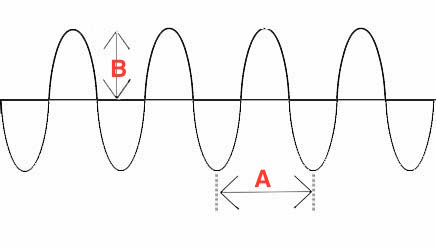
What property of this wave is represented by the letter "A"
a)
amplitude
b)
crest
c)
trough
d)
wavelength
66.
What is the primary source of energy that generates most ocean waves?
a)
earthquakes
b)
wind
c)
asteriods falling in the ocean
d)
volcanic eruptions
67.
What is a trough?
a)
highest point on a wave
b)
lowest point on a wave
c)
longest point on a wave
d)
shortest point on a wave
68.
What is a crest?
a)
lowest point of a wave
b)
longest part of a wave
c)
shortest part of a wave
d)
highest point of a wave
69.
What is the distance between two waves?
a)
wave period
b)
wave frequency
c)
wave length
d)
wave height
70.
Which of the following is not a cause of a tsunami? 
a)
Volcanic eruption
b)
Tornado
c)
Underwater earthquakes
d)
Landslide
71.
What should a person do if caught in a rip current?
a)
swim directly back to the shore
b)
swim parallel to the shore
72.
What is distance from a wave's crest to the trough called?
a)
wave height
b)
wave length
c)
wave frequency
d)
wave period