wayground logo

Free Printable Worksheets

Font size

S
M
L
XL
Worksheets

Honors Fall Semester Exam Review

Total questions: 138

Worksheet time: 2hrs 56mins

Name
Class
Date
1.

What is an unsafe lab procedure in this picture?

a)

Lindsey shouldn't be talking

b)

Sarah doesn't need goggles for dissecting a frog

c)

Even shouldn't be drinking in the lab

d)

Will shouldn't be heating up an open test tube

2.

Which student is following proper lab safety procedures?

a)

Sarah

b)

Fredy

c)

Evan

d)

Lindsey

3.

Which phase of matter has a definite volume but no definite shape?

a)

solid

b)

liquid

c)

gas

d)

ether

4.

Which phase of matter has neither a definite volume or shape?

a)

solid

b)

liquid

c)

gas

d)

ether

5.

Classify this matter

a)

element

b)

compound

c)

mixture of elements

d)

mixture of compounds

e)

mixture of element and compound

6.

Classify this matter

a)

element

b)

compound

c)

mixture of elements

d)

mixture of compounds

e)

mixture of element and compound

7.

Classify this matter

a)

element

b)

compound

c)

mixture of elements

d)

mixture of compounds

e)

mixture of element and compound

8.

Classify this matter

a)

element

b)

compound

c)

mixture of elements

d)

mixture of compounds

e)

mixture of element and compound

9.

Classify this matter

a)

element

b)

compound

c)

mixture of elements

d)

mixture of compounds

e)

mixture of element and compound

10.

Classify this matter

a)

element

b)

compound

c)

mixture of elements

d)

mixture of compounds

e)

mixture of element and compound

11.

Classify this matter

a)

element

b)

compound

c)

mixture of elements

d)

mixture of compounds

e)

mixture of element and compound

12.

Classify this matter

a)

element

b)

compound

c)

mixture of elements

d)

mixture of compounds

e)

mixture of element and compound

13.
Sugar water is a 
a)
solution
b)
suspension
c)
colloid
14.
Italian dressing is a
a)
solution
b)
suspension
c)
colloid
15.
What type of mixture separates upon standing?
a)
Solution
b)
Alloy
c)
Colloid
d)
Suspension
16.
Sand floating in water, but most of the sand is settled at the bottom this an example of which type of mixture?
a)
A solution
b)
A colloid
c)
A suspension
d)
A compound
17.
Milk is a homogeneous mixture, and scatters light.
a)
solution
b)
suspension
c)
colloid
18.
Particles are spread throughout a fluid but are too large to stay mixed w/o being stirred or shaken.
a)
suspension
b)
colloid
c)
solution
19.
A mixture whose particles are larger than the size of a molecule but smaller than particles that can be seen with the naked eye is known as a __.
a)
solution
b)
suspension
c)
colloid
d)
solvent
20.

Which of the following has the largest particles?

a)

Solution

b)

Suspension

c)

Colloid

21.

Which of the following would leave particles on filter paper?

a)

Solution

b)

Suspension

c)

Colloid

22.

A substance in which the atoms of two or more different elements are combined in a fixed proportion.

a)

molecule

b)

compound

c)

element

d)

mixture

23.

A type of mixture where the particles are larger than those in a solution but not heavy enough to settle out.

a)

Homogeneous mixture

b)

Colloid

c)

Suspension

d)

Compound

24.

The Tyndall Effect is not visible in which of the following?

a)

Solution

b)

Suspension

c)

Colloid

d)

Heterogeneous Mixture

25.

Which one of the following would you use to separate sand from iron filings?

a)

a bar magnet

b)

filter paper

c)

chromatography paper

d)

distillation

26.

Water and alcohol are easily separated by distillation because of their

a)

different melting points

b)

different colors

c)

different densities

d)

different boiling points

27.
To separate a mixture of soil and water what separation method is used?
a)
Filtration
b)
Distillation
c)
Chromatography
d)
Evaporation
28.
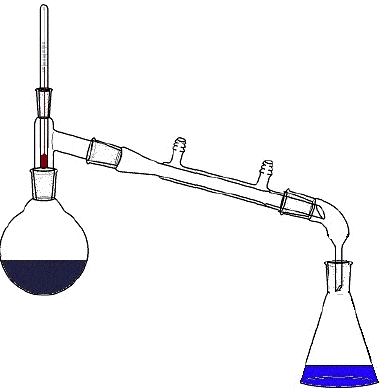
Look at the apparatus setup. It cannot be used to separate which of the following mixtures? 
a)
Marble chips from oil 
b)
Alcohol and water
c)
Chalk from sugar solution
d)
Sand and sea water
29.

In a coffee machine, the ground coffee is separated from the coffee solution by using..

a)

sand paper

b)

filter paper

c)

toilet paper

d)

tissue paper

30.
What kind of properties can only be observed when a substance changes into a different substance?
a)
physical properties
b)
chemical properties
c)
liquid properties
d)
real properties
31.
Is melting butter for popcorn a chemical or physical change?
a)
chemical
b)
physical
32.
Is burning wood a chemical or physical change?
a)
chemical
b)
physical
33.
A change in the size, shape, or state of matter.
a)
chemical change
b)
physical change
c)
chemical reaction
d)
electron change
34.
Adding baking soda and vinegar together and it fizzes and creates carbon dioxide.
a)
Chemical
b)
Physical
35.
What is an example of a Chemical change?
a)
Ripped paper 
b)
boiled egg
c)
cracked egg
d)
sugar in water
36.
Which is a chemical change?
a)
freezing fruit juice
b)
slicing a potato
c)
boiling water
d)
copper metal turning green
37.

What is the volume of the liquid in this graduated cylinder?

a)

24 mL

b)

24.20 mL

c)

24.2 mL

d)

20 mL

38.

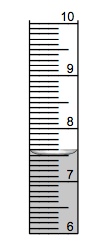
What is the volume of the liquid in this graduated cylinder?

a)

7.5 mL

b)

7.50 mL

c)

8 mL

d)

7.500 mL

39.

What is the temperature on the thermometer?

a)

20.0° Celsius

b)

20° Fahrenheit

c)

18° Celsius

d)

20° Celsius

40.
What is the temperature on the thermometer?
a)
-26°C
b)
-36°C
c)
-32°C
d)
-39°C
41.

A piece of copper has a mass of 89g and displaced 10. mL of water. What would be the density of the copper?

a)

0.89 g/cm3

b)

89 g/cm3

c)

8.9 g/cm3

d)

890 g/cm3

42.

A block has a mass of 54g and a volume of 20. cm3. What is the density of the block?

a)

74 g/cm3

b)

1080 g/cm3

c)

34 g/cm3

d)

2.7 g/cm3

43.

Identify the equipment shown here:

a)

graduated cylinder

b)

erlenmeyer flask

c)

beaker

d)

volumetric flask

44.

Identify the equipment shown here:

a)

beakers

b)

erlenmeyer flasks

c)

decanters

d)

graduated cylinders

45.
4 cm = ___mm
a)
400
b)
40
c)
4
d)
4,000
46.
180m = ___dm
a)
8
b)
18,000
c)
1,800
d)
18
47.
65g = ___mg
a)
650
b)
6,500
c)
65,000
d)
6
48.
How many Significant Figures in the number below?
400,506
a)
5
b)
4
c)
6
d)
3
49.
How many Significant Figures in the number below?
406,000
a)
5
b)
4
c)
6
d)
3
50.
Solve & Round to Correct Sig Figs.
4.5 x 2.34 = 
a)
11
b)
10.52
c)
10.5
d)
10
51.

How would you write 0.0005 in scientific notation?

a)

50 x 105

b)

5 x 10⁻⁴

c)

5 x 10³

d)

.5 x 103

52.
How would you write -5.6 x 10⁻³ in standard form?
a)
0.0056
b)
-5,600
c)
0.00056
d)
-0.0056
53.

JJ Thomson was credited for the discovery of the

a)

center of the universe

b)

proton

c)

electron

d)

neutron

54.

The atomic model associated with Thomson is the

a)

plum pudding model

b)

nuclear mode.

c)

planetary model

d)

the electron cloud model

55.

In what location did Rutherford suggest the electrons were located?

a)

in the nucleus.

b)

outside the nucleus.

c)

only where the alpha particles were deflected.

d)

outside the atom after they collided with the alpha particle.

56.

Which is a finding attributed to Rutherford's Gold Foil Experiment?

a)

atoms are indivisible and have a dense positive nucleus.

b)

atoms are divisible and have multiple layers of electrons scattered uniformly about the atom.

c)

atoms are like plum pudding with positive and negative charges uniformly scattered throughout the atom.

d)

atoms are mostly empty space with a dense positive nucleus.

57.

Rutherford used what type of radiation to bombard the gold foil?

a)

alpha particles.

b)

beta particles.

c)

gamma radiation.

d)

neutrinos.

58.
This particle determines what element you have - the elements identity.
a)
electron
b)
proton
c)
neutron
d)
valence shell
59.
Which particles make up the nucleus of an atom?
a)
protons and neutrons
b)
electrons and protons
c)
electrons, protons, and neutrons
d)
electrons and neutrons
60.
What is the mass number and name of an element with 8 protons and 8 neutrons?
a)
16 - Carbon
b)
16 - Oxygen
c)
24 - Oxygen
d)
8 - Neon
61.
An element with a mass number of 10 and an atomic number of 6 has how many protons?
a)
5
b)
8
c)
6
d)
10
62.
What is the atomic mass of the atom pictured? 
a)
11
b)
12
c)
22
d)
23
63.
What is the atomic number of the atom pictured? 
a)
11
b)
12
c)
22
d)
23
64.
Ag--110 and Ag--112 are two forms of silver with different mass # so they are
a)
compounds
b)
isotopes
c)
orbitals
d)
neutrons
65.

An atom that has gained or lost electrons in an attempt to become stable/bond with another atom.

a)

Normal/Neutral Atom

b)

Ion

c)

Isotope

66.

A negatively charged ion that has gained electrons to satisfy the octet rule (nonmetals do this)

a)

Anion

b)

Cation

c)

Neutral Atom

d)

Isotope

67.

A positively charged ion that has lost electrons to satisfy the octet rule (non-metals do this)

a)

Anion

b)

Cation

c)

Neutral Atom

d)

Isotope

68.

If an atom has 9 protons and 10 electrons it has a charge of ____.

a)

0

b)

-1

c)

+1

d)

-2

69.

If an atom has 4 protons and 2 electrons it has a charge of ____.

a)

0

b)

-2

c)

+2

d)

+1

70.
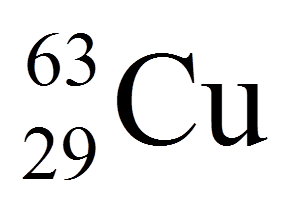
According to the isotopic notation for copper-63, how many neutrons are present in this type of atom?
a)
29
b)
34
c)
63
d)
92
71.
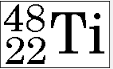
How many protons does this isotope of titanium have?
a)
48
b)
22
c)
26
d)
70
72.
What do these isotopes of carbon all have in common?
a)
neutrons & mass number
b)
atomic number and neutrons
c)
atomic number and electrons
d)
protons, atomic number, and mass number
73.

This could be the dot diagram of

a)

Mg

b)

Cl

c)

C

d)

O

74.

What are the elements (Be, Mg, Ca,...) in Group 2 called?

a)

Alkali metals

b)

Alkaline earth metals

c)

Halogens

d)

Noble Gases

75.
This could be the dot diagram of
a)
P
b)
Ar
c)
Na
d)
B
76.

This could be the dot diagram of an element with the atomic number

a)

8

b)

31

c)

19

d)

36

77.
How do positive ions form?
a)
by gaining electrons
b)
getting compliments
c)
by losing electrons
d)
gaining more protons
78.

Which of these is correct?

a)
b)
c)
79.

A wave with a large wavelength will have a ______ frequency and _____ energy

a)

high, low

b)

high, high

c)

low, high

d)

low, low

80.

The frequency of violet light is 7.5x10¹⁴ Hz. What is its wavelength?

a)

4.0x10⁻⁷ m

b)

4.0x10⁷ m

c)

2.25x10²³m

d)

2.25x10²³ Hz

81.

If short wavelength has more ENERGY than long wavelength, which color Lightsaber is the most dangerous, or powerful?

a)

Red

b)

Orange

c)

Blue

d)

Green

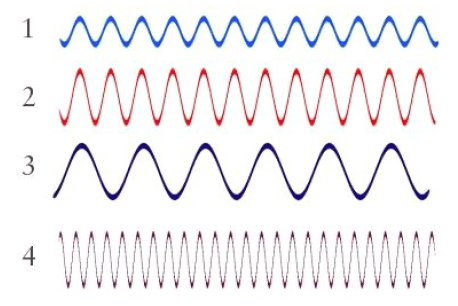
82.
Which wave in the diagram has the greatest wavelength?
a)
1
b)
2
c)
3
d)
4
83.

Longest Wavelengths and Lowest Frequencies?

a)

Visible Light

b)

Microwaves

c)

X-Rays

d)

Radio Waves

84.

Shortest Wavelength and a Higher Frequency on the Electromagnetic System?

a)

X-rays

b)

Infrared

c)

Visible Lights

d)

Gamma Rays

85.

Who proposed that electrons are only found in specific, discrete circular orbits around the nucleus?

a)

Albert Einstein

b)

Erwin Schrodinger

c)

Ernest Rutherford

d)

Niels Bohr

86.

When atoms _____________ energy, their electrons move to higher energy levels. These electrons _____________ energy by emitting light when they return to lower energy levels.

a)

lose, absorb

b)

absorb, lose

c)

lose, lose

d)

absorb, absorb

87.
Covalent bonds are between...
a)
Metal and Non-metal
b)
Non-metal and Non-metal
c)
Metal and Metal
88.
Ionic bonds are between...
a)
Metal and Non-metal
b)
Non-metal and Non-metal
c)
Metal and Metal
89.
How are covalent bonds formed?
a)
Sharing of electrons
b)
Transfer of electrons
90.
How are ionic bonds formed?
a)
Transfer of electrons
b)
Sharing of electrons
91.
Ionic or covalent?
NaBr
a)
Ionic
b)
Covalent
92.
Ionic or covalent?
H2O
a)
Ionic
b)
Covalent
93.
Which of the following compounds does NOT contain molecules?
a)
H2
b)
NaCl
c)
CO2
d)
H2O
94.

In the compound MgCl2, the subscript 2 indicates that

a)

There are two magnesium ions for each ion of chlorine

b)

The chloride ion is twice the size of the magnesium ion

c)

Magnesium and chlorine form a double covalent bond.

d)

There are two chloride ions for each magnesium ion.

95.
Beryllium, Be, and chlorine, Cl, form an ionic compound. In order for the compound to be neutral, what must the formula look like?
a)
Be2Cl
b)
2BeCl
c)
BeCl2
d)
Be2Cl2
96.
MgO is an ionic compound. What is its name?
a)
Manganese Oxide
b)
Magnesium Oxide
c)
Magnesium Monoxide
d)
Magnesium(II) Oxide
97.
What is the proper name for the covalent compound, CCl4
a)
Carbon Chloride
b)
Carbon Quadrachloride
c)
Carbon Tetrachloride
d)
Carbon Dichloride
98.
Name this covalent compound: CO
a)
Carbon Oxide
b)
Carbon Monoxide
c)
Colorado
d)
Carbon Oxygenide
99.
What is the proper name for the covalent compound N3F8?
a)
Nitrogen Flouride
b)
Nitrogen Fosfate
c)
Trinitrogen Octaflouride
d)
Nitrogen Pentaflouride
100.
Where are the metalloids located on the periodic table?
a)
Blue
b)
Red
c)
Green
101.
Where are metals located on the periodic table?
a)
Blue
b)
Green
c)
Red
102.
Where are the nonmetals located on the periodic table? 
a)
Blue
b)
Red
c)
Green
103.

What is the chemical formula of Magnesium chloride?

a)

MgCl

b)

MgCl2

c)

MgC

d)

MgC2

104.

What is the chemical formula of sodium sulfate?

a)

SSO4

b)

SoSO4

c)

NaSO4

d)

Na2SO4

105.

What is the name of this chemical, H2SO4?

a)

Hydrogen sulfate

b)

Sulfuric acid

c)

Sulfate

d)

Sulfate hydrogen

106.

What is the formula of Copper (II) oxide?

a)

CUO

b)

CuO

c)

CuO2

d)

Cu2O

107.

What is the formula of nitric acid?

a)

H2SO4

b)

HNO3

c)

HCl

d)

hno3

108.
All solids at room temperature
a)
ionic compounds
b)
covalent compounds
109.
Some are solids, some are liquids, and some are gases at room temperature.
a)
ionic compounds
b)
covalent compounds
110.
Molten compound conducts electricity.
a)
ionic compound
b)
covalent compound
111.
Molten compound does NOT conduct electricity.
a)
ionic compound
b)
covalent compound
112.
Have a high m.p. (1000°C-3000°C)
a)
ionic compounds
b)
covalent compounds
113.
Have a low m.p. (< 200°C)
a)
ionic compounds
b)
covalent compounds
114.
When dissolved in water, the solution is a good conductor of electricity.
a)
ionic compounds
b)
covalent compounds
115.
When dissolved in water, the solution does NOT conduct electricity.
a)
ionic compounds
b)
covalent compounds
116.

usually hard and brittle

a)

ionic compounds

b)

covalent compounds

117.
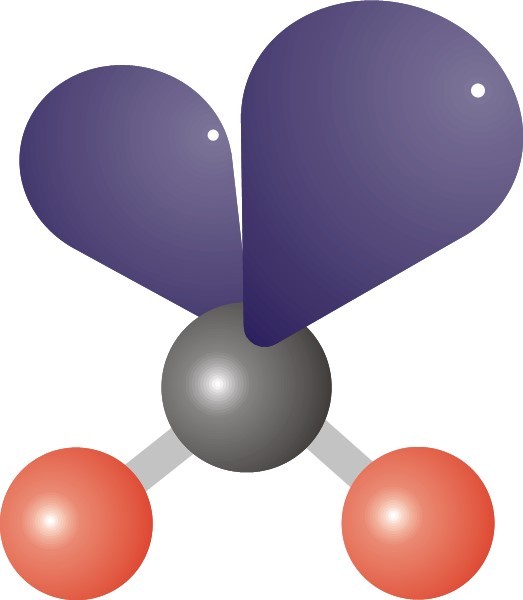
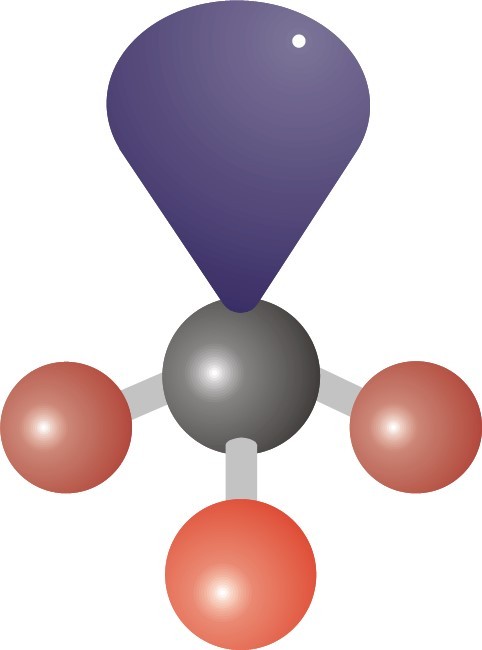
Which of the following shapes has unshared pairs of electrons on the central atom? 
a)
Bipyramidal
b)
Bent
c)
Trigonal Planar
d)
Tetrahedral
118.
Which molecule would have this shape?
a)
BF3
b)
CH4
c)
PCl5
d)
CO2
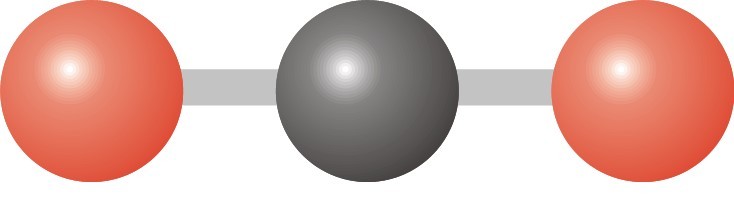
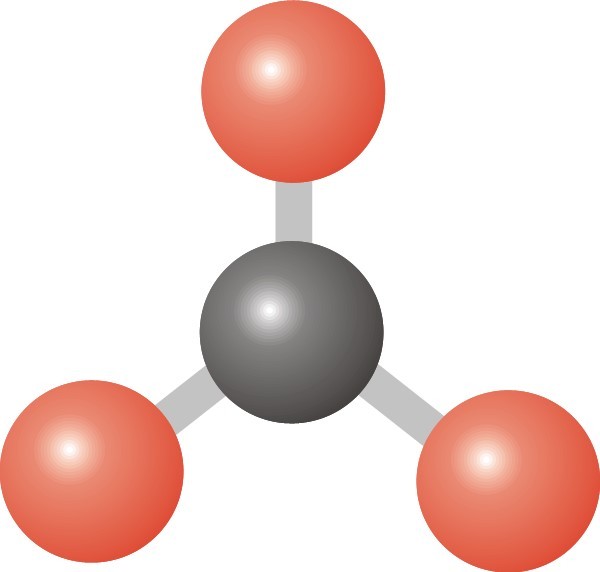
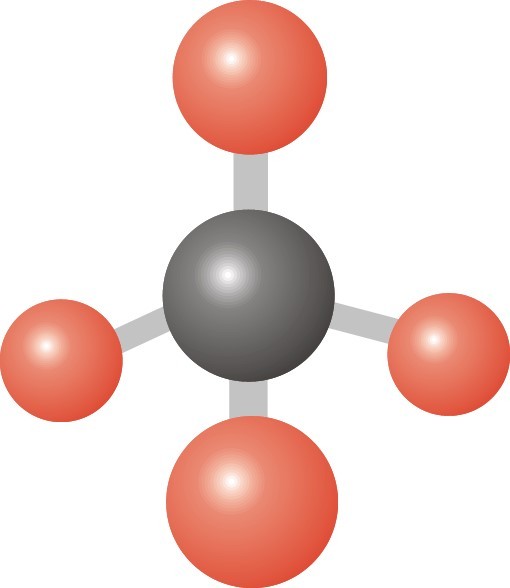
119.
What molecule could this be? 
a)
BF3
b)
CH4
c)
H2O
d)
CO2
120.

What molecule could this be?

a)

CH4

b)

CO2

c)

PCl5

d)

BF3

121.

What molecule could this be?

a)

CO2

b)

NH3

c)

H2S

d)

CH4

122.

What molecule could this be?

a)

H2O

b)

NH3

c)

CO2

d)

CH4

123.
Will this molecule be polar or nonpolar? PH3
a)
polar
b)
nonpolar
124.
What molecular shape is the structure shown here? (BCl3)
a)
linear
b)
trigonal planar
c)
tetrahedral
d)
trigonal pyramidal
125.
What molecular shape is the structure shown here? (H2O)
a)
tetrahedral
b)
trigonal planar
c)
bent
d)
trigonal pyramidal
126.
What is the molecular shape of a silicon dioxide molecule?
a)
linear
b)
trigonal planar
c)
bent
d)
tetrahedral
127.
What is the basis of a metallic bond?
a)
the attraction of neutral metal atoms.
b)
the attraction between protons and neutrons.
c)
the attraction between positive metal ions and interlocking electrons.
d)
the attraction between positive metal ions and free floating electrons.
128.
What does malleable mean?
a)
able to be shaped
b)
will break easily
c)
can be used for wire
d)
is shiny
129.
What is the ability of a substance to be pulled into a thin strand?
a)
Malleability
b)
Ductility 
c)
Conductivity
d)
Solubility
130.
How many molecules of sugar (C6H12O6) are in a mole?
a)
24 molecules
b)
180 molecules
c)
180 g
d)
6.02 x 10²³ molecules
131.
If an atom of Fluorine has an atomic mass of 19 amu, it has a Molar mass of ____
a)
19 lbs.
b)
19 kg
c)
How am I supposed to know?
d)
19 g/mol
132.
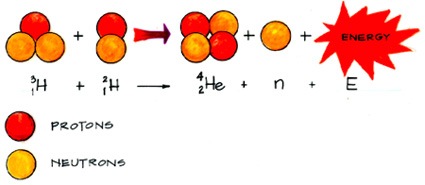
Which process involves the joining of small nuclei?
a)
Beta decay
b)
Alpha decay
c)
Nuclear fission
d)
Nuclear fusion
133.
Which process involves the splitting of large nuclei?
a)
Beta decay
b)
Alpha decay
c)
Nuclear fission
d)
Nuclear fusion
134.
The nuclear process occurring at a nuclear power plant.
a)
Nuclear fusion
b)
Nuclear fission
c)
Combustion
d)
Multiplication
135.
Arrange in order of increasing ability to penetrate matter.
a)
Beta, gamma, alpha
b)
Alpha, gamma, beta
c)
Gamma, beta, alpha
d)
Alpha, beta, gamma
136.
Which type of nuclear radiation is being emitted here?
a)
Alpha
b)
Beta
c)
Gamma 
d)
none
137.
Which type of nuclear radiation is being emitted here along with Rn
a)
alpha
b)
beta
c)
gamma
d)
none
138.
If Thorium-234 undergoes a beta decay, What element will be left in its place?
a)
Actinium-234
b)
Thorium-233
c)
Protactinium-234
d)
Radium-230