wayground logo

Free Printable Worksheets

Font size

S
M
L
XL
Worksheets

Chemistry Semester 1 Final Exam 2022-2023

Total questions: 141

Worksheet time: 2hrs 48mins

Name
Class
Date
1.

What is the smallest unit of matter? It is composed of protons and neutrons, held together in the nucleus, and electrons around the nucleus in different electron orbitals, which form an electron cloud.

a)

cell

b)

nucleus

c)

atom

d)

electron

2.

What are any of the various self-contained units of matter or energy that are fundamental parts of all matter. These particles include electrons, protons, and neutrons.

a)

subatomic particles

b)

elements

c)

nucleus

d)

electron cloud

3.

What is a subatomic particle with a positive charge that is in the nucleus of an atom?

a)

neutron

b)

proton

c)

electron

d)

valence electron

4.

What is a subatomic particle without an electric charge, located in the nucleus of an atom?

a)

neutron

b)

proton

c)

electron

d)

valence electron

5.

What is a subatomic particle with a negative charge? It is found in the electron cloud surrounding the nucleus.

a)

neutron

b)

proton

c)

electron

d)

electron cloud

6.

What is the center of an atom containing protons and neutrons?

a)

nucleus

b)

neutron

c)

proton

d)

electron cloud

7.
Which subatomic particles are found in the nucleus of an atom?
a)
Protons and Electrons
b)
Protons and Neutrons
c)
Neutrons and Electrons
d)
Protons, Neutrons and Electrons
8.
What electrical charge does a proton have?
a)
+1
b)
0
c)
-1
d)
+2
9.

What mass does a neutron have?

a)

1 amu

b)

0 amu

c)

-1 amu

d)

+2 amu

10.
Complete the missing label on the diagram.
a)
Neutron
b)
Centre
c)
Nucleus
d)
Sub atomic particle
11.
Which particle is negatively charged?
a)
proton
b)
atom
c)
neutron
d)
electron
12.
In order for an atom to be neutral what has to be true?
a)
The atom has more protons than neutrons
b)
The atom has more neutrons than protons
c)
The atom has the same number of protons and neutrons
d)
The atom has the same number of protons and electrons
13.
What subatomic particles would you find in the nucleus of an atom?
a)
Protons only
b)
Protons and Neutrons
c)
Neutrons and Electrons
d)
Protons and Electrons 
14.

How many electrons does this atom have?

a)

2

b)

4

c)

6

d)

10

15.
Where is most of the mass in an atom located?
a)
in the nucleus
b)
in the protons
c)
in the neutrons
d)
in the electrons
16.

The smallest piece of an element:

a)

quark

b)

electron

c)

shell

d)

atom

17.
Which particle contributes the negative charge to the atom?
a)
proton
b)
electron
c)
neutron
d)
nucleus
18.
Which particle does not contribute mass to the atom?
a)
Proton
b)
Neutron
c)
Electron
d)
Nucleus
19.
What scientist is best known for his gold foil experiment?
a)
J.J. Tomson
b)
Ernest Rutherford
c)
John Dalton
d)
Democritus
20.
Who is the first scientist to think that the atom was the smallest unit of matter?
a)
J.J. Tomson
b)
Ernest Rutherford
c)
John Dalton
d)
Democritus
21.
What scientist first developed 5 rules for atomic theory, and helped kick start modern chemistry?
a)
J.J. Tomson
b)
Ernest Rutherford
c)
John Dalton
d)
Democritus
22.
Bonus question: What element is this an atom of?
a)
nitrogen
b)
lithium
c)
beryllium
d)
carbon
23.
The three main subatomic particles are electrons, protons and ____________.
a)
photons
b)
neurons
c)
neutrons
d)
quarks
24.
What are the two main parts of the atom?
a)
nucleus and cytoplasm
b)
nucleus and electron cloud
c)
core and electron cloud
d)
protons and neutrons
25.
What is the standard unit of mass at the atomic level?
a)
centimeters
b)
millimeters
c)
amu
d)
milligrams
26.
Most of the mass in an atom is made up of _____________________?
a)
protons and electrons
b)
protons and neutrons
c)
neutrons and electrons
d)
electrons and quarks
27.
What is the electrical charge of a proton?
a)
1+
b)
1-
c)
neutral
d)
2-
28.
Water is an element
a)
true
b)
false
29.
DIFFERENT kinds of atoms chemically combined to form a substance are
a)
Mixture
b)
Element
c)
Compound
d)
Substance
30.
 A homogeneous mixture has the same composition of particles throughout.
a)
True
b)
False
31.
Salt water is a mixture.
a)
True
b)
False
32.
An example of a homogeneous mixture would be:
a)
salad
b)
perfume
c)
pizza
d)
chex mix
33.
A heterogeneous mixture would be:
a)
gold
b)
chex mix
c)
chocolate milk
d)
water
34.
A mixture that does not look the same throughout:
a)
heterogeneous mixture
b)
homogeneous mixture
c)
the periodic table
d)
water
35.
You are eating a pizza. What type of mixture are you consuming?
a)
homogeneous
b)
heterogeneous
c)
pure substance
d)
The Periodic Table
36.
Flammability is an example of what property?
a)
Chemical property
b)
Physical property
37.
Chicken soup is an example of what kind of substance?
a)
homogenous
 mixture
b)
solution
c)
heterogeneous
mixture
d)
compound
38.

How many valence electrons are in Aluminum?

a)

1

b)

2

c)

3

d)

4

e)

5

39.

How many valence electrons are in Calcium?

a)

1

b)

2

c)

3

d)

4

e)

5

40.

How many valence electrons are in Calcium?

a)

1

b)

2

c)

3

d)

4

e)

5

41.

How many valence electrons are in Fluorine?

a)

3

b)

4

c)

5

d)

6

e)

7

42.

How many valence electrons are in Iron?

a)

1

b)

2

c)

4

d)

6

e)

8

43.

How many valence electrons are in Helium?

a)

1

b)

2

c)

4

d)

6

e)

8

44.

How many valence electrons are in Lithium?

a)

1

b)

2

c)

4

d)

6

e)

8

45.

How many valence electrons are in Magnesium?

a)

1

b)

2

c)

4

d)

6

e)

8

46.

How many valence electrons are in Nitrogen?

a)

1

b)

2

c)

4

d)

5

e)

8

47.

How many valence electrons are in Nitrogen?

a)

1

b)

2

c)

4

d)

5

e)

6

48.

If Aluminum loses an electron - it will then become a(n)

a)

cation

b)

anion

49.

If Calcium loses an electron - it will then become a(n)

a)

cation

b)

anion

50.

If Chlorine gains an electron - it will then become a(n)

a)

cation

b)

anion

51.

If Fluorine gains an electron - it will then become a(n)

a)

cation

b)

anion

52.

If Sulfur gains an electron - it will then become a(n)

a)

cation

b)

anion

53.

What are valence electrons?

a)

The total number of electrons in an atom

b)

The number of electrons in the outermost shell

c)

The number of electrons in the second shell

d)

The number of protons in the outermost shell
54.

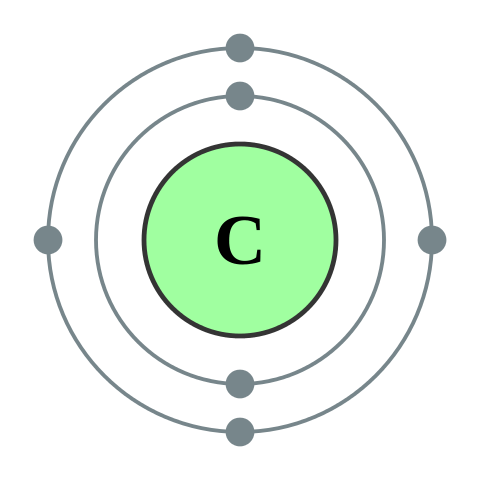
How many valence electrons does carbon have?

a)

4

b)

5

c)

6

d)

7

55.

USE THE PERIODIC TABLE

How many valence electrons does Phosphorus have?

a)

31

b)

5

c)

15

d)

4

56.
How many valence electrons are found in atoms of group 1?
a)
7
b)
6
c)
4
d)
1
57.
How many valence electrons are found in atoms of group 14?
a)
4
b)
3
c)
14
d)
16
58.
This could be the dot diagram of 
a)
Ne
b)
Si
c)
Al
d)
Be
59.

This could be the dot diagram of

a)

Mg

b)

Cl

c)

C

d)

O

60.

How many valence electrons does Germanium (Ge) have?

a)

32

b)

4

c)

14

d)

2

61.

How many valence electrons does Selenium (Se) have?

a)

6

b)

16

c)

79

d)

34

62.

Which of the following is a correct electron dot structure?

a)
b)
c)
d)
63.

Which of the following is the correct electron dot structure for nitrogen?

a)
b)
c)
d)
64.
What is the name of this element?
a)
Helium
b)
Hydrogen
c)
Argon
d)
Silver
65.

What element is represented in this Bohr Model?

a)

Carbon

b)

Hydrogen

c)

Aluminum

d)

Lithium

66.
What is the name of this element?
a)
Lithium
b)
Boron
c)
Carbon
d)
Neon
67.
What is the mass number of this atom?
a)
1
b)
3
c)
4
d)
7
68.
What is the atomic number of this atom?
a)
2
b)
4
c)
6
d)
none of the above
69.
Isotopes are elements with a different amount of
a)
protons
b)
neutrons
c)
electrons
d)
atoms
70.
an element will always have the same number of 
a)
neutrons
b)
protons
c)
isotopes
d)
atoms
71.
How are electrons arranged in an atom?
a)
In groups of five
b)
In energy levels
c)
By color
d)
By shape
72.

What is the atomic number of this element?

a)

17

b)

18

c)

35

d)

35.453

73.

How many electrons can fit on the 1st energy level (orbital) for any Bohr Model?

a)

2

b)

6

c)

8

d)

10

74.

What is the mass number of this atom of Chlorine?

a)

17

b)

18

c)

35

d)

35.453

75.
What does the nucleus of an atom contain?
a)
Electrons and neutrons
b)
Protons and neutrons
c)
Neutrinos and positrons
d)
Electrons and megatrons
76.

What is a Bohr Model?

a)

a simplified representation of an atom

b)

vertical column in periodic table

c)

horizontal row in periodic table

d)

Only shows the element symbol and it's outer most electron shell

77.

Which element does this Bohr model represent?

a)

Aluminum

b)

Silicon

c)

Magnesium

d)

Cobalt

78.

What is the mass of this atom?

a)

9

b)

10

c)

19

d)

28

79.

What element does this Bohr model represent?

a)

Chromium

b)

Magnesium

c)

Carbon

d)

Krypton

80.
How many electrons should Lithium have around its Lewis dot model?
a)
1
b)
2
c)
3
d)
4
81.
How many electrons should Beryllium have around its Lewis dot model?
a)
1
b)
2
c)
3
d)
4
82.
How many electrons should Boron have around its Lewis dot model?
a)
1
b)
3
c)
5
d)
7
83.
How many electrons should Carbon have around its Lewis dot model?
a)
1
b)
3
c)
4
d)
5
84.
How many electrons should Nitrogen have around its Lewis dot model?
a)
1
b)
3
c)
4
d)
5
85.
How many electrons should Oxygen have around its Lewis dot model?
a)
5
b)
6
c)
7
d)
8
86.
How many electrons should Flourine have around its Lewis dot model?
a)
5
b)
6
c)
7
d)
8
87.
How many electrons should Neon have around its Lewis dot model?
a)
5
b)
6
c)
7
d)
8
88.
How many electrons should Sodium have around its Lewis dot model?
a)
1
b)
2
c)
3
d)
4
89.
How many electrons should Magnesium have around its Lewis dot model?
a)
1
b)
2
c)
3
d)
4
90.
How many electrons should Aluminium have around its Lewis dot model?
a)
1
b)
2
c)
3
d)
4
91.
How many electrons should Silicon have around its Lewis dot model?
a)
1
b)
2
c)
3
d)
4
92.
How many electrons should Phosphorus have around its Lewis dot model?
a)
2
b)
4
c)
5
d)
7
93.
How many electrons should Sulfur have around its Lewis dot model?
a)
5
b)
6
c)
7
d)
8
94.
How many electrons should Chlorine have around its Lewis dot model?
a)
5
b)
6
c)
7
d)
8
95.
How many electrons should Argon have around its Lewis dot model?
a)
5
b)
6
c)
7
d)
8
96.
How many electrons should Potassium have around its Lewis dot model?
a)
1
b)
2
c)
7
d)
8
97.
How many electrons should Calcium have around its Lewis dot model?
a)
1
b)
2
c)
7
d)
8
98.
How many electrons should Helium have around its Lewis dot model?
a)
1
b)
2
c)
7
d)
8
99.
How many electrons should Hydrogen have around its Lewis dot model?
a)
1
b)
2
c)
7
d)
8
100.
How many electrons should Boron have around its Lewis dot model?
a)
1
b)
3
c)
5
d)
7
101.
How many atoms of Oxygen are in this compound?
a)
1
b)
2
c)
3
d)
4
102.
How many Oxygen are in H2O?
a)
1
b)
2
c)
0
d)
4
103.
How many atoms are there TOTAL in:
H2SO4
a)
6
b)
5
c)
7
d)
3
104.
How many Aluminum are in Al2O3?
a)
3
b)
2
c)
5
105.
The number of Na's in Na₂CO₃
a)
1
b)
2
c)
3
d)
6
106.
How many Sodium (Na) are in 6NaCl?
a)
1
b)
12
c)
6
107.
How many Hydrogen are in 4H2O?
a)
6
b)
8
c)
2
d)
4
108.
How many Magnesium are in 10MgCl2?
a)
10
b)
5
c)
20
109.

Calculate the number of Oxygen atoms in Al(OH)3

a)

1

b)

2

c)

3

d)

4

110.
How many O's are in Al₂(SO₄)₃
a)
4
b)
12
c)
7
d)
24
111.

4CF2Cl2

a)

C = 4, F = 4, Cl = 2

b)

C = 1, F = 8, Cl = 8

c)

C = 4, F = 8, Cl = 8

d)

C = 1, F = 4, Cl = 8

112.
How many total atoms are in the compound C2H8O ?
a)
11
b)
2
c)
8
d)
1
113.

How many 2O2 molecules are present?

a)

1

b)

4

c)

2

d)

8

114.
All ____________ are made up of two or more atoms bonded together.
a)
atoms
b)
molecules
c)
electrons
d)
elements
115.

How many 2H2O molecules are present?

a)

1

b)

4

c)

2

d)

8

116.
2H2O
This number tells how many molecules are in a chemical equation.
a)
coefficient
b)
subscript
c)
compound
d)
element
117.
What does this image represent?
a)
Atom
b)
Element
c)
Molecule
d)
Marshmallows
118.

How many 4H2O2 molecules are present?

a)

1

b)

4

c)

2

d)

8

119.

How many H2O2 molecules are present?

a)

1

b)

4

c)

2

d)

8

120.

How many 8CO2 molecules are present?

a)

1

b)

4

c)

2

d)

8

121.

How many CO2 molecules are present?

a)

1

b)

4

c)

2

d)

8

122.

O2

How many O2 molecules are present?

a)

1

b)

4

c)

2

d)

8

123.
Magnesium bromide is an ionic compound with the chemical formula MgBr₂.  What does the "2" tell you?
a)
There are 2 bromide ions for every magnesium ion
b)
Bromide has a 2- charge
c)
Bromide has a 2+ charge
d)
There are 2 magnesium ions to every bromide ion
124.

A(n) _________ is an ion with a positive (+) charge.

a)

anion

b)

cation

c)

ion

d)

solute

125.

How many valence electrons does hydrogen have?

a)

1

b)

2

c)

3

d)

4

126.

An ionic bond is the attraction between

a)

similarly charged ions

b)

oppositely charged ions

c)

neutral ions

d)

neutral atoms

127.

When an atom loses an electron it forms

a)

Positive Ion

b)

Negative Ion

c)

Neutral Ion

d)

Neutral Atom

128.

Each family in the periodic table has its own characteristic properties based on the number of

a)

Neutrons

b)

Valence Electrons

c)

Protons

d)

Ions

129.

When an atom loses or gains electrons, what is formed?

a)

Protons

b)

Irons

c)

Ions

d)

Noble Ions

130.

The transfer of Valence electrons from a metal to a non metal is known as

a)

Covalent Bonding

b)

Metallic bonding

c)

Molecular bonding

d)

Ionic Bonding

131.

Why do all bonds form?

a)

so the number of protons equals the number of electrons

b)

so an atom can become unstable

c)

to fill the outermost energy level

132.
Ionic bonds are between...
a)
Metal and Non-metal
b)
Non-metal and Non-metal
c)
Metal and Metal
133.

According to the Octet Rule, atoms of elements react with each other in order to attain ____ electrons in their outermost energy level or shell.

a)

2

b)

4

c)

6

d)

8

e)

10

134.

What is the best definition of valence electrons?

a)

The outermost electron NOT involved in chemical reactions

b)

The innermost electrons involved in chemical reactions

c)

The outermost electrons involved in chemical reactions.

d)

The innermost electrons NOT involved in chemical reactions
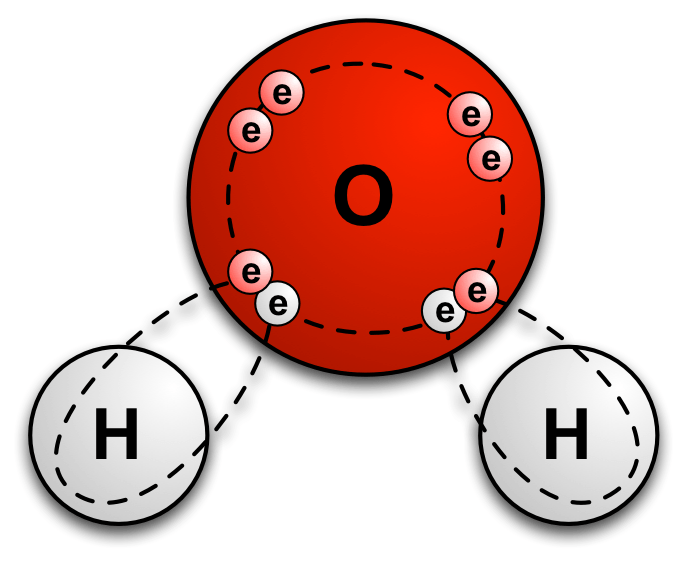
135.
What determines how ionic bonds will form?
a)
Number of protons
b)
Mass of the atom
c)
Number of total electrons
d)
Number of valence electrons
136.
A anion will be a ____ ion.
a)
negative
b)
positive
137.
According to the octet rule most elements need _______ valence electrons.
a)
2
b)
8
c)
6
d)
18
138.
What would you name this molecule?
a)
SNa3
b)
H3O
c)
NaCl
d)
H2O
139.

How many electrons can be held in the first shell?

a)

1

b)

2

c)

4

d)

8

140.

What is the reason why Noble gases are so stable?

a)

They have an even number of electrons

b)

They have no electrons

c)

They have a full outer shell of electrons

d)

They bond with other atoms

141.

How many electrons make a full outer shell in the 2nd or 3rd shells?

a)

1

b)

2

c)

4

d)

8