
 Worksheets
The Periodic Table
Total questions: 146
Worksheet time: 1hrs 21mins
The Periodic Table is organized by increasing
charges
atomic number
mass number
electronegativity
The elements in the middle of the table are called the _____________ metals because their properties change from metallic to nonmetallic.
positive
negative
magnetic
transition
The _________________ are a small group of elements that have both metallic and nonmetallic properties.
Oxygen Group
Nitrogen Group
Metalloids
Halogens
The vertical columns on the periodic are called _______________.
Rows
Periods
Groups
Valence
The horizontal rows of the Periodic Table are called ______________.
Periods
Groups
Families
Halogens
The _______________electrons are the electrons on the outer most energy level of the atom.
valence
core
excited
ground state
Elements of the same ______________ have the same number of valence electrons, which determines the elements chemical properties.
Period
Row
Group
This element does not match the properties of any other group so it stands alone. It is placed above Group 1 but it is not part of that group. It is very reactive, colorless, odorless, and a gas at room temperature.
Hydrogen
Helium
Nitrogen
Oxygen
Group 1: These metals are extremely reactive. They all have one valence electron. They are shiny and silver in color. They are soft and can be cut with a knife.
Transition Metals
Alkali Metals
Alkaline Metals
Lanthanides
Group 2: Slightly less reactive because they have 2 valence electrons. They are silver colored and more dense that Group 1 metals.
Transition Metals
Alkali Metals
Alkaline-earth Metals
Actinides
Groups 3-12: These metals have a moderate range of reactivity and a wide range of properties. They are shiny and good conductors of heat and electricity. They have higher densities and melting points than Groups 1 and 2. These have 1 or 2 valence electrons.
Transition Metals
Alkali Metals
Alkaline-earth Metals
Lanthanides
Elements with atomic numbers 57-70 and 89-102: These metals were taken out and placed at the bottom of the table so the table wouldn't be so wide. Some are shiny and reactive. Others are radioactive and unstable. Elements 95-103 do not exist in nature but have been manufactured in the lab.
Alkali Metals
Alkaline-earth Metals
Lanthanides and Actinides
Boron Group
Group 13: Contains on metalloid and 4 metals. They are reactive. All have 3 valence electrons (Group # minus 10).
Boron Group
Nitrogen Group
Oxygen Group
Carbon Group
Group 14: Contains one nonmetal, two metalloids, and two metals. These all have 4 valence electrons (Group # minus 10) and have varied reactivity.
Boron Group
Carbon Group
Nitrogen Group
Oxygen Group
Group 15: Contains two nonmetals, two metalloids, and one metal. They have varied reactivity. These elements have 5 valence electrons (Group # minus 10).
Boron Group
Carbon Group
Nitrogen Group
Oxygen Group
Group 16: Contains three nonmetals, one metalloid, and one metal. They are a reactive group. These elements all have 6 valence electrons (Group # minus 10).
Boron Group
Carbon Group
Nitrogen Group
Oxygen Group
Group 17: All nonmetals. Very reactive. Poor conductors of heat and electricity. Tend to form salts with metals. Example NaCl: sodium chloride which is known as table salt. These elemtns have 7 valence electrons (Group # minus 10).
Boron Group
Oxygen Group
Nitrogen Group
Halogens
Group 18: Unreactive nonmetals. All are colorless, odorless gases at room temperature. These elements have a full outer energy level, usually 8 valence electrons, except for Helium which only has 2 valence electrons.
Nitrogen Group
Oxygen Group
Noble Gases
Halogens
The elements on the right side of the Periodic Table are classified as ________________.
Metals
Nonmetals
The elements on the left side of the periodic table are classified as ________________.
metals
nonmetals


16
Metals are found on the ______________ side of the periodic table.
nonmetals
left
right
metals
A(n) _______ is the smallest particle of an element that has the chemical properties of that element.
electron
compound
atom
molecule

The chart gives the atomic number and mass number of two elements.
How many protons does Element B have?
10
20
9
19

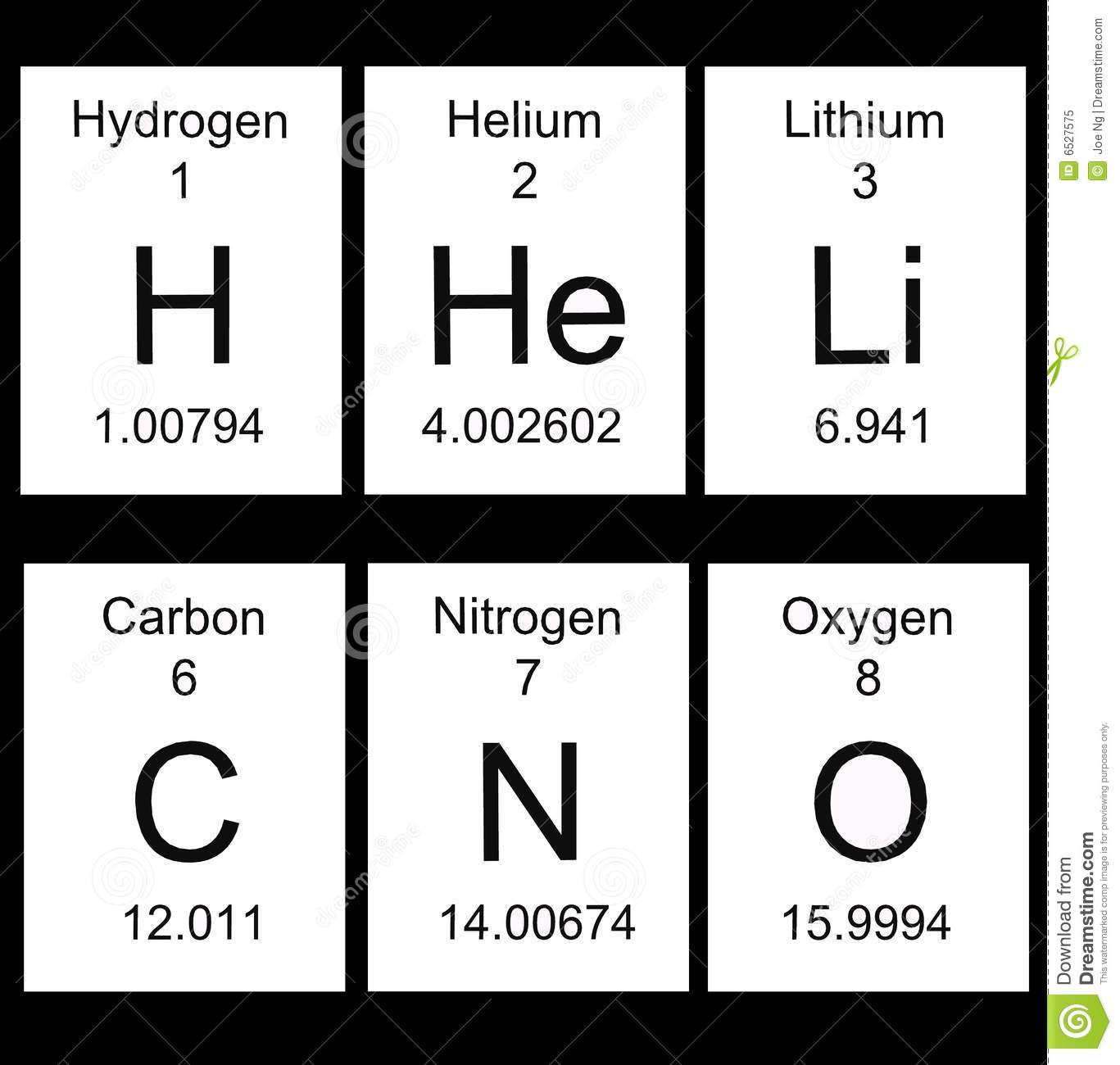
Below is a square that represents one element of the periodic table.
What information is in this square of the periodic table, from top to bottom?
average atomic mass, chemical symbol, chemical name, atomic number
atomic number, chemical symbol, chemical name, average atomic mass
average atomic mass, chemical symbol, chemical name, proton number
atomic number, chemical symbol, chemical name, proton number
Which of the following represents an element?
H2O
HCl
NaCl
Au
CaCO3
Which of the following could be a symbol on the periodic table of elements?
CC
Cc
cc
CcC
CK1
What is NOT made up of two or more elements that are chemically combined?
Element
Compound
Mixture
Solid
Liquid
Which of the following is an element?
Gold
Air
Water
Carbon Dioxide
Nitrous Oxide
How many elements are there in CuSO4?
1
2
3
4
5
A sample of matter that is not mixed with any other type of matter.
element
pure substance
mixture
compound

The image below shows how information about a specific element is represented on the periodic table.
What information does the symbol “C” give about the element?
atomic number
atomic mass
density
chemical symbol
The image below shows how information about a specific element is represented on the periodic table.
What information does the symbol “6” give about the element?
atomic number
atomic mass
density
chemical symbol
He, Ne, and Ar are all noble gases (Group 18). What is common among these gases?
They are flammable.
They are highly reactive.
They are metals.
They are unreactive.

The vertical (up and down) columns in the Periodic Table are called _______.
groups
towers
periods
atomic numbers
Locate Lanthanides and Actinides on the periodic table. (You should have more than one answer.)


Which of these is a halogen, a Group 17 element?
Helium
Chlorine
Oxygen
Neptune

Most of the elements on the periodic table are classified as _____.
Metals are found on the ______________ side of the periodic table.
nonmetals
left
right
metals
Chlorine, Cl is an example of a non-metal element.
True
False
What is the name of group 1 elements?
halogens
noble gases
alkali metals
alkaline earth metals
Elements in Group 1 have _____ valence electron(s).
1
2
3
4
Elements in Group 2 have ____ valence electron(s).
1
2
3
4

Which of the following is an alkaline earth metal?
Ti
Mg
O
He


The atoms along the ZIG-ZAG staircase are called ____.
Elements in the Group 3 to Group 12 are used in coins and tools. They are called ____.
alkali metals
noble gases
halogens
transition metals
How many valence electrons are found in Group 15 (Nitrogen Group) elements?
How many valence electrons are found in atoms of Group 14 (Carbon Group) elements?
The vertical (up and down) columns in the Periodic Table are called
groups
towers
periods
atomic numbers
Which of the following are physical properties of metal? Select all that apply
Luster
Conductivity
Malleability
Ductility
True or False: The as you move from left to right across the periodic table, elements increase in metallic character.
True
False
Name this group: These metals are the most reactive.


Name this group: These metals are the second most reactive.


Name this group: These metals contain familiar metals such as gold, iron, and copper.


Which of the following could be properties of nonmetals? Select all that apply
Poor electrical conductivity
Poor thermal conductivity
Dullness
Brittleness
I am a metal
I am in group 2
I am in period 6
I am…
Mo
Re
S
Ba
I am a nonmetal
I am in period 2
I am in group 6
Ba
Si
Tc
O
Find an element with similar chemical properties to Barium (Ba).
Ca an Ra, because they are in the same group and have similar chemical properties.
Cs and La, because they are in the same period number.
Ca and Y, because they are 90 degree angle and have similar properties.
The number of protons is also known as the
number of electrons
atomic number
atomic mass
number of neutrons
Where are electrons located?
Outside the nucleus
In the nucleus
The negatively charged particles in an atom
Electron
Proton
Neutron
Nucleus
The particles in an atom that have no charge
Nucleus
Neutron
Proton
Electron
The center part of an atom
Electron
Nucleus
Neutron
Proton
A table where elements are organized by their atomic number.
Chart
Graph
Periodic Table
Table
Subatomic particle with a positive charge
protons
neutrons
electrons
element
Subatomic particle with a neutral charge
protons
neutrons
electrons
elements
Subatomic particle with a negative charge
protons
neutrons
electrons
element
Where are protons located?
in the nucleus
orbitals around the nucleus
elements
Where are neutrons located?
nucleus
orbitals around the nucleus
elements
The number of protons=_____________
the atomic number
the atomic mass
the period number
the group number
The letter, C, is the ... of carbon.
Atomic Number
Name
Atomic Symbol
Smallest particle of an element
Atom
Electron
Neutron
Proton
This subatomic particle determines the identity of the element.
Proton
Neutron
Electron
This subatomic particle is responsible for holding together the nucleus.
Electron
Proton
Neutron
Where are protons located?
Outside the nucleus
In the nucleus
Where are neutrons located?
Outside the nucleus
In the nucleus
This subatomic particle is responsible for chemical reactions.
proton
neutron
electron

Calcium
Ca
Oxygen
O
Hydrogen
H
Helium
He
Nitrogen
N
What is the correct way to write the symbol for beryllium?
BE
Be
be
What is the correct way to write the symbol for argon?
ar
AR
Ar

What is the atomic number of oxygen?
O
8
15.999
Oxygen
How many protons are in one atom of oxygen?
O
8
15.999
Oxygen

What is the atomic number of uranium?
92
U
uranium
238.029
How many protons are in one atom of uranium?
92
U
uranium
238.029

Tin (Sn) and Lead (Pb) are both members of the came group as carbon, as shown by the periodic table, which of the following elements would also be a member of this group and why?
Iron(Fe), because it is a metal like tin and lead
Krypton (Kr) because it is an inert gas like tin and lead
Calcium (Ca) because it has reactivity similar to that of tin and lead
Silicon (Si) because it has conductivity similar to that of tin and lead
Which of the following is an element?
salt
oxygen
vinegar
water

A model of the most basic unit of oxygen is shown. Which of the following is true of oxygen?
Oxygen is an element because its most basic unit is a single type of atom
Oxygen is a compound because its most basic unit is a single type of atom
Oxygen is a mixture because its most basic unit contains more than one particle
Oxygen is a compound because its most basic unit contains more that one type of particle
How is an element different from a compound?
an element is highly reactive, and a compound is stable
an element exists in any state, and a compound is only a liquid
an element contains multiple substances, and a compound contains only one pure substance
an element is made of a single type of atom, and a compound is made of two or more atom types

This is a chemical formula for glucose, a type of sugar. What statement is true about glucose?
Glucose is an element, because it can be separated into smaller components
Glucose is an element, because it is made up of more than one kind of atom
Glucose is a compound, because it is made up of more than one element
Glucose is a compound, because it is made of protons, neutron and electrons

Nitrogen is a gas at room temperature and standard pressure. It is also a Group 15 element as shown. Which statement about the other elements in Group 15 is true?
They look similar to oxygen
They react in a way similar to how nitrogen reacts
They have the same density as nitrogen when under the same conditions
They are, like nitrogen, gases at room temperature and standard pressure

Which elements in the periodic table have similar properties?
a metal and a noble gas
a metal and a non metal
two elements in the same group
two elements in the same period

Based on the periodic table of elements, which of the following sets of elements have similar properties?
Pb, Sn, Kr
Ne, N, O
Cl, Br, I
O, S, N
What is the atomic number of an element based upon?
mass of it's nucleus
number of electrons around it's core
number of protons in its nucleus
number of neutrons in its nucleus
A chemist determines that the atom she is studying has eight negatively charged particles outside the nucleus. What does this indicate about the atom?
it is very unstable
it contains eight neutrons
it contains eight electrons
it is a negatively charged ataom
Audra is looking at the diagram of an atom. Which particle(s) does she see inside the nucleus?
electrons only
protons only
electron and protons
protons and neutrons

A model of Nitrogen is shown, in this model, what do the blue spheres represent?
electrons
neutrons
photons
protons
Which subatomic particle or particles have a negative charge?
protons and electrons
electrons and neutrons
electrons only
neutrons only
Which best describes what happens when elements combine to form a compound?
the atoms in each compound dissolve
the atoms of both elements bind together
the nuclei in the atoms of both elements split and combine with the nuclei of other atoms
The subatomic particles in the atoms of both elements change to resemble each other
Kathy's teacher puts this question on the board:
All matter is made of ______, which may contain ______.
Atoms, molecules
Elements, atoms
molecules, atoms
molecules, elements
Atoms combine in many different ways to form different substances. Iron is an element. Brass is not an element, instead brass is a combination of two elements. what is the difference between iron and brass?
Iron, but not brass, consists of atoms
Brass, but not iron, is a metallic substance
Iron is a compound, brass is not
Brass is a compound, iron is not
Compounds are made up of different kinds of atoms that are chemically combined. What do compounds have in common?
They have the same color
They have the same melting point
They can be broken down into simpler substances
They can't combine with one another to from more complex substances
Which of the following is a property of an element?
Elements have their own individual characteristic properties
Elements have at least two different types of atoms
Elements have the ability to change into a different element
Elements can be separated from one another
A student notices that a basketball seems to act differently depending on whether the game is being played on a court with a wooden floor, on a concrete driveway, or on a blacktop in the park. they student hypothesizes that the surface on which a ball is bounced affects the height of the bounce.
How can the student design an experiment to test the hypothesis?
The student should drop the same ball from 3 different heights and have someone measure the height of each bounce
The student should drop 3 different balls from the same height and have someone measure the height of each bounce
The student should drop the same ball from the same height on 3 different surface and have someone measure the height of each bounce
The student should drop 3 different balls from the same height on 3 different surfaces and have someone measure the height of each bounce
Ena is measuring the pH of various liquids to see if they are acids or bases. Although she is following the same procedure each time, she notices that when she tests a particular liquid she obtains results she does not expect. She is not sure that the result is accurate.
What should Ena do to improve the reliability of the data she collects?
change her hypothesis
perform repeated trials on each liquid
measure a smaller volume of each sample
research more information about acids and bases

The graph shows the number of pythons removed from the Florida Everglades over a period of time.
Based on the data collected, which conclusion is the most logical?
Python presence is increasing each year in certain parts of Florida?
Python presence is due to the low water levels in surrounding lakes
Python presence in evidence of an exception to the theory of natural selection
python presence is a result of the lack of human ecosystem intervention in Florida
Devin is doing an investigation to address the question of how temperature affects the rate of crystal growth. He has 6 jars and adds the same amount of warm water to each jar. Then he adds salt to each jar, enough to make a saturated solution, and stirs until the salt dissolves completely. He observes the jars for several days.
Which experimental design allows for the collection of the evidence Devin needs to address this question?
He leaves all 6 jars on the counter and records the temperature and day the crystals appear
He puts all 6 jars in the fridge, and records the day and temperature the crystals appear
he puts 3 jars in the fridge and 3 jars at room temperature and, records the day the crystals appear
He puts 5 jars at room temperature and 1 in the fridge, and records the day the crystals appear
Which statement BEST describes a scientific hypothesis?
a scientific fact
a scientific theory
an inference based on scientific data
a testable scientific explanation based on observation
Elements
in Group 18 are known as
(a)
Going down the group, the melting point and boiling point
of the elements
(a)
• Used to fill weather balloons
• Used in the oxygen tanks of divers
Helium
• Used in advertising board lights
Neon
Used to fill in electric bulbs
• Used to provide an inert atmosphere for welding in
high temperature
Argon
Used in flashlight of cameras
• Used in lasers for eye retina treatment
Krypton
• Used in lighthouse lamps
• Used for anesthesia
Xenon
Physical Characteristics of group 1 elements are(choose all that apply)
soft metals
low density
loat on the surface of water
grey shiny surface at room temperature.
Write the equation for the reaction of sodium with water.
The reactivity of alkali metals in
Group 1 is due to the tendency of
atom to donate its valence electrons.
atom to receive its valence electrons.
Why do the melting point
and boiling point of elements decrease when going down the group?
Group 1 elements are soft metals, with low density and float on the surface of water
Group 1 elements have one electron in the valence shell. In a chemical reaction, these atoms donate
one electron and form an ion with the +1 charge.
The increase in the atomic size
down the group will weaken the attraction force between the atoms. Therefore, less heat energy is
required to overcome the attraction forces between the metal atoms.
When alkali metals burn in oxygen gas,
black solid is produced
a white solid that is metal oxide will be formed
gas is produced
Reaction of chlorine with water will
produce
hypochlorous acid
hydrochloric acid
sulphuric acid
Why does the reactivity
of elements decreases when going
down Group 17?
Increasing
atomic size will cause the
valence shell to be further from
the nucleus. This will cause the
nuclear attraction force towards
the electrons to become weaker.
Thus, the difficulty in attracting
electrons to fill the valence shell
will increase.
Decreasing
atomic size will cause the
valence shell to be further from
the nucleus. This will cause the
nuclear attraction force towards
the electrons to become weaker.
Thus, the difficulty in attracting
electrons to fill the valence shell
will increase.
Increasing
atomic size will cause the
valence shell to be further from
the nucleus. This will cause the
nuclear attraction force towards
the electrons to become stronger.
Thus, the difficulty in attracting
electrons to fill the valence shell
will increase.
All halogens are
soluble in organic solvents
conduct heat nor
electricity
do not conduct heat nor
electricity
insoluble in organic solvents
All transition elements are metals with the following
properties
• Solids with shiny surfaces
• Very hard compared to metals in Groups 1 and 2
• Have high densities
• Have high melting points and boiling points
Transition elements function as a catalyst
to increase the rate of reaction without
undergoing chemical change at the end of the reaction. For example, iron filings are used
as a catalyst in the Haber Process.
increase the product
Iron, Fe is used in the Haber
Process to produce
sulphuric acid
ammonia
Special Characteristics for Several Transition Elements in the Periodic Table
are
Transition elements form coloured
ions or compounds
Transition elements
have more than one
oxidation numbe
Transition elements can form
complex ions
What family on the Periodic Table is non-reactive?
Noble Gases
Halogens
alkali earth metals
Wan Pablo
Metals are on the...
Left side of the Periodic table
Right side of the Periodic Table
Wan Pablo
Zn's atomic number is...
21
30
Wan Pablo
40
Sodium (Na) is on group 15. True or false?
true
False
Wan Pablo
Rick Astley
Bromine (Br) is in which family?
Wan Pablo
Halogens
Alkali metals
Oxygen family
Is Wan Pablo the son of Daddy Jebes? (Graham's suggestion)
Yes, he's Wan Ebes Juilius Caesar Pablo
No, he's adopted
Carbon (C) is in group...
1
Wan Pablo
14
3
Lithium (Li) is is group...
6
1
16
Wan Pablo
Argon (Ar) is in which family?
Wan Pablo
Noble Gases
Transition metals
Bearer of charms
Is Dimitrius Demarcus James John Brown Bartholomere III jr. Daddy Jebes?
Yes, he is daddy Jebes, father of Wan Ebes Juilius Caesar Pablo.
No, he's Graham cracker, right hand man of Wan Ebes Juilius Caesar Pablo.

