
 Worksheets
Chemistry Midterm Review
Total questions: 149
Worksheet time: 2hrs 17mins


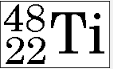
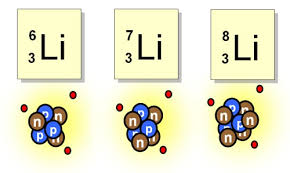
The atomic number of an element is 14. What is the likely arrangement of the valence and core electrons in a neutral atom of this element?
There are 2 valence electrons and 12 core electrons.
There are 4 valence electrons and 10 core electrons.
There are 5 valence electrons and 10 core electrons.
There are 6 valence electrons and 8 core electrons.
How many valence electrons does the chlorine atom have?
3
4
8
7

This could be the dot diagram of
Mg
Cl
C
O

This is a correct dot diagram for neon (Ne)
true
false
How many electrons should sodium, atomic number 11, have around its Lewis dot model?
1
2
3
4
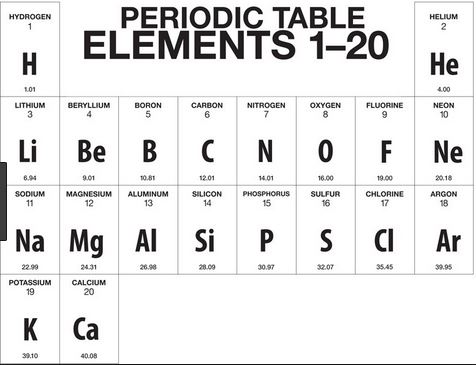
How many valence electrons does Aluminum Have?
1 Valence electron
2 Valence electron
3 Valence electron
4 Valence electron
5 Valence electron
How would you draw a Lewis dot diagram for Magnesium?


Which of these is correct?


Which Danish physicist proposed an atomic model that described electrons as moving in circular orbits around the nucleus?
Niels Bohr
Stephen Hawking
Tycho Brahe
Carl Sagan
The amount of energy required to move an electron from one energy level to another is a _______ of energy.
atomic emission spectrum
quantum
energy level
Ground State
What is the lowest possible energy level that an electron can occupy?
Lower energy level
Excited State
Ground State
Depressive State
How does an electron get from a lower energy level to an excited state (higher energy level)?
It absorbs light
it simply can do whatever it wants
that's how the statistics describe it
It emits light
Which of the following electronic transitions in the oxygen atom will result in light emission?
ni=1⟶nf=2
ni=3⟶nf=2ni
ni=1⟶nf=3
ni=2⟶nf=3
If the hydrogen atom emits red, blue-green, blue, and violet light, how many energy levels does it have in the visible region of the spectrum?
3
4
5
6
How many electrons can occupy the lowest energy level?
1 only
up to 2
up to 4
up to 8
How many electrons can occupy the second energy level?
up to 2
up to 4
up to 6
up to 8
How many electrons are in the outer most energy level of Boron?
1
2
3
4
How many electrons are in the outermost energy level of Chlorine (Cl)
1
3
5
7
The quantum mechanical model describes the ______________ location of an electron and its __________ structure. (Select TWO ANSWERS)
Most likely (probable)
Definite
2D
3D


How many atoms are in 1 molecule of H2O?
1
2
3
4
How many atoms are in 1 molecule of CH4?
2
3
4
5
Which molecule has more atoms in it: CO or CO2?
CO
CO2
They have the same number of atoms
The simplest form of matter containing only one type of atom with its own particular set of properties is called a(n) ___.
element
ion
mass
molecule
A combination of two or more atoms that can be the same or different is called a(n) ___.
element
isotope
ion
molecule
The state of matter exhibiting the highest amount of kinetic energy is the __________ state.
gas
liquid
solid
Water vapor is in gaseous form. Water vapor molecules are held together by ________ attractive forces than ice.
stronger
the same
weaker
For a given element, in which state of matter would you expect it to have the greatest amount of POTENTIAL energy?
gas
liquid
solid
Which of the following are examples of matter? (select all that apply)
electricity
American flag
temperature
water
Which of the following are examples of energy? (select all that apply)
atoms
heat
kinetic
potential
zebra

The elements in this family are soft, silvery, and very reactive with water.
Alkaline Earth Metals
Alkali Metals
Transition Metals
Lanthanides
What group is the family found? These halides are very reactive and almost have full outer energy level/shell.
1
2
16
17
The is family has properties of both metals and nonmetals.
Alkali
Halogens
Nonmetals
Metalloids
This type of element is dull, brittle solids and gases, insulators, poor conductors of heat and electricity, as well as having low melting points.
metals
metalloids
nonmetals
Sulfur is a...
metal
nonmetal
metalloid
What is the atomic number of Cu?
25
26
27
29
An element with 21 protons in each atom has an atomic number of:
12
21
2
24
Which element has a mass number of 12 and contains 6 neutrons?
Gallium
Copper
Carbon
Sodium

What is the mass number of a nitrogen atom that has 8 neutrons?
15
14
22
8

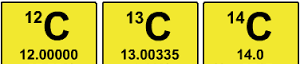
What is true about the carbon atom depicted in the image?
This carbon atom has 13 protons
There are 13 subatomic particles in the electron cloud
The mass number of this carbon atom is 13
The atomic number of this carbon atom is 13

(Multiple Answer Question)
Select the element(s) that has 8 valence electrons.
Ne
Br
Kr
Xe
How many valence electrons does Boron have?
1
2
3
4
5
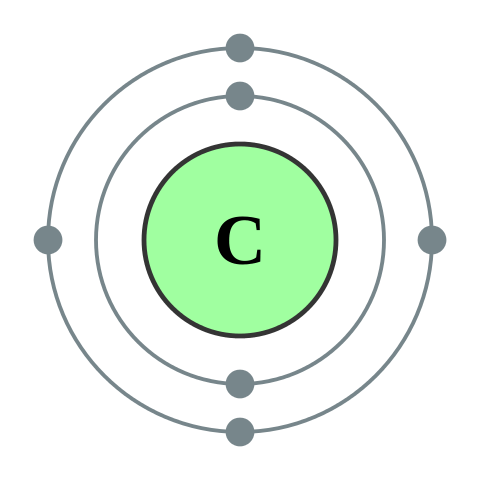
How many valence electrons does carbon have?
4
5
6
7
USE THE PERIODIC TABLE
Find the element that has 5 Valence Electrons and 4 energy levels.
(Hint: Energy Levels = Number of Electrons Shells or Periods)
Arsenic - As
Selenium - Se
Calcium - Ca
Vanadium - V
Two objects that are similarly charged will...
attract.
repel.
not experience an electric force.
implode.
The Lewis Dot structure for aluminum would have ______ electrons.
13
3
8
27
Valence electrons are those that are
closest to the nucleus.
freely floating between atoms.
in the outermost energy level of the atom.
unable to become involved in chemical bonding.
Atoms that have gained electrons form
cations.
anions.
negions.
positrons.
What is a cation's charge?
positive
negative
neutral
depends on the element
This could be the dot diagram of
Mg
Cl
C
O
How would you draw a Lewis dot diagram for Magnesium?
What is the goal of the Lewis Dot Structure?
To determine the electron position.
To show the element's valence electrons & bonding capabilities.
To find the atomic mass of an element.
To search for the number of electrons in an individual atom.


The majority of an atom's mass exists where?
In the nucleus
In the electron cloud
In the space between the nucleus and the electrons
In the neutrons
N or C?
Na ionizes to a charge of _______
+1
+2
-1
-2
Li ionizes to a charge of _________
+2
+1
-1
-2
K ionizes to a charge of _________.
+1
+2
-1
-2
Rb ionizes to a charge of _________.
+2
+1
-1
-2
Be ionizes to a charge of ________.
+1
+2
-1
-2
Mg ionizes to a charge of ______.
+1
+2
-1
-2
Ca ionizes to a charge of _______.
+1
+2
-1
-2
Sr ionizes to a charge of _________.
+1
+2
-1
-2
Al ionizes to a charge of _______.
+3
-3
+2
-2
N ionizes to a charge of _______.
+3
-3
+2
-2
P ionizes to a charge of _______.
+3
-3
+2
-2
As ionizes to a charge of _______.
-3
+3
-2
+2
O ionizes to a charge of ________.
+1
+2
-1
-2
S ionizes to a charge of _______.
-2
-1
+1
+2
Se ionizes to a charge of _____.
-2
-1
+1
+2
Te ionizes to a charge of ________.
-2
-1
+2
+1
F ionizes to a charge of ________.
-2
-1
+1
+2
Cl ionizes to a charge of _________.
-2
-1
+1
+2
Br ionizes to a charge of ________
-1
-2
+1
+2
I ionizes to a charge of _______.
-1
-2
+1
+2
Which of the following could NOT form an ionic compound? Check all that apply.
Li+ and Cl-
F- and O2-
Ba2+ and Ag+
Mg2+ and S2-
Which of the following could form an ionic compound? Check all that apply.
Na+ and F-
S2- and O2-
Ca2+ and Fe3+
Mg2+ and Cl-
In an ionic bond, the ions are held together because...
the positive nucleus of each ion attracts the other ion's negatively charged electrons
the ions have opposite charges
as the electron moved from one atom to another it pulled the atom along with it
electrons are being shared
Which element(s) will lose valence electrons to form an ion? Check all that apply.
Phosphorus
Iron
Barium
Neon
Which element(s) will form negative ions? Check all that apply.
Potassium
Sulfur
Iodine
Magnesium
Which of the following pairs of elements could NOT react to form an ionic compound?
Carbon and Oxygen
Potassium and Fluorine
Silver and Oxygen
Aluminum and Chlorine
Calcium Fluoride has a chemical formula of CaF2. What does the chemical formula tell you?
There are 2 Calcium ions for every 1 Fluoride ion in the crystal
There is 1 Calcium ion for every 2 Fluoride ions in the crystal

The following ionic crystal has 6 Fe ions (red) and 9 O ions (blue). What is the formula for this ionic crystal?
FeO
Fe2O3
Fe3O2
Fe6O9

The following ionic crystal has 4 Sr ions (red) and 8 Br ions (blue). What is the formula for this ionic crystal?
SrBr
SrBr2
Sr2Br
Sr4Br8

The following ionic crystal has 4 Al ions (red) and 6 O ions (blue). What is the formula for this ionic crystal?
Al3O2
Al4O5
Al4O6
Al2O3
In which part of the periodic table are metals mostly found?
At the top
On the left
On the right
Which of these describes the arrangement of particles in a metal?
Closely packed electrons with delocalised ions
Alternating layers of metal ions and electrons
Layers of metal ions surrounded by delocalised electrons
How many electrons are delocalised in a metal?
1
2
As many as are in the outer shell
What does a metallic bond consist of?
Forces between metal ions and delocalised electrons
Pairs of metal atoms joined together by strong bonds
Forces between oppositely charged metal ions
Which of the following is NOT a property of a typical metal?
Poor conductor of electricity
High melting point
Shiny
What does 'malleable' mean?
Able to be drawn into wires
Able to conduct electricity
Able to be hammered into thin sheets
Which of these metals does NOT have a high melting point?
Magnesium
Mercury
Silver
Why are metals ductile?
Because the metal is arranged in layers
Because the metal ions are closely packed
Because the metal can conduct electricity
Why do metals conduct electricity?
They have free-moving atoms
They have free-moving ions
They have free-moving electrons
Why do metals have high melting points?
Metallic bonds are weak and metals have a simple structure
Metallic bonds are strong and metals have a lattice structure
Metallic bonds are strong and metals have a simple structure

