
 Worksheets
Chemistry Semester 2 Final exam 2023-203-24
Total questions: 151
Worksheet time: 8hrs 44mins
A teacher asks her students to examine titles of four scientific articles. Which titled article is specifically about a chemical change?
How Baking Soda Reacts with Vinegar
How Rust Can Be Scraped off of Metal
How Metals Respond to Electrical Currents
How Elements Can Change Phase When Heated
Identify ALL of the chemical changes
Boiling water
Burning a marshmallow
Fireworks going off
Cutting your hair
Dying your hair
If you cut a wooden block in half, each half would have:
Half the density of the original piece
Twice the density of the original piece
The same density as the original piece
Which best represents a balanced equation?
120 grams of carbon plus 20 grams of oxygen → 200 grams of carbon dioxide
120 grams of carbon plus 50 grams of oxygen → 200 grams of carbon dioxide
120 grams of carbon plus 80 grams of oxygen → 200 grams of carbon dioxide
The following chemical reaction occurs.
2H2O2 → 2H2O + O2
How many atoms of hydrogen are involved in the reaction?
1
2
4
8
The compound ammonia is composed of nitrogen and hydrogen atoms. If two atoms of nitrogen completely react with six atoms of hydrogen to form two molecules of ammonia, which best describes the number of hydrogen atoms present in the two molecules of ammonia?
2
4
6
Which is best represented by the equation?
2Mg + O2 2MgO
Law of Conservation of Energy
Law of Conservation of Mass
Law of Superposition
When chemicals react in a closed container, which must be true?
The mass both before and after the reaction is the same.
The mass both before and after the reaction is variable.
The same number of compounds is present both before and after the reaction.
A chemistry teacher combines 20 grams of lemon juice with 25 grams of baking soda in a flask covered with a balloon. The flask and balloon have a combined mass of 105 grams. What is the mass of the entire setup after a reaction has occurred?
45 g
150 g
605 g
The equation below shows a reaction between sodium (Na) and water (H2O).
2Na (s) + H2O (l) → 2NaOH (aq) + H2 (g)
Which best explains why the equation is not balanced?
There is too much sodium in the reactants.
There is not enough water in the reactants.
There is too much hydrogen gas in the products.
There is not enough sodium hydroxide in the products.
What coefficient for O2 demonstrates the law of conservation of mass?
CH4(g) + __O2(g) → CO2(g) + 2H2O(g)
1
2
3
4
Which best describes how to balance the chemical equation shown below to support the law of conservation of mass?
Mg + O2 → MgO
Add the coefficient 2 before the Mg on both sides of the equation.
Add the coefficient 2 before the O2 on the left side of the equation.
Add the coefficient 2 before the Mg on the left side of the equation.
Add the coefficient 2 before the MgO on the right side of the equation.
In the equation below, suppose 11 grams of zinc react with 12 grams of hydrogen chloride to form 16 grams of zinc chloride and an unknown amount of hydrogen gas.
Zn + 2HCl → ZnCl2 + H2
Based on the Law of Conservation of Mass, how many grams of hydrogen gas will form?
1 g
7 g
19 g
Which best explains why the total mass of the product(s) would be less than the total weight of the reactant(s) after a chemical reaction?
A physical change occurred.
Atoms involved in the reaction lost mass
Precipitates were created in the new solution
Gases were released into the atmosphere.
If 100 grams of vinegar and 5 grams of baking soda are poured in a container, a small amount of gas will be produced. What will the final mass of the products be if the gas is trapped in the container?
100 g
104 g
105 g
110 g
Which of the following is a correctly written chemical equation that demonstrates the conservation of mass?
Mg + HCl --> H2 + MgCl2
H2O + CO2 --> H2CO3
KClO3 --> KCl + O2
H2 + O2 --> H2O
What is the total number of oxygen atoms on the reactant side of the equation shown below?
CH3COOH + NaHCO3 → CH3COONa + H2O + CO2
2
3
5
7
An ice cube is put into a heated pan. What will most likely happen to the molecules in the ice as the ice is heated?
The molecules will begin to move slower.
The molecules will begin to move faster.
The molecules will begin to increase in density.
The molecules will begin to condense in air.
Two clear solutions are mixed together in a beaker. Which result would indicate a chemical reaction had occurred between these solutions?
increase of volume in the beaker
decrease of volume in the beaker
increase in temperature of the beaker
John and Lisa collected a sample of ocean water and placed it in a jar. Within a couple of days, the water had evaporated and salt was visible at the bottom of the jar. This is an example of a
physical change
chemical change
new substance being formed
What does the Law of Conservation of Mass state?
Matter is created and destroyed in a chemical reaction.
Matter is neither created nor destroyed, just transferred.
Matter is only destroyed in a chemical reaction.
Matter can be transformed into energy.
When balancing chemical equations, what is the first step?
Balance the most complex molecule.
Sum all the atoms and make a chart.
Guess and check the coefficients.
Balance the hydrogen atoms first.
What does balancing a chemical equation involve?
Changing the chemical formulas of the reactants and products.
Adding coefficients to ensure the number of atoms of each element is equal on both sides.
Removing elements to simplify the equation.
Increasing the temperature of the reaction.
What should be true for all elements in a balanced chemical equation?
They should all be gases.
They should react with each other.
They should be equal and as simplified as possible.
They should be in their elemental form.
What is the purpose of making a chart when balancing chemical equations?
To list the physical properties of each element.
To track the number of atoms of each element.
To determine the temperature of the reaction.
To identify the catalysts in the reaction.
What is meant by ‘balancing’ in the context of chemical equations?
Ensuring the equation is symmetrical.
Making sure the physical states of all reactants and products are mentioned.
Ensuring the number of atoms for each element is the same on both sides of the equation.
Confirming that the reaction is exothermic.
What role do coefficients play in balancing chemical equations?
They indicate the temperature at which the reaction occurs.
They change the chemical properties of the substances involved.
They represent the number of molecules of each substance.
They show the speed of the chemical reaction.
What is typically the first element balanced in a chemical equation?
The element with the least atoms.
The element with the most complex structure.
Any random element.
An element chosen based on its position in the periodic table.
Why might balancing chemical equations involve some trial and error?
Because the exact composition of substances is unknown.
Due to the unpredictability of chemical reactions.
Because finding the correct coefficients may require adjustment.
Because the laws of chemistry are not always consistent.
In a balanced chemical equation, what happens to atoms from the beginning to the end of the reaction?
They change into different atoms.
They are destroyed and then recreated.
They remain the same, just rearranged.
They are converted into energy.
How many oxygen atoms are in the products for the chemical reaction below?
4Fe + 3O2 → 2Fe2O3
2
3
5
6
What do we call the chemicals that result from a chemical reaction?
reactants
products
subscripts
coefficients
The Law of Conservation of Mass says that matter can neither be __________ or __________.
created; destroyed
recycled; renewed
subtracted; added
joined; separated
How many atoms are in the products below?
4Fe +3O2 → 2Fe2O3
7
10
17
20
According to the Law of Conservation of Mass, what happens to the wood and oxygen when it is burned?
The wood disappears.
It stays the same chemically.
The atoms in the wood and oxygen rearrange and form smoke and ash.
Nothing.
H2 + O2 --> H2O
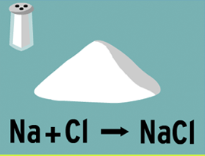
When sodium and chlorine combine to form sodium chloride, sodium chloride is the:
Originator
Reactant
Product
Produce
How many Hydrogen atoms are in 4H2O?
6
8
2
4
What does the subscript in a chemical formula tell you? (a)
How many elements are in this chemical formula?
H2SO4
1
2
3
4
How many atoms of Carbon are in this formula? C6 H12O6
6
1
12
What elements are represented in this chemical formula? Fe2O3
Iron, Oxygen
Francium, Europium, Oxygen
Ferrium, Oxygen
Berylium, Oxygen
What is the total number of atoms in this formula? H2O2
2
4
3
How many more atoms of Oxygen than than Magnesium are in this formula? (subtraction) MgSO4
4
3
2
6
Which of the following elements is least likely to form a compound?
Hydrogen
Sodium
Argon
Potassium
Which of the following is a molecule of a compound?
H2
Cl2
H2O
F2
Which does not belong in the group?
Sodium
Glucose
carbon
Element
Is this an element or a compound? CaSO4
Element
Compound
Which chemical formula correctly displays 1 atom of nickel and 2 atoms of Fluorine?
niF2
NIF2
Ni1F2
NiF2
What is the total number of atoms in this chemical formula? C8H3NaBr12
18
12
25
24
Which element has the greatest number of atoms? AgNO3
Silver
Gold
Nitrogen
Oxygen
Molecules that are made of more than one type of atom are called?
Molecules
Elements
Mixtures
Compounds
How many elements are in this chemical formula? NaHCO3
1
2
3
4
H2SO4
What is it called if there are three-pairs of electrons being shared?
Triple Bond
Three Single Bonds
Tribond
Double and Single Bond Combo

Which of the following is the best representation of a molecule of fluorine (F2)?
A
B
C
D
Carbon is in 4A, so how many bonds can it form based on electrons needed to fill its outer shell?
1
3
4
5
What bond is formed between a metal and a nonmetal?
Covalent bond
Ionic bond
Hydrogen bond
Metallic bond
When two nonmetals do not share electrons evenly, the resulting covalent bond will be
nonpolar
polar
ionic
metallic
Since covalent compounds do not have free charges, they are
good conductors
poor conductors
ionic
metallic
Which would be the only situation where valence electrons would be shared evenly?
metals and nonmetals
different nonmetals
nonmetals of the same element
metalloids of the same element
Which formula is for phosphorus trichloride?
KCl3
PCl3
K3Cl
P3Cl
Silicon dioxide is the compound in sand. What is its formula?
SO2
NaO2
SiO2
SiO
What is the formula for diphosphorus pentoxide?
P2O5
PO5
P5O2
P2O6

What is a positive ion called?
anion
cation
isotope
covalent
What is a negative ion called?
anion
cation
covalent
isotope
Which types of elements from cations?
metals
nonmetals
metalloids
noble gases
Which types of elements from anions?
metals
nonmetals
metalloids
noble gases
Why do elements form bonds?
to get a charge
so they can make friends
to become stable by getting a full valence shell
to become stable by increasing their mass
How many electrons would a Nitrogen ion gain/lose?
lose 5
gain 5
lose 3
gain 3
How many electrons would a Calcium ion gain/lose?
lose 1
gain 1
lose 2
gain 2
What is the ion formed from Sulfur?
S+2
S-2
S+6
S-6
If an atom loses electrons, the charge will be positive.
true
false
A Bromine ion gains 1 electron, which of the following is the correct symbol for a Bromine ion?
Br-1
Br+1
Br+7
Br-7

This image shows the bonding between Lithium and Fluorine. What does the red arrow show?
electrons being shared
electrons being transferred to Fluorine
electrons being transferred to Lithium
electrons being destroyed
Which of the following is NOT a step in forming an ionic bond?
One atom shares its electrons with another one
Opposite charged ions form due to the transfer of electrons
One atom gives electrons to another one
Oppositely charged ions attract
An ionic bond is the attraction between: (Select ALL that apply)
oppositely charged ions
similarly charged ions
metals and nonmetals
neutral atoms
cations and anions
Which of the following is the correct formula for these two ions: Al+3 & S-2
AlS3
Al2S3
Al3S2
Al3S
If I had a cation with a charge of 2+ how would you describe the formation of that ion?
gained 2 electrons
lost 2 electrons
gained 4 electrons
lost 4 electrons
If I had an anion with a charge of 3- how would you describe the formation of that ion?
gained 2 electrons
lost 2 electrons
gained 3 electrons
lost 3 electrons

Looking at the periodic table, when the alkali metals form an ion what charge do they have?
1-
1+
2-
2+
3-
Looking at the periodic table, when the alkaline earth metals form an ion what charge do they have?
1-
1+
2-
2+
3-
Looking at the periodic table, when the halogens form an ion what charge do they have?
1-
1+
2-
2+
3-

Nitrogen, N, will form which of the following ions?
N
N-3
N-5
N+5
In the compound aluminum oxide, which is the cation?
[ Al ] +3
Al
[ O ] -2
O
When ionic compounds form what is the overall charge?
neutral
positive
negative
What is responsible for bringing cations and anions together?
the size of the ions
the opposite charges are attracted to one another
the similar charges are attracted to one another
depends on what period they're in
What is another name of an ionic compound
salt
cation
anion
polyatomic ion
Which is the correct name for CaBr2?
Calcium Bromine
Bromine Calcium
Calcium Bromide
Bromine Chloride
Calcium Bromate
What is the name for CsBr?
Cesium Bromide
Calcium Bromine
Calcium Bromide
Cesium Bromine
Bromine Ceside
Which of the following is the correct formula for Sodium Nitride ( [ Na ] + & [ N ] 3- )
NaN3
Na3N
Na2N3
Na3N2
Which of the following is the correct formula for Potassium Sulfide
K2S
KS2
K3S
K2S3

When assigning ionic charge it is always written as a...
superscript
subscript
coefficient
script

When assigning the number of individual atoms in a chemical formula it is written as a...
superscript
subscript
coefficient
script
KF
NaCl
Sodium monochlorine
Sodium chloride
Sodium monochloride
Sodium chlorine
MgI2
Magnesium Iodine
Monomagnesium di-iodide
Magnesium iodide
Magnesium tetraiodide
N2O
Nitrogen Oxide
Dinotrogen dioxide
Nitrous dioxide
Nitrogen Oxygen
AlCl3
Aluminum dichlorine
Aluminum trichlorine
Monoaluminum chloride
Aluminum chloride

