
 Worksheets
Bonding, Polarity, Lewis Test Review
Total questions: 137
Worksheet time: 2hrs 2mins
What two types of atoms make a covalent bond?
2 non-metals
1 metal and 1 non-metal
2 metals
2 Adams
SO2
ionic
covalent
metallic
missing sock
Ca(OH)2
ionic
covalent
metallic
Autotune has ruined "popular" music.
Cations have a _____________ charge.
positive
negative
neutral
"Charge? Huh?"
Anions have a ____ charge.
positive
negative
neutral
Union was not the band Yes's worst album.
Cations, because they are positive, tend to be ________.
metals
nonmetals
irrelevant
nothing but a good time
Anions tend to be _______
metals
nonmetals
lachrymal
impossible to control

Identify the charge for a chloride anion (Cl-)
1-
1+
2-
2+
3-

Identify the charge for an oxide ion (O2-).
1+
2+
2-
3-
3+

Identify the charge for nitride ion (N3-).
1+
2+
3+
3-
2-

Identify the charge for a potassium ion (K+).
1-
1+
2+
2-
In ionic bonding, valence electrons are _______.
shared between atoms
transferred from one atom to another
destroyed by the force
absorbed by the nucleus
In covalent bonding, valence electrons are ______.
shared between atoms
transferred from one atom to another
destroyed by the nonbelievers
hanging out in the excited state

What type of bonding does this picture show?
Ionic
Covalent
Valentine
Generally, atoms form covalent bonds so that _______________.
each atom loses its electrons to become cations
each atom "feels like" it has a full valence electron shell
each atom feel like part of the greater atomic community
each atom gains electrons to become anions
______________ generally have low melting and boiling points.
Ionic compounds such as NaCl
Covalent compounds such as C6H12O6 (that's sugar, y'all)
Metallic elements
The tropical regions of earth
________________ generally have high melting and boiling points.
Ionic compounds
Covalent compounds
Metalloidic compounds
Molecules from planets close to the sun
____________ do not conduct electricity in solution.
Ionic compounds
Covalent compounds
Old music composers
____________ conduct electricity well when either melted or dissolved in water.
Ionic compounds
Covalent compounds
Plastics
MgO is held together by
Ionic bonds
Covalent bonds
Metallic bonds
Slayer bonds
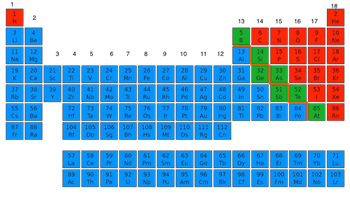
I forgot to color where they actually are.
If Sodium and Bromine react, they will form a(n) _______ bond.
ionic
covalent
metallic
inseparable
Carbon and Oxygen will form a(n) ___________ bond.
ionic
covalent
metallic
fake
Why do covalent bonds form?
filling the outermost energy level to be stable (i.e., have an octet except H or B)
to make all atoms exactly the same
to make other atoms in other molecules unstable
to make all atoms different from each other
Why don't noble gases form bonds?
They already have a full valence shell.
What? Noble gases form bonds with all kinds of other atoms.
They only bond when with each other, and that doesn't count.
Everything else except this choice is wrong.

How many valence electrons are shown in the diagram?
16
7
6
2
This refers to the tendency of atoms to prefer to have eight electrons in the valence shell
Octet rule
Valence electron
Electronegativity
Lewis symbol
Electron that is located on the outermost shell
proton
neutron
electron
valence electron
Which element is most likely to form only 2 covalent bonds?
Carbon
Fluorine
Nitrogen
Sulfur

How many valence electrons does Oxygen (O) have?
6
8
15
16


PCl3
Polar
Nonpolar
Superpolar
Subpolar

H2O
Polar
Nonpolar
Arctic Monkeys
Baroness
In a polar covalent bond, electrons are shared ___________.

electrons are being completely transferred to Fluorine
Fluorine has formed an anion
Hydrogen "wants" (or needs) __ electrons in its valence shell to be stable.
According to the octet rule most elements are stable with __ valence electrons.

How many valence electrons are participating in bonding in the molecule above?
8
4
12
6

NH3 has how many nonbonding (or lone) pairs of electrons?
0
1
2
3
4

Dihydrogen monosulfide, H2S
nonpolar
unintelligent
polar
grizzly bear
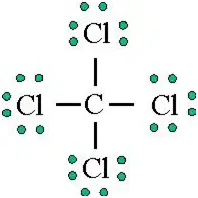
CCl4
made of polar covalent bonds but overall nonpolar
made of polar covalent bonds and overall polar
made of nonpolar covalent bonds and nonpolar
made of nonpolar covalent bonds but is somehow polar
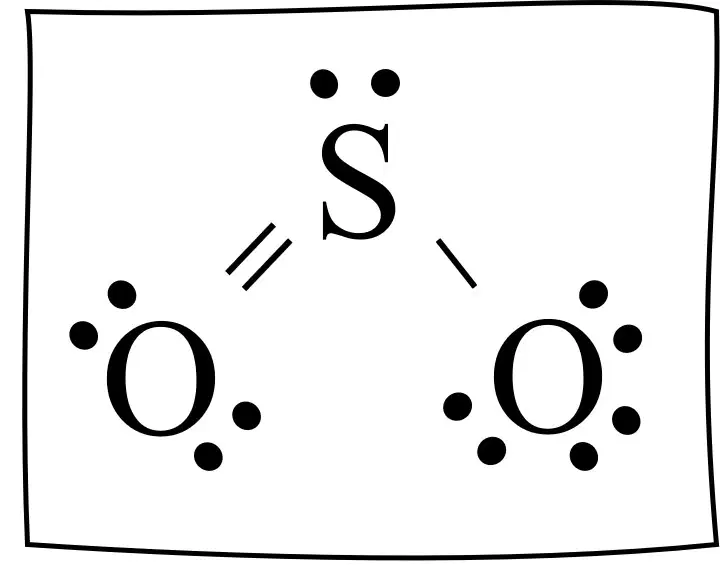
Sulfur dioxide (cough, cough), SO2
polar molecule because of its shape
polar molecule because every atom has a full octet
nonpolar molecule because there are no dipoles
nonpolar molecule because there are dipoles that cancel each other out

Although sulfur has more than an octet here, this actually happens.
Is this molecule polar or non-polar?
Non-polar
Polar

Boron does not form an octet because it only has 3 valence electrons to share.
Is this molecule polar or non-polar? [Hint: shape]
Non-polar
Polar

Bromine has more than an octet. This actually happens because ... well, it's bromine.
Considering its shape, is this molecule polar or non-polar?
Polar
Non-polar
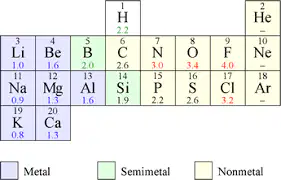
Which molecule contains bonds that are the most polar?
H2O
OF2
CH4
CH2S
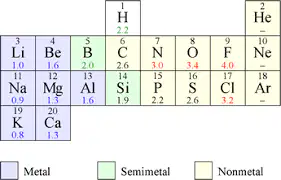
A diatomic molecule like O2 is always_______ because electrons are shared ________.
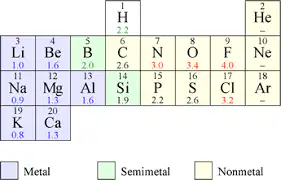
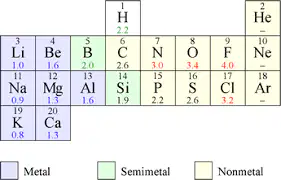
If chlorine (Cl) bonds with Hydrogen, a ____________ bond forms.

attract electrons in the lower energy levels
how many negative charges an electron has
The most electronegative atom on the periodic table is:
CCl4
The electronegativity difference in the bonds of CH4 (methane) is:
small enough to be nonpolar
small enough to be irrelevant
large enough to be polar
large enough to be important enough for you to learn everything about it
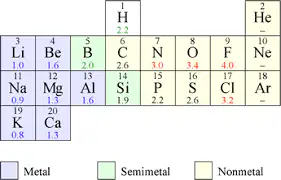
The electronegativity difference in the bonds of CCl4 (carbon tetrachloride) is:
0.6
5.7
Numbers
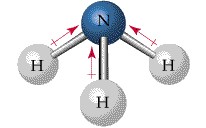
Use the molecular model's shape to predict the most likely type of molecule shown.
polar covalent
nonpolar covalent
ionic
metallic

The molecule (CCl4) shown is ___________-.
nonpolar covalent
polar covalent
ionic
metallic
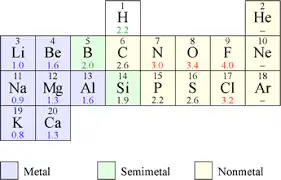
What type of bond would form between calcium and fluorine?
non-polar covalent
polar covalent
ionic
metallic
Water which is polar likes to dissolve what stuff? Pick as many options that apply.
ionic compounds
polar molecules
nonpolar molecules
metallic compounds
What is the correct Lewis Dot Structure for ammonia NH3


Which is the correct Lewis diagram for carbon dioxide, CO2?


What causes a partial charge (a dipole) to develop across a molecule with 2 atoms?
unequal sharing of electrons
an electronegativity difference between 0.4 and 1.7
electron spends more time around one of the atoms
all of the above
Which has the greater Electronegativity:
N or C?
You shouldn't need a chart for this ... !!!
C
N
Based on their location on the periodic table, which has the greater Electronegativity:
H or F?
H
F
Put these in increasing order of electronegativity:
F, N, B (smallest on left; largest on right)
B < N < F
B < F < N
N < F < B
F < N < B
Put these in increasing order of electronegativity:
C, H, and O (smallest on left; largest on right)
H < C < O
H < O < C
O < C < H
C < H < O
Which has the greater electronegativity:
Cl or Al?
Cl
Al
Electronegativity is...
how much an atom wants electrons in a bond
the ability of an atom to lose electrons
the energy required to remove an electron from a specific atom
how easy it is to make friends.
Which of the following is the least electronegative element?
How many bonds does chlorine typically make?
[Huh? Draw its single element dot diagram showing its valence electrons.]
1
2
3
4
7
How many bonds does nitrogen typically make?
1
2
3
4
5
How many bonds does carbon typically make?
1
2
3
4
5
How many bonds does hydrogen typically make?
1
2
3
4
5
The octet rule says that most atoms want to have ____ valence electrons?
1
2
3
4
8
How many valence electrons does nitrogen have?
1
2
3
4
5
Which atom would likely be the central atom if H, C, and O are in a molecule? (choose the one that makes the most bonds)
H
C
O
all of these
the center? where we hang out?

The formation of which type of bond usually releases the most energy?
polar covalent
nonpolar covalent
metallic
ionic


Which compound would have a high melting point?
CaCl2
CO2
PI3
SO3


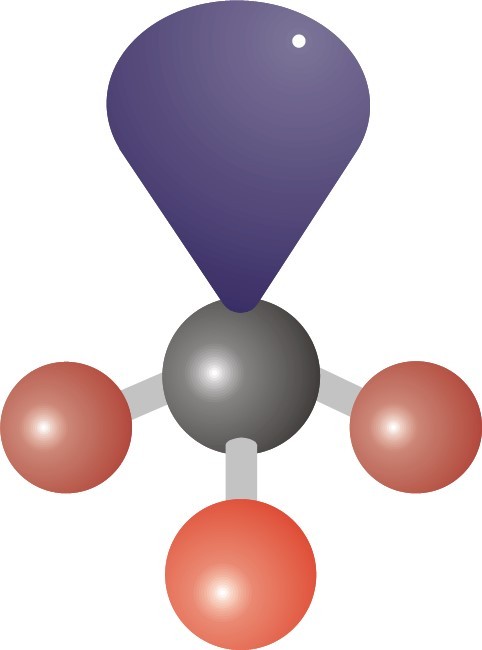
2. The first step to creating a Lewis structure is going to be finding the total number of valence electrons. What is the total number of valence electrons for the compound HNO2?
19
16
18
20
Except for hydrogen (H), the least electronegative element should be the central atom in a Lewis diagram. Out of the atoms listed, which should be in the center?
Nitrogen
Oxygen
Hydrogen
Fluorine

10. The proper structure of the HNO2 molecule is seen here. It has four bonds, two single and one double, and nitrogen is the central atom that the oxygens are bonded to. Looking at this final structure, is this molecule polar or nonpolar? Describe how you know.
nonpolar
polar
Conductivity in a metal results from the metal atoms having
high electronegativity
high ionization energy
highly mobile protons in the nucleus
highly mobile electrons in the valence shell
Which type of substance is soft, has a low melting point and is a poor conductor of heat and electricity?
network solid
molecular solid
metallic solid
ionic solid
Which compound contains both ionic and covalent bonds?
CaCO3
CH2Cl2
NaCl
C6H12O6
Molecules:
have covalent bonds and are always polar
have covalent bonds and are always non-polar
have covalent bonds and can be polar or non-polar
have ionic bonds and are always polar

The following properties are all characteristics of ionic compounds EXCEPT
solid at room temperature
soft
crystal lattice structure
conduct electricity when dissolved in water
Which types of elements become cations?
non-metals
metals
metalloids
Ionic bonds could be best described as:
A bond formed when 2 atoms share electrons
A firm handshake
An electrostatic attraction between oppositely charged ions
An electrostatic attraction between anions
Which type of bond is formed from the sharing of electrons?
ionic bond
covalent bond
What set of elements is most likely to form a covalent compound?
Na and O
Na and K
O and C
Which set of elements is most likely to form an ionic compound?
Na and O
C and O
Na and K
Molten or dissolved compound conducts electricity.
ionic compound
covalent compound

Which of the following is a molecular compound?
CaO
NaCl
MgCl2
CH4
In a nonpolar covalent bond, the electrons gather around...
The atom with the Greatest Electronegativity
The atom with the Lowest Electronegativity
Each atom Equally
None of the Above
The polarity of a bond is determined by...
The sum of the electronegativities of the two atoms
The difference in the electronegativities of the two atoms
The charges of the atoms
None of the Above
Partial charges are present in which type of bond?
Ionic
Nonpolar Covalent
Polar Covalent
Both Polar Covalent and Ionic
Which bond is the most polar of the group?
H--H
H--C
H--N
H--O
Which bond is LEAST polar?
O=O
O-H
O-N
O=C
Which bond is the most polar?
C--O
C--F
C--N
C--P

(Top picture is A, bottom picture is D.)

Which Lewis Dot Model drawing correctly shows an O2 molecule?


Which type of bond involves sharing electrons?
Metallic
Ionic
Nuclear
Covalent
Molten or dissolved compound conducts electricity.
ionic compound
covalent compound

Which three of the following are features of ionic compounds? (click 3 boxes)
They have bonds between metals and non-metals.
They have bonds between two non-metals.
They form simple molecular structures.
They form giant ionic lattices.
They involve the transfer of electrons.

True or false? Ionic compounds have high melting points.
true
false

Why do ionic compounds conduct electricity when they are molten or dissolved?
Their ions are free to move.
Their ions are held in fixed positions.
Their electrons are free to move
Their electrons are held in a fixed state
Why do ionic compounds NOT conduct electricity when they are in their solid state?
Their ions are free to move.
Their ions are held in fixed positions.
Their electrons are free to move
Their electrons are held in a fixed state
The bond between two chlorine atoms in Cl2 molecule is ...
Ionic
Covalent polar
Covalent nonpolar
metallic

NH3 is a ... molecule
Polar
Nonpolar
A polar bond happens between ...
metal and non metal
Two non metals of the same electronegativity
Two non metals, one is more electronegative than the other
Two metals

