
 Worksheets
Unit 1 and 2 Summary Quiz
Total questions: 140
Worksheet time: 2hrs 50mins

Carbon has how many protons?
12
6
7
4

Argon has how many Valence Electrons?
18
40
8
3

Potassium has how many energy levels?
4
19
39
1

Bromine has how many Neutrons?
35
80
45
8
Elements in the same group all have the same number of...
Electrons
Protons
Valence Electrons
Energy Levels
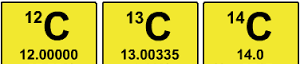
Element X has 2 isotopes. X-125 and X-126. For every 100 atoms of X, 30 of them have a mass of 125.0 amu and 70 have a mass of 126.0 amu. What is the average atomic mass of X?
125.3 amu
125.7 amu
126.3 amu
126.7 amu

How many isotopes are shown in this mass spec?
1
2
6
7

Which of the following is NOT a step in the operation of a mass spectrometer?
Accelerate,
Deflect
Radiate
Ionize


What element has the following mass spec data?
Sulfur
Nitrogen
Oxygen
Carbon

The color of emitted light with the LONGEST wavelength is
violet
green
red
indigo
The color of emitted light with the SHORTEST wavelength is
violet
green
red
indigo
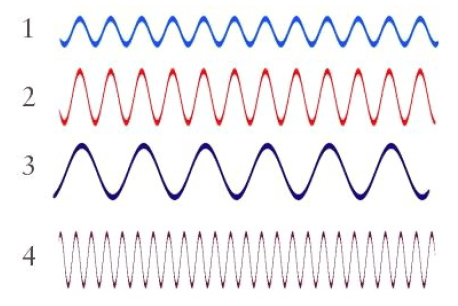
What is the speed of light in a vacuum?
3×10⁸ m/s
3×10⁻⁸ m/s
6.63×1034 J s
6.63×10⁻³⁴ J s
What is the value of Planck's constant?
3×10⁸ m/s
3×10⁻⁸ m/s
6.63×1034 J s
6.63×10⁻³⁴ J s
Which of the following is TRUE about the frequency and energy in electromagnetic waves?
As the frequency of an EM wave increases, the energy also increases.
As the frequency of an EM wave increases, the energy decreases.
The Planck's constant increases when the frequency and energy of an EM wave increase.
There is no relation between the energy and the frequency of an EM wave.
What is the frequency of green light that has a wavelength of 500 nm?
6×10⁻³ Hz
6×10⁵ Hz
6×10¹⁴ Hz
6×10⁻¹⁶ HZ
1s2 2s2 2p6 3s2

1s22s22p63s23p64s23d10
Which atom has the largest atomic radius?
potassium
rubidium
francium
cesium
Ra, Be, Ca, Rb, H
What is meant by isolectronic?
Group of atoms or ions that have the same electronic configuration
Group of atoms or ions that have the same protonic configuration
Group of atoms or ions that have the same charges
Group of atoms or ions that have different electronic configuration
Going down the group, the atomic radius of elements increases. Why is that so?
the number of shell (n) increases
Shielding effect increases
Nucleus attraction towards valence electrons weaker
All of the above
Which species has the larger radius?
Cl
Cl-
Which species has the larger radius?
Na
Na+
Which is larger... P or P3- ? … and why?
P3- because it gains an energy level
P3- due to extra electron repulsion
P because it loses an energy level
P because of extra electron repulsion
Na+ (Zeff=+9) and Al3+(Zeff=+11) are isoelectronic species (1s2 2s2 2p6). Which of these ion is smaller?
Na+
Al3+
They have the same size
If the number of energy level rings remains the same, as the number of protons increases, the force of attraction
remains the same
increases
decreases
is divided by 1/2
What is the trend in Coulombic attraction moving from left to right across a period?
Coulombic attraction increases moving from left to right across a period.
Coulombic attraction decreases moving from left to right across a period.
No trend can be observed.
The trend depends upon which period is being observed.
Select the element that has the strongest Coulombic attraction.
O
S
Se
Te
Which of the following is the correct ranking of elements from weakest to strongest Coulombic attractive force?
F, O, Ag, W, Rf, Fr
O, F, Ag, W, Fr, Rf
Rf, Fr, W, Ag, F, O
Fr, Rf, W, Ag, O, F
Electronegativity trends are the same as:
Atomic radius trends
Ionization energy trends
Both of these
None of these
What does electronegativity do as you go across a period?
decrease
no pattern
stay the same
increase
As you move across a period, the outer electrons are ________ to the nucleus, so the nucleus of the atom is ________ to attract electrons in a bond.
closer, more able
closer, less able
further, less able
further, more able
Electronegativity is the ability of an atom to attract electrons in a physical bond.
false
true

Based on the data in the table above, which of the following correctly predicts the relative electronegativity of the elements X, Y, and Z, and provides the correct reason?
X > Y > Z because smaller elements have a stronger coulombic attraction between the nucleus and valence electrons
X > Y > Z because smaller elements have a weaker coulombic attraction between the nucleus and valence electrons
Z > Y > Z because larger elements have a stronger coulombic attraction between the nucleus and valence electrons
Z > Y > Z because larger elements have a stronger coulombic attraction between the nucleus and valence electrons
The electrons in a POLAR covalent bond are shared...
Evenly
Unevenly
Electrons are not shared
None of the Above
The electrons in a NONPOLAR covalent bond are shared...
Evenly
Unevenly
Electrons are not shared
None of the Above

What type of bond is depicted in the image?
Nonpolar Covalent
Polar Covalent
Ionic
Electronegativity is...
The ability for an atom to ATTRACT electrons
the ability of an atom to LOSE electrons
the energy required to remove an electron from an atom
how easy it is to make friends.

HBr has a difference in electronegativity of 0.7. Based on the table, what kind of bond is HF?
Nonpolar covalent
Polar covalent
Ionic
How many peaks would be expected for a PES spectum for Calcium?
2
3
4
5
Which of these elements would have the same number of PES peaks as Fluorine?
Neon
Beryllium
Sodium
Chlorine

The PES spectrum below is for the element _______________.
O
Ne
N
F

Examine the spectrum below. Where would you expect the 2p peak for F be if it were on the same spectrum?
To the left of the peak at 3.04
To the right of the peak at 3.04
To the left of the peak at 1.31
To the right of the peak at 1.31

What does the 4th peak from the left represent?
The 2s electrons
The 3d electrons
The 2p electrons
The 3s electrons

How many valence electrons does the element pictured in the PES spectrum below have?
1
2
3
4

Where would you expect the 2s peak for Sodium to fall relative to the presented spectrum of a different element below?
Just to the left of the peak at 126
Just to the right of the peak at 126
Just to the left of the peak at 9.07
Just to the right of the peak at 9.07

Particle Z will experience the most attractive force when touching which particle? Think about Coulomb's Law and the fact that it depends on charge and distance
Particle A
Particle B
Particle C
Particle D

What is incorrect about this orbital diagram?
Both arrows in the filled 2p box should be pointing the same direction
There is nothing incorrect with this diagram
In the there should only be 1 arrow in the first 2p box and one in the 2nd 2p box
All the arrows should be pointing the same direction.
Ionisation energy is ___________.
maximum energy required to remove 1 electron from 1 mol of gaseous atom
minimum energy required to remove 1 electron from 1 mol of gaseous atom
first ionisation energy
second ionisation energy
When across a period, the atomic size decreases so the first IE ___________.
increases
decreases
constant
i am not sure
When going down a group, the atomic size increases so the first IE __________.
increases
decreases
constant
I am not sure
The equation for the first ionisation energy of a sodium atom is:
Na (g) -> Na+ (g) + e-
Na+ (g) -> Na2+ (g) + e-
Na (s) -> Na+ (g) + e-
Na+ (g) + e- -> Na (g)



Factors affecting the value of lattice energy
the size of the ions only
the charges of the ions only
BOTH the size of the ions AND the charges of the ions
When comparing different ionic compounds, the one with the greater charges will have a _______ magnitude of lattice energy.
greater
less
same
When comparing different ionic compounds, the one with the ions of greater size or radius will have a _______ magnitude of lattice energy.
greater
smaller
same
Choose the ionic compound with the greater magnitude of lattice energy.
NaCl
KCl
Choose the ionic compound with the greater magnitude of lattice energy.
CaCl2
KCl
What is Lattice Energy?
one mole of an ionic compound is formed from its gaseous ions under standard conditions
one mole of electrons is added to one mole of gaseous atoms to form one mole of gaseous 1- ions under standard conditions
one mole of an ionic compound is formed from its atoms under standard conditions
one mole of gaseous atoms is formed from its element under standard conditions

Which are the particles in an ionic lattice?
cations and delocalised electrons
cations and delocalised anions
cations and anions
anions and delocalised electrons
What is the first electron affinity?
one mole of electrons is added to one mole of gaseous 1- ions to form one mole of gaseous 2- ions under standard conditions
one mole of gaseous atoms is formed from its element under standard conditions
one mole of electrons is added to one mole of gaseous atoms to form one mole of gaseous 1- ions under standard conditions

The diagram shows metallic bonding.
Which labels are correct?
X: atomic nucleus
Y: outer electron
X: metal atom
Y: mobile electron
X: metal cation
Y: mobile electron
X: positive ion
Y: negative ion
X is a solid at room temperature.
X has a high melting point.
Solid X conducts electricity.
Which diagram shows how the particles are arranged in solid X?


A sample of a hard, solid binary compound at room temperature did not conduct electricity as a pure solid but became highly conductive when dissolved in water. Which of the following types of interactions is most likely found between the particles in the substance?
Ionic bonds
Metallic bonds
Covalent bonds
Hydrogen bonds
This type of solid forms a regular repeating
three-dimensional structure called a crystal lattice. What type of solid is this?
amorphous
crystalline
glass
diamond
An alloy is harder than its pure metal because the foreign atoms in the alloy
increase the bond strength between the atoms.
increase the empty spaces between the atoms.
react with the pure metal atoms to form a compound.
reduce the ability of the atoms to slide across each other.
what are the 2 types of alloys
substitutional
additional
interstitial
intracellular
if boron 84pm and carbon 69pm are combined what type of alloy is created
multicellular
substitutional
partial
interstitial
if flourine 64 pm and lithium 121pm combine what type of combination will occur
additional
substitutional
inerstitial
non-corrosive
What would happen to an ionic crystal when a force is applied to it.
It breaks
It bends
It bounces
_____________ alloys have smaller atoms that fit into the spaces between larger atoms
Interstitial
substitional
institutional
international
All alloys are mixtures.
True
False
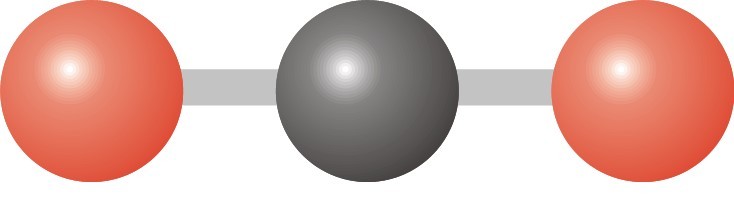
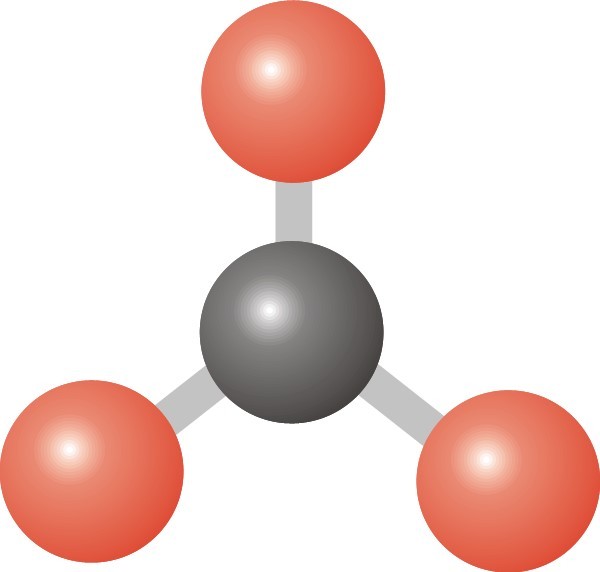
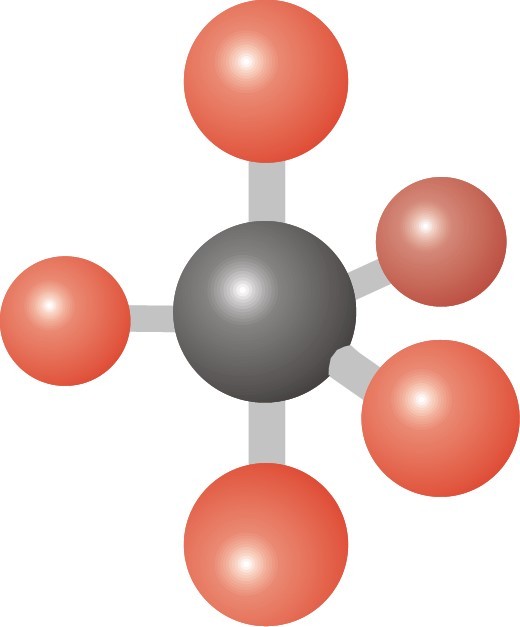
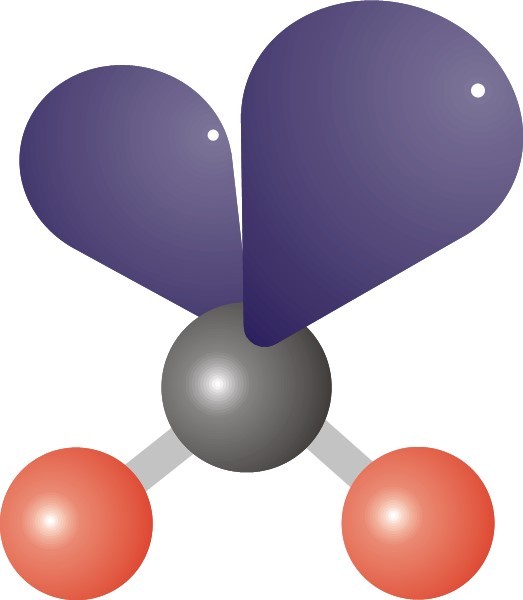
Molecule CO2
undergoes sp2 hybridisation
has 2 σ bond and 2 π bond
undergoes sp3d hybridisation
is trigonal planar molecule
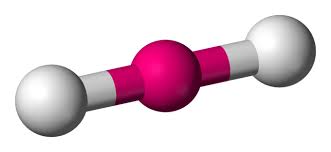
What is the hybridization of a linear molecule?
sp
sp2
sp3
sp3d
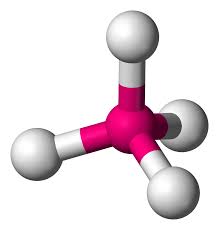
What is the hybridization of this molecule shown.
sp
sp2
sp3
sp4
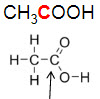
What is the hybridization of the Carbon atom indicated by the arrow?
sp hybridization
sp2 hybridization
sp3 hybridization
dsp3 hybridization

What is the bond angle for the CH4 molecule?
120°
107°
109.5°
90°


What is the formal charge on the oxygen atom at the top of this Lewis dot structure?
0
+1
-1
-2

What is the picture showing?
All of the resonance structures for carbonate.
The formal charge on each atom in carbonate.
The electronegativity for carbonate.
The ionization energy for carbonate.


How many sigma bonds are in the following molecule?
0
1
2
5
6


Which element should be used as the central atom of a Lewis structure?
The least electronegative element will be the central atom.
The most electronegative will be the central atom.
The largest atomic radius will be the central atom.
The smallest atomic radius will be the central atom.

