wayground logo

Free Printable Worksheets

Font size

S
M
L
XL
Worksheets

IS2 Midyear Review - 2018

Total questions: 136

Worksheet time: 2hrs 49mins

Name
Class
Date
1.
What type of selection is depicted in the picture? 
a)
stabilizing 
b)
directional 
c)
disruptive 
d)
the answer is not here
2.

Robins typically lay fours eggs. If more then four eggs are produced then the baby chicks are malnourished while smaller egg numbers result in no viable (able to live) baby chicks. This is an example of

a)

stabilizing

b)

disruptive

c)

direction

d)

none of the above

3.
What type of selection?
a)
Directional 
b)
Stabilizing
c)
Disruptive
4.
Only populations can evolve.
Individuals can not evolve.
a)
True
b)
False
5.
If finches with large beaks and finches with small beaks increase in a population while finches with average sized beaks decreases, which pattern of natural selection has occurred?
a)
Directional selection
b)
Disruptive selection 
c)
Stabilizing selection
6.
What type of natural selection is this?
a)
Disruptive Selection
b)
Directional Selection
c)
Stabilizing Selection
d)
Sexy Selection
7.
What is the correct explanation for what is happening in this graph?
a)
There are a lot of average-sized beaks
b)
There are no beaks
c)
There are a lot of small beaks only
d)
There are a lot of small and large beaks, but not average-sized ones
8.
Scientists find that most feral cats in a neighborhood have whiskers about 12 cm long. After about 15 generations of stabilizing selection, what would you expect to see?
a)
even more cats with 12 cm long whiskers
b)
most cats with less than 12 cm long whiskers
c)
most cats with more than 12 cm long whiskers
d)
most cats with whiskers either less than or more than 12 cm long, very few with whiskers 12 cms 
9.
Natural selection can best be defined as the _____.
a)
survival of the biggest and strongest in a population
b)
survival and reproduction of those in the largest area
c)
elimination of the smallest organism by the biggest
d)
survival and reproduction of those that are best adapted
10.
What type of natural selection is this: When a group of deer migrated to a cold mountain, the thin-furred deer and average-furred deer died. The thick-furred deer survived and eventually the population became thicker-furred.
a)
Disruptive Selection
b)
Directional Selection
c)
Stabilizing Selection
d)
Slippery Selection
11.
Why did the population of peppered moths in England change from light to dark after the Industrial Revolution produced a lot of pollution?
a)
Light moths were easy to see against sooty trees and were eaten
b)
Light moths were killed by soot
c)
The birds that ate the dark moths were killed by soot
d)
Dark moths were produced by industrial processes
12.
What are the most studied animals in the galapagos?
a)
Finches
b)
Tortoises
c)
Turtles
d)
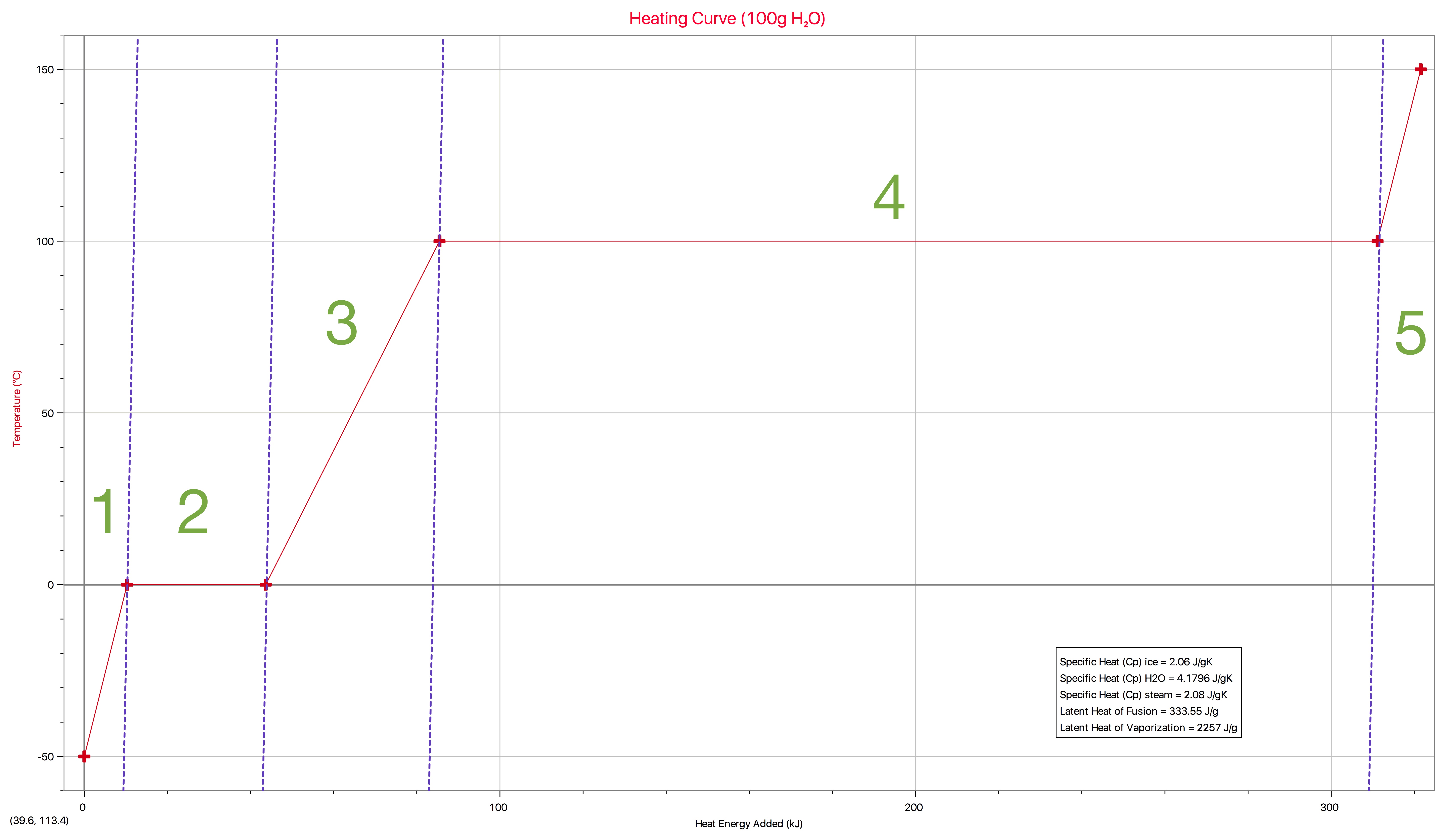
Lizards
13.
What is the advantage of having different shaped beaks?
a)
To look different from other species.
b)
To be able to eat the food readily available in the environment.
c)
To protect itself against predators.
d)
To protect itself against prey.
14.
The theory of evolution by natural selection means that what is changing over time?
a)
The inherited traits of a population.
b)
The acquired traits of a population.
c)
Hair color and eye color
d)
Attractive features.
15.
Why are advantageous traits more likely to be passed onto offspring?
a)
Because they are more likely to survive and reproduce.
b)
Because they come from dominant alleles.
c)
Because they come from recessive alleles.
d)
Because the trait is an acquired phenotype.
16.
Mutations are a change in what?
a)
DNA
b)
tRNA
c)
genotype
d)
phenotype
17.

A mutation causes a new fur color variation to appear in a mouse population. In which of the situations described below would the new fur color become more common than the old color in the mouse population?

a)

If plenty of food is available in the mouse habitat.

b)

If the new fur color gene is a recessive allele.

c)

If the amount of reproduction in the mouse population stays the same.

d)

If the new fur color gene is helpful in the survival of mice and their offspring.

18.
Scientist have created larger and sweeter strawberries for humans to consume (eat). What process was used?
a)
Natural Selection 
b)
Artificial Selection 
c)
Cellular Respiration 
d)
Environmental Natural Selection 
19.
In natural selection, the main goal of organisms is...
a)
adapting.
b)
surviving.
c)
moving to a new ecosystem.
20.
In artificial selection, the main goal is...
a)
surviving.
b)
producing the best plant or animal.
c)
playing the role of nature.
21.

Why did dark-colored rock pocket mice first appear in a population of light-colored rock pocket mice?

a)

they have a mutation that affects fur color

b)

there is dark lava rock where they live

c)

they changed color to blend in with the environment

d)

predators eat light colored mice

22.

Why do dark colored mice have light colored bellies?

a)

there is no selection for dark bellies

b)

there is no mutation that causes dark bellies

c)

there is a reproductive advantage to having a white belly

d)

white bellies are part of camouflage

23.
How many sig figs are there?
100.00
a)
1
b)
3
c)
4
d)
5
24.
How many sig figs are there?
100000000
a)
1
b)
9
c)
10
25.
How many sig figs are there?
0.000008
a)
1
b)
2
c)
6
d)
7
26.
What is 78.5 rounded to one significant figure?
a)
79
b)
78.5
c)
70
d)
80
27.
What is 0.658 rounded to 1 significant figure?
a)
0
b)
0.66
c)
0.7
d)
0.658
28.
What is 0.0568 rounded to 1 significant figure?
a)
0
b)
0.06
c)
0.6
d)
0.57
29.
How many significant figures will be in the answer to the following question:
7.62 x 6.98 x 3.2645
a)
1
b)
2
c)
3
d)
4
30.
Round 1009 to three sig figs
a)
100
b)
101
c)
1010
d)
1000
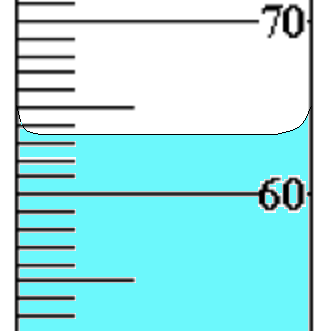
31.

Volume?

a)

63.5 mL

b)

63 mL

c)

63.55 mL

d)

6 mL

32.

The correct mass based on the reading and the ability of this device would be...

a)

106 g

b)

105.6 g

c)

105.600 g

d)

156 g

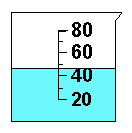
33.
volume?
a)
48 mL
b)
48.2 mL
c)
48.25 mL
d)
4 mL
34.
What type of graph is this?
a)
Bar Graph
b)
Line Plot
c)
Pictograph
d)
Tally Chart
35.

To display data comparing time spent on each activity to the total time spent at summer camp, use a...

a)

Pie Graph

b)

Bar Graph

c)

Line Graph

36.

To display data showing the growth of a flower over the course of two weeks, use a...

a)

Circle or Pie Graph

b)

Bar Graph

c)

Line Graph

37.

To display data comparing colors of notebooks students use, use a...

a)

Circle Graph

b)

Bar Graph

c)

Line Graph

38.
A pie chart allows you to easily see
a)
information about the proportion of parts relative to the whole.
b)
the total number of each category.
c)
how much data occurs within a range of numbers.
d)
the spread of the data.
39.
What pattern is evident on this line graph?
a)
Ability to do situps had no change as the days continued
b)
Ability to do situps decreased as the days continued
c)
Ability to do situps increased as the days continued
40.
Research Question: Does the type of gasoline put in a car effect how fast the car can drive. What is the independent variable?
a)
Type of gasoline
b)
which car the gas is put into
c)
how fast the car can drive
d)
how much gas is put into the car
41.
Ms. S set up an experiment to see how the mass of a ball affects the distance it rolls off a ramp. What is the dependent variable?
a)
Distance traveled by the ball
b)
Height of the ramp
c)
Mass of the ball
d)
Where the experiment took place.
42.
This variable in an experiment is the one being deliberately changed by the scientist. 
a)
dependent variable
b)
independent variable
c)
data
d)
control group
43.
What is the INDEPENDENT variable?
a)
distance
b)
25
c)
time
d)
there isn't one
44.
What is the DEPENDENT variable?
a)
total cost
b)
weight
c)
0.3
d)
there isn't one
45.
Khaleel is testing how the use of stress balls during testing affects a student's test score.  The students' average test scores who used the stress balls is the __ variable.
a)
dependent (measured)
b)
constant (same)
c)
independent (changes)
46.
Find the slope from the table.
a)
-4
b)
1
c)
4
d)
-2
47.
Which of the following are homologous structures?
a)
Bee wings and bird wings
b)
legs on a beetle and legs on a cat
c)
whale flipper and bat wing
d)
human eyebrows and ant antenna 
48.
Which images illustrate analogous structures?
a)
1, 2
b)
1, 3
c)
2, 3
d)
1, 2, 3
49.
These limbs provide evidence of common ancestry because they....
a)
have the same basic structure
b)
Perform the same function
c)
Are the same size
d)
Are parts of mammals
50.
Which images illustrate homologous structures?
a)
1, 2
b)
1, 3
c)
2, 3
d)
1, 2, 3
51.
The cave fish and minnow are related to each other but the cave fish is blind and only has the remnants of an eye. What type of structure is this?
a)
homologous
b)
analogous
c)
vestigial
d)
convergent
52.
What is an example of a vestigial structure in a human?
a)
liver
b)
ear drum
c)
small intestine 
d)
appendix
53.
Which of the following are analogous structures? 
a)
bee wings and bird wings
b)
legs on a beetle and legs on a cat
c)
whale flipper and bat wings
d)
human eyebrows and ant antenna
54.
If an organism has a vestigial structure, that structure likely once had a function in a(n)
a)
close relative
b)
early ancestor
c)
unrelated organism
d)
embryological stage
55.
Study of embryos of various organisms to show a common ancestor because of similarities in development
a)
natural selection
b)
embryology
c)
speciation
d)
evolution
56.
Two organisms that are closely related would have
a)
very similar DNA sequence
b)
exactly the same DNA sequences
c)
no proteins in common
d)
completely different DNA sequence
57.

Where is extra carbon coming from?

a)

Driving cars

b)

Deforestation

c)

Industry

d)

All of the above

58.

What is a direct effect of polar ice melting?

a)

increased biodiversity

b)

oceans will rise

c)

lower temperatures

d)

less intense weather

59.
Things you can do to help decrease global warming include:
a)
Eat more ice cream.
b)
Keep your freezer door open.
c)
Keep your air conditioner on high.
d)
Turn off your lights when you’re not using them.
60.

Are greenhouse gases natural?

a)

Yes

b)

No

61.

Which wavelength of energy is trying to escape the greenhouse?

a)

long waves

b)

short waves

c)

no waves

62.

What wavelength enters the atmosphere?

a)

short wave

b)

long wave

c)

no wave

63.
Consequences of climate change include:
a)
Stronger hurricanes
b)
Increased flooding
c)
Frequent droughts
d)
All of the above
64.
Peppered moths can have either a light wing color or a dark wing color. A scientist studied populations of both light and dark peppered moths over a 10-year period. A graph of the data he collected is shown. Based on the graph, which is the best conclusion to make about changes in the moth populations by the end of the study period? 
a)
A disease has affected only the dark winged peppered moth. 
b)
At present, wing color is not a factor in the success of peppered moths. 
c)
A new food source has become available only to the light winged peppered moth. 
d)
At present, dark-winged peppered moths are being naturally selected for survival. 
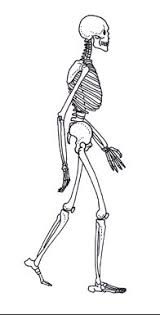
65.

The ability to walk upright on two legs is called:

a)

bipedalism

b)

quadropedalism

c)

bicyclepedalism

d)

tripedalism

66.

If you wanted to excavate fossils of the earliest human ancestors, to what country might you travel?

a)

Australia

b)

China

c)

Africa

d)

Madagascar

67.
Radiometric dating
a)
uses isotopes with half lifes
b)
uses carbon 12
c)
dates fossils by which layer of rock they were found in
d)
is a new online dating sight
68.
What advantage did Lucy have over other apes of her time?
a)
She was smarter
b)
She could walk around and carry things
c)
She had stone tools
d)
She dated the Beatles
69.

Which statement would most likely go along with Lamarch's theory of evolution?

a)

Black moths have evolved in an area because they are better adapted to the environment

b)

Geographic barriers may lead to isolation and production of a new species.

c)

Monkeys have long arms because their ancestors stretched their arms reaching for food

70.

According to natural selection, which of the following correctly describes an individual with higher fitness?

a)

an individual who is more likely to survive than others

b)

an individual who has higher reproductive success than others

c)

an individual who is stronger and healthier than less fit individuals

d)

an individual who is better adapted to his/her environment than others

71.
Nitrogen oxides cause which problem?
a)
Acid rain 
b)
Heart damage 
c)
eye irritation 
d)
death
72.
What absorbs ultraviolet rays in the atmosphere?
a)
troposphere
b)
stratosphere
c)
ozone layer
d)
greenhouse gases
73.
What do we call gases such as carbon dioxide, methane, nitrous oxide, water vapor, and ozone in the atmosphere which are involved in the greenhouse effect?  
a)
Bad Gases
b)
Ozone Gases
c)
Greenhouse Gases
d)
Atmospheric Gases
74.
What chemical is responsible for breaking up the ozone?
a)
CFCs
b)
Carbon Dioxide
c)
Nitrogen
d)
Oxygen
75.
This protects us from harmful UV rays from the sun
a)
Troposphere
b)
Stratosphere
c)
Greenhouse Effect
d)
Ozone Layer
76.

Which is the stronger acid?

a)

Ph 10

b)

Ph 6

c)

Ph 1

d)

Ph 14

77.

Which of the following is not a greenhouse gas?

a)

Sulfur dioxide

b)

Water Vapor

c)

Methane

d)

Carbon Dioxide

78.
What type of reaction occurs between an element and a compound?
Zn + 2HCl --> ZnCl2 + H2
a)
Synthesis
b)
Decomposition
c)
Single Replacement
d)
Double Replacement
79.
What kind of reaction is this:
2H2 + O2 --> 2H2O
a)
Synthesis
b)
Decomposition
c)
Single Replacement
d)
Double Replacement
80.
What kind of reaction is this:
4Fe  +  3O2 →   2Fe2O3 
a)
Synthesis
b)
Decomposition
c)
Single Replacement 
d)
Double Replacement
81.
What kind of reaction is this:
2H2O2 →2 H2+ O2
a)
Synthesis
b)
Decomposition
c)
Single Replacement 
d)
Combustion
82.
What kind of reaction is this:
2C3H7OH +9O2 -> 6CO2 + 8H2O
a)
Double Replacement
b)
Combustion
c)
Single Replacement
d)
Decomposition
83.
The reaction below is an example of?
AgNO3 + NaCl 
→ AgCl + NaNO3
a)
Single Replacement
b)
Double Replacement
c)
Decomposition
d)
Combustion
84.
Ocean acidification begins with 
a)
pollution from ships
b)
carbon dioxide released from combustion
c)
dumping of waste from cities into the ocean
85.
The H+ ion is a(n)
a)
acid
b)
base
c)
neutral
86.
The process of burning fuel to drive a car or operate a factory is called 
a)
photosynthesis
b)
combustion
c)
respiration
87.
Carbon dioxide levels in the air have changed throughout earth's history.  The difference today is how ______ the change is happening.
a)
rapidly 
b)
slowly 
c)
wide spread
88.
How can coral be bleached?
a)
Warm water
b)
animals
c)
life
d)
fish
89.
Barium-122 has a half-life of 2 minutes. A fresh sample weighing 80 g was obtained. If it takes 10 minutes to set up an experiment using barium-122, how much barium-122 will be left when the experiment begins?
a)
0.25g
b)
2.5g
c)
25g
d)
80g
90.
The half-life of strontium-90 is 25 years. How much strontium-90 will remain after 100 years if the initial amount is 4.0 g?
a)
3.0g
b)
0.25mg
c)
0.3g
d)
0.25g
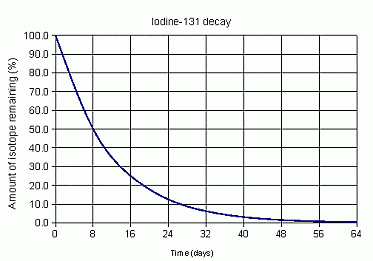
91.
What is the half-life of iodine-131?
a)
32 days
b)
8 days
c)
16 days
d)
24 days
92.
When an unstable radioactive atom decays, it usually turns into:
a)
a more stable atom
b)
a less stable atom
c)
the exact same atom but with less pure energy
d)
empty space
93.
Radiometric dating is possible because the rates of decay of radioactive isotopes _____.
a)
change over time
b)
change from place to place
c)
are constant
d)
vary widely
94.

Which of the following are used as evidence for evolution?


I. Fossils

II. DNA analysis

III. Embryology

IV. Comparative anatomy

a)

II and IV only

b)

I, III, and IV only

c)

I, II, and III only

d)

I, II, III, and IV

95.
How do living organisms return carbon to the atmosphere in the carbon cycle?
a)
respiration and photosynthesis
b)
 decomposition and respiration
96.
a slight change in a rabbit's ability to hear its predators better and help it survive is
a)
an adaptation.
b)
a vestigial structure
c)
an acquired trait
d)
an isolation
97.
Which is a major concept included in Lamarck’s evolutionary hypothesis?
a)
Body structures can change according to the actions of the organism.
b)
Change is the result of survival of the fittest.
c)
Artificial selection is the basis for evolution.
98.
The economist Thomas Malthus suggested that
a)
in the human population, people die faster than babies are born.
b)
without certain checks on population size, there would soon be insufficient food for the growing human population.
c)
the majority of a species’ offspring die.
99.
The idea that events like war, starvation, and disease could prevent the endless growth of human populations was presented by
a)
Thomas Malthus.
b)
Jean-Baptiste Lamarck.
c)
Charles Darwin.
100.
Which two organisms are the most closely related according to their DNA sequence?
Critter A--> ATG CTT AAC CCG TTA
Critter B--> ATC GTT TTC CCG TAA
Critter C--> ATG CTA TAG GCG TAA
a)
Critter A and B
b)
Critter A and C
c)
Critter B and C
d)
They are all equally related
101.
Individuals who are considered fit, have:
a)
Stronger genes
b)
Fewer mutations
c)
More food
d)
More offspring
102.
What does evolution mean?
a)
To change something
b)
To change and adapt over time
c)
To lose some original features
d)
To improve ssomething over time
103.
Why are advantageous traits more likely to be passed on to the offspring?
a)
Because parents with those traits can teach their offspring
b)
Because parents with those traits can surive and reproduce better
c)
Because parents with those traits care more about their offspring
104.

Various structures in different species that have the same function but have evolved separately are called ____________.

[no common ancestor]

a)

Convergent Evolution

b)

Homologous Structures

c)

Analogous Structures

d)

Vestigial Structures

105.

True or False: The greenhouse effect is a natural feature of earth's atmosphere

a)

True

b)

False

106.

What is the distance from point A to point B

a)

1.40 cm

b)

1.4 cm

c)

2.90 cm

d)

2.9 cm

107.

Within the carbon cycle, anything that absorbs more carbon from the atmosphere than it releases.

a)

carbon sink

b)

carbon source

108.

Human activities add greenhouse gases to the atmosphere, therefore we are carbon ________.

a)

sinks

b)

sources

109.

Why should you be concerned with the size of your carbon footprint?

a)

Sometimes its hard to find shoes that are the right size.

b)

If we don't decrease greenhouse gas emissions Earth will continue to cool.

c)

Greenhouse gases are becoming scarce in Earth's atmosphere.

d)

Increases in greenhouse gases in the atmosphere are contributing to global climate change.

110.
When humans burn fossil fuels, most of the carbon quickly enters the                       as carbon dioxide.
a)
Water
b)
Atmosphere
c)
Sun
d)
Air
111.
If the plant population decreased, the amount of carbon would _________.
a)
Stay the same
b)
Increase
c)
Decrease
112.
Why is Carbon important to us?
a)
All living things are made of Carbon
b)
Carbon helps us digest our food
113.

What piece of information did Darwin not use when he molded his theory of evolution

a)

His Collection of animal specimens

b)

DNA evidence

c)

Lyell's ideas about geology

d)

His travels around the world

114.

What is true of C-14 levels after a living being dies

a)

C-14 levels fall since the organisms are no longer taking in carbon through photosynthesis or eating.

b)

The C-14 only undergoes radioactive decay once an organism dies

115.

Free flowing, constant volume

a)

Solid

b)

Liquid

c)

Gas

d)

Plasma

116.

Particles packed together, shape and volume relatively stable

a)

Plasma

b)

Gas

c)

Liquid

d)

Solid

117.

During an endothermic phase transition, more heat energy is added to the system

a)

True

b)

False

118.

In an exothermic phase transition, heat energy is transferred from the system to its surroundings

a)

True

b)

False

119.
Gas molecules have ___________ freedom of movement than other phases.
a)
greater
b)
less
120.
Solids have __________ freedom of movement than liquids.
a)
more
b)
less
121.
Liquids have __________ freedom of movement than gases.
a)
more
b)
less
122.
Liquids have ______ freedom of movement than solids.
a)
more
b)
less
123.

Why are gas particles furthest away from one another?

a)

The particles are held by the strongest attractive forces

b)

The particles can move around randomly and freely at high speeds

c)

The particles are held by the weakest attractive forces

d)

The particles are arranged in a disorderly manner.

124.

Particles move quickest in which state of matter?

a)

solid

b)

liquid

c)

gas

125.

Which state of matter do the particles in this picture represent?

a)

solid

b)

liquid

c)

gas

126.
In which region(s) does temperature remain constant?
a)
Region 1, 3, & 5
b)
Region 2 & 4
c)
Region 1 only
d)
Region 1 & 2
127.
In which region(s) does temperature increase?
a)
Region 1, 3, & 5
b)
Region 2 & 4
c)
Region 1 only
d)
Region 1 & 2
128.
This curve indicates what about the heat energy?
a)
heat energy is being added or absorbed
b)
heat energy is being removed
129.
In which region(s) of the graph does a phase change occur?
a)
Region 1, 3, & 5
b)
Region 2 & 4
c)
Region 1 only
d)
Region 1 & 2
130.
In which region(s) of the graph would the substance only be in one phase?
a)
Region 1, 3, & 5
b)
Region 2 & 4
c)
Region 1 only
d)
Region 1 & 2
131.
In which region(s) of the graph would the substance be a solid only?
a)
Region 1
b)
Region 2
c)
Region 3
d)
Region 4
132.
In which region(s) of the graph would the substance be a solid and a liquid?
a)
Region 1
b)
Region 2
c)
Region 3
d)
Region 4
133.
In which region(s) of the graph would the substance be a liquid only?
a)
Region 1
b)
Region 2
c)
Region 3
d)
Region 4
134.
In which region(s) of the graph would the substance be a liquid and a gas?
a)
Region 2
b)
Region 3
c)
Region 4
d)
Region 5
135.
In which region(s) of the graph would the substance be a gas only?
a)
Region 2
b)
Region 3
c)
Region 4
d)
Region 5
136.

What wavelength of light reflects from the earth after sunlight hits it?

a)

short wave

b)

long wave

c)

no wave