wayground logo

Free Printable Worksheets

Font size

S
M
L
XL
Worksheets

Chemistry 2nd Nine Weeks Test Review

Total questions: 145

Worksheet time: 3hrs 40mins

Name
Class
Date
1.
The independent variable is the ONE thing you _____.
a)
change on purpose
b)
control or keep constant
c)
measure
2.

The variable that is being measured or observed is called the _______________. Hint: this is the variable that is the result or effect

a)

independent variable

b)

dependent variable

c)

control variable

3.
Using deductive reasoning, which of the following completes the statement to form a valid conclusion?
If it is snowing heavily, then school will be canceled.
If school is canceled, the big test will not be given today.
It is snowing heavily, then...
a)
Look out for the snowplows while driving to school.
b)
The big test will not be given today.
c)
The roads will be hard to drive on.
d)
You should call the school to see if school is canceled.
4.
Inductive Reasoning means...
a)
Guessing
b)
Testing and observing patterns to make conjectures
c)
Explaining why
d)
Ura nok seblu!
5.
Deductive reasoning means...
a)
Guessing
b)
Ura nok seblu!
c)
Testing and observing patterns to make conjectures
d)
Making general observations of situations and applying them to specific situations.
6.

Joe tells Gabby his theory about why sea turtles nest on the beach instead of in the ocean. He says, “The turtle eggs would sink to the bottom of the ocean, and the baby turtle would drown. I know this because my uncle is a fisherman, and he told me this information. Gabby tells Joe that his theory is not scientific. Why does Joe’s idea not meet the requirements to be a scientific theory?

a)

Joe’s idea is already a scientific law.

b)

Joe’s idea is not supported by scientific evidence.

c)

Joe’s idea is a good guess that can be tested by experiments.

d)

Joe and his uncle are not scientists.

7.

In 1897, Joseph Thomson discovered that atoms contained electrons. He proposed a change in the atomic theory of that time, and the theory was modified because of his discovery. Since Thomson’s discovery, atomic theory has been further modified. What is the best explanation for why scientific theories are modified?

a)

Theories more than ten years old are usually out of date.

b)

Scientists want to prove that the work of other scientists is wrong.

c)

New evidence that supports a change prompts scientists to modify earlier theories.

d)

So much information is available today that it is harder to focus research and disprove theories.

8.

The law of universal gravitation states that both mass and distance of objects affect the gravitational force between them. Gravitational force increases as the mass of the objects increase. Gravitational force decreases as distance between the objects increases. Why are these statements considered scientific law, and not scientific theory?

a)

The statements tells what happens, and not why it happens.

b)

The statements involve mass and distance measurements.

c)

The statements explain the attractive force between two objects.

d)

The statements predict what will happen under certain conditions.

9.

Lilly was trying to explain to her friend the difference between a theory and a law in science. She used the theory of plate tectonics and the law of superposition as examples. Lilli explained the difference by using non-scientific language. Which statement could Lilly use to correctly describe the difference between a theory and a law in science?

a)

A theory describes a natural event, while a law explains it.

b)

A theory explains a natural event, while a law predicts it.

c)

A theory explains a natural event, while a law describes it.

d)

A theory predicts a natural event, while a law explains it.

10.

The first people to try and develop the theory behind their observations were:

a)

The Greeks

b)

Cave people

c)

16th century scientists

d)

Darwin

11.

Which of the following words or phrases does not describe the personality of a good scientist?

a)

Honest

b)

Curious

c)

Proud

d)

Secretive

12.

What are ethics?

a)

How you feel about a certain topic and how you behave

b)

The principles that govern individual behaviour

c)

What is dictated by the principal at school

d)

Only relevant to the plot of The Good Place

13.

Why do we use ethics in Science?

a)

To restrict how we do science

b)

To ensure that we only sometimes do the right thing

c)

To ensure that we are always doing the right thing in our experiments

d)

To justify everything that we do

14.

Which of these is not within the scope of Physics

a)

Matter and energy

b)

Nature and its phenomena

c)

Sounds and Waves

d)

Animals and their anatomy

15.

Select all that is true about models

a)

A model is a representation of a phenomenon in nature

b)

A model is often modified as scientists gain more knowledge

c)

A model can replace reality

d)

A model can simplify complex systems

16.

How many significant figures in 0.005650

(a)  

17.

0.0114*10^4 in scientific notation

a)

0.0114*10^5

b)

1.14*10^-4

c)

1.14*10^2

d)

114

18.

How many grams in 137milligrams?

a)

0.137

b)

1.37*10^-1

c)

137

d)

0.00137

19.

Science might best be described as a:

a)

set of facts

b)

collection of beliefs

c)

way of knowing

d)

list of rules

20.

A student sees a bee on a flower. The student wonders how the bee finds flowers. This student is displaying the scientific attitude of:

a)

creativity

b)

curiosity

c)

open-mindedness

d)

skepticism

21.

Which of the following questions could best be answered through scientific investigation?

a)

Does taking large doses of vitamin C reduce the duration of a cold?

b)

Who is the greatest actor of all time?

c)

What is the key to happiness?

d)

Where are the qi meridians found in the human body?

22.

Physical science is divided into two main areas:

a)

biology and chemistry

b)

chemistry and physics

c)

biology and physics

d)

physics and earth science

23.

Technology is:

a)

handheld device

b)

a representation of an object

c)

descriptive statement or equation

d)

application of science for practical purposes

24.
What is the first stage in the Technological Design Process
a)
Define a problem
b)
Research
c)
Concept
d)
Construction
25.
How many trials or tests should you complete?
a)
1 or 2
b)
3
c)
as many as needed until the problem is solved
d)
as many as they tell me to do.
26.
What does modification mean in the design process?
a)
changes to prototype
b)
changes to the design
c)
changes to concept drawing
d)
all apply
27.

Time, budget, and safety are almost always considered to be ________________.

a)

Trade-offs

b)

Criteria

c)

Constraints

d)

Efficiency

28.

What is another word for constraints?

a)

Requirements

b)

Complete

c)

Ability

d)

Limitations

29.
Why is it important to collect data?
a)
because
b)
it gives you busy work
c)
They are magically delicious
d)
in order to share your results with others
30.
What do you do after you come up with your hypothesis?
a)
Conclude
b)
Test your hypothesis
c)
Do a victory dance
d)
Tell your teacher
31.
What comes after your conclusion?
a)
reflect on your work
b)
make a hypothesis
c)
test your hypothesis
d)
make an observation
32.
An educated guess is
a)
an observation
b)
question
c)
hypothesis
d)
experiment
33.
This step should be done more than once to ensure accurate results. 
a)
Conduct an experiment
b)
conclude
c)
record data
d)
clean up after an investigation
34.
What does every scientific experiment begin with?
a)
a hypothesis
b)
a conclusion
c)
procedures
d)
a question or problem
35.
What is an inference?
a)
An observation
b)
Conclusions or deductions based on observation
c)
A safety rule
d)
The unit of measurement for mass
36.
When smelling a liquid, you should
a)
Inhale deeply
b)
Use a fan
c)
Waft the odor toward you
d)
Pour it on the table and test it
37.
If you wanted to measure an objects' length, which would you use?
a)
A triple balance
b)
A compound microscope
c)
A yard stick
d)
A meter stick
38.
Your friend's hair got caught in the triple balance. She should have ________?
a)
Cut her hair before the class
b)
Tied back her hair with a tie
c)
Skipped class and gotten the notes later
d)
Worn a hat
39.
Why would we use the metric system?
a)
It's based on the number 10
b)
Scientists, engineers, and the rest of the world uses it
c)
We are not used to it.
d)
Both a & b
40.
Is the phrase an inference, qualitative observation, or a quantitative observation? 
She had six fingers.
a)
Inference
b)
Qualitative 
c)
Quantitative
41.
Is the phrase an inference, qualitative observation, or a quantitative observation? 
The tree was tall.
a)
Inference
b)
Qualitative
c)
Quantitative
42.
Is the phrase an inference, qualitative observation, or a quantitative observation? 
They like each other.
a)
Inference
b)
Qualitative
c)
Quantitative
43.

The tree is taller than the building.

a)

Qualitative Observation

b)

Quantitative Observation

c)

Opinion

d)

Inference

44.

The barometer reading shows low pressure. A storm is coming our way.

a)

Qualitative Observation

b)

Quantitative Observation

c)

Opinion

d)

Inference

45.

One leaf is 9 cm long.

a)

Qualitative Observation

b)

Quantitative Observation

c)

Opinion

d)

Inference

46.

What is a hypothesis?

a)

the thing changed on purpose in the experiment

b)

an explanation about what you observed

c)

using your 5 senses to gather data

d)

an educated guess about the outcome of an experiment

47.

What two words should be in your hypothesis?

a)

I think

b)

If ...then...

c)

It will

d)

No idea

48.

When is a hypothesis written?

a)

before you decide on a question

b)

after the experiment

c)

before the experiment

d)

after the conclusion

49.

The independent variable is

a)

the part the scientist measures

b)

the part the scientist changes or is testing

c)

a letter

50.

The dependent variable is the part

a)

the letter in the equation

b)

the part being changed

c)

the part being measured

51.
An experiment is conducted to test how different cleats change an athletes running speed.  Six different types of cleats are tested and the 100m run time is recorded.  What is the independent variable?
a)
The type of cleat
b)
The run time
c)
The 100 meters
d)
The athlete
52.
How many variables can be tested in a controlled experiment?
a)
one
b)
two
c)
three
d)
as many as possible
53.
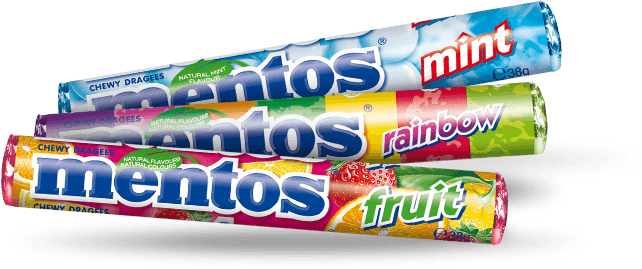
A test is set up to test which brand of soda creates the biggest foam explosion when adding a Mentos candy.  Three different sodas were tested. They measured the height of the foam eruption.   What is the dependent variable?
a)
Brand of soda
b)
Number of mentos candies used
c)
Height of foam eruption
d)
Temperature of soda
54.

The SI unit for mass is _________.

a)

Pounds

b)

Inches

c)

Kilograms

d)

Ounces

55.
The amount of space taken up by an object
a)
Mass
b)
Volume
c)
Density
d)
Weight
56.
The curve of the liquid
a)
Mass
b)
Meniscus
c)
Density
d)
Weight
57.
This refers to how close the measurement is to the true or accepted value
a)
estimate
b)
accuracy
c)
precision
d)
mean
58.
This refers how close a group of measurements are to eachother
a)
estimate
b)
accuracy
c)
precision
d)
mean
59.
The metric system is based on multiples of:
a)
100
b)
20
c)
10
d)
1
60.
Which is bigger?
a)
750 mL
b)
.75 L
c)
7.5 cL
d)
.075kL
61.

Which of these scientific measuring devices uses milliliters as its unit?

a)

ruler

b)

graduated cylinder

c)

beaker

d)

spring scale

62.

Which of these scientific measuring devices is not like the others?

a)

tape measure

b)

thermometer

c)

ruler

d)

meter stick

63.

Which of these scientific measuring devices should be used to measure the mass of water in a cup?

a)

ruler

b)

graduated cylinder

c)

spring scale

d)

triple beam balance

64.

Which of these scientific measuring devices should be used to measure the volume of water in a cup?

a)

ruler

b)

graduated cylinder

c)

spring scale

d)

triple beam balance

65.

How close a measurement is to the accepted value is called..

a)

Accuracy

b)

Precision

c)

Significant

d)

Estimate

66.
It is a measure of how close measurements come to each other when they are made in the same way
a)
Accuracy
b)
Precision
c)
Error
d)
Extrapolation
67.
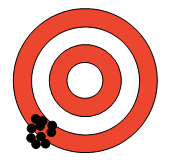
This bullseye demonstrates...
a)
High Accuracy & High Precision
b)
High Accuracy & Low Precision
c)
Low Accuracy & High Precision
d)
Low Accuracy & Low Precision
68.
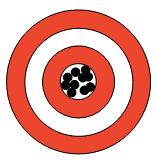
?
a)
High Accuracy & High Precision
b)
High Accuracy & Low Precision
c)
Low Accuracy & High Precision
d)
Low Accuracy & Low Precision
69.

Which is the more precise measurement?

a)

4 mL

b)

4.3 mL

c)

4.30 mL

d)

4.300 mL

70.
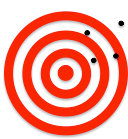
Describe the accuracy and precision of the image
a)
Accurate and Precise
b)
Accurate and not precise
c)
Not Accurate and Precise
d)
not accurate and not precise
71.
What is derived quantities ?
a)
a tendency to do nothing or to remain unchanged.
b)
combination of two or more base quantities
c)
the quantity of motion of a moving body, measured as a product of its mass and velocity.
72.

What is the unit of DENSITY

a)

m/s

b)

m/s2

c)

kg/m3

d)

Newton

73.
How many significant figures does the following number have: 0.002040
a)
6
b)
4
c)
3
d)
2
74.
How many significant figures does the following number have: 0.998005
a)
9
b)
10
c)
6
d)
5
75.
How many significant figures does the following number have: 100.00210
a)
7
b)
5
c)
10
d)
8
76.
Round 0.010229 to four sig figs
a)
1022
b)
1023
c)
0.01023
d)
0.01022
77.

What is the measurement 1042 Liters rounded to 2 significant figures?

a)

1040 L

b)

1.1 x 10³ L

c)

1.0 x 10³ L

d)

1050 L

78.
Change from standard form to scientific notation: 12,000,000
a)
12.0  x  107
b)
0.12  x  107
c)
1.2  x  106
d)
1.2  x  107
79.
Change from standard form to scientific notation:  450,000
a)
4.5  x  105
b)
45  x  105
c)
4.5  x  104
d)
4.5  x  106
80.
Change from standard form to scientific notation:  0.000398
a)
39.8  x  10-5
b)
3.98  x  10-5
c)
3.98  x  10-4
d)
39.8  x  10-6
81.
Change from standard form to scientific notation: 0.004078
a)
4.078  x  10-3
b)
4.078  x  103
c)
40.78  x  10-4
d)
.4078  x  10-2
82.
Try to change the number back to standard form:  6.79  x  104
a)
679,000
b)
6,790
c)
67,900
d)
6,790,000
83.

Ervin bowled 7 games last weekend. His scores are: 155, 165, 138, 172, 127, 193, 142. What is the range of Ervin's scores?

a)

193

b)

127

c)

60

d)

66

84.

The scores awarded to 25 students for an assignment were as follows:

4 7 5 9 8 6 7 7 8 5 6 9 8 5 8 7 4 7 3 6 8 9 7 6 9

What is the mode?

a)

6

b)

7

c)

8

d)

9

85.
Find the median of these numbers:
4,2,7,4,3
a)
2
b)
5
c)
7
d)
4
86.
The mode score on the 6th grade math test was 94! Which of these interpretations must be correct?
a)
99 was the highest score on the test.
b)
More students received a 94 than any other score
c)
No student scored below a 50
d)
A score of 91 was slightly below average.
87.
What type of graph is this?
a)
Bar Graph
b)
Line Plot
c)
Pictograph
d)
Tally Chart
88.
I have no axes at all. I help compare parts to a whole. What am I?
a)
Circle Graph
b)
Histogram
c)
Line Graph
d)
Bar Graph
89.
I have an x-axis and a y-axis. I help to track changes over time. What am I?
a)
Circle Graph
b)
Histogram
c)
Line Graph
d)
Dot Plot
90.
I have an x-axis and a y-axis. I help to compare categories. There are spaces between my bars. What am I?
a)
Bar Graph
b)
Histogram
c)
Line Graph
d)
Dot Plot
91.
I have an x-axis and a y-axis. I help to show frequency. There are no spaces between my bars. What am I?
a)
Bar Graph
b)
Histogram
c)
Line Graph
d)
Dot Plot
92.

What is a model (in general)?

a)

A simplified version of something.

b)

A unique picture of an atom.

c)

A image of an atom.

d)

A fun puzzle

93.
What is a physical model?
a)
A structure that allows for physical activity
b)
A structure scientists develop in their minds.
c)
A model based on the scientific method.
d)
A model scientists build to represent something else.
94.
What is a conceptual model?
a)
A structure that scientists develop in their minds.
b)
A model that scientists build to represent something else.
c)
A model based on the scientific method.
d)
A structure that allows for variables to be tested.
95.
What should you do before you start lab?
a)
Read all the procedures
b)
Make sure your work area is neat
c)
Get teachers permission
d)
All of the above
96.
If you break glassware during a lab you should
a)
tell the teacher immediately
b)
Clear people out of the area and leave broken glass for a janitor
c)
Tell the teacher on the way out of class at the end of the period
d)
Try to clean it up yourself quickly so you won�t bother anyone
97.
If you are using sharp instruments you should always
a)
Place objects on a suitable surface
b)
Cut objects in your hand
c)
Cut objects over the sink
d)
Give objects for someone else to cut
98.
Ionic bonds are between...
a)
nonmetals and nonmetals
b)
carbon and oxygen
c)
metals and nonmentals
d)
hydrogen and chlorine
99.
Covalent bonds are between...
a)
two or more nonmetals
b)
sodium and chlorine
c)
metals and metals
d)
metals and nonmetals
100.
What is the name for an ion with a positive charge?
a)
cation
b)
anion
c)
onion
d)
union
101.
What is the name for an ion with a negative charge?
a)
cation
b)
anion
c)
onion
d)
union
102.
What kind of bond forms when atoms share electrons?
a)
ionic
b)
covalent
c)
artificial
d)
univalent
103.
What kind of bond forms when atoms exchange electrons?
a)
ionic
b)
covalent
c)
artificial
d)
univalent
104.
What are valence electrons?
a)
sum of the protons and neutrons
b)
protons minus electrons
c)
electrons in the inner shells
d)
electrons in the outer shell
105.
If an atom gains two electrons what charge will it have?
a)
-2
b)
-1
c)
+1
d)
+2
106.
If an atom loses two electrons what charge will it have?
a)
-2
b)
-1
c)
+1
d)
+2
107.
How many valence electrons does oxygen have?
a)
2
b)
4
c)
5
d)
6
108.

Any substance that cannot be broken down is a(n)

a)

atom

b)

element

c)

compound

d)

carbohydrate

109.
Contains only one kind of atom.
a)
Element
b)
Compund
c)
Mixture
110.
Contains two or more atoms combined
a)
Elements
b)
Compounds
c)
Mixtures
111.
The air is a _________. 
a)
element 
b)
mixture 
c)
compound 
d)
energy 
112.
How many carbon atoms (C) are in a COmolecule?
a)
1
b)
2
c)
3
d)
0
113.
Which of the following is a compound?
a)
Co
b)
O2
c)
C
d)
CO2
114.
Which is the correct formula for:
 three hydrogen (H)
one sulfur (S)
four oxygen (O)
a)
H3SO4
b)
HSO4
c)
H4S3O
d)
H2O
115.
Is hydrogen considered a metal or a non-metal?
a)
A metal
b)
Nonmetal
c)
Metalloid
116.

Why do all bonds form?

a)

so the number of protons equals the number of electrons

b)

so an atom can become unstable

c)

to fill the outermost energy level

117.
When metals bond with non-metals they form what type of bonds
a)
covalent
b)
ionic
c)
cooperative
d)
lewis
118.
How do the following two elements bond together?
Cr3+  O2-         
a)
CrO
b)
Cr3O2
c)
Cr2O3
d)
CrO3
119.
PbS2
a)
lead sulfide
b)
lead sulfur
c)
lead II sulfide
d)
lead IV sulfide
120.
AgF
a)
silver fluoride
b)
silver fluorine
c)
monosilver monofluoride
d)
silver monofluorine
121.
The proper formula for magnesium hydroxide:
a)
MgOH
b)
Mg2OH
c)
Mg(OH)2
d)
Mg2OH2
122.
How do covalent bonds form?
a)
Donating & receiving valence e- between atoms.
b)
Opposite slight charges attract each other between compounds.
c)
Scientists are still not sure how they form.
d)
Sharing valence e- between atoms.
123.
Which of the following is NOT formed by a covalent bond?
a)
K2S
b)
H2O
c)
I2
d)
CO2
124.
Covalent bonds are between...
a)
Metal and Non-metal
b)
Non-metal and Non-metal
c)
Metal and Metal
125.
phosphorus trichloride
a)
KCl3
b)
PCl3
c)
K3Cl
d)
P3Cl
126.
silicon dioxide
a)
SO2
b)
NaO2
c)
SiO2
d)
SiO
127.
SiCl4
a)
silicon tetrachloride
b)
silicon quadchloride
c)
monosilicon tetrachloride
d)
silicon chloride
128.
The name of P₄S₁₀ is
a)
phosphorous sulfide
b)
phosphorus sulfide
c)
tetraphosphorus decasulfide
d)
phosphorus (X) sulfide
129.

When you have Br-Br, what is the polarity?

a)

Polar

b)

nonpolar

c)

Ionic

130.

When you have H-Cl, what is the polarity?

a)

nonpolar

b)

polar

c)

ionic

131.

When you have Li-O, what is the polarity?

a)

nonpolar

b)

polar

c)

ionic

132.

What is the basis of hydrogen bond?

a)

Attraction forces between hydrogen atom bonded with another hydrogen atom

b)

Attraction forces between hydrogen atom bonded with a high electronegativity atom (F, O, N)

c)

Attraction forces between hydrogen atom bonded with a high electronegativity atom (F, O, N) with atom (F, O, N) of another molecule

d)

Attraction forces between hydrogen atom with another hydrogen atom of another molecule

133.

Why can compounds that can form hydrogen bonds have higher boiling points than compounds that cannot form hydrogen bonds?

a)

Compounds that can form hydrogen bonds need to overcome weak Van der Waals attraction forces

b)

Compounds that can form hydrogen bonds need to overcome strong hydrogen bonds

c)

Compounds that can form hydrogen bonds need to overcome weak Van der Waals attraction forces and strong hydrogen bonds

134.

What is the basis of a metallic bond?

a)

the attraction of neutral metal atoms.

b)

the attraction between protons and neutrons.

c)

the attraction between positive metal ions and interlocking electrons.

d)

the attraction between positive metal ions and free moving electrons.

135.
At room temperature, most metals are
a)
liquid
b)
solid
c)
gas
d)
an alloy
136.
What is the ability of a substance to be pulled into a thin strand?
a)
Malleability
b)
Ductility 
c)
Conductivity
d)
Solubility
137.

Steel generally speaking is made of

a)

iron and carbon

b)

copper and iron

c)

tin and carbon

d)

aluminum and nickel

138.

Brass is an alloy made of

a)

copper and zinc

b)

copper and tin

c)

copper and nickel

d)

copper and aluminum

139.
Which is the name of the kind of solid substance formed in this figure?  
a)
aqueous 
b)
precipitate
c)
acid
d)
synthesis 
140.

How many reactants are in A + B ---> C ?

a)

1

b)

2

c)

3

d)

4

141.

How many products are in A + B ---> 2C

a)

1

b)

2

c)

3

d)

4

142.

What type of reactions can able to change products back to the their original form?

a)

Reversible reactions

b)

Irreversible reactions

c)

Combustion reactions

d)

Combination reactions

143.

Which of the following combination is correct?

a)

reversible ⇌

irreversible →

b)

reversible ←

irreversible →

c)

reversible ⇌

irreversible ←

d)

irreversible ⇌

reversible →

144.

When amounts of reactants and products become constant in reversible reaction, what might happen to the reversible reaction?

a)

Reversible reaction reaches equilibrium.

b)

Reversible reaction fastens forward reaction.

c)

Reversible reaction fastens reverse reaction.

d)

Reversible reaction slows down forward reaction.

145.
What molecule is this?
a)
CO
b)
CO2
c)
C2O
d)
C2O2