
 Worksheets
Unit 5/6 Mandatory Review
Total questions: 140
Worksheet time: 4hrs 56mins
What is the order after the 3s orbital? If it is not used, put it in the answer slot 5.
3p
4s
3d
4p
2d
What is the order after the 2s orbital? If it is not used, put it in the answer slot 5.
2p
3s
3p
4s
3d
What is the order after the 4d orbital? If it is not used, put it in the answer slot 5.
5p
6s
4f
5d
5f
What is the order after the 4d orbital? If it is not used, put it in the answer slot 5.
1s
2s
2p
3s
1p
Match the following.
s orbital
orbital Na is in
p orbital
energy levels 2-7
d orbital
holds 10 electrons
f orbital
only 2 energy levels
Match the following.
s orbital
holds 2 electrons
p orbital
holds 6 electrons
d orbital
holds 10 electrons
f orbital
holds 14 electrons
Match the following.
s orbital
energy levels: 1-7
p orbital
energy levels: 2-7
d orbital
energy levels: 3-6
f orbital
energy levels: 4-5
What is wrong with the electron configuration for Arsenic?
If there is nothing wrong, chose the box that is empty.
What is wrong with the electron configuration for Arsenic?
If there is nothing wrong, chose the box that is empty.
What is wrong with the electron configuration for Gold?
If there is nothing wrong, chose the box that is empty.
What is wrong with the electron configuration for Gold?
If there is nothing wrong, chose the box that is empty.
What is the correct electron configuration for Arsenic?
If there is none are correct, chose the box that is empty.
What is the correct electron configuration for Gold?
If there is none are correct, chose the box that is empty.

1s22s22p63s23p64s23d10

1s22s22p63s2
Choose the correct shortcut configuration for iodine.
[Ar]4s24d104p5
[Kr]5s24d105p5
[Xe]5s25d105p5
none of the above
Energy levels are denoted by:
letters
numbers
a combination of letters and numbers
subscripts

Match the elements with their electron configuration! (3 minutes)
1s2 2s2 2p3
Nitrogen, N
1s2 2s2 2p6 3s2 3p3
Phosphorus, P
1s2
Helium, He
1s2 2s2 2p6 3s2 3p6
Argon, Ar
1s2 2s2 2p6 3s2 3p6 4s2 3d5
Manganese, Mn
Choose the correct configuration for Neon (Ne).
1s2 2s2 2p6 3s2 3p6
1s2 2s2 2p6 3s2
1s2 2s2 2p6
1s2 2s1 2p6
Choose the correct element for 1s2 2s2 2p6 3s2 3p6 4s2 3d10 4p5
Chlorine
Bromine
Krypton
Sulfur
Which element is 1s2 2s2 2p6 3s2 3p6 4s1?
Sodium (Na)
Lithium (Li)
Potassium (K)
Calcium (Ca)
1s
7p
2d
3f
5d
1d
4f
1s1
2d9
[He] 1s2
4f11
3p7
5d10
4d14
size of an atom
amount of energy needed to REMOVE an electron
attraction an atom has for an electron
trend does not include noble gases
goes in the opposite direction than the other two
Match the following
atomic radius
size of an atom
electronegativity
affinity an atom has for an electron
ionization energy
energy required to remove an electron
ion
electrically charge atom/group of atoms
noble gases are not include in ____ trend
electronegativity
Order the following in INCREASING Atomic Radius.
(Biggest is last)
Cl
S
P
Si
Al
Order the following in INCREASING Atomic Radius.
(Biggest is last)
B
Ga
In
Tl
Nh
Order the following in INCREASING Atomic Radius.
(Biggest is last)
Ru
Mo
Zr
Sr
Rb
Order the following in INCREASING Atomic Radius.
(Biggest is last)
He
Ne
Ar
Kr
Xe
Order the following in DECREASING Atomic Radius.
(Biggest is first)
Fe
Co
Ni
Cu
Zn
Order the following in INCREASING Ionization Energy.
(Biggest is last.)
Po
Te
Se
S
O
Order the following in INCREASING Ionization Energy.
(Biggest is last.)
Mg
Al
Si
P
Cl
Order the following in INCREASING Ionization Energy.
(Biggest is last.)
Y
Pd
Cd
Sn
I
Order the following in INCREASING Ionization Energy.
(Biggest is last.)
Cs
Rb
K
Li
H
Order the following in DECREASING Ionization Energy.
(Biggest is first.)
F
Cl
Br
I
At
Order the following in DECREASING Ionization Energy.
(Biggest is first.)
Ne
F
O
N
B
Order the following in INCREASING Electronegativity.
(Biggest is last.)
Ba
Sr
Ca
Mg
Be
Order the following in INCREASING Electronegativity.
(Biggest is last.)
V
Cr
Mn
Fe
Cu
Order the following in INCREASING Electronegativity.
(Biggest is last.)
Ir
Pt
Pb
Bi
Po
Order the following in INCREASING Electronegativity.
(Biggest is last.)
Tl
In
Ga
Al
B
Order the following in DECREASING Electronegativity.
(Biggest is first.)
Br
Se
Ge
Ga
Ni
Order the following in DECREASING Electronegativity.
(Biggest is first.)
H
Li
Na
K
Rb
Choose the element with the largest atomic radius.
Choose the element with the highest ionization energy.
Choose the element with the highest electronegativity.
Match the following
Create +1 Charge
Group 1
Create +2 Charge
LOOSING 2 Electrons
Create -2 Charge
GAINING 2 Electrons
Create -1 Charge
Group 17
Group 7A
Not an ION
has no charge
Match the following
Create +2 Charge
Group 2
Create +1 Charge
LOOSING 1 Electron
Create -1 Charge
GAINING 1 Electron
Create -2 Charge
Group 16
Group 6A
Not an ION
has no charge
Match the following
ION
atom with an electrical charge
CATION
positive ION
ANION
negative ION
How are ions formed?
loosing or gaining electrons
-1 charge
gain 1 electron
Match the following
ION
atom with an electrical charge
CATION
positive ION
ANION
negative ION
How are ions formed?
loosing or gaining electrons
-1 charge
gain 1 electron
Match the following
ION
atom with an electrical charge
CATION
loss of electrons
ANION
gain of electrons
How are ions formed?
loosing or gaining electrons
+1 charge
lose 1 electron
Match the following
ION
atom with an electrical charge
CATION
loss of electrons
ANION
gain of electrons
Na+
example of an cation
Cl-
example of an anion
POSITIVE
NEGATIVE
gain electrons
loose electrons
-1 charge
anion
does not gain or lose electrons
charge on a group 2 ion
lose 1 electron
of electrons = # of protons
of electrons = # of protons
more electrons than protons
less electrons than protons
ions made on the right of PT
ions made of the left of the PT
of electrons = # of protons
more electrons than protons
less electrons than protons
ions made on the right of PT
ions made of the left of the PT
Choose the group that will have a +1 charge.
Choose the group that will have a -1 charge.
Choose the group(s) that will create anions.
Choose the group(s) that will create cations.

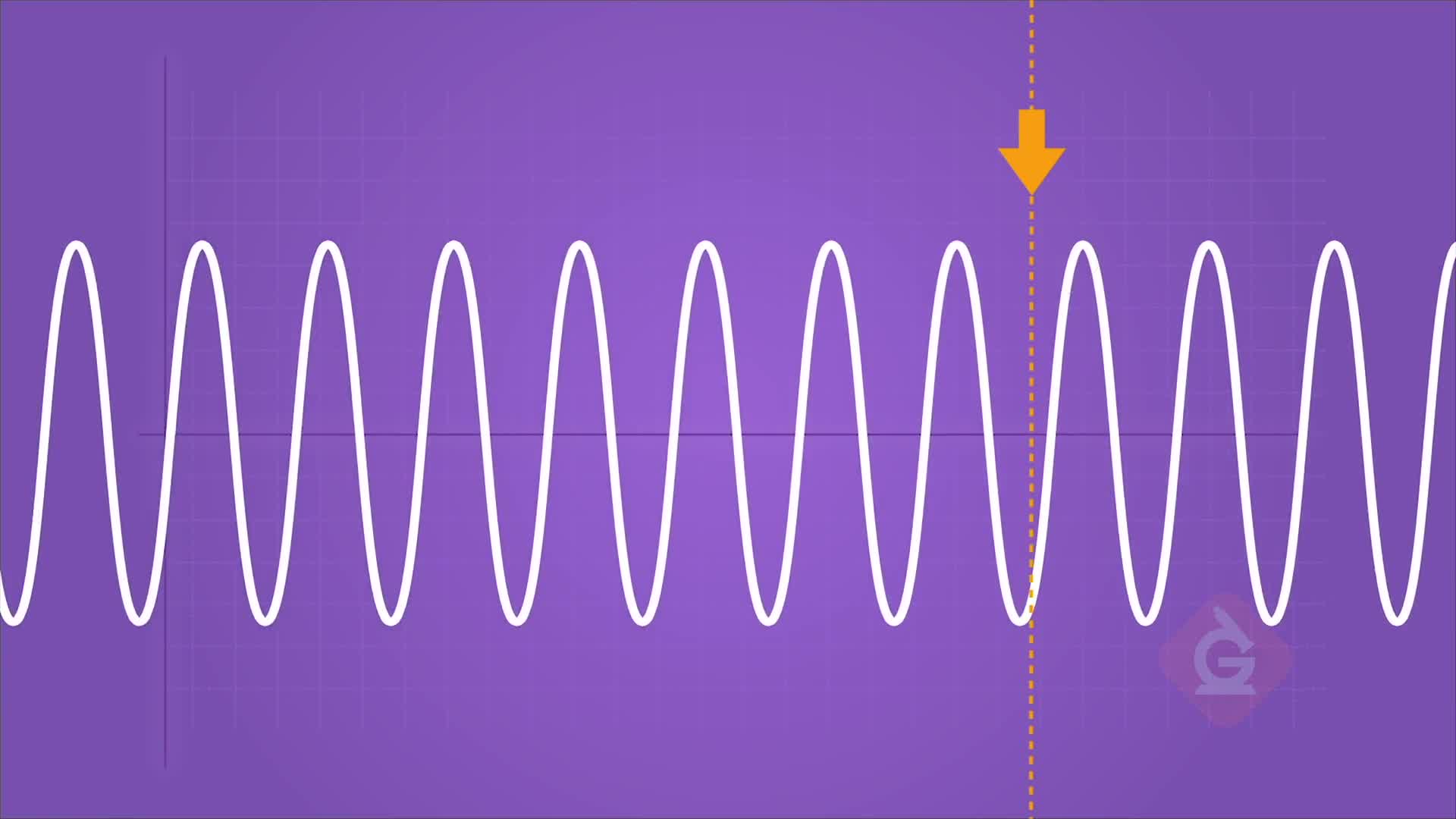
Which has a higher frequency?
Wave N
Wave O
Same frequency
There is no frequency


Which color waves have the shortest wavelength?
red
yellow
green
violet
Which color waves have the lowest frequency?
red
yellow
green
violet
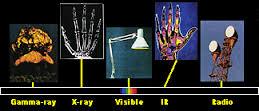
Which EM waves are have a SHORTER wavelength than visible?
radio
none
infrared
x-rays
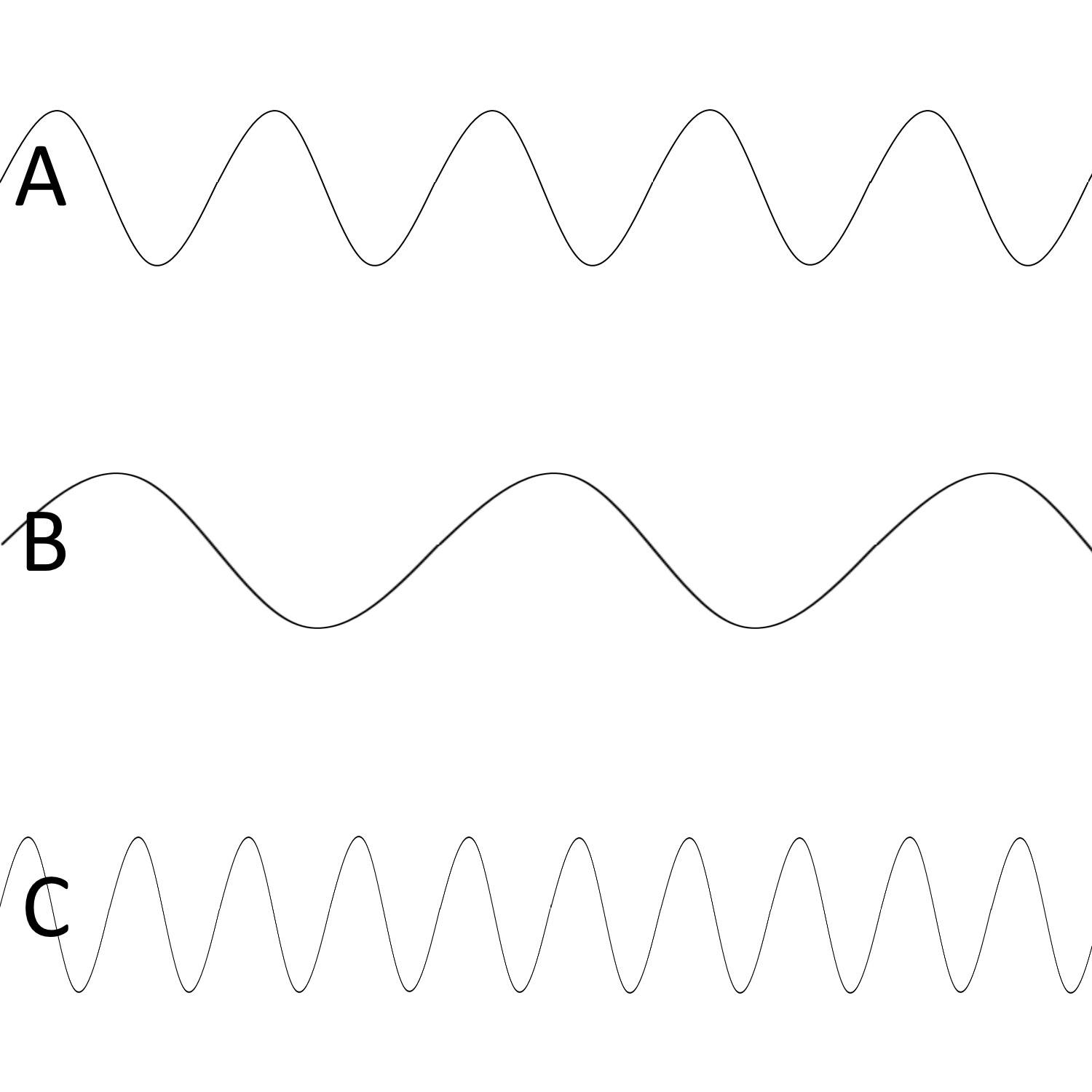
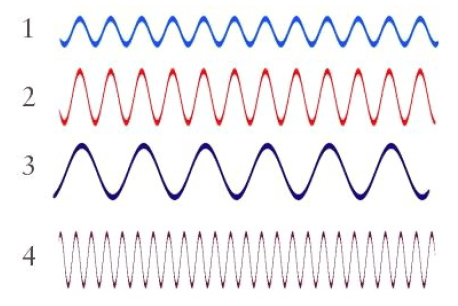
Which wave has the lowest frequency?
A
B
C
None (same wavelength)

Which of the following electromagnetic waves has the lowest energy?
Gamma Rays
Visible Light
Radio waves
microwave
Which of the following electromagnetic waves is given off as heat?
Gamma Rays
Radio Waves
Infrared rays
Visible Light
Which wave has the shortest wavelength?
A
B
C
None (same wavelength)

When the wavelength increases the frequency will
increase
decrease
remain same
none of these
What does lambda represent?
frequency
energy
wavelength
it is made up; it does not represent anything
As the wavelength increase, the energy of the wave _____________.
increases
decreases
remains the same
do not know
As Energy Increases, the frequency ____________.
increases
decreases
remains constant
do not know
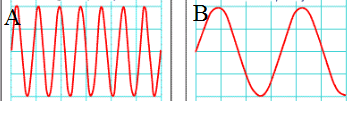
Which wave has a higher energy?
Which wave has a greater wavelength?

The distance between two consecutive crests is ___________.
Wavelength
Medium
Frequency
LIne of Origin
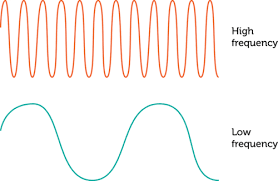
If a wave has a greater frequency, what happens to the wavelength?
increases
decreases
stays the same

Which wave has a greater frequency?
wave B
wave C


Label each wave with either higher or lower energy.
higher
lower
shorter
longer
Label each wave with either higher or lower frequency.
higher
lower
shorter
longer
Label each wave with either shorter or longer wavelength.
higher
lower
shorter
longer
Reorder the following from highest to lowest energy.
gamma rays
x-rays
purple light
yellow light
radio waves
Reorder the following from highest to lowest wavelength.
FM radio waves
infrared
green light
ultraviolet
gamma rays
Reorder the following from highest to lowest frequency.
x-rays
blue light
infrared
Radar radio waves
AM radio waves
Label the four parts of the wave.
energy
crest
amplitude
wavelength
frequency
trough
long wavelength
low frequency
short wavelength
high frequency
low energy
long wavelength
high energy
short wavelength
low energy
low frequency
high energy
high frequency
As wavelength increases...
frequency (a) and
energy (b) .
As energy increases...
frequency (a) and
wavelength (b) .
As frequency increases...
energy (a) and
wavelength (b) .
As wavelength decreases...
energy (a) and
frequency (b) .
As energy decreases...
wavelength (a) and
frequency (b) .
As frequency decreases...
wavelength (a) and
energy (b) .
Choose the alkali metals.
Choose the group(s) that are highly reactive and form a +1 charge.
Choose the alkaline earth metals.
Choose the group(s) that are highly reactive that form a +2 charge.
Choose the alkaline halogens.
Choose the group(s) that are highly electronegative and form a -1 charge.
Choose the noble gases.
Choose the group(s) that are unreactive.
Choose the lanthanides.
Choose the group(s) that make lights and lighters.
Choose the actinides.
Choose the group(s) that are radioactive.
Choose the transition metals.
Choose the group(s) that are strong and used a lot in industry.
Choose the group(s) that are known to make colorful compounds and fireworks.
Choose all of the elements that are metalloids.
Choose all of the elements that are post transition metals.
Al
Si
C
Cd
Ge
Sn
noble gases
halogens
greedy
chameleons
alkali
alkaline earth
transition
post transition
Label the parts of the periodic table with the correct characteristics that match it.
unreactive
non metals
soft metals, will take electrons
strong, colorful
very reactive
radioactive
lamps, fluorescent
Label the parts of the periodic table with the correct characteristics that match it.
look like metals behave like non metals
unreactive
non metals
soft metals, will take electrons
strong, colorful
very reactive
radioactive
lamps, fluorescent
Label the parts of the periodic table with the correct characteristics that match it.
unreactive
non metals
soft metals, will take electrons
strong, colorful
very reactive
radioactive
lamps, fluorescent
Label the parts of the periodic table with the correct characteristics that match it.
unreactive
non metals
soft metals, will take electrons
strong, colorful
very reactive
radioactive
lamps, fluorescent
Columns on the periodic table are called (a) while rows are called (b) .
relatively soft
soft
strong
high boiling and melting points
higher electronegativity

