wayground logo

Free Printable Worksheets

Font size

S
M
L
XL
Worksheets

Midterm Review Mr. Z Fall 2022

Total questions: 145

Worksheet time: 4hrs 18mins

Name
Class
Date
1.

_______ are made by using your senses and are more fact based.

a)

inferences

b)

observations

2.

An _________ is a guess based on what you have observed.

a)

inference

b)

observation

3.

A __________ is something that we expect to happen in the experiment. It is an "educated guess".

a)

hypothesis

b)

observation

4.

Something that remains the same in all groups during an experiment is called a ___________.

a)

variable

b)

constant

5.

What is the tiniest representative particle of matter within the entire universe?

a)

cells

b)

gases

c)

atoms

d)

liquids

6.

What do we call a substance composed of atoms of a singular type?

a)

cell

b)

proton

c)

element

d)

atom

7.

Which term represents the particle that is formed when 2 or more atoms come together as one?

a)

atoms

b)

elements

c)

molecules

d)

compounds

8.

What is the term used for the substances that are formed when 2 or more atoms from differing elements come together?

a)

atoms

b)

elements

c)

molecules

d)

compounds

9.

TRUE OR FALSE:

Every compound is a molecule and every molecule is a compound.

a)

TRUE

b)

FALSE

10.

What does this picture portray?

a)

atom of an element

b)

elemental substance

c)

molecule of a compound

d)

compound

11.

Who proposed the 'plum pudding' model of the atom?

a)

o Dalton

b)

o Thomson

c)

o Rutherford

d)

o Bohr

12.

Who performed the famous 'gold foil experiment'?

a)

o Dalton

b)

o Thomson

c)

o Rutherford

d)

o Bohr

13.

Who first discovered that electrons orbit the nucleus in orbits?

a)

o Dalton

b)

o Thomson

c)

o Rutherford

d)

o Bohr

14.

Which of the four Physicists was first to work with cathode rays?

a)

o Dalton

b)

o Thomson

c)

o Rutherford

d)

o Bohr

15.

Who discovered that atoms have a nucleus?

a)

Dalton

b)

Thompson

c)

Rutherford

d)

Bohr

16.

Each element produces its own pattern of emission spectra lines because each element has its own distinct

a)

Speed of light

b)

Electron configuration

c)

Number of neutrons

d)

None of these

17.

The color of emitted light with the LONGEST wavelength is

a)

violet

b)

green

c)

red

d)

indigo

18.

The color of emitted light with the SHORTEST wavelength is

a)

violet

b)

green

c)

red

d)

indigo

19.

The color of emitted light with the HIGHEST frequency is

a)

violet

b)

green

c)

red

d)

indigo

20.

The color of emitted light with the LOWEST frequency is

a)

violet

b)

green

c)

red

d)

indigo

21.

The unknown emissions spectra belongs to the element

a)

Hydrogen

b)

Mercury

c)

Neon

d)

Sodium

22.

The unknown emissions spectra belongs to the element

a)

Hydrogen

b)

Mercury

c)

Neon

d)

Sodium

23.

If the atomic mass is the number of protons and neutrons, and the atomic number is the number of protons, how

can the number of electrons be determined?

a)

By subtracting the number of protons by the number of neutrons.

b)

It is the same as the number of protons.

c)

By subtracting the number of protons from the atomic mass.

d)

By adding the protons and neutrons.

24.

If the atomic number of Pb (Lead) is 82 and its atomic mass is 205, how many neutrons does it have?

a)

123

b)

82

c)

205

d)

287

25.

Hydrogen has an atomic mass of 3 and atomic number of 1. How many protons and neutrons does hydrogen have?

a)

3 protons and 1 neutron

b)

1 proton and 2 neutrons

c)

2 protons and 1 neutron

d)

1 proton and 3 neutrons

26.

Which element is the heaviest?

a)

Na

b)

Ar

c)

Ca

d)

O

27.

Which atom has an atomic mass of 16?

a)

Na

b)

Ar

c)

Ca

d)

O

28.

An atom has an atomic number of 11 and an atomic mass of 23. Which of the following statements is correct?

a)

It has 11 protons and 11 neutrons.

b)

It has 11 electrons and 12 protons.

c)

It has 11 protons and 11 electrons.

d)

It has 23 protons and 11 electrons.

29.
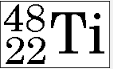
How many protons does this isotope of titanium have?
a)
48
b)
22
c)
26
d)
70
30.
How many neutrons does the isotope of lithium have?
a)
8
b)
3
c)
4
d)
5
31.
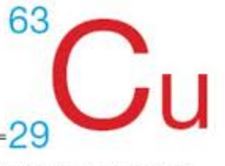
How many electrons does a Copper atom have?
a)
63
b)
29
c)
92
d)
34
32.

Ground state means that an electron is...

a)

at its lowest possible potential energy

b)

in the first shell of an atom

c)

laying low for the weekend

d)

removed from an atom

33.

In order to go from ground state to an excited state, an electron must

a)

emit energy

b)

absorb energy

c)

rotate

d)

wiggle

34.

When an electron returns to ground state from an excited state, the atom will

a)

emit energy

b)

absorb energy

c)

rotate

d)

wiggle

35.

Electrons that have not been excited are said to be at:

a)

high level

b)

base line

c)

set state

d)

ground state

36.

There may be a maximum of ____ p orbitals at a given energy level.

a)

2

b)

6

c)

3

d)

8

37.

The principle quantum number, n, represents the:

a)

spin value

b)

suborbital value

c)

energy level

d)

magnetic value

38.

How many electrons total are found in the f orbital?

a)

2

b)

6

c)

10

d)

14

39.
What is the ground state electron configuration of Bromine?
a)
2-8-18-7
b)
2-8-18-8
c)
2-3
d)
2-8-17-8
40.

Which is an excited state electron configuration of Bromine?

a)

2-8-18-7

b)

2-8-18-8

c)

2-3

d)

2-8-17-8

41.
An electron moves ___________ the nucleus when it moves to its excited state
a)
towards
b)
away from
c)
inside
d)
around
42.
What is the electron configuration of sodium?
a)
2.8
b)
2.8.2
c)
2.8.1
d)
11
43.
Which element has an electron configuration of 2.8.8?
a)
Lead
b)
Flourine
c)
Neon
d)
Argon
44.
What is the electron configuration of Aluminium?
a)
2.8.3
b)
2.11
c)
13
d)
2.8.2
45.
What is the electron configuration of chlorine?
a)
17
b)
2.7
c)
2.8.7
d)
2.8.4
46.
Which element has the electron configuration of 2.8.2?
a)
Magnesium
b)
Sodium
c)
Sulfur
d)
Arsenic
47.
Which element has the electron configuration of 2.7?
a)
Krypton
b)
Iodine
c)
Flourine
d)
Barium
48.
What is the relative atomic mass of sodium?
a)
11
b)
23
c)
46
d)
64
49.

AgF....

a)

is an element because it has 2 different types of atoms.

b)

is a compound because it has 2 different types of atoms.

c)

is a compound because it has 2 of the same types of atoms.

d)

is an element because it has 2 of the same types of atoms.

50.

Find Molecular Mass: Calculate the mass of one mole of CO2 (carbon dioxide).

a)

18.0 grams

b)

44.0 grams

c)

14.0 grams

d)

180.0 grams

51.

Find Atomic Mass: What is the mass of one mole of Lithium (Li)?

a)

6.9 grams

b)

14.0 grams

c)

22.9 grams

d)

56.9 grams

52.
What is the relative formula mass of NaOH?
a)
20
b)
39
c)
40
d)
45
53.
Electronegativity is...
a)
how good an atom is at attracting electrons
b)
the ability of an atom to lose electrons
c)
the energy required to remove an electron from a specific atom
d)
how easy it is to make friends. 
54.
Ionization energy is...
a)
the energy required to add an electron to a specific atom
b)
how much energy it takes to remove an electron from an atom
c)
the energy required to shield the outer electrons from the nucleus
d)
a measure of the ability of an atom to attract electrons
55.
Atomic radius generally increases as we move __________.  
a)
down a group and from right to left across a period 
b)
up a group and from left to right across a period 
c)
down a group and from left to right across a period 
d)
up a group and from right to left across a period 
56.
Which atom has the largest atomic radius?
a)
potassium
b)
rubidium 
c)
francium
d)
cesium
57.

As you move from left to right on the periodic table, the number of valence electrons.......

a)

Increases

b)

Decreases

c)

Remains the same

58.

As you move down a group on the periodic table, the number of valence electrons....

a)

Increases

b)

Decreases

c)

Remains the same

59.

Which of the following would be most similar to Phosphorus? (select all that apply)

a)

Nitrogen

b)

Sulfur

c)

Silicon

d)

Germanium

e)

Antimony

60.

The common charge on an atom in group 17 would be....

a)

+1

b)

+7

c)

-7

d)

-1

e)

17

61.

Which of the following is the term for a substance in which all the atoms have the same number of protons

a)

a compound

b)

An element

c)

a molecule

d)

a solid

e)

a gas

62.

Which of the following reasons explains why there is a decimal for most atomic masses?

a)

The mass of one atom can have a fraction.

b)

Since electrons are very small mass they only add a little bit, usually only a decimals worth.

c)

It is the average mass of all the potential isotopes of an atom.

d)

Neutrons have a mass of 1.1 meaning that fractions are common.

63.

Which of the following is true of atomic radius?

a)

The radius is mainly due to how large an atom's nucleus is.

b)

The radius is mainly due to the size of the electron cloud.

c)

The atomic radius is a way we measure the mass of an atom.

d)

Neutrons account for the majority of an atom's radius.

64.
Which of the following is NOT true of scientific notation?
a)
The number in front must be between 1 and 9.9
b)
The exponent tells you how many times the decimal was moved
c)
It shortens big numbers
d)
It doesn't always contain x10
65.
What is 9.2 x 10in standard notation?
a)
9,200
b)
92,000
c)
920,000
d)
920
66.
What is 416,000,000 in scientific notation?
a)
4.16 x 10⁸
b)
4.16 x 10⁹
c)
4.16 x 10⁻⁸
d)
4.16 x 10⁻⁹
67.
What is 2.8 x 10⁻⁴ in standard notation?
a)
28,000
b)
280,000
c)
.00028
d)
.000028
68.
What does a negative exponent mean in scientific notation? (example:  1.19 x 10⁻³)
a)
It means the number is very large
b)
It means the number is very small
69.
What is 7.0 x 10⁸ in standard notation?
a)
7,000,000,000
b)
70,000,000
c)
700,000,000
d)
.000000007
70.
What is 2.0x 10⁻⁶ in standard notation?
a)
200,000
b)
2,000,000
c)
.000002
d)
.0000002
71.
What is 1 in scientific notation?
a)
1
b)
1 x 10⁻¹
c)
1 x 10⁻¹
d)
1 x 100
72.
What is 2.8 x 10³ in standard notation?
a)
28,000
b)
2,800
c)
.0028
d)
.00028
73.
Scientific notation is NOT used extensively in which of the following?
a)
Math
b)
Science
c)
English
74.
How many significant figures does the following number have?
0.00345
a)
6
b)
5
c)
3
d)
Ambiguous: 3,4,5, or 6
75.
How many significant figures does the following number have: 0.00204
a)
6
b)
4
c)
3
d)
2
76.

How many significant figures does the following number have?1.2500 x 10310^3  

a)
5
b)
3
c)

Ambiguous: 3 or 5

d)

7

77.
How many significant figures does the following number have: 100.00210
a)
7
b)
8
c)
10
d)
Ambiguous: 7 or 8
78.
Round 1289 to three significant figures
a)
1290
b)
130
c)
1300
d)
1.29x10³
79.
What is 98.907 rounded to 1 significant figure?
a)
98.9
b)
90
c)
100
d)
1x10²
80.
Solve and give your answer with the correct number of significant figures
(12.470)(271)
a)
3366.9
b)
3.37x10³
c)
3400
d)
3370
81.
Solve and give your answer with the correct number of significant figures
129.6/3
a)
43.0
b)
43
c)
 4x101
d)
40
82.
Solve and give your answer with the correct number of significant figures
24.28 + 12.5
a)
3.687 x 101
b)
36.8
c)
37
d)
3.70x101
83.
Solve and give your answer with the correct number of significant figures
1421-34
a)
1.39x10³
b)
1387
c)
1390
d)

1400

84.
How many liters would you need to make a 1 M solution if you have 6 mol of Sodium Hydroxide? 
a)
2
b)
3
c)
4
d)
85.
What is the molarity of 4 g of NaCl (MM=58.45) in 3,800 mL of solution?
a)
0.018 M
b)
0.0011 M
c)
1.052 M
d)
0.062 M
86.
How many grams of solute are dissolved in 125.0 mL of 5.00 M NaCl (MM = 58.45)?
a)
0.625 g NaCl
b)
625 g NaCl
c)
36.5 g NaCl
d)
0.04 mol NaCl
87.
What is the empirical formula of the following molecular formula:  C3H6
a)
C3H6
b)
CH2
c)
C2H4
d)
CH3
88.
What is the molecular formula if the empirical formula is C2H5 and the molecular molar mass is 58.14 g/mol?
a)
C2H5
b)
C4H10
c)
C1H2.5
d)
C4H8
89.
What is the empirical formula for the following molecular formula: C6H14
a)
C6H14
b)
C3H7
c)
CH2
d)
CH3
90.
What is the molecular formula if the empirical formula is CH2O and the molecular molar mass is 180.18?
a)
CH2O
b)
C2H4O2
c)
C4H8O4
d)
C6H12O6
91.
What is the empirical formula for the following molecular formula: C5H12
a)
C5H12
b)
CH3
c)
CH2
d)
C2.5H6
92.
Which pair has the same empirical formula?
a)
NaCrO4 and Na2Cr2O7
b)
C2H4O2 and C6H12O6
c)
C3H6Oand C2H6O2
d)
CH4 and C2H6
93.
Find the percent composition of N2S2.
a)
N: 69.6%  S: 30.4%
b)
N:36% S: 75.6%
c)
N: 96.6% S: 3.4%
d)
N: 30.4% S: 69.6%
94.
What is the molecular formula for a compound with the empirical formula: K2SOand a molecular mass of 696g.
a)
K2SO
b)
K8SO16
c)
K8S4O
d)
K8S4O16 
95.
What is the molecular formula of a compound with an empirical formula of C2OH4 and a molar mass of 88 grams per mole?
a)
C2O4H8
b)
C8O2H4
c)
C4O2H8
d)
C4O8H2
96.
How many moles are in 88 g of propane, C3H8
a)
2.0
b)
16.0
c)
0.051
d)
3,872
97.
A compound is 25.9 % nitrogen and 74.1% oxygen. Find its empirical formula. 
a)
N2O4
b)
NO
c)
N2O5
d)
N4O6
98.
Determine the empirical formula for a compound with 87.1% Ag and 12.9% S. 
a)
AgS2
b)
Ag3S5
c)
Ag2S
d)
Ag4S2
99.
The empirical formula of a substance is CH2O. Its molar mass is 180. What is the molecular formula?
a)
C6H12O6
b)
C4H8O4
c)
C8H16O8
d)
C2H4O2
100.
Epinephrine (adrenaline) is a hormone secreted into the bloodstream in times of stress. It contains 59.0%  C, 7.15% H, 26.20%O, 7.65%N and has a molar mass of 183 g/mol. What is its molecular formula? 
a)
C9H13NO3
b)
C5H11N3O2
c)
C8H12NO2
d)
C7H9N2O
101.

what is the name of CCl4?

a)

carbon tetrachloride

b)

monocarbon tetrachloride

c)

tetracarbon monochloride

d)

carbon chloride

102.

What is the name of the compound SO2

a)

Monosulfate oxide

b)

Sulfur Dioxide

c)

Monosulfur dioxide

103.

What is the name of the compound P2O5

a)

Pentaphosphorus dioxide

b)

Phoshphide dioxide

c)

Diphosphorus pentoxide

104.

What is the name for MgF2 ?

a)

magnesium fluoride

b)

manganese Phosphide

c)

magnesium(III) fluoride

d)

magnesium fluoride(II)

105.
What is the charge on the calcium ion?
a)
1+
b)
2+
c)
2-
d)
1-
106.
Which is a transition metal?
a)
cesium
b)
iron
c)
helium
d)
tellurium
107.
What is the name for the NO3- ion?
a)
nitrate ion
b)
nitrite ion
c)
nitrogan ion
d)
nitride ion
108.
Select the correct formula for sulfur hexachloride
a)
S2Cl6
b)
S6Cl
c)
SCl6
d)
SF6
109.
Name the compound CaF2
a)
calcium difluoride
b)
calcium (II) fluoride
c)
calcium fluorite
d)
calcium fluoride
110.

NaBr

a)

Bromide sodide

b)

Sodium bromide

c)

Sodium bromate

d)

Sodium bromite

111.
What is the formula for Potassium Fluoride? 
a)
KF
b)
K2F
c)
KF2
d)
none of the above
112.
C3O8
a)
Tricarbon Octoxide
b)
Carbon Octoxide
c)
Carbon Oxide
d)
Carbon (VIII) Oxide
113.
H2O
a)
Dihydrogen Monoxide
b)
Hydrogen Oxide
c)
Hydrogen Monoxide
d)
Water
114.
Zn3P2
a)
Zinc Phosphide
b)
Zinc (II) Phosphide
c)
Trizinc Diphosphide
d)
Zinc Phosphate
115.
What kind of bond forms between a cation and an anion?
a)
Chemical bond
b)
Ionic bond
c)
Covalent bond
d)
Electron bond
116.
What kind of bond forms between two nonmetals?
a)
Chemical bond
b)
Ionic bond
c)
Covalent bond
d)
Electron bond
117.
Name the following compound: SnO2
a)
tin(II) oxide
b)
tin(IV)oxide
c)
tin(II)oxygen 
d)
tin oxide
118.
Name the following ionic compound: Cs2S
a)
cesium sulfide
b)
cesium sulfate
c)
cesium (II) sulfate
d)
cesium (II) sulfide
119.
SeF4
a)
Tetraselenium fluoride
b)
Selenium Fluoride
c)
Selenium tetraflouride
d)
Selenium (IV) Fluoride
120.
P2O5
a)
Phosphorus Oxide
b)
Pentaphosphorus Dioxide
c)
Diphosphorous pentoxide
d)
Phosphoric Oxygen
121.
What is a coefficient?
a)
The small number on the right of the chemical symbol.
b)
The large number to the left of a formula.
122.
Which side of a chemical equation is the product side?
a)
Left (before the arrow)
b)
Right (after the arrow)
123.
Which side of a chemical equation is the reactant side?
a)
Left (before the arrow)
b)
Right (after the arrow)
124.
Which problem is balanced?
a)
PbO2 + 2H2
b)
SO2 + H20 --> H2SO4
c)
2Na + 2H2O --> 2NaOH + H2
125.
Is the equation balanced?: 2H2O + O2 --> 4MgO + 3Fe
a)
Yes
b)
No
126.
What is the little number after an element in a chemical equation called.
Example: H2
a)
Coefficient 
b)
Subscript
c)
Atom
d)
Equation
127.
What is the arrow in a chemical equation...
H2 + O --> H2O
a)
Reactants
b)
Products 
c)
Produces
d)
Chemical Equation 
128.
Balance this equation
_Zn+_HCl-->_ZnCl+_H2
a)
1,1,2,1
b)
1,1,1,2
c)
1,2,1,1
d)
2,1,1,1
129.
Balance this equation.
_Mg + _Cl--> _MgCl2
a)
1, 2,1
b)
already balanced
c)
2,1,1
d)
1,1,2
130.
What does the Law of Conservation of Mass state?
a)
Matter cannot be gained or lost in a chemical reaction.
b)
Matter can only be lost in a chemical reaction.
c)
Matter can only be gained in a chemical reaction.
d)
Matter can be gained and lost in a chemical reaction. 
131.
Is this balanced?...
Fe + S --> FeS
a)
YES!
b)
NO!
132.
KNO3 --> KNO2 + O2
What coefficients are needed to balance the reaction?
a)
2, 2, 1
b)
2, 3, 2
c)
1, 2, 2
d)
1, 3, 1
133.
Balance this equation-
__P+ __O--> __P2O3
a)
it is already balanced
b)
2, 1, 3
c)
1, 2, 3
d)
1, 3, 2
134.
Balance this equation.
_Mg + _Cl--> _MgCl2
a)
1, 2,1
b)
already balanced
c)
2,1,1
d)
1,1,2
135.
Balance this equation.
_CH4 + _O--> _CO+ _H2O
a)
1,2,1,1
b)
2,1,2,1
c)
1,2,1,2
d)
0,2,0,2
136.

Identify the type of chemical reaction

a)

Synthesis

b)

Decomposition

c)

Single replacement

d)

Double replacement

e)

Combustion

137.

Identify the type of chemical reaction

a)

Synthesis

b)

Decomposition

c)

Single replacement

d)

Double replacement

e)

Combustion

138.

Identify the type of chemical reaction

a)

Synthesis

b)

Decomposition

c)

Single replacement

d)

Double replacement

e)

Combustion

139.

Identify the type of chemical reaction

a)

Synthesis

b)

Decomposition

c)

Single replacement

d)

Double replacement

e)

Combustion

140.

Identify the type of chemical reaction

a)

Synthesis

b)

Decomposition

c)

Single replacement

d)

Double replacement

e)

Combustion

141.

Identify the type of chemical reaction

a)

Synthesis

b)

Decomposition

c)

Single replacement

d)

Double replacement

e)

Combustion

142.

Identify the type of chemical reaction

a)

Synthesis

b)

Decomposition

c)

Single replacement

d)

Double replacement

e)

Combustion

143.

Identify the type of chemical reaction

a)

Synthesis

b)

Decomposition

c)

Single replacement

d)

Double replacement

e)

Combustion

144.

Identify the type of chemical reaction

a)

Synthesis

b)

Decomposition

c)

Single replacement

d)

Double replacement

e)

Combustion

145.

Identify the type of chemical reaction

a)

Synthesis

b)

Decomposition

c)

Single replacement

d)

Double replacement

e)

Combustion