wayground logo

Free Printable Worksheets

Font size

S
M
L
XL
Worksheets

Semester 1 AP Final Review

Total questions: 134

Worksheet time: 2hrs 6mins

Name
Class
Date
1.
Ionic bonds are between...
a)
nonmetals and nonmetals
b)
carbon and oxygen
c)
metals and nonmentals
d)
hydrogen and chlorine
2.
Covalent bonds are between...
a)
two or more nonmetals
b)
sodium and chlorine
c)
metals and metals
d)
metals and nonmetals
3.

Why do elements bond?

a)

To be friends

b)

To create a new element

c)

To become stable

d)

To get bigger

4.
What is the name for an ion with a positive charge?
a)
cation
b)
anion
c)
onion
d)
union
5.
What is the basis of a metallic bond?
a)
the attraction of neutral metal atoms.
b)
the attraction between protons and neutrons.
c)
the attraction between positive metal ions and interlocking electrons.
d)
the attraction between positive metal ions and free floating electrons.
6.
Predict the bond that will form between Se and Cl.
a)
Ionic
b)
Covalent
7.

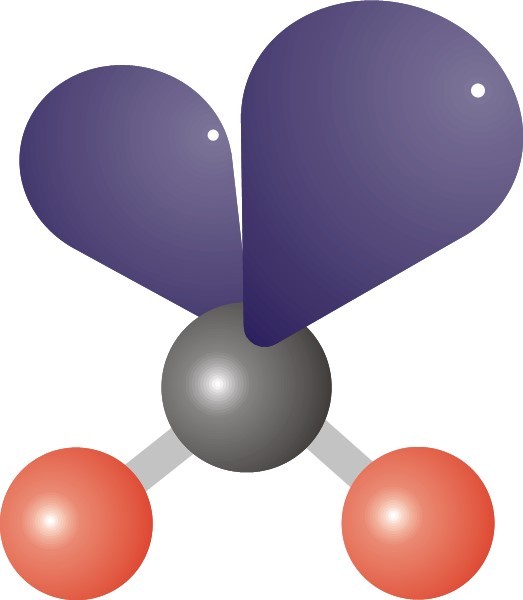
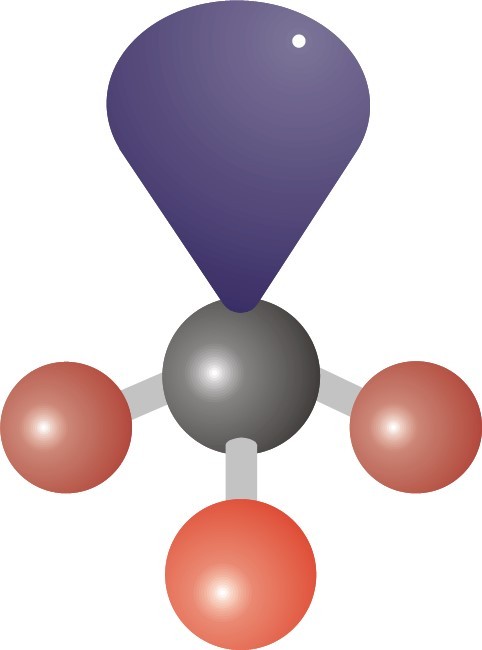
The molecular geometry of this molecular compound is ...

a)

Trigonal planar

b)

Tetrahedral bent

c)

Linear

d)

Tetrahedral tetrahedral

8.

The number of domains around the central atom in this molecular compound is ...

a)

1

b)

2

c)

3

d)

4

9.

The hybridization of the central atom in this molecular compound is ...

a)

s

b)

sp

c)

sp3

d)

sp3d2

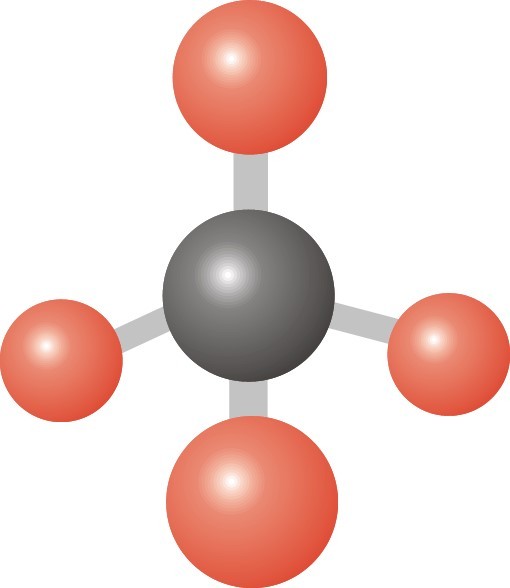
10.

What is the molecular geometry of this molecular compound?

a)

Trigonal bypyramidal

b)

Tetrahedral

c)

Trigonal planar

d)

linear

11.

What is the hybridization of the central atom in this molecular compound?

a)

sp2

b)

sp3d5

c)

s

d)

sp3

12.

Ionic substances typically have high conductivities in which of the following state(s) of matter?

a)

Solids

b)

Molten liquids

c)

Aqueous liquids

13.

The substance H2O has which kind(s) of intermolecular bonds?

a)

Nonpolar covalent

b)

Polar covalent

c)

Ionic

14.
What is polarity in a covalent compound? 
a)
When there is an unequal "pull" of electrons when sharing (like a tug-of-war game) 
b)
When there is an equal pull of electrons between atoms 
c)
When there is a balance of sharing electrons
d)
When there is a charge between a compound 
15.
Why are covalent compounds non-conductive to electricity? 
a)
They do NOT contain charged atoms (ions) 
b)
They contain ions, but have equal charges in those ions
c)
They contain metals, which give away electrons
d)
They bond by transferring electrons 
16.

True or False:

ALL covalent compounds are insoluble in water (cannot dissolve in water)

a)

True

b)

False

c)

Tu eres loco

d)

The illuminati

17.
Which solution would be least likely to carry an electric current?
a)
NaCl
b)
HCl
c)
C6H12O6
d)
CsI
18.
a solute whose water solution conducts electricity is called a(n)
a)
nonconductor
b)
electrolyte
c)
nonelectrolyte
d)
aqueous solution
19.
What is a solvent?
a)
The substance that does the dissolving in a solution.
b)
The substance that is being dissolved in a solution.
c)
The mixing of different substances.
d)
The process in which neutral molecules lose or gain electrons
20.
An example of a nonelectrolyte is
a)
sugar water
b)
salt water
c)
sodium chloride
d)
hydrogen chloride
21.

BH3 molecules can form...

a)

London dispersion forces

b)

Dipole-dipole forces

c)

Hydrogen bonds

22.

Which one has the highest boiling point?

a)

CH4

b)

SO2

c)

H2O

23.

Which one has the highest boiling point?

a)

BeCl2

b)

CO2

c)

SF4

24.

Which of the following non-polar molecules has the highest boiling point? (Refer Page 15 - 17 of Intermolecular Forces)

a)

CH4; molar mass = 16.04 g/mol

b)

CCl4; molar mass = 153.82 g/mol

c)

PF5; molar mass = 125.966 g/mol

d)

Rn; molar mass = 222.01758 g/mol

25.

The weaker the intermolecular forces of a substance the _____________ the boiling point

a)

higher

b)

lower

26.

Which of these has the strongest London forces?

a)

F2

b)

Br2

c)

I2

d)

Cl2

27.
Rank these in order of strength:
covalent bond
London forces
hydrogen bond
dipole-dipole attraction
a)
dipole-dipole>covalent bond>hydrogen bond>London
b)
London>dipole-diple>hydrogen bond>covalent bond
c)
covalent bond>hydrogen bond>dipole-dipole>London
d)
hydrogen bond>dipole-dipole>London>covalent bond
28.
Intermolecular forces are the forces
a)
within molecules
b)
between molecules
29.

Which of the following has the highest boiling point?

a)

CaCl2

b)

PH3

c)

Cl2

d)

N2

30.

Intermolecular forces depend on the size of the charge

a)

true

b)

false

31.

Intermolecular forces depend on the distance apart of the particles

a)

true

b)

false

32.

Arrange the boiling point of molecules from lowest to highest.

a)

lowest H2 - N2 - H2O - CI2 highest

b)

lowest H2 - H2O - N2 - CI2 highest

c)

lowest H2 - N2 - CI2 - H2O highest

d)

lowest H2O - N2 - H2 - CI2 highest

33.

Which substance has the weakest intermolecular forces?

a)

Substance A, boiling point of 75 °C

b)

Substance B, boiling point of 105 °C

c)

Substance C, boiling point of 25 °C

d)

Substance d, boiling point of 45 °C

34.

Intermolecular forces for: NH3

a)

Dispersion Force

b)

Dipole dipole

c)

Hydrogen bonding

35.
Does H2S have hydrogen bonding?
a)
yes
b)
no
36.
Does HF have hydrogen bonding?
a)
yes
b)
no
37.
Does HCl have hydrogen bonding?
a)
yes
b)
no
38.

Intermolecular forces for: CO2

a)

Dispersion Force

b)

Dipole dipole

c)

Hydrogen bonding

39.
 A lone pair is defined as
a)
A pair of bonding electrons
b)
One non-bonding electron
c)
A pair of non-bonding electrons
d)
A pair of electrons on the central atom
40.
What is the VSEPR theory used to predict?
a)
Bond Strength
b)
Polarity
c)
Molecular Shape
d)
Electronegativity
41.
Which of the following shapes has an unshared pairs of electrons on the central atom? 
a)
Bipyramidal
b)
Bent
c)
Trigonal Planar
d)
Tetrahedral
42.
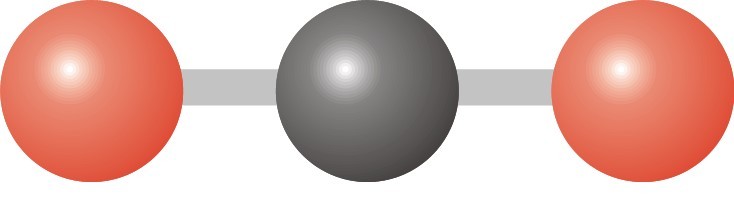
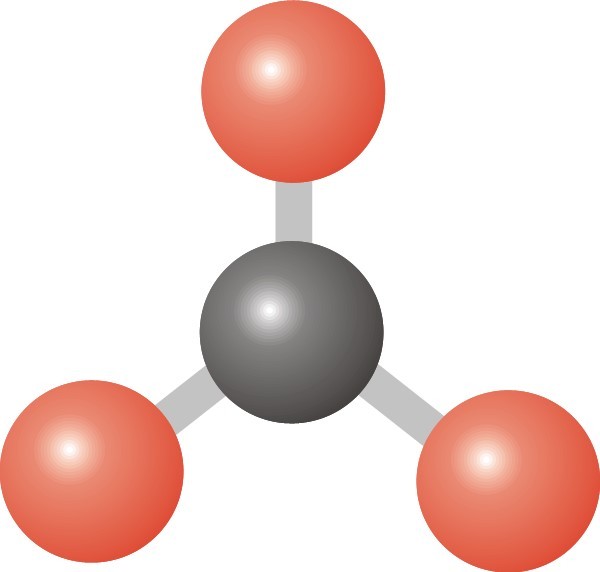
Which molecule would have this molecular geometry?
a)
BF3
b)
CH4
c)
PCl5
d)
CO2
43.
What molecule could this be? 
a)
BF3
b)
CH4
c)
H2O
d)
CO2
44.
Who could this be? 
a)
CO2
b)
NH3
c)
H2S
d)
CH4
45.
Who could this molecule be?
a)
CH4
b)
CO2
c)
PCl5
d)
BF3
46.
Who could this be?
a)
H2O
b)
NH3
c)
CO2
d)
CH4
47.

Is this molecule polar?

a)

No

b)

Yes

48.

Is this molecule polar?

a)

Yes

b)

No

49.

How many sigma bonds are in the following molecule?

a)

0

b)

1

c)

2

d)

5

e)

6

50.

How many pi bonds are in the following compound?

a)

0

b)

1

c)

2

d)

5

e)

6

51.

How many pi bonds are in the following compound?

a)

0

b)

1

c)

2

d)

3

e)

5

52.

How many sigma bonds are in the following molecule?

a)

0

b)

1

c)

2

d)

3

e)

5

53.

How many pi bonds are in the following compound?

a)

0

b)

1

c)

2

d)

4

54.

How many pi bonds are in the following compound?

a)

0

b)

4

c)

8

d)

16

55.

A double bond contains 1 pi bond and 1 sigma bond.

a)

true

b)

false

56.

A triple bond contains 2 sigma and 1 pi bonds.

a)

True

b)

False

57.

TLC stands for...

a)

Tender Love & Care

b)

Thick Layer Chromatography

c)

Thin Layer Chromatography

d)

Thin Liquid Chromatography

58.

In TLC substances are separated because of differences in_______. Tick all that apply.

a)

polarity

b)

molecular size

c)

concentration

d)

electronegativity

59.

In TLC, the distance travelled by the compound depends on how soluble it is in the chosen solvent.

a)

TRUE

b)

FALSE

60.
State whether the following compound is soluble or insoluble.  calcium carbonate CaCO
a)
soluble
b)
insoluble
61.
State whether the following compound is soluble or insoluble. potassiun bromide KBr
a)
Soluble
b)
Insoluble
62.
State whether the following compound is soluble or insoluble. Zinc hydroxide Zn(OH)2
a)
Soluble 
b)
Insoluble
63.
State whether the following compound is soluble or insoluble. iron(ii) sulfide FeS
a)
soluble
b)
insoluble
64.
State whether the following compound is soluble or insoluble.Potassium hydroxide KOH
a)
Soluble 
b)
Insoluble
65.
State whether the following compound is soluble or insoluble. Zinc  carbonate ZnCO3 
a)
Soluble 
b)
Insoluble 
66.

Ammonium (NH4-)

a)

Soluble

b)

Insoluble

67.

Halogens

a)

Soluble No Exceptions

b)

Soluble Except W/ Hg, Ag, Pb

c)

Insoluble at all times

68.

Phosphates (PO43-)

a)

Soluble

b)

Insoluble

69.
If the temperature of a gas increase, the pressure...
a)
Decreases
b)
Increases
c)
Does not change
70.
If a balloon is cooled what will happen to the volume?
a)
Volume will increase
b)
Volume will decrease
c)
Volume will not change
71.
Which container will have lower pressure?
a)
left
b)
right
c)
they both have the same pressure
72.

What describes the motion of a Gas Molecule?

a)

Molecules are far apart

b)

Move in constant, random motion

c)

It will travel in a straight path

d)

All of the above

73.
Charles' Law States...
a)
As Pressure goes up volume goes down
b)
As Pressure goes up temperature goes up
c)
As Volume goes up temperature goes up 
d)
As Pressure goes down volume goes down 
74.

If a hairspray can is heated, what can be expected of the pressure of the gas inside the can?

a)

The pressure will increase

b)

The pressure will decrease

c)

The pressure will remain constant

d)

The pressure will equalize

75.

Absolute zero is

a)

0 K

b)

where there is no molecular movement

c)

the coldest temperature possible

d)

all of these

76.
A balloon will pop in the atmosphere because..
a)
Pressure goes down volume goes up
b)
Pressure goes up volume goes down
c)
temperature goes down volume goes up
d)
volume goes down temperature goes down
77.

Three gases are mixed together in a container with a total pressure of 4.8 atm. If two of the gases have pressures of 1.2 atm and 1.5 atm, what is the pressure of the third gas?

a)

2.5 atm

b)

1.8 atm

c)

2.1 atm

d)

1.3 atm

78.
What about gases can be measured?
a)
Pressure and Volume
b)
Temperature, Volume, and Pressure
c)
Volume and Temperature
d)
Pressure, Temperature, Volume, and Moles
79.
a)
Helium
b)
Nitrogen 
c)
Oxygen
d)
All have the same number of molecules
80.
Which of the following would increase the (gas) pressure of a system?
a)
Increase the Temperature
b)
Pump in more gas
c)
Decrease the volume
d)
All of these
81.

What is fractional distillation?

a)

a process used to separate crude oil

b)

a process used to burn up fuels

c)

a way to make different products

d)

how oil is extracted from the ground

82.

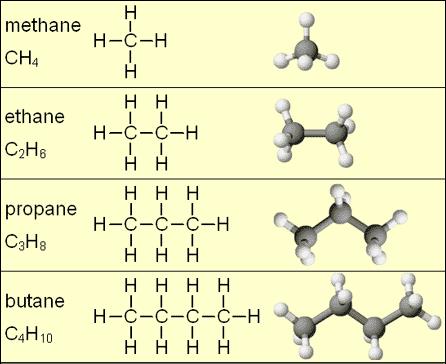
Which of these substances is not a hydrocarbon?

a)

methane

b)

ethane

c)

propane

d)

butane

e)

ammonia

83.

Fractional distillation separates crude oil based on the different __________ of the molecules in the mixture

a)

melting point

b)

boiling point

c)

freezing point

d)

chemical reactivity

84.

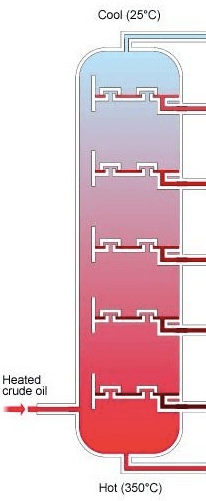
What process happens at each level in the fractionating column?

a)

Evaporation

b)

Condensation

c)

Combustion

85.

What process happens as the crude oil enters the fractionating column?

a)

Evaporation

b)

Condensation

c)

Combustion

86.

The fractional distillation in its separation of crude oil components depends on the difference in

a)

Melting point

b)

boiling point

c)

name

d)

freezing point

87.

What is the formal charge on oxygen for the hydronium ion H3O+?

a)

+3

b)

+1

c)

-2

d)

-3

e)

0

88.

When the atoms in a molecule can form two different structures (not resonance structures), formal charge can help determine the best one (where lower or zero FC is best). A and B both follow the octet rule: use formal charge to determine which structure is the better one for NH3O.

a)

A is the better structure for NH3O

b)

B is the better structure for NH3O

c)

Both structures are equally good.

d)

Both structures are incorrect.

89.

Which electron dot structure is correct for the element chlorine (Cl2)?

a)

A

b)

B

c)

D

d)

D

90.

In the structure shown, which C-C bond is the strongest?

a)

a

b)

b

c)

c

d)

d

e)

e

91.

Which combination of elements would be likely to form a covalent bond?

a)

V and X

b)

V and Z

c)

W and Y

d)

W and Z

e)

Y and Z

92.

What is the formal charge on the oxygen at the the bottom left in this Lewis dot structure?

a)

0

b)

+1

c)

-1

d)

-2

93.

What is the picture showing?

a)

All of the resonance structures for carbonate.

b)

The formal charge on each atom in carbonate.

c)

The electronegativity for carbonate.

d)

The ionization energy for carbonate.

94.
Calculate the Formal Charge for the Nitrogen
a)
-1
b)
+1
c)
0
d)
-2
95.
What is the formal charge for each of the Fluorine atoms
a)
-1
b)
+1
c)
0
d)
+2
96.
In this Lewis structure, the symbol above F means...
a)
electrons are being transferred to Fluorine
b)
electrons are less attracted to F than H
c)
electrons are more attracted to F than H
d)
Fluorine has formed a cation
97.
In a polar covalent bond, electrons are shared ___________.
a)
equally
b)
unequally
c)
between non-metals with similar electronegativities
d)
between a metal and a non-metal
98.
Which molecule contains bonds of GREATER polarity?
a)
H2O
b)
OF2
99.
Which molecule contains bonds with a GREATER polarity?
a)
HCl
b)
CCl4
100.
For carbonate ions, how many resonance structures can be drawn ?
a)
2
b)
3
c)
4
d)
5
101.

What is the Integrated Rate Law for a Second Order Reaction?

a)
b)
c)
102.

What is the Integrated Rate Law for a First Order Reaction?

a)
b)
c)
103.

What is the Integrated Rate Law for a Zero Order Reaction?

a)
b)
c)
104.

What are the units for the rate constant of a Third Order Reaction?

a)

M/s

b)

1/s

c)

1/M*s

d)

1/M2*s

105.

What are the units for the rate constant of a Second Order Reaction?

a)

M/s

b)

1/s

c)

1/M*s

d)

1/M2*s

106.

What are the units for the rate constant of a First Order Reaction?

a)

M/s

b)

1/s

c)

1/M*s

d)

1/M2*s

107.

What are the units for the rate constant of a Zero Order Reaction?

a)

M/s

b)

1/s

c)

1/M*s

d)

1/M2*s

108.

Which graph represents a Second Order Reaction?

a)
b)
c)
109.

Which graph represents a First Order Reaction?

a)
b)
c)
110.

Which graph represents a Zero Order Reaction?

a)
b)
c)
111.

Which of the following best describes why increasing temperature increase reaction rate?

a)

Activation energy is reduced.

b)

Collisions become more frequent.

c)

Collisions become more energetic.

d)

Collisions become more frequent and more energetic.

112.

Given the following rate law,

rate = k[A]2[B]

if [A] were doubled, what must happen to [B] to keep the rate constant?

a)

[B] must quadruple

b)

[B] must double

c)

[B] must be havled

d)

[B] must be quartered

113.

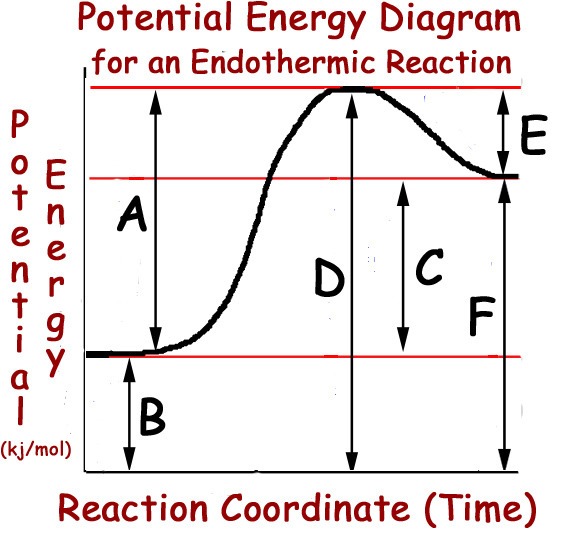
What letter represents the activation energy?

a)

A

b)

B

c)

C

d)

D

114.
The following is true on intermediates and transition states EXCEPT
a)
Intermediates exist for a while
b)
Transition state occurs at peak of the curve
c)
Intermediates formed in one step and consumed in the next
d)
Transition state can exist in the reaction mechanism
115.

Which of the following plots will show a linear relationship for a second order reaction?

a)

[A] vs time

b)

1/[A] vs time

c)

ln[A] vs time

d)

[A]2 vs time

116.
The following is true for reaction mechanism EXCEPT
a)
Elementary steps must add up to overall balanced equation
b)
Molecularity for slow and fast step is 2
c)
Proposed mechanism is likely
d)
slow step and fast step dont add up to overall balanced eqn
117.

The average rate of a reaction is defined as

a)

Δ(mass)/Δt

b)

Change in concentration

c)

Δ[concentration]/Δt

d)

Δt/Δ[concentration]

118.

If you increase the temperature of a system, the rate of reaction

a)

Increases

b)

Decreases

119.

What is the overall reaction order for the reaction that has the rate law: Rate = k[O2] [NO ]2

a)

First

b)

Second

c)

Third

d)

Zeroth

120.
What is the rate exponent for B?
a)
0
b)
1
c)
2
121.
What is the rate exponent for A?
a)
0
b)
1
c)
2
122.
In which experiment is the rate of reaction between hydrochloric acid and calcium carbonate slowest? 
a)
A
b)
B
c)
C
d)
D
123.
What type of reaction occurs in a hand warmer
a)
exothermic
b)
endothermic
124.

In an exothermic reaction, heat is ...

a)

absorbed

b)

released

125.

What does a catalyst do?

a)

Increase the rate of all steps of a reaction.

b)

Lowers the activation energy of the slow step

c)

Cools the reaction down

d)

Increases the concentration of the reaction

126.

The K value of a reaction is dependent on the concentration of the reactants.

a)

True

b)

False

127.
Temperature is a measure of average [blank] energy of individual atoms.
a)
heat
b)
potential
c)
mechanical
d)
kinetic
128.
ΔH value in an endothermic reaction is a positive number.
a)
True
b)
False
129.
Which phase of matter has the greatest motion and least orderly arrangement?
a)
solid
b)
liquid
c)
gas
130.
What type of reaction is shown in the reaction pathway?
a)
endothermic reaction
b)
exothermic reaction
131.
N2 +  3H2 −->  2NH3 
How many moles of ammonium are produced when 3 moles of nitrogen react with hydrogen?
a)
6 moles Ammonium
b)
1.5 moles ammonium
c)
9 moles ammonium
d)
9 moles hydrogen
132.
Endothermic reactions feel
a)
warm
b)
cold
133.

How do you calculate Enthalpy of a reaction?

a)

ΔH = ΔHproducts - ΔHreactants

b)

ΔT = q / mC

c)

ΔG = ΔH -TΔS

d)

E = mc2

134.
a)

endothermic reaction

b)

exothermic reaction

c)

reaction with catalyst

d)

equilibrium reaction