wayground logo

Free Printable Worksheets

Font size

S
M
L
XL
Worksheets

Chemistry Review

Total questions: 95

Worksheet time: 2hrs 11mins
Name
Class
Date
1.
What charge does an electron have?
a)
Negative
b)
Positive
c)
Neutral
d)
Contrated
2.
Which of the following is found in the nucleus of an atom?
a)
electrons
b)
neutrons
c)
The center of an atom, composed of protons and neutrons
d)
molecules
3.

In this chemical equation, the elements in red are the_______.

a)

Products

b)

Reactants

c)

Subscripts

d)

Coefficients

4.

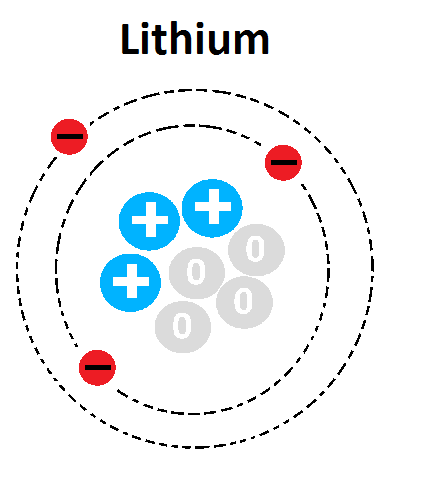
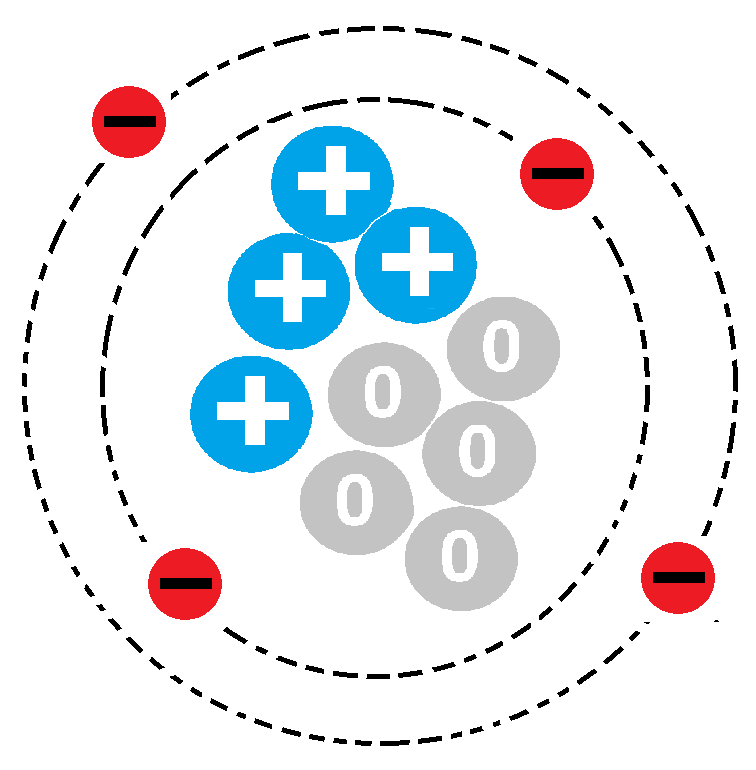
What is the atomic mass of this atom?

a)

1

b)

3

c)

4

d)

7

5.
What is the atomic number of this atom?
a)
4
b)
5
c)
9
d)
none of the above
6.
What is a valence electron?
a)
an electron that is found in the outermost orbital of an atom. 
b)
an electron found in the innermost orbital of an atom.
c)
an electron found in the middle orbital.
7.
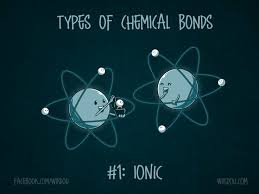
An ionic bond forms when 
a)
Valence electrons are shared
b)
a sea of mobile electrons surround the cations
c)
valence electrons are transferred between atoms
d)
none of the above
8.
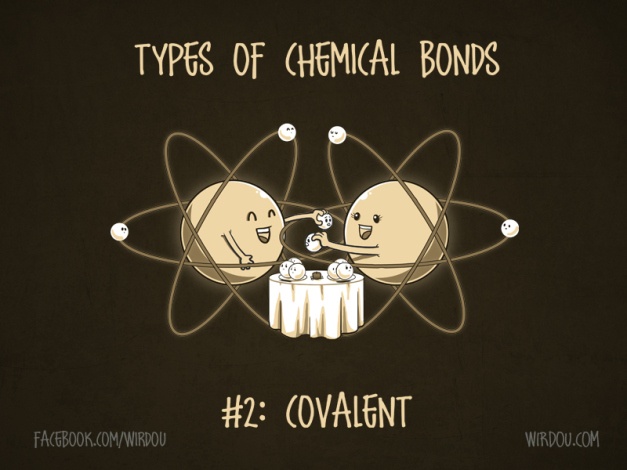
In chemical compounds, covalent bonds form when
a)
the electronegativity difference between two atoms is very large.
b)
electrons are completely transferred between two atoms.
c)
pairs of electrons are shared between two atoms.
d)
ions are held together by opposite charges.
9.

What do isotopes of carbon all have in common?

a)

They all have the same number of neutrons & mass number

b)

They all have the same atomic number and number of neutrons

c)

They all have the same atomic number and number of electrons

d)

They all have the same number of protons and neutrons

10.

What quantities vary between isotopes of an element?

a)

protons, electrons, and atomic mass

b)

protons, electrons, and atomic number

c)

neutrons and electrons

d)

neutrons and atomic mass

11.

How many molecules are in this formula?

a)

1

b)

2

c)

3

d)

6

12.
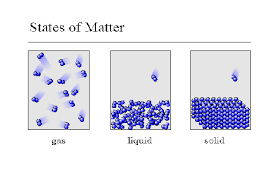
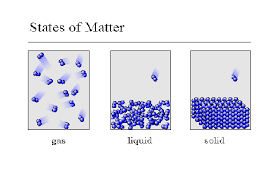
Which form of matter does not take the shape of its container?
a)
liquid
b)
gas
c)
solid
d)
air
13.
What is the energy that comes from heat called? 
a)
heat energy
b)
hot energy
c)
thermal energy
d)
burning energy
14.
Which thing in this picture represents a gas? 
a)
ice cubes
b)
bubbles 
c)
soda
15.
Which of the following changes liquid water into gas?
a)
boiling
b)
freezing 
c)
melting
16.
When a stick of butter melts it changes from a...
a)
solid to gas
b)
gas to solid
c)
solid to liquid
17.
Which of the following things will take the shape of the container it is in?
a)
ice cube
b)
melted chocolate
c)
baseball
18.
At higher temperatures
a)
particles in an object have less energy
b)
particles in an object move faster
c)
a gas contracts
19.
A gas
a)
has a definite shape but no definite volume
b)
has a definite volume but no definite shape
c)
has fast-moving particles
20.
Which state of matter has a definite shape?
a)
solid
b)
liquid
c)
gas
21.

The state of matter that has no definite size or shape is

a)

Solid

b)

Liquid

c)

Gas

22.

State of matter with no definite shape and no definite volume.

a)

solid

b)

liquid

c)

gas

23.

State of matter with a definite volume, but no definite shape.

a)

solid

b)

liquid

c)

gas

24.
What is the chemical formula for Carbon Dioxide?
a)
H2O
b)
O2
c)
CO2
d)
H
25.
Why wasn't there a puddle of water under the dry ice flake after it evaporated?
a)
The water evaporated?
b)
The water dried up too fast?
c)
Water is invisible?
d)
There's no water in CO2
26.
Why did the match go out when placed above the cup?
a)
The water bubbled on it.
b)
Mr. T blew it out.
c)
The carbon dioxide suffocated the fire.
d)
Water evaporation put it out
27.

a substance (such as oxygen or hydrogen) that is like air. It has no definite shape or volume, it will expand to fill its container. It is easily compressible.

a)

solid

b)

liquid

c)

gas

d)

boiling point

28.
Ice melting
a)
Chemical Change
b)
Physical Change
29.
Glass bottle that is shattered
a)
Chemical Change
b)
Physical Change
30.
Evidence of Chemical Change.
a)
New Substance 
b)
Size change
c)
State change
d)
Mixture 
31.
Water boiling is a _______ change. 
a)
Physical Change 
b)
Chemical Change 
32.

What is a chemical change?

a)

Forming a new substance

b)

When two or more substances combine to make a greater one

c)

When two or more substances combine to make a new chemical substance

d)

Combing substances

33.

Which is an example of a chemical change?

a)

Cutting paper

b)

Digesting Food

c)

Crumbling paper

d)

Boiling water

34.
The positive particles of an atom are 
a)
electrons 
b)
positrons 
c)
neutrons 
d)
protons 
35.
the central region of an atom where its neutrons and protons are is its 
a)
nucleus 
b)
electron cloud
c)
core 
d)
center 
36.
Particles in an atom that are neutral and have no charge are 
a)
negatrons 
b)
electrons 
c)
neutrons 
d)
protons 
37.
an atom with atomic number 6 would have how many protons 
a)
6
b)
12
c)
3
d)
cannot be determined 
38.
True or False? Neutrons have a negative charge
a)
True
b)
False
39.
An atom's mass number equals the number of...
a)
protons plus the number of electrons
b)
protons plus the number of neutrons
c)
protons
d)
neutrons
40.
Which statement about the atomic nucleus is correct?
a)
The nucleus is made of protons and neutrons and has a negative charge
b)
The nucleus is made of protons and neutrons and has a positive charge
c)
The nucleus is made of electrons and has a positive charge
d)
The nucleus is made of electrons and has a negative charge
41.
Which statement best describes an electron?
a)
Smaller mass than a proton and a negative charge
b)
Smaller mass than a proton and a positive charge
c)
Greater mass than a proton and a negative charge
d)
Greater mass than a proton and a positive charge
42.
Atoms have no electric charge because they...
a)
have an equal number of charged and non charged particles
b)
have neutrons in their nuclei
c)
have an equal number of electrons and protons
d)
have an equal number of neutrons and protons
43.
Which statement best describes an electron?
a)
Smaller mass than a proton and a negative charge
b)
Smaller mass than a proton and a positive charge
c)
Greater mass than a proton and a negative charge
d)
Greater mass than a proton and a positive charge
44.
Most of the mass in an atom is concentrated in the...
a)
electrons
b)
nucleus
c)
protons
d)
empty space
45.
What is the smallest?
a)
worm
b)
molecule
c)
galaxy
d)
atom
46.
What is the overall charge of this atom?
a)
+3
b)
-3
c)
0
d)
+1
47.

Vertical columns on the periodic table are called ___?

a)

groups

b)

periods

c)

rows

d)

families

48.

Which color on the image of the periodic table corresponds with the halogens.

a)

red

b)

black

c)

blue

d)

orange

49.

Which color on the image of the periodic table corresponds with the alkaline earth metals.

a)

yellow

b)

dark yellow

c)

blue/green

d)

teal

50.

Which family of elements does not combine with other elements unless under special conditions in a laboratory?

a)

Noble gases

b)

Halogens

c)

Metalloids

d)

Alkaline earth metals

e)

Actinides

51.

When a halogen such as Chlorine, combines with an alkali metal to produce a what?

a)

compound

b)

salt

c)

mineral

d)

acid

52.

Which family of elements reacts violently with water and exposure to oxygen?

a)

alkali metals

b)

alkaline earth metals

c)

lanthanides

d)

actanides

e)

transition metals

53.

what is the name of group number 1

a)

halogens

b)

noble gases

c)

alkali

d)

alkaline earth

54.

what is the name of group number 2

a)

transition metals

b)

halogens

c)

metaloids

d)

alkaline earth

55.

what group number are the noble gases

a)

17

b)

18

c)

14

d)

15

56.
How did Mendeleev arrange the elements?
a)
alphabetical 
b)
density
c)
melting point
d)
atomic mass
57.
The number at the bottom of each square on the periodic table is the ...
a)
atomic number
b)
atomic mass
c)
chemical symbol
d)
element name
58.
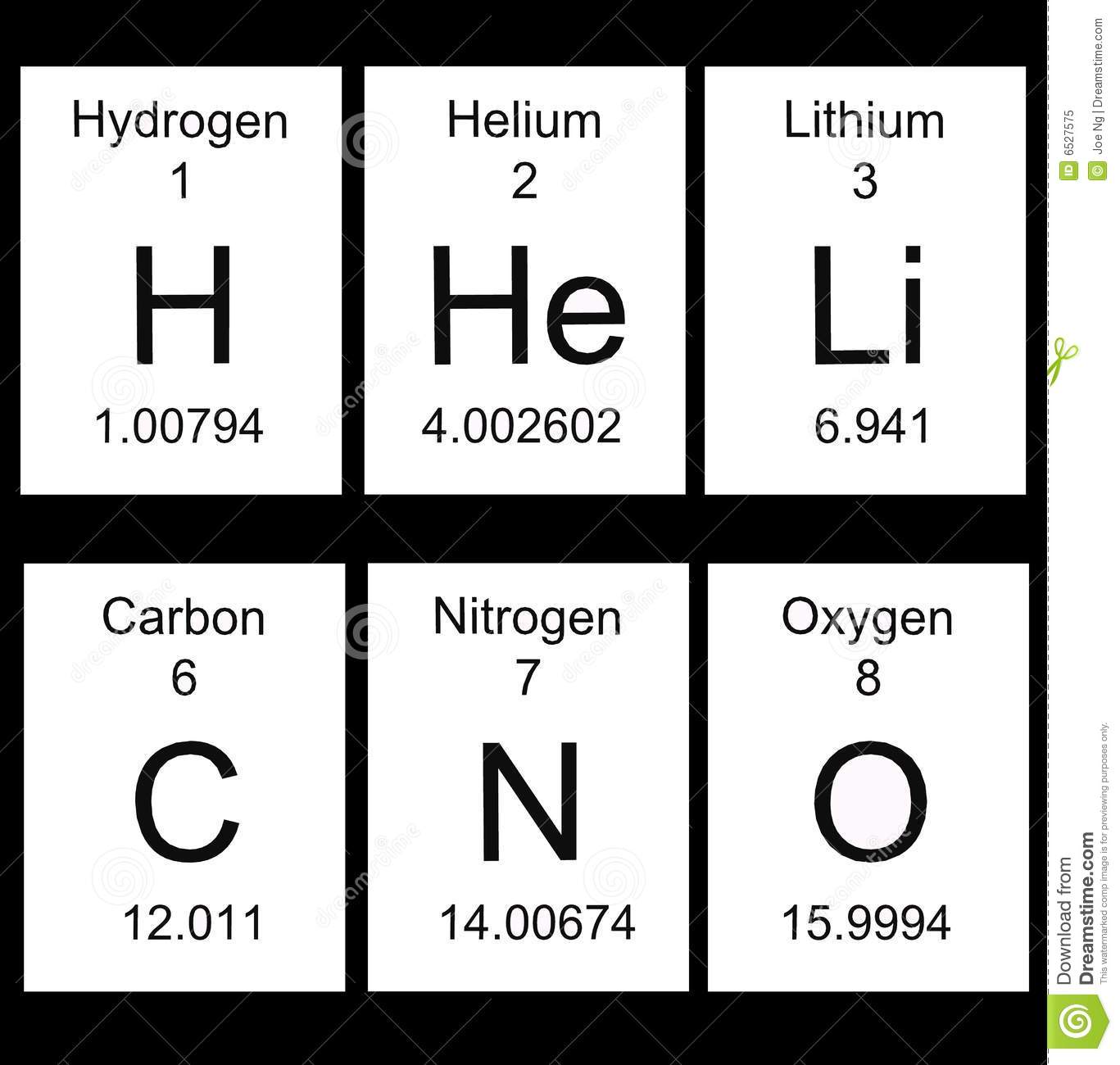
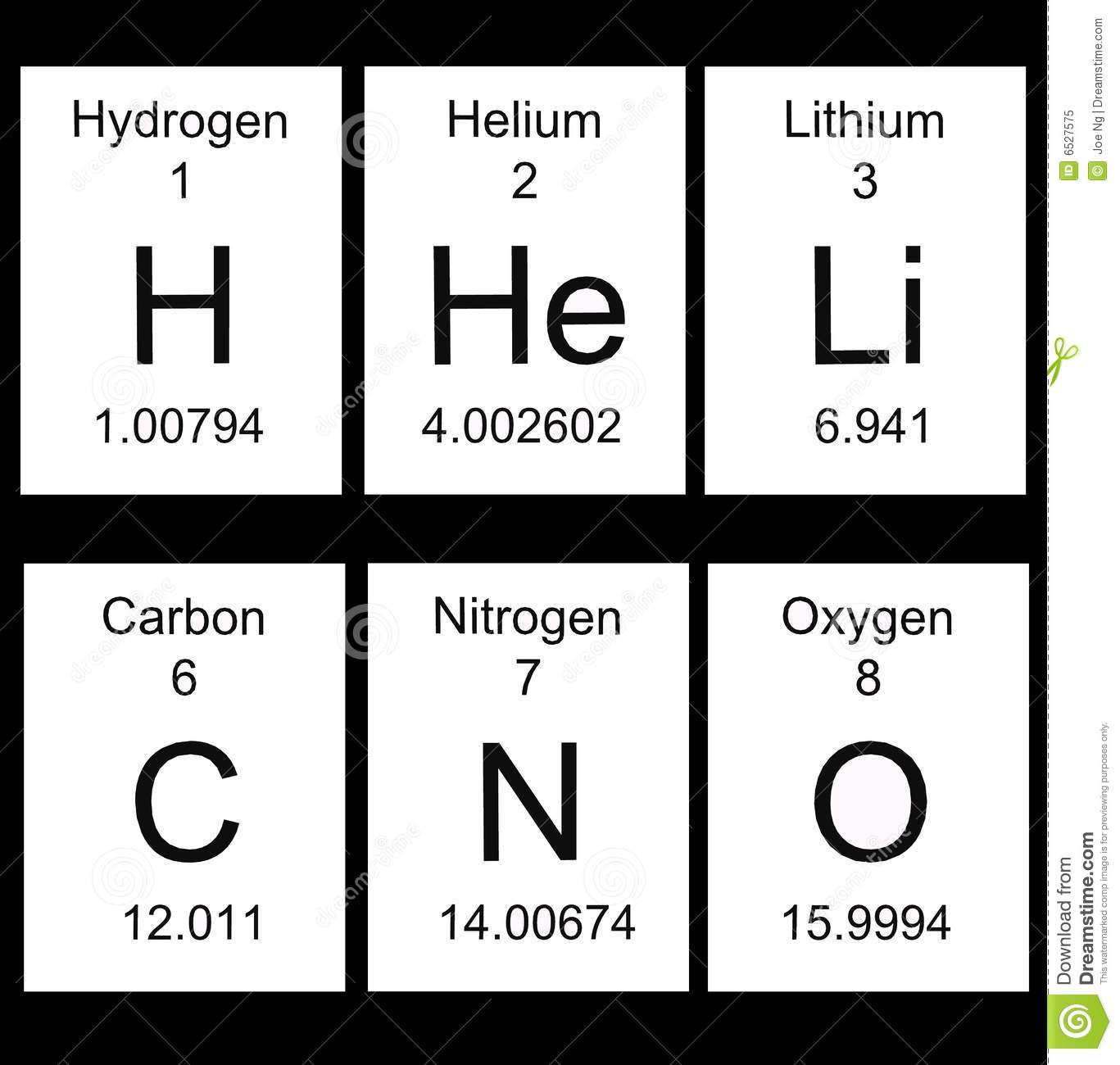
What is the chemical symbol for Lithium?
a)
H
b)
He
c)
Li
d)
N
59.
After the third half-life, how much of the sample is left?
a)
1/2
b)
1/3
c)
1/16
d)
1/8
60.
If 10 mg of iodine 131 is given to a patient, how much is left after 24 days? The half-life of iodine-131 is 8 days.
a)
1.25mg
b)
1.25g
c)
10g
d)
10mg
61.
The half-life of strontium-90 is 25 years. How much strontium-90 will remain after 100 years if the initial amount is 4.0 g?
a)
3.0g
b)
0.25mg
c)
0.3g
d)
0.25g
62.
If the half-life of uranium-232 is 70 years, how many half-lives will it take for 10 g of it to be reduced to 1.25 g?
a)
1 half-life
b)
2 half-lives
c)
3 half-lives
d)
4 half-lives
63.

Which type of radiation releases an electron?

a)

Alpha radiation

b)

Beta radiation

c)

Gamma radiation

d)

Theta radiation

64.

What particle is released when an unstable isotope undergoes alpha radiation?

a)

a helium nucleus

b)

an electron

c)

a photon of light

d)

a neutron

65.
An isotope of an element has the same number of _________, but a different number of _________.
a)
Protons, electrons
b)
Protons, neutrons
c)
Electrons, neutrons
66.
A charged particle that has gained or lost electrons is called a _____.
a)
molecule
b)
ion
c)
isotope
d)
element
67.
A cation is a ____ ion.
a)
negative
b)
positive
c)
neutral
d)
ficticious
68.
A anion will be a ____ ion.
a)
negative
b)
positive
c)
neutral
d)
ficticious
69.
Beryllium will ____ valence electrons when forming an ionic bond.
a)
lose 4
b)
gain 4
c)
lose 2
d)
gain 2
70.
In the compound aluminum oxide, which is the cation?
a)
Al+3
b)
Al
c)
O-2
d)
O
71.
Ionic bonds form between metals and ____.
a)
metalloids
b)
metals
c)
nonmetals
72.
What determines how ionic bonds will form?
a)
Number of protons
b)
Mass of the atom
c)
Number of total electrons
d)
Number of valence electrons
73.
Ionic bonds happen because of the ____ of valence electrons.
a)
sharing
b)
transfer
74.
What type of bond is this? Lithium with Fluorine?
a)
ionic
b)
covalent
75.
Which of the following would produce an anion?
a)
Ca
b)
Al
c)
K
d)
F
76.
Magnesium bromide is an ionic compound with the chemical formula MgBr₂.  What does the "2" tell you?
a)
There are 2 bromide ions for every magnesium ion
b)
Bromide has a 2- charge
c)
Bromide has a 2+ charge
d)
There are 2 magnesium ions to every bromide ion
77.
How do covalent bonds form?
a)
Donating & receiving valence e- between atoms.
b)
Opposite slight charges attract each other between compounds.
c)
Scientists are still not sure how they form.
d)
Sharing valence e- between atoms.
78.
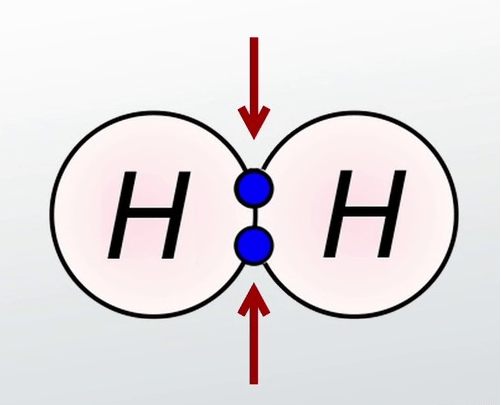
What type of bond is shown in this image?
a)
Ionic
b)
Polar Covalent
c)
Nonpolar Covalent
d)
Van der Waals Force
79.

Substance that changes the rate of a chemical reaction without being consumed in the reaction

a)

bonding

b)

catalyst

c)

chemical reaction

d)

activation energy

80.
The rate of a reaction increases as temperature__________________.
a)
Decreases
b)
Increases
c)
Stays the Same
81.
Products will form faster if____________
a)
the particle size of the reactants are larger.
b)
temperature is decreased.
c)
concentration of the reactants are increased.
d)
the reaction is not stirred.
82.
A ______________ is a substance that increases the rate of a reaction without being used up during the reaction. 
a)
catalyst
b)
product
c)
reactant
d)
solute
83.
Smaller particle size allows for a _________ surface area to be exposed for the reaction.
a)
larger
b)
smaller
84.
A + B --> AB
a)
synthesis
b)
decomposition
c)
single replacment
d)
double replacement
85.
AB + X --> XB + A
a)
synthesis
b)
decomposition
c)
single replacement
d)
double replacement
86.
AB + XY --> XB + AY
a)
synthesis
b)
decomposition
c)
single replacement
d)
double replacement
87.
2HI --> H2 + I2
a)
synthesis
b)
decomposition
c)
single replacement
d)
double replacement
88.
Zn + H2S --> ZnS + H2
a)
synthesis
b)
combustion
c)
single replacement
d)
double replacement
89.
Fe + O2 --> Fe2O3
a)
synthesis
b)
acid base
c)
single replacement
d)
decomposition
90.

An acid has a pH

a)

higher than 7

b)

lower than 7

c)

7

d)

greater than 14

91.

lemon juice is a

a)

acid

b)

base

92.

bleach is

a)

an acid

b)

a base

93.

if you add an acid to a base what will happen?

a)

BOOM

b)

it will neutralize

c)

it wont mix

94.
Human blood has a pH between 7.35 and 7.45. Which of the following best describes human blood?
a)
strongly acidic
b)
slightly acidic
c)
strongly basic
d)
slightly basic
95.
Which of these pH values would indicate that a solution is a weak base?
a)
4
b)
5.6
c)
8
d)
13