wayground logo

Free Printable Worksheets

Font size

S
M
L
XL
Worksheets

VSEPR

Total questions: 108

Worksheet time: 5hrs 27mins
Name
Class
Date
1.
 A lone pair is defined as
a)
A pair of bonding electrons
b)
One non-bonding electron
c)
A pair of non-bonding electrons
d)
A pair of electrons on the central atom
2.
What is the VSEPR theory used to predict?
a)
Bond Strength
b)
Polarity
c)
Molecular Shape
d)
Electronegativity
3.
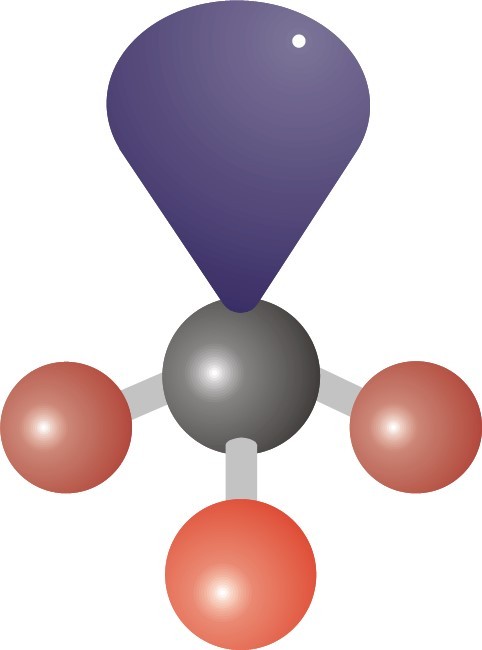
Which of the following shapes has an unshared pairs of electrons on the central atom? 
a)
Bipyramidal
b)
Bent
c)
Trigonal Planar
d)
Tetrahedral
4.
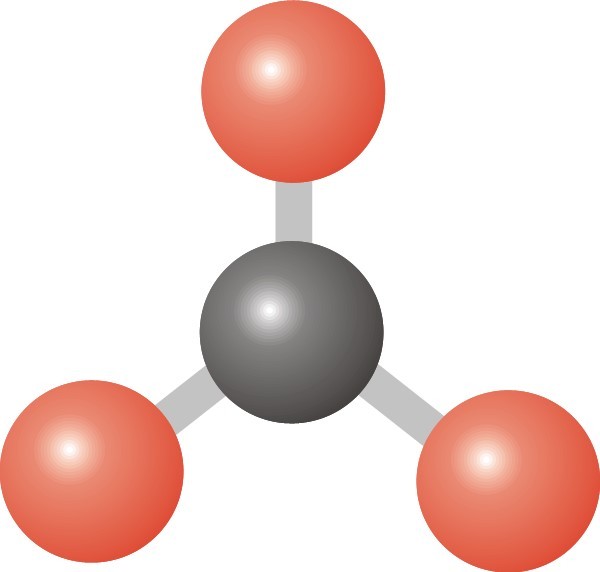
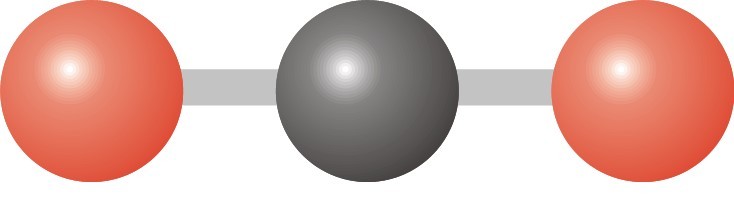
Which molecule would have this molecular geometry?
a)
BF3
b)
CH4
c)
PCl5
d)
CO2
5.
What molecule could this be? 
a)
BF3
b)
CH4
c)
H2O
d)
CO2
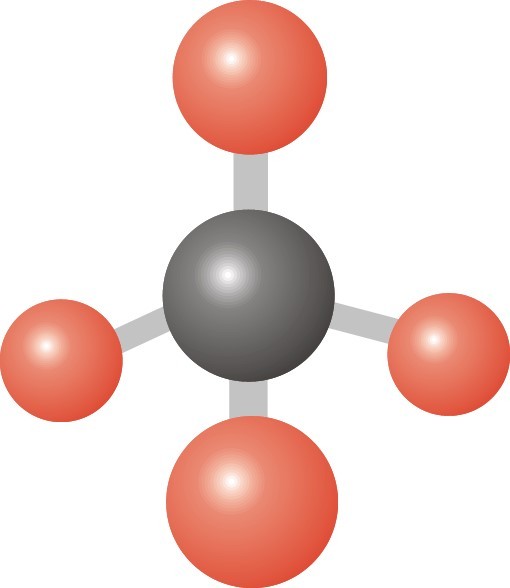
6.
What molecule could this be? 
a)
H2O
b)
CCl4
c)
PCl5
d)
NaCl
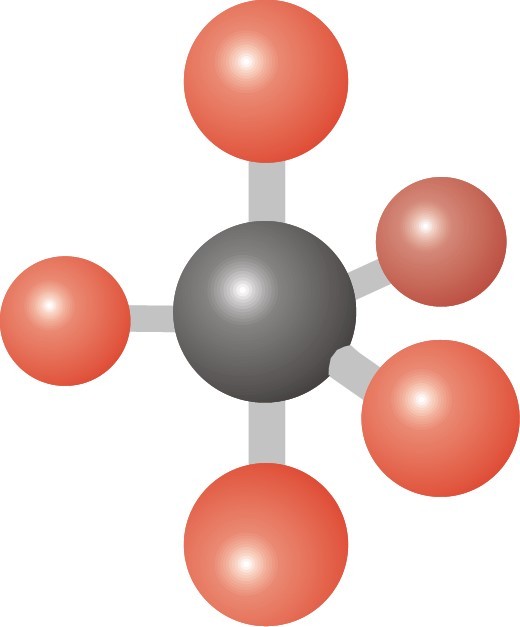
7.
Who could this molecule be?
a)
CH4
b)
CO2
c)
PCl5
d)
BF3
8.
Who could this be? 
a)
CO2
b)
NH3
c)
H2S
d)
CH4
9.
Who could this be?
a)
H2O
b)
NH3
c)
CO2
d)
CH4
10.

What molecular geometry would PH3 have?

a)

Trigonal Pyramidal

b)

Trigonal Bipyramidal

c)

Bent

d)

Linear

11.
Who could this be? 
a)
CO2
b)
NH3
c)
H2S
d)
CH4
12.
Determine the electron geometry (eg) and molecular geometry (mg) of XeF4 (Lewis structure is shown) .
a)
eg = tetrahedral, mg = tetrahedral
b)
eg = linear, mg = linear
c)
eg = octahedral, mg = square planar
d)
eg = trigonal bipyramidal, mg = tetrahedral
13.
How many lone pairs of electrons are on the P atom in PF3?
a)
1
b)
2
c)
3
d)
0
14.
According to VSEPR, molecules adjust their shapes to keep which of the following as far away as possible?
a)
Pairs of valence electrons
b)
Inner shell electrons
c)
Mobile Electrons
d)
Electrons closest to the nucleus
15.
What is the measure of a tetrahedral bond angle?
a)
90 Degrees
b)
109.5 Degrees
c)
120 Degrees
d)
180 Degrees
16.
The bond angle for a trigonal planar molecule is 
a)
90 Degrees
b)
109.5 Degrees
c)
120 Degrees
d)
180 Degrees
17.

How many unshared pairs of electrons will a bent molecule have?

a)

0

b)

2

c)

3

d)

4

18.

What is the bond angle for a trigonal pyramidal molecule?

a)

90

b)

107

c)

109.5

d)

120

19.

What is the bond angle in a bent molecule?

a)

90

b)

109.5

c)

107

d)

180

20.
What is the bond angle for this molecule?
a)
109.5
b)
120
c)
107
d)
90
21.
What is the measure of a tetrahedral bond angle?
a)
90 Degrees
b)
109.5 Degrees
c)
120 Degrees
d)
180 Degrees
22.
Which of the following molecular shapes would have a bond angle of 180 Degrees?
a)
Bent
b)
Trigonal Planar
c)
Tetrahedral
d)
Linear
23.
Consider the molecule below.  Determine the molecular geometry at each of the 2 labeled carbons.
a)
C1 = tetrahedral, C2 = linear
b)
C1 = trigonal planar, C2 = bent
c)
C1 = bent, C2 = trigonal planar
d)
C1 = trigonal planar, C2 = tetrahedral
24.

What is the molecular shape of a molecule with 3 bonded atoms and 2 lone pairs?

a)

T-Shape

b)

Trigonal Bipyramid

c)

See-Saw

d)

Square Planar

25.

What is the molecular shape of a molecule with 2 bonded atoms and 2 lone pairs?

a)

Linear

b)

Bent

c)

Tetrahedral

d)

See-Saw

26.

What is the molecular shape of a molecule with 5 bonded atoms and 1 lone pair?

a)

Octahedral

b)

Pentagon

c)

Square Pyramid

d)

Square Planar

27.

What is the molecular shape of a molecule that has 2 bonded atoms 1 lone pair?

a)

Trigonal Planar

b)

Linear

c)

T-shape

d)

Bent

28.

What is the Electron Geometry of NH3?

a)

Trigonal Planar

b)

Trigonal Bipyramid

c)

Tetrahedral

d)

Octahedral

29.

What is the Hybridization for NH3?

a)

sp

b)

sp2

c)

sp3

d)

sp3d

30.

What is the bond angle(s) of NH3?

a)

~109.5

b)

<109.5

c)

>109.5

d)

110

31.

What is the bond angle of H2O?

a)

~90

b)

~104.5

c)

~107.5

d)

~109.5

32.

What is the Electron Geometry of H2O?

a)

Linear

b)

Octahedral

c)

Trigonal Planar

d)

Tetrahedral

33.

Which of the following has 1 lone pair on the central atom?

a)

T-Shaped

b)

Trigonal Pyramid

c)

Linear

d)

Square Pyramid

e)

See-Saw

34.

Which of the following is correct?

a)

Linear - sp

b)

Linear - sp2

c)

Bent - sp2

d)

Bent - sp3

e)

Bent - sp3d

35.

What are the bond angle(s) of a structure with a hybridization of sp3d2?

a)

90

b)

90 & 120

c)

120

d)

~109.5

36.

What is the Hybridization of XeF4?

a)

sp3d

b)

sp2

c)

sp3

d)

sp3d2

37.

What is the Hybridization of ICl3?

a)

sp3d

b)

sp2

c)

sp3

d)

sp3d2

38.

What is the Molecular Shape of ICl3?

a)

Square Planar

b)

See-Saw

c)

T-Shape

d)

Square Pyramid

39.

What the polarity of IF5?

a)

Polar

b)

Non-Polar

40.

What is the Polarity of BrF2-?

a)

Polar

b)

Non-Polar

41.

What is the Polarity of Water (H2O)?

a)

Polar

b)

Non-Polar

42.
What is the molecular shape of a silicon dioxide molecule?
a)
linear
b)
trigonal planar
c)
bent
d)
tetrahedral
43.
Determine the molecular shape of carbon tetrafluoride.
a)
linear
b)
trigonal planar
c)
bent
d)
tetrahedral
44.

What is the chemical formula for Tetraphosphorous Pentachloride ?

a)

4P5Cl

b)

PCl

c)

P4Cl5

d)

P5Cl4

45.

Draw the Lewis Dot structure for SF4 and determine how many lone pair electrons it has?

a)

0

b)

1

c)

2

d)

3

46.

Draw the Lewis Dot structure for SF4 and determine how many bonding pair electrons it has?

a)

2

b)

3

c)

4

d)

5

47.

How many total valence electrons does SF4 have?

a)

28

b)

22

c)

34

d)

6

48.

Draw the Lewis Dot structure for SF4 and determine its predicted molecular geometry.

a)

square planar

b)

trigonal bipyramidal

c)

see-saw

d)

tetrahedral

49.

Draw the Lewis Dot structure for ICl2- and determine its predicted molecular geometry.

a)

see-saw

b)

trigonal bipyramidal

c)

linear

d)

bent

50.

Draw the Lewis Dot structure for ICl2- and determine its number of lone pair electrons.

a)

3

b)

1

c)

2

d)

4

51.

Calculate the total number of valence electrons for ICl2-.

a)

22

b)

21

c)

20

d)

18

52.

Draw the Lewis Dot structure for BrF3 and determine its number of bonding pair electrons.

a)

3

b)

1

c)

2

d)

4

53.

Draw the Lewis Dot structure for BrF3 and determine its predicted molecular geometry

a)

t-shaped

b)

trigonal bipyramidal

c)

tetrahedral

d)

square planar

54.

Draw the Lewis Dot structure for PCl5 and determine how many lone pair electrons it has?

a)

0

b)

1

c)

2

d)

3

55.

Draw the Lewis Dot structure for PCl5 and determine the predicted molecular geometry

a)

octahedral

b)

trigonal pyramidal

c)

seesaw

d)

trigonal bipyramidal

56.

Calculate the total number of valence electrons for PCl5

a)

40

b)

38

c)

24

d)

44

57.

Draw the Lewis Dot structure for BrF5 and determine how many lone pair electrons it has?

a)

0

b)

1

c)

2

d)

3

58.

Draw the Lewis Dot structure for BrF5 and determine how many bonding pair electrons it has?

a)

0

b)

4

c)

6

d)

5

59.

Calculate the total number of valence electrons for BrF5

a)

40

b)

38

c)

42

d)

44

60.

Draw the Lewis Dot structure for BrF5 and determine the predicted molecular geometry

a)

octahedral

b)

trigonal pyramidal

c)

square pyramidal

d)

trigonal bipyramidal

61.
According to VSEPR, molecules adjust their shapes to keep which of the following as far away as possible?
a)
Pairs of valence electrons
b)
Inner shell electrons
c)
Mobile Electrons
d)
Electrons closest to the nucleus
62.
In a polar bond, the more electronegative element will assume a partial ________ charge.
a)
positive
b)
negative
63.
What explains the very high melting and boiling point of water
a)
Strong dipole-dipole bonds between water molecules
b)
Strong hydrogen bonds between water molecules
c)
Dispersion forces which are present in all molecules
d)
Asymmetrical shape of the polar bonds.
64.
Br & Br
a)
Ionic 
b)
Polar Covalent 
c)
Nonpolar Covalent 
65.

True or False


Attractions between polar molecules are Weaker than attractions between nonpolar molecules.

a)

True

b)

False

66.
In a polar covalent bond, electrons are shared ___________.
a)
equally
b)
unequally
c)
between non-metals with similar electronegativities
d)
between a metal and a non-metal
67.
This is an example of a __________ bond.
a)
non-polar covalent
b)
polar covalent
c)
ionic
d)
metallic
68.
Which molecule contains bonds with a GREATER polarity?
a)
HCl
b)
CCl4
69.

Does the following reference Polar, Nonpolar, or both:

"equal sharing of electrons"?

a)

Polar

b)

Nonpolar

c)

Both

70.
Boron, an exception when it comes to stability, only needs to be surrounded by ____ valence electrons.
a)
2
b)
4
c)
6
d)
8
71.
True or False: The Lewis Dot diagram for CATIONS show a complete octet of valence electrons.
a)
True
b)
False
72.
VSEPR is used to predict the shape of individual molecules based to the extent to which valence electrons...
a)
attract each other
b)
repel each other
c)
bond with each other
d)
mock each other
73.
There are _____ sigma bond(s) and _____ pi bond(s) in 1 molecule of H2CO (formaldehyde).
a)
1, 2
b)
2, 3
c)
3, 1
d)
4, 0
74.
To determine the SHAPE of a molecular compound you assess the number of bonding groups and unshared electron pairs...
a)
on the central atom only
b)
on all elements in the compound
c)
on the cations only
d)
on the anions only
75.
According to VSEPR, molecules adjust their shapes to keep which of the following as far away as possible?
a)
Pairs of valence electrons
b)
Inner shell electrons
c)
Mobile Electrons
d)
Electrons closest to the nucleus
76.

2 bonded atoms and 0 lone pairs

a)

linear

b)

trigonal planar

c)

bent

d)

tetrahedral

e)

trigonal pyramidal

77.
*
a)
linear
b)
trigonal planar
c)
trigonal pyramid
d)
bent of angular
78.
How many lone pairs are in this molecule's structure?
a)
6
b)
2
c)
0
d)
4
79.

4 shared pairs and 0 unshared pairs

a)

true linear

b)

trigonal planar

c)

bent

d)

tetrahedral

e)

trigonal pyramidal

80.
What is the molecular shape of CH3Cl?
a)
trigonal pyramidal
b)
trigonal bipyramidal
c)
tetrahedral
d)
not enough information
81.
Which of the following shapes is NOT included in the image?
a)
tetrahedral
b)
trigonal pyramidal
c)
bent
d)
T-shaped
82.

Which one of the following is the correct bond angle between atoms adopting a trigonal planar geometry?

a)

180°

b)

109.5°

c)

90°

d)

120°

83.

Ammonia, NH3, adopts a tetrahedral geometry. However, the non-bonding pair on the central nitrogen atom distorts the bond angle away from the expected 109.5°. Which of the following statements correctly describes how the bond angle is distorted?

a)

The actual bond angle is reduced: it is less than 109.5°

b)

The actual bond angle is increased: it is more than 109.5°

84.

From the following possible responses, select those responses that give the combination of bonds that makes up a triple covalent bond.

a)

Two sigma bonds

b)

Two pi bonds

c)

One sigma bond and two pi bonds

d)

Two sigma bonds and one pi bond

85.

Apply the VSEPR model to XeF4. Which of the following molecular shapes is consistent with the model?

a)

Disphenoidal

b)

Square planar

c)

Tetrahedral

d)

Square pyramidal

86.

Choose the molecule that is incorrectly matched with the electronic geometry about the central atom.

a)

CF4 - tetrahedral

b)

BeBr2 - linear

c)

H2O - tetrahedral

d)

PF3 - pyramidal

87.

The F-S-F bond angles in SF6 are ______.

a)

109o28'

b)

120o only

c)

90o and 120o

d)

45o and 90o

88.

A (pi) bond is the result of the

a)

overlap of two s orbitals

b)

overlap of two p orbitals along their axes.

c)

sidewise overlap of two parallel p orbitals.

d)

sidewise overlap of two s orbitals.

89.

For which of the following molecules would the VSEPR model predict a trigonal pyramidal structure?

a)

BeF2

b)

BF3

c)

PF3

d)

CF4

90.

A lone pair is defined as

a)

A pair of bonding electrons on the outer atom(s)

b)

One non-bonding electron on the central atom

c)

A pair of non-bonding electrons on the central atom

d)

A pair of electrons on any atom

91.
Which molecule would have this molecular geometry?
a)
BF3
b)
CH4
c)
PCl5
d)
CO2
92.
State the number of BP, LP, ECC and shape for CO2 molecule.
a)
BP-4, LP-0, ECC-2, linear
b)
BP-4, LP-0, ECC-4, linear
c)
BP-2, LP-0, ECC-2, linear
d)
BP-2, LP-0, ECC-4, linear
93.
Which statement is FALSE about VSEPR principle?
a)
Lone pair repulsion > Bonding pair repulsion
b)
Bonding and lone pair will arrange as far as possible
c)
 determine the shape and geometry of molecule
d)
Number of ECC will determine the shape
94.
State the number of BP, LP, ECC and shape for SO3 molecule.
a)
BP-6, LP-0, ECC-3, trigonal planar
b)
BP-6, LP-0, ECC-3, trigonal pyrimidal
c)
BP-3, LP-0, ECC-3, trigonal planar
d)
BP-3, LP-0, ECC-3, trigonal pyrimidal
95.
State the number of BP, LP, ECC and shape for SO2 molecule.
a)
BP-3, LP-1, ECC-3, trigonal planar
b)
BP-3, LP-1, ECC-3, bent
c)
BP-2, LP-1, ECC-3, trigonal planar
d)
BP-2, LP-1, ECC-3, bent
96.
State the number of BP, LP, ECC and shape for F2O molecule.
a)
BP-2, LP-2, ECC-2, trigonal planar
b)
BP-2, LP-2, ECC-2, bent
c)
BP-2, LP-2, ECC-4, trigonal planar
d)
BP-2, LP-2, ECC-4, bent
97.
State the number of BP, LP, ECC and shape for PH3 molecule.
a)
BP-3, LP-1, ECC-4, trigonal planar
b)
BP-3, LP-1, ECC-4, bent
c)
BP-3, LP-1, ECC-4, trigonal pyrimidal
d)
BP-4, LP-0, ECC-4, trigonal pyrimidal
98.
State the number of BP, LP, ECC and shape for BH4- molecule.
a)
BP-4, LP-0, ECC-4, square planar
b)
BP-4, LP-0, ECC-4, trigonal pyrimidal
c)
BP-4, LP-0, ECC-4, tetrahedral
d)
BP-4, LP-0, ECC-4, octahedral
99.
State the number of BP, LP, ECC and shape for PCI5 molecule.
a)
BP-5, LP-0, ECC-5, square planar
b)
BP-5, LP-0, ECC-5, trigonal pyrimidal
c)
BP-5, LP-0, ECC-5, trigonal bipyrimidal
d)
BP-5, LP-0, ECC-5, octahedral
100.
State the number of BP, LP, ECC and shape for IF5O molecule.
a)
BP-7, LP-0, ECC-7, square planar
b)
BP-7, LP-0, ECC-7, octahedral
c)
BP-6, LP-0, ECC-6, octahedral
d)
BP-6, LP-0, ECC-7, square planar
101.
State the number of BP, LP, ECC and shape for [XeF2]2- molecule.
a)
BP-2, LP-4, ECC-2, octahedral
b)
BP-2, LP-4, ECC-6, T shape
c)
BP-2, LP-4, ECC-6, linear
d)
BP-4, LP-2, ECC-6, linear
102.

Identify this molecule structure

a)

Bent

b)

Tripostular

c)

Trigonal Planar

d)

Bipyramidal

103.

Identify this molecule structure

a)

Square Planar

b)

Equal angle

c)

Octohedral

d)

Tetrahedral

104.

Identify the molecule structure

a)

Pyramidal

b)

Bent

c)

Straight

d)

Linear

105.

Identify this molecule structure

a)

Bent

b)

Tetrahedral

c)

Pyramidal

d)

Square Planar

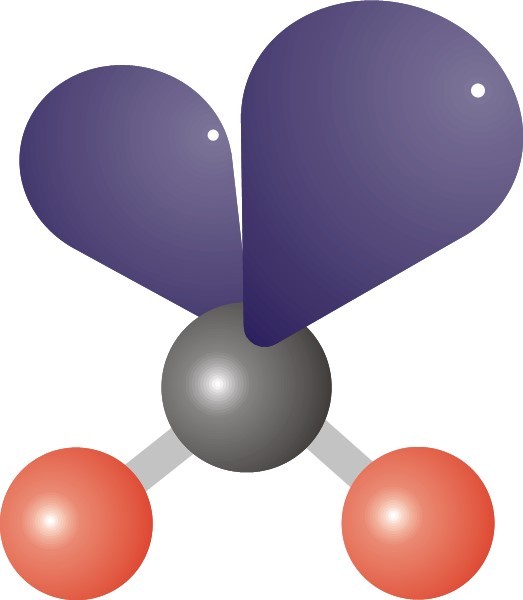
106.

Identify the molecule structure

a)

Bent

b)

Linear

c)

Trigonal Planar

d)

Pyramidal

107.

What is a lone pair of electrons?

a)

Electron pairs that are lonely

b)

Electrons pairs that aren't bonded to another atom

c)

Electrons that have paired together

d)

When electricity has split atoms apart

108.
What is the Molecular Geometry of the molecule?
a)
Linear
b)
Bent, 120o
c)
Bent, 109.5o
d)
Trigonal Planar