wayground logo

Free Printable Worksheets

Font size

S
M
L
XL
Worksheets

review for dangerous chemical unit

Total questions: 111

Worksheet time: 2hrs 40mins

Name
Class
Date
1.
What atom matches this electron configuration?
1s22s22p63s23p64s23d10
a)
Zinc
b)
Copper
c)
Nickel
d)
Germanium
2.
What electron configuration matches an oxygen atom?
a)
1s22s22p63s2, 3p64s23d104p5
b)
1s22s22p4
c)
1s22s22p6
d)
1s22s22p63s23p64s23d1
3.
How many electrons can the d sublevel hold?
a)
14
b)
10
c)
2
d)
6
4.
How many electrons can the s sublevel hold?
a)
14
b)
10
c)
2
d)
6
5.

Choose the correct shortcut configuration for iodine.

a)

[Ar]4s24d104p5

b)

[Kr]5s24d105p5

c)

[Xe]5s25d105p5

d)

none of the above

6.

Each row on the periodic table represents:

a)

an energy level

b)

a sublevel

c)

an electron

d)

an orbital

7.

Which area on the periodic table represents the electrons in the "d" sublevel?

a)

representative elements

b)

columns 3-8

c)

rare earth elements

d)

transition elements

8.
Which periodic table family could have electrons filling orbitals in the s-block?
a)
Alkaine Earth 
b)
Halogens
c)
Noble Gases
d)
Transition Metals
9.
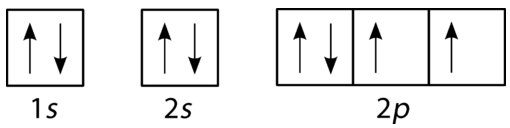
This orbital diagram represents:  
a)
C
b)
B
c)
N
d)
O
10.
What is incorrect about this orbital diagram?
a)
Both arrows in the 2p box should be pointing up
b)
There is nothing incorrect with this diagram
c)
In the there should only be 1 orbital in the first 2p box and one in the 2nd 2p box
d)
All the arrows should be pointing up.
11.
 The diagram above represents two electrons with 
a)
a. opposite spins.
b)
 b. the same spin.
c)
c. different energies.
d)
d. different energy levels.
12.
Which element is pictured?
a)
neon
b)
fluorine
c)
magnesium
d)
argon
13.

The following electron dot diagram belongs to which group on the periodic table?

a)

1

b)

5

c)

15

14.

In the Lewis structure for PH3, how many lone pairs of electrons are located on the central atom?

a)

1

b)

2

c)

4

15.

Which element is a halogen and found in Period 3?

a)

Na

b)

Cl

c)

Ne

16.

Which of the following statements must be true for a diatomic element with a high first ionization energy?


I. It is a metal.

II. It is a nonmetal.

III. It has a high electronegativity.

IV. It has a low electronegativity.

a)

I only

b)

II only

c)

II and III

d)

III and IV

17.

Which of the following Lewis dot diagrams could represent a noble gas?

a)

I only

b)

III only

c)

I and III

18.

Which diagram best represents group and period trends in atomic radius?

a)
b)
c)
d)
19.

If equal masses of the listed metals were collected, which would have the greatest volume?

a)

Aluminum

b)

Zinc

c)

Copper

20.

Arrange the following elements in order of increasing electronegativity.


N, O, P

a)

N,O,P

b)

O, P, N

c)

P,N,O

21.

n 1817 Johann Dobereiner published his law of triads, which grouped elements that possess similar chemical and physical properties into set of three. Of the following sets, which would most likely represent one of Dobereiner’s triads?


I. lithium, sodium, potassium

II. nitrogen, oxygen, fluorine

III. iron, nickel, and cobalt

a)

I only

b)

II only

c)

III only

22.

What is the correct Lewis Dot Structure for ammonia NH3

a)
b)
c)
d)
23.

Which is the correct molecular structure for carbon dioxide?

a)
b)
c)
d)
24.

How many total valence electrons are participating in bonding in the molecule above?

a)

8

b)

4

c)

2

d)

3

25.
Which of the following is the correct Lewis dot structure for the molecule fluorine (F2)?
a)
A
b)
B
c)
C
d)
D
26.

NH3 has how many lone pairs?

a)

0

b)

1

c)

2

d)

3

27.

CCl4 has how many double bonds?

a)

0

b)

1

c)

2

d)

3

28.
anions are _____ ions.
a)
positive
b)
negative
c)
neutral
29.
What charge will a Beryllium ion have?
a)
+
b)
2+
c)
2-
d)
-
30.
anions are _____ ions.
a)
positive
b)
negative
c)
neutral
31.
What charge will a Beryllium ion have?
a)
+
b)
2+
c)
2-
d)
-
32.
What charge will a sulfide ion have?
a)
3+
b)
2+
c)
2-
d)
3-
33.
What charge will a nitride ion have?
a)
3+
b)
2+
c)
2-
d)
3-
34.
what charge will an aluminum ion have?
a)
3+
b)
2+
c)
2-
d)
3-
35.
How many valence electrons does Lithium have?
a)
1
b)
2
c)
3
d)
4
36.
How many valence electrons does magnesium have?
a)
1
b)
2
c)
12
d)
24
37.
How many valence electrons does Carbon have?
a)
4
b)
12
c)
6
d)
14
38.
How many valence electrons does Sulfur
a)
16
b)
32
c)
6
d)
3
39.
How many valence electrons does Krypton have?
a)
36
b)
18
c)
8
d)
4
40.
If an atom has 3 valence electrons, what charge will it have as an ion?
a)
+3
b)
-3
c)
+5
d)
-5
41.
If an element gains 1 electron, what charge will it have?
a)
+1
b)
-1
c)
+7
d)
-7
42.
Group 17 always has ions with a charge of 
a)
+1
b)
+2
c)
-1
d)
-2
43.
Beryllium will ____ valence electrons when forming an ionic bond.
a)
lose 4
b)
gain 4
c)
lose 2
d)
gain 2
44.
Why are ions charged particles?
a)
The number of electrons does not equal the number of protons.
b)
The number of protons does not equal the number of neutrons.
c)
The number of neutrons does not equal the number of electrons.
d)
The electric charges of the electrons and protons cancel each other out.
45.
what charge will an aluminum ion have?
a)
3+
b)
2+
c)
2-
d)
3-
46.
How many valence electrons does Lithium have?
a)
1
b)
2
c)
3
d)
4
47.
How many valence electrons does Carbon have?
a)
4
b)
12
c)
6
d)
14
48.
If an atom has 3 valence electrons, what charge will it have as an ion?
a)
+3
b)
-3
c)
+5
d)
-5
49.
If an element gains 1 electron, what charge will it have?
a)
+1
b)
-1
c)
+7
d)
-7
50.

Which change to an atom occurs when it forms a positive ion?

a)

It gains electrons.

b)

It gains protons.

c)

It loses electrons.

d)

It loses protons

51.

The element rubidium, Rb, is immediately below potassium in the Periodic Table.

It reacts with bromine to form the compound rubidium bromide.

Which descriptions of this compound are correct?

a)

A

b)

B

c)

C

d)

D

52.

The table contains information about four substances.

Which substance is potassium chloride?

a)

A

b)

B

c)

C

d)

D

53.

Sodium chloride is an ionic solid.

Which statement is not correct?

a)

Ions are formed when atoms lose or gain electrons

b)

Ions in sodium chloride are strongly held together

c)

Ions with the same charge attract each other.

d)

Sodium chloride solution can conduct electricity.

54.

Lithium is in Group I of the Periodic Table. Nitrogen is in Group V of the Periodic Table.

Lithium reacts with nitrogen to form the ionic compound lithium nitride.

What happens to the electrons when lithium atoms and nitrogen atoms form ions?

a)

A

b)

B

c)

C

d)

D

55.

The name of FeCl₂ is

a)

iron chloride

b)

iron (II) chloride

c)

iron (I) chloride

d)

iron dichloride

56.

Which of the following combinations would need roman numerals in the name?

a)

potassium + fluorine

b)

beryllium + oxygen

c)

boron + iodine

d)

lead + oxygen

57.

The name of FeCl₂ is

a)

iron chloride

b)

iron (II) chloride

c)

iron (I) chloride

d)

iron dichloride

58.

LiBr is called

a)

lithium bromine

b)

lithium (I) bromine

c)

lithium bromide

d)

lithuim (I) bromide

59.

Which of the following combinations would need roman numerals in the name?

a)

potassium + fluorine

b)

beryllium + oxygen

c)

boron + iodine

d)

lead + oxygen

60.

What is the name of the compound Na2(SO4)?

a)

Sodium sulfate

b)

Sodium sulfide

c)

Sodium sulfite

d)

Sodium sulfuroxide

61.
What is the correct formula for Sodium Oxide?
a)
NaO
b)
NaO2
c)
Na2O
d)
Na2O2
62.

What is the correct molecular formula for barium hydroxide?

a)

Ba(OH)2

b)

Ba2OH

c)

BaOH

d)

Ba2OH

63.
What is the formula for copper(I) sulfate?
a)
CuSO3
b)
CuSO4
c)
Cu2SO3
d)
Cu2SO4
64.

Which of these combinations is an ionic compound made of?

a)

Metal and Metal

b)

Nonmetal and Nonmetal

c)

Metal and Nonmetal

d)

Cation and Cation

65.

When naming ionic compounds with transition metals you need to include roman numerals to show the _____ of the metal..

a)

atomic number

b)

mass number

c)

charge

d)

ionization energy

66.
Which of the following is the correct name for the chemical formula Ca(NO2)2?
a)
cadmium nitride
b)
calcium nitrate
c)
calcium nitrite
d)
cadmium nitrite
67.

The name of FeCl₂ is

a)

iron chloride

b)

iron (II) chloride

c)

iron (I) chloride

d)

iron dichloride

68.

LiBr is called

a)

lithium bromine

b)

lithium (I) bromine

c)

lithium bromide

d)

lithuim (I) bromide

69.

Which of the following combinations would need roman numerals in the name?

a)

potassium + fluorine

b)

beryllium + oxygen

c)

boron + iodine

d)

lead + oxygen

70.

What is the name of the compound Na2(SO4)?

a)

Sodium sulfate

b)

Sodium sulfide

c)

Sodium sulfite

d)

Sodium sulfuroxide

71.
What is the correct formula for Sodium Oxide?
a)
NaO
b)
NaO2
c)
Na2O
d)
Na2O2
72.

What is the correct molecular formula for barium hydroxide?

a)

Ba(OH)2

b)

Ba2OH

c)

BaOH

d)

Ba2OH

73.
What is the formula for copper(I) sulfate?
a)
CuSO3
b)
CuSO4
c)
Cu2SO3
d)
Cu2SO4
74.

Which of these combinations is an ionic compound made of?

a)

Metal and Metal

b)

Nonmetal and Nonmetal

c)

Metal and Nonmetal

d)

Cation and Cation

75.

When naming ionic compounds with transition metals you need to include roman numerals to show the _____ of the metal..

a)

atomic number

b)

mass number

c)

charge

d)

ionization energy

76.
Which of the following is the correct name for the chemical formula Ca(NO2)2?
a)
cadmium nitride
b)
calcium nitrate
c)
calcium nitrite
d)
cadmium nitrite
77.

What is the correct molecular formula for barium hydroxide?

a)

Ba(OH)2

b)

Ba2OH

c)

BaOH

d)

Ba2OH

78.
What is the formula for copper(I) sulfate?
a)
CuSO3
b)
CuSO4
c)
Cu2SO3
d)
Cu2SO4
79.
How do covalent bonds form?
a)
Donating & receiving valence e- between atoms.
b)
Opposite slight charges attract each other between compounds.
c)
Scientists are still not sure how they form.
d)
Sharing valence e- between atoms.
80.
How do covalent bonds form?
a)
Donating & receiving valence e- between atoms.
b)
Opposite slight charges attract each other between compounds.
c)
Scientists are still not sure how they form.
d)
Sharing valence e- between atoms.
81.
What two types of atoms make a covalent bond?
a)
2 Nonmetals
b)
1 Nonmetal and 1 Metal
c)
2 Metals
d)
2 Noble Gases
82.
A binary covalent bond exists between
a)
2 metals
b)
1 metal and 1 nonmetal
c)
2 nonmetals
d)
Any 2 elements
83.
What is the correct name for C4H6?
a)
Carbon Hexahydride
b)
Pentacarbon Pentahydride
c)
Hexacarbon Tetrahydride
d)
Tetracarbon Hexahydride
84.
What is the correct name for NO?
a)
Mononitrogen Monoxide
b)
Nitrogen Monoxide
c)
Mononitrogen Dioxide
d)
Nitrogen Oxide
85.
What is the formula for Tricarbon Octahydride?
a)
Ca3O
b)
C2H8
c)
C3H8
d)
Ca3H8
86.
What is Sulfur Trichloride?
a)
SCl3
b)
SiCl3
c)
SCl4
d)
Si3Cl
87.
Phosphorous trichloride
a)
PCl3
b)
P3Cl
c)
P3Cl3
d)
PCL
88.
P2O5
a)
Phosphorus Oxide
b)
Pentaphosphorus Dioxide
c)
Diphosphorous pentoxide
d)
Phosphoric Oxygen
89.
PBr5
a)
Phosphorus Bromide
b)
Phosphorus Pentabromide
c)
Pentaphosphorus bromide
d)
Phosphorus Bromine
90.
As4O10
a)
arsenic oxide
b)
quadarsenic decoxide
c)
tetraarsenic decoxide
d)
arsenic decoxide
91.
A covalent compound made of one sulfur and two oxygen atoms would be named
a)
sulfur dioxide.
b)
sulfur oxide.
c)
disulfur oxide.
d)
sulfide oxygen.
92.
The covalent compound N2O5 would be named
a)
nitrogen oxide.
b)
dinitrogen oxide.
c)
nitrogen pentoxide.
d)
dinitrogen pentoxide.
93.
Disulfur trioxide
a)
S3O2
b)
SO
c)
S2O3
d)
S2O
94.
The covalent compound N2O5 would be named
a)
nitrogen oxide.
b)
dinitrogen oxide.
c)
nitrogen pentoxide.
d)
dinitrogen pentoxide.
95.
Bromine monofluoride
a)
Br1F1
b)
BrF
c)
Br2F
d)
BrF2
96.
A binary covalent bond exists between
a)
2 metals
b)
1 metal and 1 nonmetal
c)
2 nonmetals
d)
Any 2 elements
97.
What is the correct name for C4H6?
a)
Carbon Hexahydride
b)
Pentacarbon Pentahydride
c)
Hexacarbon Tetrahydride
d)
Tetracarbon Hexahydride
98.
What is the correct name for NO?
a)
Mononitrogen Monoxide
b)
Nitrogen Monoxide
c)
Mononitrogen Dioxide
d)
Nitrogen Oxide
99.
What is Sulfur Trichloride?
a)
SCl3
b)
SiCl3
c)
SCl4
d)
Si3Cl
100.
P2O5
a)
Phosphorus Oxide
b)
Pentaphosphorus Dioxide
c)
Diphosphorous pentoxide
d)
Phosphoric Oxygen
101.
The covalent compound N2O5 would be named
a)
nitrogen oxide.
b)
dinitrogen oxide.
c)
nitrogen pentoxide.
d)
dinitrogen pentoxide.
102.
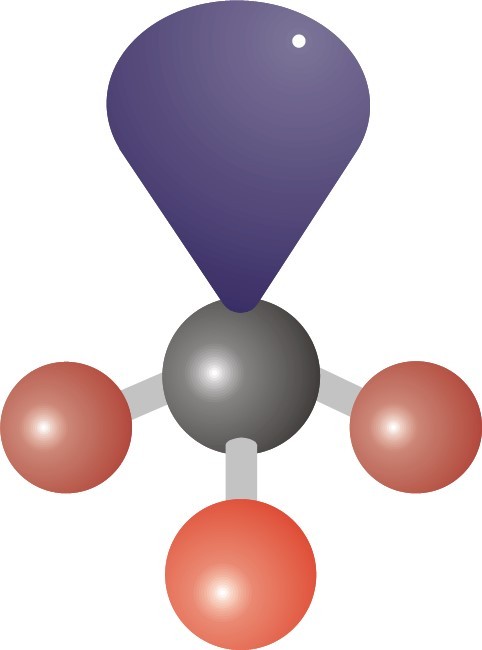
Choose the correct shape for this molecule:
a)
Trigonal planar
b)
Trigonal pyramidal
c)
Tetrahedral
d)
Linear
103.
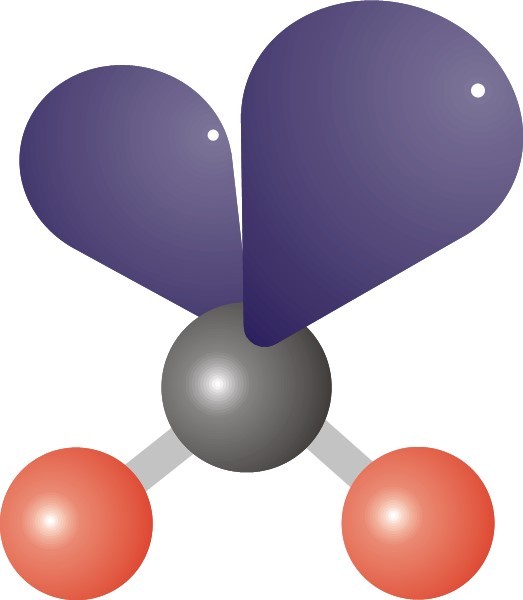
Choose the correct shape for this molecule:
a)
Trigonal planar
b)
Trigonal pyramidal
c)
Bent
d)
Tetrahedral
104.
Choose the correct shape for this molecule:
a)
linear
b)
Trigonal pyramidal
c)
Bent
d)
Tetrahedral
105.
Who could this be? 
a)
CO2
b)
NH3
c)
H2S
d)
CH4
106.
Who could this be?
a)
H2O
b)
NH3
c)
CO2
d)
CH4
107.

What is the molecular shape of a molecule with 2 bonds and 0 lone pairs on central atom?

a)

linear

b)

bent

c)

tetrahedral

d)

trigonal planar

e)

octahedral

108.

What is the molecular shape of a molecule with 3 bonds and 0 lone pairs on central atom?

a)

linear

b)

bent

c)

tetrahedral

d)

trigonal planar

e)

trigonal pyramidal

109.

the repulsive force of a non-bonded pair of electrons (lone pair) is greater than a bonded pair of electrons

a)

true

b)

false

110.
Choose the correct shape for this molecule:
a)
Trigonal planar
b)
Trigonal pyramidal
c)
Bent
d)
Linear
111.
Choose the correct shape for this molecule:
a)
Tetrahedral
b)
Trigonal pyramidal
c)
Bent
d)
Trigonal planar