wayground logo

Free Printable Worksheets

Font size

S
M
L
XL
Worksheets

Chemistry 2nd quarter benchmark review

Total questions: 111

Worksheet time: 2hrs 0mins

Name
Class
Date
1.

How did Mendeleev arrange the elements?

a)

alphabetically by element name

b)

density

c)

atomic number

d)

atomic mass

2.

Which group of the periodic table is composed of inert (unreactive) gases?

a)

alkali metals

b)

alkaline earth metals

c)

halogens

d)

noble gases

3.

Elements which are shiny, conduct electricity and heat are called:

a)

metal

b)

nonmetal

c)

metalloid

d)

radioactive

4.

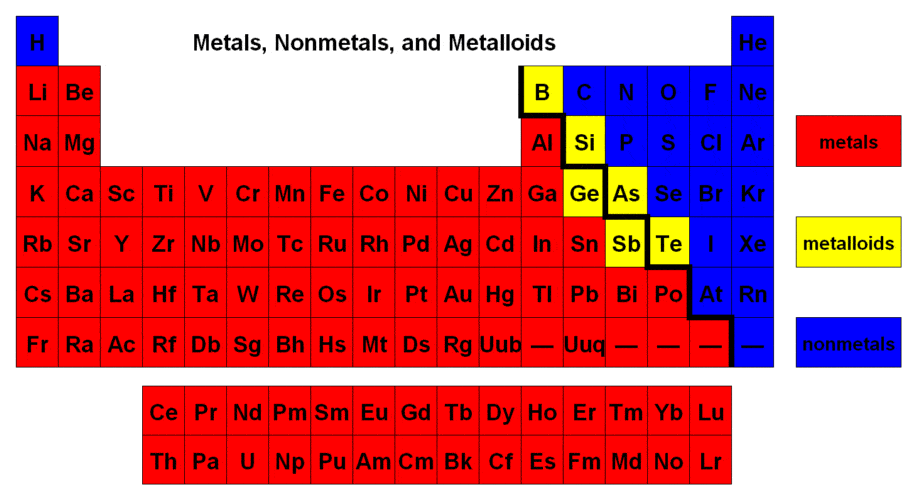
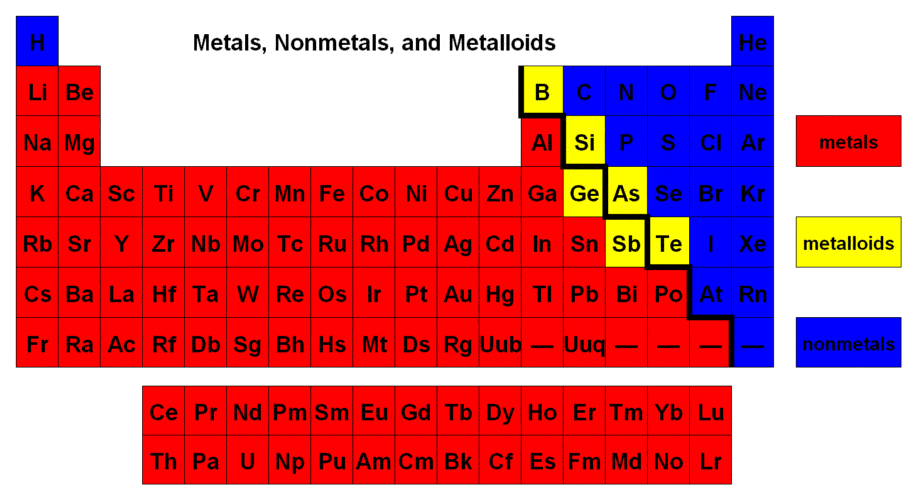
Which element is not a metal?

a)

Hg

b)

Rh

c)

Al

d)

B

5.

What are the elements along the dark line on the periodic table called?

a)

metals

b)

nonmetals

c)

metalloids

d)

noble gases

6.

What is on the left side of the dark line on the periodic table?

a)

Non-Metals

b)

Metals

c)

Metalloids

d)

Anions

7.

Which is a halogen?

a)

Helium

b)

Chlorine

c)

Oxygen

d)

Niobium

8.

Which is an alkali metal?

a)

Magnesium

b)

Iron

c)

Sodium

d)

Europium

9.

A horizontal row of elements in the periodic table is called:

a)

column

b)

group

c)

period

d)

family

10.

A vertical column in the periodic table is called:

a)

row

b)

group

c)

period

d)

table

11.
indicates the relative ability of an element's atoms to attract electrons in a chemical bond
a)
ionization energy
b)
periodic law
c)
representative elements
d)
electronegativity
12.
a highly reactive group 17 element
a)
noble gas
b)
halogen
c)
nonmetals
d)
metalloid
13.
the energy required to remove an electron from a gaseous atom; generally increases moving from left-to-right across a period and decreases from top to bottom in group
a)
ionization energy
b)
electronegativity
c)
octet rule
d)
group
14.
an element that is solid at room temperature, a good conductor of heat and electricity, and generally is shiny; most metals are ductile and malleable
a)
nonmetals
b)
metalloid
c)
metal
d)
transition metal
15.
an element that has physical and chemical properties of both metals and nonmetals
a)
metal
b)
alkali metals
c)
alkaline earth metals
d)
metalloid
16.
elements that are generally gases or dull, brittle solids that are poor conductors of heat and electricity
a)
periodic law
b)
nonmetals
c)
representative elements
d)
noble gas
17.
states that atoms lose, gain, or share electrons in order to acquire the stable electron configuration of a noble gas
a)
periodic law
b)
ion
c)
octet rule
d)
period
18.
Which has the greater EN: 
N or C?
a)
C
b)
N
19.
Which has the greater EN: 
H or F?
a)
H
b)
F
20.
Electronegativity is...
a)
how good an atom is at attracting electrons
b)
the ability of an atom to lose electrons
c)
the energy required to remove an electron from a specific atom
d)
how easy it is to make friends. 
21.
The element with the largest electronegativity in the halogens is - 
a)
At
b)
F
c)
Cl
d)
Br
22.
 Which of the following generally applies to the noble gases? 
a)
high ionization energy, low electronegativity, high reactivity
b)
high ionization energy, high electronegativity, high reactivity
c)
low ionization energy, low electronegativity, low reactivity
d)
high ionization energy, low electronegativity, low reactivity 
23.
Elements closer to the noble gases have stronger attraction for electrons.
a)
True
b)
False
24.
Chlorine and Fluorine are both very electronegative, as they are both missing a single electron from their valence energy level.  Why is Fluorine more electronegative than Chlorine? 
a)
Fluorine has less energy levels.
b)
Chlorine has more electrons in its outer shell
c)
Fluorine has more protons.
d)
None of these
25.
What's the difference between electronegativity and electron affinity?
a)
Electronegativity is a measured energy value and electron affinity is a man-made number.
b)
Electron affinity is a measured energy value and electronegativity is a man-made number.
26.
Define electron affinity.
a)
The energy it takes to add an electron to an atom.
b)
The energy it takes to remove an electron from an atom.
27.
The electron affinity of a metal is positive (endothermic).
a)
True
b)
False
28.
The electron affinity of a nonmetal is negative (exothermic).
a)
True
b)
False
29.
Which of the following is the most electronegative element?
a)
nitrogen
b)
phosphorus
c)
arsenic
d)
lithium
30.
Put these in order of increasing electronegativity:
F, N, B
a)
B < N < F
b)
B < F < N
c)
N < F < B
d)
F < N < B
31.
Put these in order of increasing electronegativity:
Se, S, and O
a)
Se < S < O
b)
Se < O < S
c)
O < S < Se
d)
S < Se < O
32.

Which has the greater electronegativity:

N or C?

a)

C

b)

N

33.

Which atom has the largest atomic radius?

a)

potassium

b)

rubidium

c)

francium

d)

cesium

34.
As you move down the periodic table atoms get bigger.  This is because ____________.
a)
The atoms have more mass.
b)
The atoms have more protons.
c)
The atoms have more energy levels
d)
The atoms have more nuetrons
35.
As you move across the periodic table atoms tend to get smaller because, ______________.
a)
the atoms have more mass.
b)
the atoms have less mass
c)
the atoms have more protons.
d)
the atoms have less electrons.
36.
The atom with the largest atomic radius in Group 18 is - 
a)
Ar
b)
He
c)
Kr
d)
Rn
37.
Which periodic group has the smallest atomic radius?
a)
Alkali metals
b)
Halogens
c)
Noble Gases
d)
Transition metals
38.
Atomic radius generally increases as we move __________.  
a)
down a group and from right to left across a period 
b)
up a group and from left to right across a period 
c)
down a group and from left to right across a period 
d)
up a group and from right to left across a period 
39.
Order the following in increasing atomic radii: 
Ra, Be, Ca, Rb, H
a)
Ra, Be, Rb, H, Ca
b)
Rb, H, Ca, Be, Ra
c)
Ra, Rb, Ca, Be, H
d)
H, Be, Ca, Rb, Ra
40.
The more protons there are, the  ____ .
a)
Weaker the pull
b)
Smaller the electrons
c)
Stronger the pull
d)
The bigger the electrons
41.
Based on their locations in the periodic table, which element has chemical properties most similar to those of calcium, Ca?
a)
beryllium, Be
b)
potassium, K
c)
titanium, Ti
d)
yttrium, Y
42.

The correct name for LiCl is _______.

a)

lithium monochloride

b)

lithium(I) chloride

c)

monolithium chloride

d)

lithium chloride

e)

monolithium monochloride

43.

The correct name for FeO is _____.

a)

iron oxide

b)

iron (II) oxide

c)

iron (III) oxide

d)

iron (IV) oxide

e)

iron (I) oxide

44.

Which of the following is not the correct

combination of compound name and its formula?

a)

hydrobromic acid; HBr

b)

calcium sulfate; CaSO4

c)

beryllium oxide; BeO

d)

nickel(II) peroxide; Ni2O

e)

ammonium chromate; (NH4)2CrO4

45.

Which of the following formulas is

incorrect?

a)

CaNO3

b)

MgS

c)

AlBr3

d)

Li2O

e)

NaOH

46.

The correct name for P2O5 is

a)

phosphorus(II) oxide

b)

phosphorus(V) oxide

c)

diphosphorus oxide

d)

diphosphorus pentoxide

e)

phosphorus pentoxide

47.

The correct name for an aqueous solution of H2CO3 is __________.

a)

carbonate acid

b)

hydrocarbonic acid

c)

carbonous acid

d)

carbonic acid

e)

hydrocarbonous acid

48.

The carbonate ion has the formula CO32–.

Which of the following is the correct formula

for sodium carbonate?

a)

Na(CO3)2

b)

Na2(CO3)2

c)

Na2CO3

d)

Na3(CO)2

e)

NaCO3

49.
Write the formula for copper (I) phosphide?
a)
Cu3P
b)
CuP
c)
Cu1P
d)
CuP3
50.
Write the formula for vanadium (IV) carbonate
a)
V(CO3)2
b)
V4C
c)
V(CO3)4
d)
V4(CO3)
51.
Name this compound:
Li2SO3
a)
Lithium sulfate
b)
Lithium sulfite
c)
Lithite sulfide
d)
Sulfur lithite
52.
What is the formula for copper (II) sulfate?
a)
Cu2SO4
b)
CuSO3
c)
CuS
d)
CuSO4
53.
What is the formula for silver nitrate?
a)
Ag3NO
b)
AgNO3
c)
Ag(NO3)2
d)
Ag2NO3
54.
What is the formula for ammonium sulfate
a)
NH4SO4
b)
(NH4)2SO4
c)
NH4S
d)
(NH4)2S
55.
What is the formula for manganese (II) chloride?
a)
MgCl2
b)
MnCl2
c)
Mn2Cl
d)
MnCl
56.
Name this compound: 
NH4F
a)
Ammonia fluoride
b)
Ammonium fluorite
c)
Ammonia fluorate
d)
Ammonium fluoride
57.
What is the name of BaO?
a)
barium (II) oxide
b)
barium oxide
c)
barium oxygen
d)
barium (I) oxide
58.
What is the formula for lead (II) iodide
a)
PbI
b)
PbI2
c)
Pb2I
d)
LbI2
59.
What elements generally make an ionic bond?
a)
metal and nonmetal
b)
2 or more nonmetals
c)
metal
d)
none of the above
60.
What elements generally make a covalent bond?
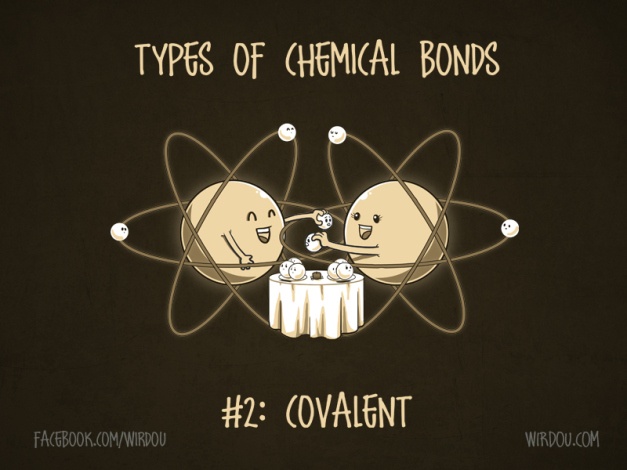
a)
metal and nonmetal
b)
2 or more nonmetals
c)
metal
d)
none of the above
61.
In chemical compounds, covalent bonds form when
a)
the electronegativity difference between two atoms is very large.
b)
electrons are completely transferred between two metals.
c)
pairs of electrons are shared between two nonmetal atoms.
d)
two nonmetal atoms are attracted to each other by opposite charges.
62.
An ionic bond forms when 
a)
Valence electrons are shared
b)
a sea of mobile electrons surround the cations
c)
valence electrons are transferred between atoms
d)
none of the above
63.
Predict the bond that will form between Be and F.
a)
Ionic
b)
Covalent
64.
What is a valence electron?
a)
an electron that is found in the outermost shell of an atom. 
b)
an electron found in the innermost shell of an atom.
c)
an electron found in the middle shell.
65.
What is the number of valence electrons for Oxygen?
a)
8
b)
6
c)
2
d)
1
66.
What is the number of valence electrons for Beryillum?
a)
1
b)
4
c)
2
d)
7
67.
What type of diagram is this?
a)
Electron Dot Diagram
b)
Bohr Model
c)
Alkali Diagram
d)
Chemical Diagram
68.
Using electronegativities, what type of bond is formed by S and Br.
a)
ionic
b)
polar covalent
c)
non-polar covalent
69.
Using electronegativities, what type of bond is formed by Co and F.
a)
ionic
b)
polar covalent
c)
non-polar covalent
70.
What atom matches this electron configuration?
1s22s22p63s2
a)
Neon
b)
Magnesium
c)
Aluminum
d)
Potassium
71.
There are 4 different types of subshells s,p,d,f
a)
true
b)
false
72.
What happens when an atom loses an electron?
a)
It becomes Negatively Charged
b)
It remains neutral because the proton also leaves.
c)
It becomes Positively Charged
d)
It stays the same.
73.

The proper pair of the L value with the orbital shape.

a)

0; f

b)

3; p

c)

1; s

d)

2; d

74.
What is the electron configuration for F?
a)
1s2 2s2 3p5
b)
1s2 2s2 3d5
c)
1s2 2s2 2p5
d)
1s2 2p5
75.
What is the electron configuration for V?
a)
[Ne] 4s2 4d3
b)
[Ar] 4s2 4d3
c)
[Ne]4s2 3d3
d)
[Ar] 4s2 3d3
76.

What element has the electron configuration 1s2 2s2 2p6 3s2 3p5?

a)

Chlorine

b)

Argon

c)

Fluorine

d)

Sulfur

e)

Bromine

77.

How many electrons are in 1s2 2s2 2p4?

a)

5

b)

6

c)

8

d)

13

78.

What does the 1 in "1s" stand for?

a)

energy level

b)

s orbitals

c)

p orbitals

d)

the number of electrons

79.

What is the noble gas configuration for Cobalt?

a)

[Kr] 4s2 3d7

b)

[Kr] 4s2 4d7

c)

[Ar] 4s2 3d7

d)

[Ar] 4s2 4d7

80.

What is the noble gas configuration for 1s2 2s2 2p6 3s2?

a)

[He] 3s2

b)

[Ne] 3s2

c)

[Ar] 3s2

d)

[Ar] 4s2

81.

What is the correct representation for an orbital which has an "n" value of 4 and an "L" value of 2?

a)

4d

b)

4s

c)

4f

d)

4p

82.

For a p sublevel, "L" equals ____.

a)

0

b)

1

c)

2

d)

3

83.
For a principle quantum number, "n", equal to 2, what is the total electron capacity of that level?  
a)
2
b)
4
c)
8
d)
16
84.

What quantum number describes the energy level of an orbital?

a)

l

b)

m

c)

s

d)

n

85.
Electrons occupy orbitals of lowest energy first is part of what electron configuration rule?
a)
Hund’s Rule
b)
Aufbau Principle
c)
Pauli Exclusion Principle
86.

Which of the following sets of quantum numbers (n, l, ml, and ms) describes the valence electron of Na?

a)

2, 1, 0, -½

b)

2, 0, 0, -½

c)

3, 1, 1, +½

d)

3, 0, 0, +½

87.
What atom matches this electron configuration?
1s22s22p63s2
a)
Neon
b)
Magnesium
c)
Aluminum
d)
Potassium
88.
Is the 5p orbital permitted? 
a)
yes
b)
no
89.
What is the correct representation for an orbital which has an "n" value of 4 and an "l" value of 2?  
a)
4d
b)
4s
c)
4f
d)
4p
90.
What is the noble gas configuration for Sulfur?
a)
[Ar] 3p4
b)
[He] 3s2 3p4
c)
[Ne] 3s2 3p4
d)
[Na] 3s2 3p4
91.
How many electrons can the first energy level hold?
a)
1
b)
2
c)
8
d)
0
92.
How many total electrons can the f orbitals in a sublevel hold?
a)
2
b)
14
c)
6
d)
10
93.
Which orbital shows a violation of Hund's Rule?
a)
A
b)
B
c)
C
d)
D
94.
Which orbital shows a violation of the Pauli Exclusion Principle?
a)
A
b)
B
c)
C
d)
D
95.

Which rule is broken by this electron configuration?

a)

the Aufbau principle

b)

the Pauli exclusion principle

c)

Hund's rule

d)

Conservation of Energy

96.
4Si + S8 --> 2Si2S4
a)
Synthesis
b)
Decomposition
c)
Single displacement
d)
Double displacement
97.
3Ca + 2AlCl3 --> 3CaCl2 + 2Al
a)
Synthesis
b)
Decomposition
c)
Single diplacement
d)
Double displacement
98.
3KOH + H3PO4 --> K3PO4 + 3H2O
a)
Synthesis 
b)
Decomposition
c)
Single displacement
d)
Double displacement
99.
3Mg + N2 --> Mg3N2
a)
Synthesis 
b)
Decomposition
c)
Single displacement
d)
Combustion
100.
2NO2 --> N2 + 2O2
a)
Synthesis
b)
Decomposition
c)
Single displacement
d)
Combustion
101.
P4 + 3O--> 2P2O3
a)
Synthesis 
b)
Decomposition
c)
Single displacement
d)
Combustion
102.
Fe + H2SO4 --> Fe2(SO4)3 + H2
a)
Synthesis (combination)
b)
Decomposition
c)
Single replacement
d)
Combustion
103.
Which of the following is the general formula for a decomposition reaction?
a)
A + B  → AB
b)
AB → A + B
c)
AB + C → AC + B
d)
AB + CD → AC + BD
104.
When balancing equations a ____ can be placed to the left of a formula of a substance to make the equations balanced
a)
charge
b)
subscript
c)
random number
d)
coefficient
105.
What coefficient should be used to make the following equation balanced?
N2+O2--> _NO 
a)
1
b)
2
c)
3
d)
4
106.
Balance this equation:
 __Li + __Cl2 -> __LiCl
a)
2Li + Cl2 -> 4LiCl2
b)
2Li + Cl2 -> LiCl2
c)
2Li +  Cl2 -> 2LiCl
107.
H2SO4 + Fe -->H2 + FeSO4
a)
Synthesis
b)
Decomposition
c)
Single Replacement
d)
Double Replacement
108.
PbCl2 + AgNO3 ---> Pb(NO3)2 + AgCl 
a)
Synthesis
b)
Decomposition
c)
Single Replacement
d)
Double Replacement
109.
Which chemical reaction switches 2 elements?
a)
Double Replacement
b)
Single Replacement
c)
Combustion
d)
Decomposition
110.
Which chemical reaction takes place when 2 substances react to form a single product?
a)
Decomposition
b)
Double Replacement
c)
Single Replacement
d)
Synthesis
111.
At the end of chemical reactions, what is the total mass of the reactants compared to the total mass of the products?
a)
the product is doubled
b)
the product is half the mass of the reactants
c)
the mass is the same
d)
the mass changes depending on the reaction