Wayground logo

Free Printable Worksheets

Font size

S
M
L
XL
Worksheets

Midpoint D1 Review

Total questions: 85

Worksheet time: 2hrs 43mins

Name
Class
Date
1.
At which point is potential energy greatest?
a)
W
b)
X
c)
Y
d)
Z
2.
__________ is stored energy. 
a)
Potential
b)
Kinetic
c)
None of the above 
d)
All of the above 
3.
The faster an object moves, the ________ kinetic energy it has. 
a)
more
b)
less
c)
none of the above
d)
same
4.
What kind of energy is in a moving skateboard?
a)
Potential
b)
Kinetic
c)
Both potential and kinetic energy
d)
none of the above
5.
What kind of energy is in a rock at the edge of a cliff?
a)
Potential
b)
Kinetic
c)
Both potential and kinetic energy
d)
none of the above
6.
Which is the best example that something has kinetic energy?
a)
a. a car parked on a steep hill 
b)
b. a tennis ball rolling across the court
c)
c. a picture hanging on the wall 
d)
d. a piece of coal before it's burned 
7.
Energy due to motion is ____________ energy. 
a)
Potential 
b)
Energy
c)
Kinetic
d)
Friction
8.
Gravitational potential energy depends on the ________ and ________ of the object. 
a)
Height and mass
b)
Friction and movement
c)
Mass and Movement
d)
Height and Friction 
9.
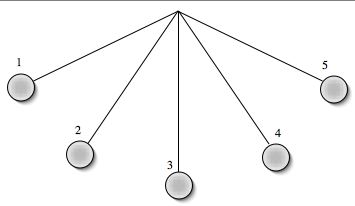
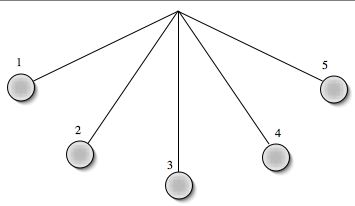
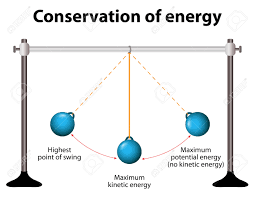
When a pendulum swings, at which point is kinetic energy highest?
a)
1
b)
2
c)
3
d)
4
10.
When a pendulum swings, at which point is potential energy at its greatest?
a)
1
b)
2
c)
3
d)
4
11.
Energy can be _____________ or changed from one type to another.
a)
destroyed
b)
transferred
c)
created
d)
ignored
12.
Gravitational potential energy depends on the ________ and ________ of the object. 
a)
Height and mass
b)
Friction and movement
c)
Mass and Movement
d)
Height and Friction 
13.
Conservation of energy states that energy cannot be ________ or ________, but can be altered from one form to another.
a)
created, destroyed
b)
gravity, force
c)
heat, created
14.
What are the two factors that affect kinetic energy?
a)
time and energy
b)
power and mass
c)
mass and speed
d)
time and work
15.
What is the unit of measurement for kinetic energy
a)
Newton
b)
Joule
c)
Watt
d)
Kilogram
16.
Which of the following is an exmaple of a change of kinetic energy into gravitational potential energy?
a)
a person parachuting out of a plane
b)
a car racing around an oval track
c)
a person skiing down a hill
d)
a person walking up a hill
17.
Choose the BEST answer that is an example of an energy transformation from potential energy to kinetic energy.
a)
a ball rolling down a ramp
b)
a picture hanging on the wall
c)
a swing swaying back and forth
d)
a coat hanging on a hook
18.
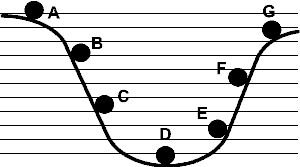
Which point has the most potential energy?
a)
G
b)
f
c)
b
d)
a
19.
Which 2 letters have the most kinetic energy
a)
W & Y
b)
X & Z
20.
How much potential energy is at the top of a hill on a rollar coaster ride
a)
100%
b)
50%
c)
0%
d)
20%
21.
A 0.40 kilogram bird is flying at a constant speed of 8.0 m/s. What is the bird's kinetic energy ?
a)
3.2 J
b)
4.2 J
c)
2.0 J
d)
12.8 J
22.
A 2600 kilogram car is moving at a speed of 25 m/s. How much kinetic energy does the car have?
a)
427,500 J
b)
237,500 J
c)
437,500 J
d)
537,500 J
23.
A 60.0 kg person walks from the ground to the roof of a 74.8 m tall building. How much gravitational potential energy does she have at the top of the building?
a)
43982.4 J
b)
63982.3 J
c)
43962.4 J
d)
83942.4 J
24.
A pitcher throws a 0.145 kg baseball at a velocity of 30.0m/s. How much kinetic energy does the ball have?
a)
65.35 J
b)
87.25 J
c)
23.45 J
d)
65.25 J
25.
When a another scientist does someone's experiment to see if the results are valid?
a)
repetition
b)
replication
c)
experimental method
d)
controlled variable
26.
Dr. Smith has been reading about another scientist’s research in a physics journal. He plans to do these experiments himself and see if he gets the same result.
a)
repetition
b)
replication
27.
Ryan is testing golf balls. He drops three different brands of balls from 40 cm and measures how high they bounce. He drops each ball 10 times.
a)
repetition
b)
replication
28.

Which statement is necessary in order for a scientific investigation to be valid?

a)

The investigation must be able to be repeated by others.

b)

The investigation must produce data that can be graphed.

c)

The investigation must follow all the steps of the scientific method.

d)

The investigation must have a conclusion that matches the prediction.

29.

What happens if the results of a scientist's experiment are NOT similar to the results gathered by other scientists doing the same experiment at a later date?

a)

The results of the experiment are changed by the scientists.

b)

The results of the experiment are published in scientific journals.

c)

The results of the experiment are questioned by the other scientists.

d)

The results of the experiment are accepted by the scientific community.

30.

What energy transformation occurs as bioluminescent algae glow in the ocean?

a)

Radiant --> Chemical

b)

Thermal --> Radiant

c)

Chemical --> Radiant

d)

Thermal --> Chemical

31.

What energy transformation occurs in the chameleon as it quickly launches its tongue to catch an insect?

a)

Radiant --> Chemical

b)

Thermal --> Chemical

c)

Chemical --> Mechanical

d)

Mechanical --> Chemical

32.

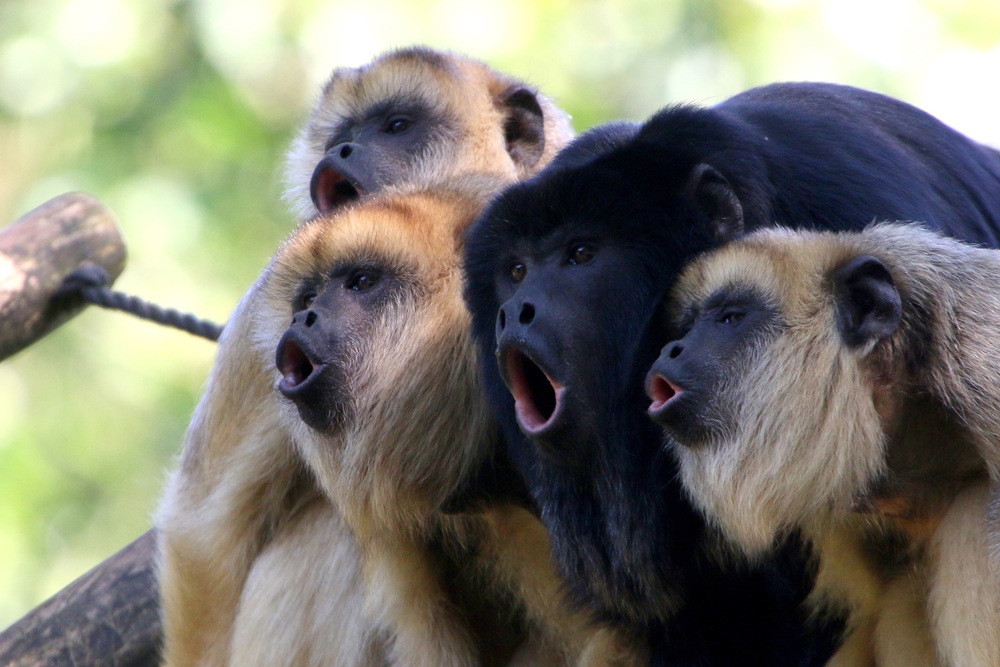
What energy transformation occurs as howler monkeys loudly call to each other in the forest?

a)

Chemical --> Mechanical --> Sound

b)

Chemical --> Sound --> Thermal

c)

Sound --> Chemical --> Radiant

d)

Mechanical --> Chemical --> Sound

33.

What do sound energy, radiant energy, and thermal energy all have in common?

a)

They're all forms of kinetic energy

b)

They're all made of similar atoms and molecules

c)

They're all made by plants during photosynthesis

d)

All of these choices

34.
What is the best example of a machine that converts electrical energy into kinetic energy and sound energy?
a)
an electric toothbrush
b)
a toaster
c)
a flashlight
d)
an iron
35.
What best describes the energy conversion that occurs when you turn on a hair dryer?
a)
electric to kinetic to thermal and sound
b)
chemical to thermal to light and sound
c)
nuclear to electrical to thermal and sound
d)
kinetic to light to thermal and sound
36.
What best describes the energy conversion that takes place in a microwave oven?
a)
electrical to light to thermal
b)
chemical to thermal to light
c)
electrical to thermal to sound
d)
nuclear to thermal to chemical
37.
Turning on a lamp is an example of energy transformation from electrical to 3 forms of energy. Which of these is NOT created by the lamp?
a)
radiant
b)
light
c)
heat
d)
chemical
38.
Which of the following energy transfers occurs when food is digested?
a)
chemical to mechanical
b)
radiant to nuclear
c)
mechanical to potential
d)
thermal to chemical
39.
In energy transformations, "wasted energy" usually takes what form?
a)
heat
b)
chemical energy
c)
light
d)
sound waves
40.
During most energy transformations and transfers, wasted energy takes the form of __.
a)
electromagnetic radiation
b)
sound waves
c)
random mechanical movements
d)
heat
41.
What two forms of energy are given off by a burning candle?
a)
heat and light
b)
mechanical and electrical
c)
nuclear and light
d)
potential and heat
42.
Which of the following converts chemical energy to electrical energy?
a)
Battery
b)
Person eating food
c)
Automobile
d)
Camp Fire
43.
Heat is the _______ of energy.
a)
Transfer
b)
Measure
44.
Which choice below deals with how fast the particles of an object move?
a)
Heat
b)
Temperature
45.

As the temperature of a substance rises, the average kinetic energy of the particles making up the substance

a)

increases

b)

decreases

c)

remains the same

46.
Heat transfer occurs:
a)
in many directions
b)
both from warm objects to colder ones and from cold objects to warmer ones
c)
only from warm objects to colder ones
d)
only from cold objects to warmer ones
47.
When you touch something that feels cold, 
a)
heat from your hand moves into the cold substance.
b)
coldness moves from the cold substance into your hand.
c)
it melts.
d)
it freezes.
48.
Energy that moves particles of matter is 
a)
temperature
b)
thermal energy
c)
heat
d)
friction
49.
Why does a diver wear a wet suit?
a)
To keep in thermal energy.
b)
To keep from getting cuts.
c)
To keep from sinking.
d)
To keep out cold.
50.
The temperature of a substance increases as___.
a)
the substance expands
b)
the average kinetic energy of its particles increases
c)
the substance's volume increases
d)
the substance's mass increases
51.
You're holding hands with your best friend.  Your friend's hands are REALLY warm and yours are really cold.  After a few minutes, this has changed.  How might you explain what happened?
a)
The cold energy from your hand transferred to your friend's hand through conduction.
b)
The heat energy from your friend's hand transferred to your hand through conduction. 
c)
The cold energy from your hand transferred to your friend's hand through convection.
d)
The heat energy from your friend's hand transferred to your hand through convection.
52.

If two objects have different temperatures, heat will flow from the warmer object to the cooler one UNTIL ____________

a)

one reaches a temperature of zero

b)

they both have an equal temperature

c)

one runs out of energy

53.

Observe the diagram. Which statement is true about the kinetic energy of the molecules in the containers?

a)

The molecules are moving faster in Diagram A

b)

The molecules are moving slower in Diagram A

c)

The molecules are moving at the same rate in both diagrams

54.
The Law of Conservation of Energy states:
a)
Energy can created or destroyed but not transformed 
b)
Energy cannot be created or destroyed, it can only transformed
c)
Energy can't be created, destroyed or transformed
55.
The heat from a lamp allows a lizard to remain warm. This is an example of which type of heat transfer?
a)
radiation
b)
conduction
c)
convection
d)
insulation
56.
What is the definition of CONDUCTION?
a)
When heat is transferred from objects like rays of light or electromagnetically.
b)
a  hot liquid or air that  expands, becomes less dense, and rises or becomes more dense, and sinks.
c)
When heat transfers from objects that are touching.
d)
When heat transfers through the heater or AC in your house.
57.

What is the definition of CONVECTION

a)

When heat transfers through waves.

b)

When heat transfers from objects that are touching.

c)

warm fluid rises; cool fluid sinks

d)

Heat traveling from the sun

58.
Warm air is __________ dense than cold air and rises creating convection currents.
a)
more
b)
less
59.
What is the BEST example of a conductor? 
a)
A wooden block
b)
A ceramic mug
c)
A glass cup
d)
A metal bowl
60.
An insulator . . .
a)
Allows a lot of heat to escape
b)
Makes the temperature of an object rise
c)
Moves heat from one place to another
d)
Traps heat inside an object
61.
True or False: A thermal conductor transfers heat well between two objects, and the heat does not stay in one place.
a)
True
b)
False
62.
Why does warm air rise and cool air sink?
a)
Warm air is less dense than cooler air.
b)
Warm air is more dense than cooler air.
c)
Warm air weighs less than cooler air.
d)
Warm air weighs more than cooler air. 
63.

When would an object left in a room temperature room stop transferring heat?

a)

When it has reached the same temperature as the room temperature air

b)

When it has lost all of its thermal energy

c)

When it has gained all of the air's thermal energy

d)

When it has gained or lost all of it's coldness to the air

64.
What is the symbol for Thermal Energy?
a)
Q
b)
t
c)
m
d)
C
65.
What is the symbol for Specific Heat
a)
Q
b)
t
c)
m
d)
C
66.
What is the equation to measure change in Thermal Energy?
a)
Q=mc∆t
b)
Q=mc
c)
Q= ∆mct
d)
m=QC
67.
Water has a specific heat of 4184 J/KgºC.  Wood has a specific heat of 1760 J/KgºC.  What material needs more energy to raise the temperature 1ºC
a)
Wood
b)
Water
c)
Both are the same
68.
Copper, Stainless Steel, Carbon Steel, and Zinc were all heated using the same thermal energy.  What material would be the coolest after being heated?
a)
Copper
b)
Carbon Steel
c)
Zinc
d)
Stainless Steel
69.
A material was cooled from 100ºC to 40ºC.  What is the temperature change?
a)
60ºC
b)
40ºC
c)
-60ºC
d)
-40ºC
70.

What does  ΔT\Delta T  represent?

a)

 tf −tit_{f\ }-t_i  

b)

 ti −tft_{i\ }-t_f  

c)

t - celsius

d)

celsius - t

71.
A 0.3 g piece of copper is heated and fashioned into a bracelet.  The amount of energy transferred by heat to the copper is 66,300 J.  If the specific heat of copper is 390 J/g 0C, what Is the change of the copper's temperature? 
a)
566.7 °C
b)
77,571,000 Joules
72.
 How many joules of heat are needed to raise the temperature of 10.0 g of aluminum from 22°C to 55°C, if the specific heat of aluminum is 0.90 J/gx°C?    
a)
297 Joules
b)
0.003 Joules
c)
297 J/gx°C
d)
0.003 J/gx°C
73.
A 15.75-g piece of iron absorbs 1086.75 joules of heat energy, and its temperature changes from 25°C to 175°C.  Calculate the specific heat capacity of iron.    
a)
0.46 J/gxoC
b)
1.654 J/gxoC
c)
2,567,446.875 J/gxoC
74.
When a  piece of aluminum foil is taken out of the oven and cools from 100° to 50°, What is the change in temperature?
a)
50°
b)
0°
c)
100°
d)
150°
75.

Objects with MORE MASS have______________

a)

lower potential energy

b)

lower number of atoms

c)

higher thermal energy

d)

higher temperature

76.

Hot things have ____________ thermal energy than cold things

a)

more

b)

less

c)

same

d)

potato

77.

Temperature is a way we ____________ energy

a)

eat

b)

measure

c)

gain

d)

lose

78.

Cold things often have a _________ kinetic energy because_______

a)

lower; particles are moving around less

b)

lower; particles are moving around more

c)

higher; particles are moving around the same

d)

higher; particles do not move

79.

For objects that have the SAME mass, which object will have a HIGHER thermal energy?

a)

the object with the higher temperature

b)

the object with the lower temperature

c)

the objects will have the same temperature

d)

the objects have no temperature

80.
Why does a metal lawn chair get hot in the sun when the grass sitting in the same sunlight remains cool to the touch?
a)
Heat travels easily through plants but not metals.
b)
Heat travels easily through both plants and metals.
c)
Heat travels easily through metal objects but not through plants.
81.

Heat will always transfer from the ___________ object to the ________ object.

a)

The hottest object to the coolest object.

b)

The coolest object to the hottest object.

c)

The solid object to the liquid object.

d)

The liquid object to the solid object.

82.
On a cold rainy day a baby is touching a cold window.  It feels so cold. Which way is the heat moving moving? 
a)
Cold is moving from the window to the hand.
b)
Heat is moving from the hand to the window.
c)
Heat doesn't move.
d)
It moves in currents
83.
Which ice cube will melt first?
a)
The large cube
b)
The small cube
c)
They will melt at the same rate
84.
A cup of tea with a temperature of 80 degrees Celsius is placed on a table in a 20 degree Celsius room.  What happens to the thermal energy and the molecular motion of the tea when it is left on the table?
a)
The thermal energy increases and the molecules move faster.
b)
The thermal energy decreases and molecules move more slowly.
c)
The thermal energy increases and the molecules move more slowly.
85.
A student touches a metal sink with her finger and notices that her finger feels cold.  Which of the following statements explains this observations?
a)
Heat energy flows from the student's finger to the metal.
b)
Heat energy flows from the metal sink to the student's finger.
c)
The student's finger was originally at the same temperature as the sink.