wayground logo

Free Printable Worksheets

Font size

S
M
L
XL
Worksheets

Whitman Excellence A+

Total questions: 87

Worksheet time: 37mins

Name
Class
Date
1.

Which type of metamorphosis is represented?

a)

complete metamorphosis

b)

incomplete metamorphosis

2.
Which of the following is a phenotype?
a)
BB
b)
Bb
c)
bb
d)
Blue eyes
3.
the passing of genetic traits from parent to offspring.
a)
heredity
b)
trait
c)
gene
d)
allele
4.
One form of a gene is called_______________
a)
a DNA
b)
a Phenotype
c)
a trait
d)
an allele
5.
What type of "square" helps us solve genetic problems?
a)
carpenter square
b)
Mendel square
c)
Punnett square
d)
genetic square
6.
Genotype refers to the ...
a)
physical expression of the genes
b)
the possible combination of alleles in a gene
c)
whether an allele is dominant or recessive
d)
how an organism will appear
7.
How many generations are shown in this pedigree?
a)
1
b)
2
c)
3
d)
4
8.
In the second generation-how many people are carriers of the trait?
a)
2
b)
3
c)
5
d)
6
9.

Plants need ________ to conduct photosynthesis

a)

Oxygen

b)

Soil

c)

Carbon dioxide

d)

Sugar

10.
Which organelle in the plant cell performs photosynthesis?
a)
Chloroplast
b)
Mitochondria
c)
Nucleus
d)
Cytoplasm
11.

____________ reproduction requires only one parent organism.

a)

sexual

b)

asexual

c)

external

d)

internal

12.

_________ may occur either inside or outside the female organism's body.

a)

budding

b)

fertilization

c)

asexual

d)

fragmentation

13.

Fertilization that takes place inside the female organism's body is ___________.

a)

internal fertilization

b)

gestation period

c)

external fertilization

d)

asexual reproduction

14.
What is the order of succession shown in this figure?
a)
A, B, C, D
b)
B, A, D, C
c)
C, D, A, B
d)
D, A, B, C
15.
A tree is a ....
a)
composer
b)
decomposer
c)
producer
16.
Example of a decomposer
a)
fungus
b)
mouse
c)
plants
d)
frogs
17.
What is a herbivore?
a)
an animal that gets energy from eating other animals
b)
an organism that gets energy from eating only plants
c)
an animal that gets energy by eating both plants and other animals
d)
an animal that eats only herbs
18.
What is this called?
a)
Food Web
b)
Food Chain
c)
Abiotic Factors
19.
What is this called?
a)
Food Web
b)
Food Chain
c)
Abiotic Factors
20.
Which best describes what a food chain shows you?
a)
Energy flow through an ecosystem
b)
Food flowing through an ecosystem
c)
Consumers going into other consumers
d)
Who eats who
21.

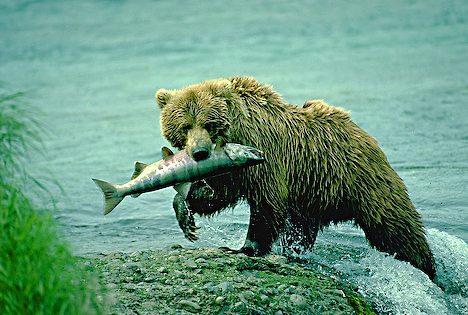
A grizzly bear survives because he is well-adapted to his environment. When he reproduces he passes on those traits to his offspring. this process is called

a)

Natural Selection

b)

Selective Breeding

c)

Random mutations

d)

Variations in a species

22.

The peppered moth's color camouflaged it on the light colored tree bark. It's color was an example of a/n

a)

Variation

b)

Dominant trait

c)

Recessive trait

d)

Adaptation

23.
Survival of the Fittest and Evolution were proposed by what scientist?
a)
Charles Darwin
b)
Albert Einstein
c)
Steven Hawking
d)
Isaac Newton
24.
When every organism of a species has died.
a)
Evolution
b)
Natural Selection
c)
Extinction
d)
Artificial Selection
25.
Darwin wrote that organisms with traits that are best suited to the environment will ________________
a)
increase in number
b)
become extinct
26.
Another word for adapt is ____________.
a)
change
b)
create
27.

The solidified remain or imprint of a once living thing are called:

a)

Fossils

b)

Homologous Structures

c)

Vestigial Structures

d)

DNA

28.
What process is being shown in this image?
a)
Variation
b)
Natural Selection
c)
Selective Breeding
d)
Homeostasis
29.
The net force of the following diagram is
a)
20 N
b)
Moving to the left
c)
Balanced forces
d)
160 N
30.
The runner's motion as they turned the curve to pass the baton is best described as
a)
speed
b)
force
c)
acceleration
d)
velocity
31.
What is the speed of the object represented by the graph?
a)
0.5 m/s
b)
2 m/s
c)
5 m/s
d)
4 m/s
32.
a change in position is defined as
a)
force
b)
motion
c)
speed
d)
acceleration
33.
The lab equipment seen in the image should be worn during a lab investigation when...
a)
using glassware.
b)
using chemicals.
c)
using heat/fire.
d)
using any of the above.
34.
What should you do before you start lab?
a)
Read all the procedures
b)
Make sure your work area is neat
c)
Get teachers permission
d)
All of the above
35.
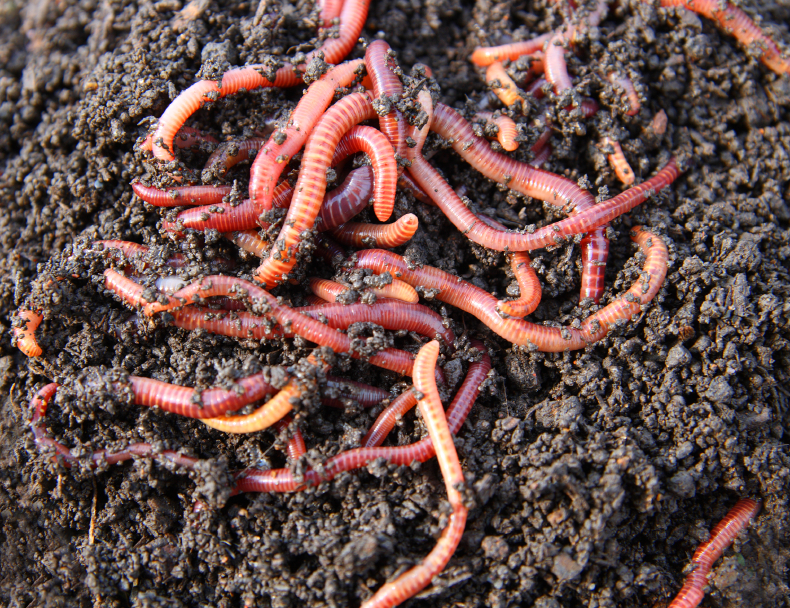
What role do these organisms play in their ecosystem as they break down matter?
a)
producer
b)
primary consumer
c)
secondary consumer
d)
decomposer
36.
What is the first thing that would happen in this food chain if the grass died?
Sun -> Grass -> Mouse -> Snake -> Hawk
a)
The snake population would increase
b)
the mouse population would increase
c)
the mouse population would decrease
d)
the hawk population would decrease
37.

What gas is produced during photosynthesis?

a)

CO2

b)

O2

38.
The process by which organisms maintain homeostasis is known as
a)
synthesis
b)
regulation
c)
respiration
d)
digestion
39.
The phases of the moon are __________ because they repeat in a pattern.
a)
periodic
b)
group
c)
awesome
d)
halogens
40.
What is changed in a chemical reaction like this one? 
NaOH + HCl   
  NaCl + H2O
a)
the number of atoms is changed
b)
molecules and compounds are changed 
c)
atoms are changed
d)
elements are changed 
41.
Fossils are only found in
a)
Sedimentary rocks
b)
Foliated Metamorphic rocks
c)
Igneous Rocks
d)
Nonfoliated Metamorphic rocks
42.
The three groups of rocks are classified by
a)
How they form
b)
Color
c)
Grain size
d)
Chemical Composition
43.
When we discuss greenhouse gases what is the main one we discuss?
a)
Methane (CH4)
b)
Carbon Dioxide (CO2)
c)
Nitrous oxide (N2O)
d)
Flourinated gases
44.
The main human activity that releases greenhouse gases is...
a)
using bottled water
b)
burning fossil fuels
c)
texting on cellphones
d)
eating meat
45.
Which layer in the atmosphere protects us form harmful UV radiation?
a)
Ozone
b)
Troposphere
c)
Ionosphere
d)
Exosphere
46.
What absorbs ultraviolet rays in the atmosphere?
a)
troposphere
b)
stratosphere
c)
ozone layer
d)
greenhouse gases
47.
I can cut down on pollution by_____
a)
Walking to the store
b)
Driving to the store
c)
Throwing everything away
48.

Water Pollution:

a)

Chemicals being released into oceans, lakes, rivers, etc.

b)

Protecting things in nature

c)

Sprays that kill bugs

d)

Prevent leakage in landfills

49.

Air Pollution:

a)

Smoke and harmful gases

b)

Littering and dumping illegally on the ground

c)

Water, soil, minerals, wildlife, forests, etc.

d)

Where something exists or lives

50.

Land pollution:

a)

Littering and dumping illegally on the ground

b)

Making something new out of something old

c)

Protecting things in nature

d)

Where something exists or lives

51.

Recycling:

a)

Making something new out of something old

b)

Sprays that kill bugs

c)

Where something exists or lives

d)

Smoke and harmful gases

52.

Conservation:

a)

Protecting things in nature

b)

Sprays that kill bugs

c)

Littering and dumping illegally on the ground

d)

Making something new out of something old

53.

Pesticides:

a)

Sprays that kill bugs

b)

Water, soil, minerals, wildlife, forests

c)

Where something lives

d)

Smoke and harmful gases

54.
The ozone layer protects us from
a)
UV rays
b)
CFCs
c)
Increased atmospheric heat
d)
Decreased atmospheric heat
55.
What causes acid rain?
a)
High concentrations of sulfuric or nitric acid from pollution
b)
Fertilizer use
c)
Pesticide use
d)
CFCs
56.
Global warming is due to 
a)
Greenhouse gases
b)
Nitric and sulfuric acids
c)
CFCs
d)
Ozone depletion
57.

The diagram below shows a student’s model of the water cycle. In which layer of the atmosphere does the process shown occur (take place)?

a)

mesosphere

b)

stratosphere

c)

troposphere

d)

thermosphere

58.
Within the stratosphere is the ozone layer. What does the ozone layer do?
a)
It protects us from meteors
b)
It protects us from violent solar flares
c)
It protects us from ultra violet radiation
d)
It helps us breathe
59.
The shortest wavelength in visible light is______.
a)
violet
b)
red
c)
blue
d)
yellow
60.
Correctly sequence the layers of rocks oldest to youngest 
a)
A,B,C,D
b)
D,C,B,A
61.
This produces cells for growth and repair.
a)
mitosis
b)
meiosis
62.
An abnormal mass of cancer cells is called a 
a)
tumor
b)
cyst
c)
lesion
d)
polyp
63.
What is a fault?
a)
A crack in a plate.
b)
Where two plates move toward each other.
64.
First waves to arrive at an earthquake
a)
P waves
b)
S waves
c)
surface waves
65.
How does a solution become supersaturated?
a)
dissolve lots of solute in it.
b)
dissolve a little solute in it. 
c)
dissolve more solute than you should be able to. 
d)
dissolve a solvent in it. 
66.

During an Earthquake it is best to leave a first floor building.

a)

True

b)

False

67.
What kind of magnet can be turned on and off?
a)
refridgerator magnet
b)
electromagnet
c)
magnetite
d)
iron
68.
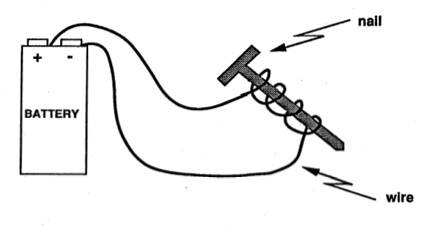
This is a picture of a simple electromagnet. How can the electromagnet be made stronger?
a)
Add more coils of wire to the nail.
b)
Use a smaller battery.
c)
Reverse the poles of the magnet.
d)
Remove all the coils and the nail.
69.

What Is an Independent Variable?

a)

Something I measure

b)

Something I change

70.

Which body System helps to release hormones

a)

Endocrine

b)

Digestive

c)

Lymphatic

d)

Excretory

71.

Which organelle promotes Photosynthesis in 🌱 plants?

a)

Cell wall

b)

Chloroplast

c)

Mitochondrion

d)

DNA

72.

Select two objects that can be found in our Solar System that are not planets:

a)

Black hole and dark matter

b)

Jupiter and Saturn

c)

Star and Moon

d)

Mars and Earth

e)

Wakanda and Morag

73.

What does the “C” in CPR mean

a)

Collapse

b)

Call for Help

c)

Circulatory

d)

Cardio

74.
The main purpose of the ____________ system is to break food particles into pieces that can be used.
a)
circulatory
b)
respiratory
c)
digestive
d)
skeletal
75.
___________ are the building blocks of life.
a)
cells
b)
legos
c)
blocks
d)
blood
76.
Which of the following body systems work together for support, protection, and movement?
a)
respiratory and cardiovascular
b)
skeletal and muscular
c)
skeletal and integumentary
d)
digestive and respiratory
77.
Which of the following shows the levels of organization of an organism from LEAST to MOST complex.
a)
cells-tissues-systems-organs
b)
organs-cells-systems-tissues
c)
systems-organs-tissues-cells
d)
cells-tissues-organs-systems
78.
What is the function of the cell nucleus found in both plant and animal cells?
a)
to produce energy
b)
to control cell activity
c)
to remove waste products
d)
to allow molecules to enter the cell
79.
What is one basic function of the vacuoles?
a)
circulating oxygen
b)
producing food
c)
controlling cell processes
d)
storing water
80.
Which of the following is not part of the cell theory?
a)
cells must contain DNA 
b)
all living things are made from cells
c)
cells can only come from other cells
d)
cells are the basic unit of life
81.
Increased levels of carbon dioxide in the atmosphere have been implicated in which of the following?
a)
Increased global warming
b)
Increased seawater acidity
c)
decreased seawater temperatures
d)
both increased global warming and increased seawater acidity
82.
Over an extended period of time, the United States has been responsible for the majority of global CO2 emissions, at 25% of the total for all countries. In 2008, the largest emitter was
a)
United States
b)
Japan
c)
China 
d)
Russia
83.
Which one of the choices below is NOT a  cause for global warming?
a)
Having too many cows
b)
Burning Fossil Fuels
c)
Planting new trees
84.
Burning fossil fuels is one of the main causes for global warming.
a)
True
b)
False
85.
Global warming and the greenhouse effect are exactly the same.
a)
True
b)
False
86.

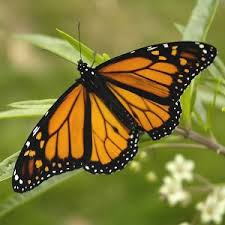
What is the last stage of the butterfly life cycle?

a)

egg

b)

pupa

c)

adult

d)

larva

87.

How was this experience?

a)

Great

b)

Challenging

c)

Too much

d)

Bring it Mr. Adams. I want all that smoke 💨