wayground logo

Free Printable Worksheets

Font size

S
M
L
XL
Worksheets

Review for final exam (Energy)

Total questions: 82

Worksheet time: 1hrs 26mins
Name
Class
Date
1.
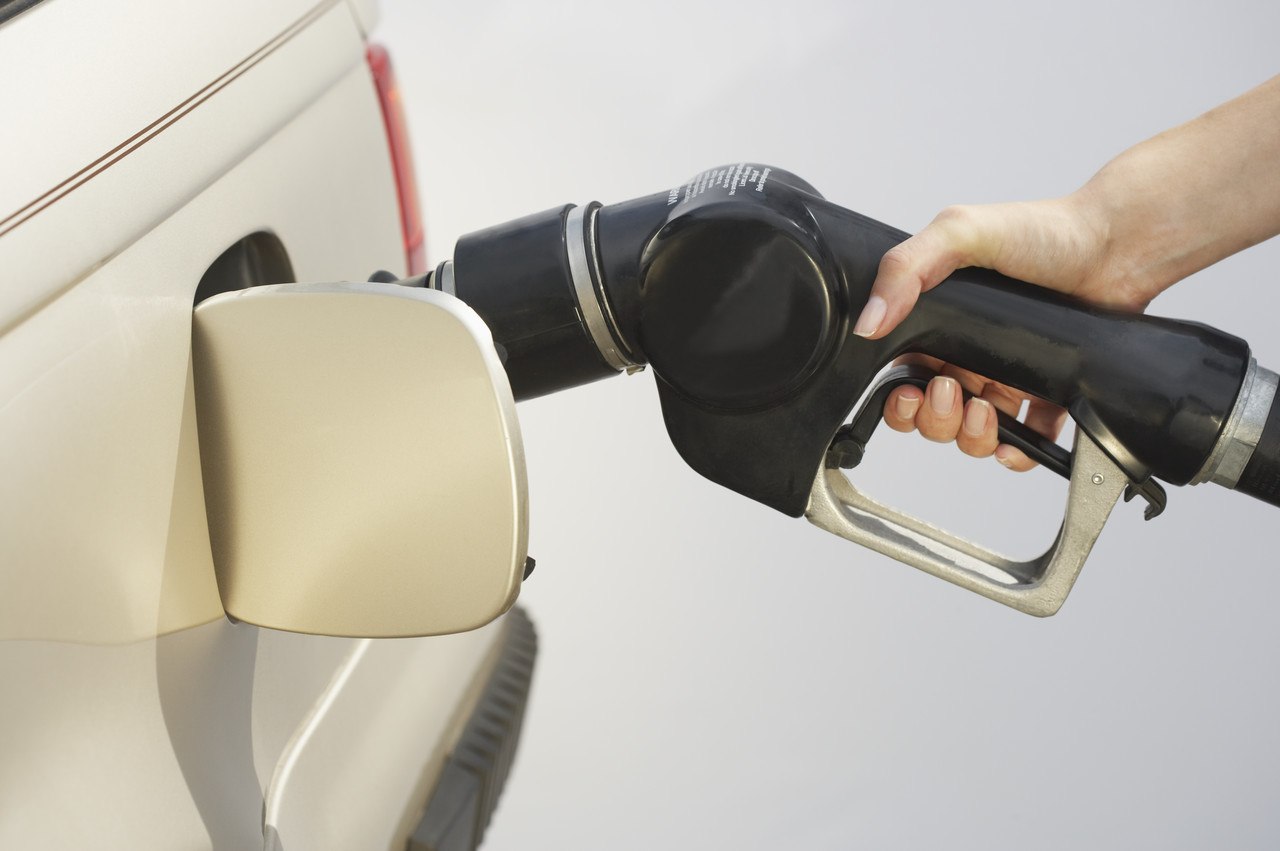
Which energy conversion is taking place when you put gasoline in a car?
a)
thermal -> electrical
b)
mechanical -> electrical
c)
chemical -> mechanical
d)
mechanical -> electromagnetic
2.
what type of energy is stored in a battery?
a)
electrical
b)
chemical
c)
thermal
d)
mechanical
3.
Electrical Energy is transferred to _____ Energy.
a)
Thermal
b)
Solar
c)
Electrical
d)
None
4.
A battery converts what type of energy to another?
a)
sound to kinetic
b)
light to heat
c)
mechanical to electrical
d)
chemical to electrical
5.
The roller coaster cart has the most gravitational potential energy at position-
a)
W
b)
X
c)
Y
d)
Z
6.
"Energy can be transformed from one form into another or transformed from one region or another, but energy cannot be created or destroyed."
Which law is this?
a)
Law of Conservation of Mass
b)
Newton's Second Law
c)
Law of Conservation of Energy
d)
Newton's Third Law
7.
A student listens to music with a digital music player, similar to the one shown below. Which best describes the energy transformations that take place in the music player?
a)
Mechanical to chemical to electrical
b)
Chemical to sound to electrical
c)
Chemical to electrical to sound
d)
Electrical to heat to sound
8.
Where is the potential energy the greatest?
a)
A
b)
B
c)
C
d)
D
9.
Which of these is an example of light energy being transformed into chemical energy?
a)
A glow stick lights up when broken.
b)
Water heated by the sun evaporates.
c)
A plant makes sugar in the sunlight.
d)
A battery causes a buzzer to vibrate.
10.
What type of energy is in this picture?
a)
Kinetic
b)
Potential
c)
Chemical
d)
Sound
11.
What kind of energy is represented in this picture?
a)
Thermal
b)
Potential
c)
Nuclear
d)
Mechanical
12.
What kind of energy does this device use?
a)
Chemical
b)
Electrical
c)
Thermal
d)
Chemical
13.
What kind of energy is represented in the picture?
a)
Thermal
b)
Chemical
c)
Sound
d)
Nuclear
14.
According to the Law of Conservation of Energy, energy cannot be _________ or ____________. 
a)
destroyed, destroyed
b)
created, saved
c)
created, destroyed
d)
lost, found
15.

The picture showing the energy conversion

Chemical → heat

is:

a)
b)
c)
d)
16.

The picture showing the energy conversion

Light → chemical

is:

a)
b)
c)
d)
17.

The picture showing the energy conversion

Chemical → light & heat

is:

a)
b)
c)
d)
18.

Kinetic Energy of wind is transferred to _____ Energy in a windmill.

a)

Solar

b)

Mechanical

c)

Electrical

d)

Potential

19.

What is the energy transformation in the picture

a)

Electrical to thermal

b)

Dads home 2

c)

Electrical to mechanical

d)

Mechanical to electrical

20.

A slinky moving down a set of stairs

a)

potential energy

b)

kinetic energy

c)

both

d)

neither

21.
The faster an object moves, the ________ kinetic energy it has. 
a)
more
b)
less
c)
none of the above
d)
same
22.
What kind of energy is in a rock at the edge of a cliff?
a)
Potential
b)
Kinetic
c)
Both potential and kinetic energy
d)
none of the above
23.

Which is the best example that something has kinetic energy?

a)

a car parked on a steep hill

b)

a tennis ball rolling across the court

c)

a picture hanging on the wall

d)

a piece of coal before it's burned

24.

What kind of energy is in a person climbing a ladder?

a)

Potential

b)

Kinetic

c)

Both

d)

None

25.

An object has potential energy if it is on the second story of a building.

a)

true

b)

false

26.

An object can have both potential and kinetic energy at the same time.

a)

true

b)

false

27.

This ball sits at the top of the hill and later gets pushed down. For letter A on this diagram, how much KINETIC energy does the ball have? Answer with a NUMBER, not a word.

(a)  

28.

This ball sits at the top of the hill and later gets pushed down. For letter B (halfway down) on this diagram, how much POTENTIAL energy does the ball have? Answer with a NUMBER, not a word.

(a)  
29.
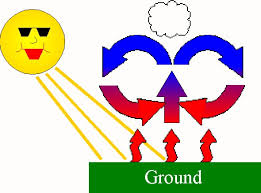
What kind of heat transfer happens when the sun is heating your body?
a)
Conduction
b)
Radiation
c)
Convection
d)
Density
30.
What heat transfer happens when you burn your hand by touching a fire?
a)
Radiation
b)
Conduction
c)
Convectio
d)
I don't know!!!!!!!!!!!
31.
Warm air rises and the cool air sinks demonstrates this type of heat transfer. 
a)
conduction
b)
convection
c)
radiation
d)
Insolation 
32.
Warm air is __________ dense than cold air and rises creating convection currents.
a)
more
b)
less
33.
Transfer of thermal energy through "space"
a)
conduction
b)
convection
c)
radiation
34.
Hot coffee is stirred with a spoon; the spoon gets hot due to
a)
conduction
b)
convection
c)
radiation
35.
A chair is several feet from a fireplace. The side of the chair facing the fireplace gets warm due to
a)
conduction
b)
convection
c)
radiation
36.
"Lava lamps" contain colored liquids. These liquids form globs that rise to the top due to
a)
conduction
b)
convection
c)
radiation
37.
Near the ceiling of a room the air is warmer; the warm air rises because of
a)
conduction
b)
convection
c)
radiation
38.
In a swimming pool, water near the surface is slightly warmer. The warm water rises because of
a)
conduction
b)
convection
c)
radiation
39.
How many kinds of heat transfer are there?
a)
1
b)
2
c)
3
d)
4 or more
40.
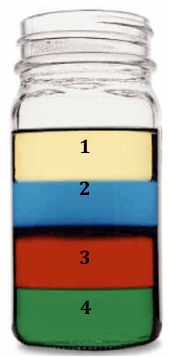
Put the liquids in order from most dense to least dense?
a)
4, 3, 2, 1
b)
1, 2, 3, 4
c)
3, 4, 2, 1, 
d)
4, 3, 1, 2
41.

How does heat move?

a)

from a warmer to a cooler object

b)

from a cooler to a warmer object

c)

toward a hot object

d)

away from a cold object

42.

Heat from which of these causes convection currents inside the Earth?

a)

crust

b)

crust and mantle

c)

crust and core

d)

mantle and core

43.

__________ is the transfer of heat by the movement of a fluid.

a)

Conduction

b)

Convection

c)

Radiation

44.

When you heat up an object, the particles in the object move _________.

a)

faster

b)

the same speed

c)

slower

45.

Cold water has ______________ density than warm water.

a)

less

b)

more

c)

the same

46.

When you touch hot sand, heat is transferred by _________ to your skin.

a)

conduction

b)

convection

c)

radiation

47.
Which state of matter has closely packed and organized particles?
a)
Solid
b)
Liquid
c)
Gas
d)
Plasma
48.
Which state of matter has loosely packed and unorganized particles?
a)
Solid
b)
Liquid
c)
Gas
d)
Plasma
49.
Which state of matter has closely packed and disorganized particles?
a)
Solid
b)
Liquid
c)
Gas
d)
Plasma
50.
Particles in this state of matter do not move around a lot.
a)
Solid
b)
Liquid
c)
Gas
d)
Plasma
51.
Particles in this state of matter slide past each other and take the shape of the bottom of their container.
a)
Solid
b)
Liquid
c)
Gas
d)
Plasma
52.
Particles in this state of matter take the shape of their entire container.
a)
Solid
b)
Liquid
c)
Gas
d)
Plasma
53.
In this demonstration, what causes the balloon to expand?
a)
The heat from the room causes the balloon to expand.
b)
The heat from the hot plate heats the glass and the air inside it expands.
c)
The balloon spontaneously blows up to try to escape the bottle. 
d)
I don't know.
54.

At Point A, the beginning of observations, the substance exists in a solid state. Material in this phase has a ____________ volume and ___________ shape.

(a)  

55.

With each passing minute, (a)   is added to the substance.

56.

This causes the molecules of the substance to (a)   more rapidly.

57.

We detect this by the (a)   change (rising) in the substance

58.

At POINT B, the temperature is (a)   degrees C.

59.

The solid begins to (a)   .

60.

At POINT C, the substance is completely _____________, or in a ____________ state.

(a)  

61.

Material in this phase has a __________ volume and an _______________ shape.

(a)  

62.

The energy put to the substance between minutes 5 and 9 was used to convert the substance from a ___________ state to a __________ state.

(a)  

63.

Between minute 9 and 13, the added energy increases the (a)   of the substance

64.

During the time from POINT D to POINT E, the liquid is (a)   .

65.

By POINT E, the substance is completely in the (a)   phase.

66.

Material in this phase has _________ volume and ____________ shape.

(a)  

67.

The energy put into the substance between minutes 13 and 18 converted the substance from ___________ to ____________ state.

(a)  

68.

Beyond POINT E, the substance is still in the __________ phase, but the molecules are moving _________ as indicated by the increasing temperature.

(a)  

69.
What does temperature measure?
a)
Heat of Molecules
b)
ºC
c)
Average Kinetic Energy of Molecules
d)
Thermal Energy
70.
Specific heat is....
a)
The measure of kinetic energy of an objects particles
b)
A measure of the energy needed to increase the average kinetic energy of the particles
c)
The heating caused by the motion of flluid due to temperature difference
d)
The transfer of energy by electromagnetic radiation
71.
How does heat flow?
a)
Always from cold to warm
b)
Always from warm to cold
c)
Both warm to cold & cold to warm
d)
It depends on the temperature
72.
The amount of energy required to raise the temperature 1ºC for every kilogram is called____?
a)
Thermal Energy
b)
Specific Heat
c)
Temperature
d)
Kinetic Energy
73.
What is the equation to measure change in Thermal Energy?
a)
Q=mc∆t
b)
Q=mc
c)
Q= ∆mct
d)
m=QC
74.
There are four cups of hot cocoa. The cup sizes are shown. The temperature of the cocoa in each cup is 25 degrees celsius. Which cup has the MOST thermal energy?
a)
Large cup (Trenta)
b)
Small cup (Tall)
c)
Medium cup (Venti)
d)
All three are the same temperature so they have the same thermal energy
75.
What unit do you use to measure Thermal Energy?
a)
J/Kg ºC
b)
Kg
c)
ºC
d)
J
76.
Copper, Stainless Steel, Carbon Steel, and Zinc were all heated using 10,000 JOULES of thermal energy.  What material would be have the LARGEST change in temperature?
a)
Copper
b)
Carbon Steel
c)
Zinc
d)
Stainless Steel
77.
A high specific heat means...
a)
It requires less energy to change temperature
b)
It requires more energy to change temperature
c)
It heats up very quickly
78.
When a  piece of aluminum foil is taken out of the oven and cools from 100° C to 50°C, What is the change in temperature?
a)
50°
b)
c)
100°
d)
150°
79.
Copper, Stainless Steel, Carbon Steel, and Zinc were all heated using 10,000 JOULES of thermal energy.  Based on the chart, which material would be have the SMALLEST change in temperature?

a)
Copper
b)
Carbon Steel
c)
Zinc
d)
Stainless Steel
80.
There are 2 pans of water, one has 100 mL in it and one has 1000mL. You add 4000 joules of energy,  which one has the bigger change in temperature?
a)
100 mL
b)
1000 mL
c)
They the same material so they both heat to the same temperature
d)
They both will cool down.
81.
If I have 2 blocks of Aluminium (one of 1kg and one of 10 kg) and heat them up with 6,000 Joules of energy.
Which one will have the SMALLEST change in temperature?
a)
1 kg
b)
10 kg
c)
They both heat up  to the same temperature
d)
It depends on the temperature of the room
82.
Which of the following would be the best insulator?
a)
air
b)
aluminum
c)
copper
d)
silver