
 Worksheets
Skeletal System
Total questions: 58
Worksheet time: 34mins

The bones at the end of our fingers and toes are known as _______________.
Tarsals
The phalanges

The scientific name for the skull is the _____________.
Cranium
Zygomatic process
A function of the skeletal system is to protect vital organs.
True
False
The patella is commonly known as your knee cap.
True
False
Babies have more bones than adults.
True
False
Examples of a hinge joint are the elbow and knee.
True
False
The shoulder and hip are ball and socket joints.
True
False

The vertebra is a gliding joint.
True
False
Which system is responsible for creating red blood cells?
skeletal
muscular
respiratory
nervous
Which system of the human body provides protection to most of the major organs?
skeletal system
circulatory system
respiratory system
muscular system
Which of the following best describes the job of the skeletal system?
Gives shape and support to the body.
Sends messages from the stomach to the brain.
Brings in and breaks down all nutrients for the body

This is at the end of a bone, cushions/tough
cartilage
tendon
ligament

This attaches bone to bone
cartilage
tendon
ligament

The part of the bone that makes red blood cells.
cartilage
tendon
ligament
bone marrow
How many bones are in an adult body?
106
206
306
406

Bone tissue composed of small needle-like pieces of bone with open spaces:
lacunae
compact bone
canaliculi
spongy bone

Dense bone tissue that appears smooth and solid:
adipose tissue
compact bone
spongy bone
hyaline cartilage

What bone is highlighted?
Skull (Cranium)
Mandible
Clavicle
Scapula

What bone is highlighted?
Skull (Cranium)
Mandible
Scapula
Clavicle

What bone is highlighted?
Skull (Cranium)
Scapula
Clavicle
Mandible

What bone is highlighted?
Skull (Mandible)
Clavicle
Mandible
Scapula
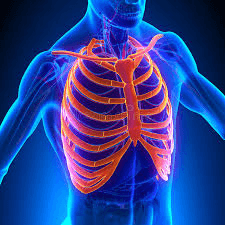
What bone is highlighted?
Ribs
Vertebrae
humerus
Femur

What bone is highlighted?
Radius
Ulna
Humerus
Carpals

What bone is highlighted?
Radius
Ulna
Humerus
Carpals

What bone is highlighted?
Radius
Ulna
Humerus
Carpals

What bone is highlighted?
Femur
Tibia
Fibula
Humerus

What bone is highlighted?
Patella
Pelvis
Clavicle
Femur

From wrist to fingertip, what is the order of bones?
Carpals, metacarpals, phalanges
Phalanges, metacarpals, carpals
Carpals, phalanges, metacarpals
Metacarpals, carpals, phalanges

From ankle to toe, what is the order of bones?
Tarsals, metatarsals, phalanges
Phalanges, metatarsals, tarsals
Metatarsals, phalanges, tarsals
Tarsals, phalanges, metatarsals
Name the type of joint that have little or no movement.
movable
Fixed
Ball and Socket
Hinge
What is a joint?
The place where 2 or more bones meet.
A thin membrane that covers the surface of bone.
A band of tissue that hold bones together.
Connective tissue
What is the function of marrow?
To make protein
To make red blood cells and store fat.
reduce friction
to hold bones together
Name the condition in which the bones become weak and break easily.
Osteoarthritis
Rheumatoid arthritis
osteoporosis
arthritis

What food contain Calcium that helps our bones?
Milk
Oranges
Mountain Dew
Celery
Bones are living things.
True
False
Bones can grow back together if they get broken.
True
False
Where is the largest bone in the body?
Finger
Leg
Arm
Spine
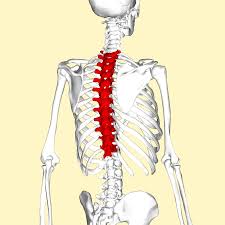
The bones in your back are made up of what?
Fingers
Phalanges
Vertebrate
Toes


What bone is this?
Clavicle
Sternum
Scapula
Coccyx
Which of the following are your carpals?


Which of the following are your metatarsals?


The part of the skull in this picture highlighted in green. What is this called?
Mandible
Zygomatic
Cranium
Meta-Tarsals


Maxilla
Frontal
Mandible
Sphenoid

