
 Worksheets
Naming Practice & Bonding
Total questions: 45
Worksheet time: 41mins


Name this compound Se3I4
Selinium Iodide
Selinium Iodine
Triselinium tetraiodide
Selinium tetraiodide
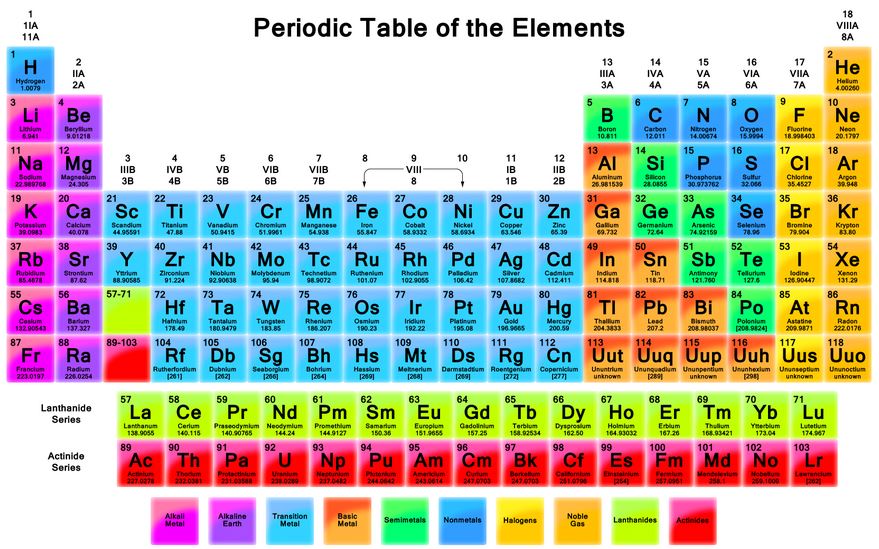
Which of the following should be soluble in water?
CH4
PCl3
AlCl3
SF2
Which of the following will not conduct electricity?
Non-Metal bonded with another Non-Metal in deionized (DI) water
Metal bonded with a Non-Metal in deionized (DI) water
Non-Metal bonded with another Non-metal in tap water
Metal bonded with a Non-Metal in tap water
What causes the electrical probe to light up in solution?
The flow of electrons from the solution to the probe.
The flow of protrons from the probe to the water.
The flow of neutrons through the water and the probe simultaneously.
The flow of electrons through the water and the probe in one direction.
Energy transferred through a solution can cause a chemical reaction that can cause a color change in the solution.
True
False
A Non-metal paired with a full amount of oxygens will have
an -ide ending
a per- prefix
an -ate ending
an -ite ending
P and S are fully bonded with this number of Oxygens:
3
4
5
None of these.
Aluminum requires roman numeral when naming.
True
False
What is the name for Se2I6?
Selinium Iodide
Selinium (II) Iodide
diselinium hexafluoride
diselinium heptafluorde
What is the formula for strontium fluoride?
SrFl
SrF
Sr2F
SrF2
SrFl2
What holds ionic compounds together?
electronegativity
electrostatic
static
glue
A three-dimensional geometric arrangement of ions in which each cation is surrounded by anions, and they vary in shape due to sizes and relative numbers of the ions bonded.
crystal lattice
delocalized electrons
electrolyte
electron sea model
The electronegativity difference for POLAR COVALENT bonds is
0.0-0.5
0.5-1.7
1.7-4.0
4.0-5.5
Another term for Covalent is
Neutral
Dificial
Molecular
Bipolar
When drawing bonds, a line between elements represents
two electrons in a sharing bond
two ions with opposite charges being attracted together
a physical link between atomic nuclei
An example of Coulombic Attraction in an atom is between (choose all that are correct):
metals and electrons
anions and electrons
protons and electrons
anions and cations
A student sample in the lab is white, melts at a low temperature, is soluble in water and does not conduct electricity in solution. Which of the following could it be?
An Ionic Compound
A Metallic Compound
A Covalent Molecule
It is not possible to determine.
Titanium (II) should be translated as
Ti2
Ti2+
11Ti
11 Ti

