
 Worksheets
SEE Semester Final Review
Total questions: 60
Worksheet time: 1hrs 17mins


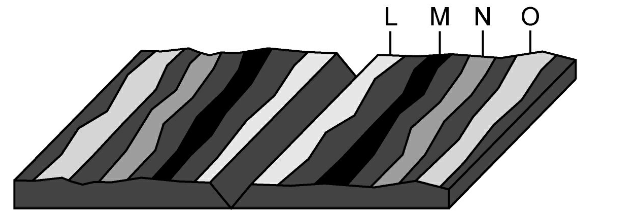

Kepler's First Law states
objects attract other objects with a force that is directly proportional to the product of their masses
the square of the ratio of the periods of any two planets revolving around the Sun is equal to the cube of the ratio of their average distance from the Sun
An imaginary line joining a planet and the sun sweeps out an equal area of space in equal amounts of time.
Planets move about the Sun in an elliptical orbit with the Sun at one of the foci.

Kepler's Second Law states
objects attract other objects with a force that is directly proportional to the product of their masses
the square of the ratio of the periods of any two planets revolving around the Sun is equal to the cube of the ratio of their average distance from the Sun
An imaginary line joining a planet and the sun sweeps out an equal area of space in equal amounts of time.
Planets move about the Sun in an elliptical orbit with the Sun at one of the foci.

Kepler's Third Law states
objects attract other objects with a force that is directly proportional to the product of their masses
the square of the ratio of the periods of any two planets revolving around the Sun is equal to the cube of the ratio of their average distance from the Sun
An imaginary line joining a planet and the sun sweeps out an equal area of space in equal amounts of time.
Planets move about the Sun in an elliptical orbit with the Sun at one of the foci.

Which of the following most accurately describes the movement of the Earth around the Sun?
The Earth moves at a constant speed around the Sun.
The Earth moves faster when it is closest to the Sun.
The Earth moves slowest when it is closest to the Sun.
The Earth's speed varies dependent upon the phase of the moon.


What is the 10% rule?
The idea that 10% of the mass of the food an organism eats turns into energy.
The idea that 10% of the energy you get from food is lost as heat.
The idea that 10% of the mass of the food an organism eats becomes part of their body.
The idea that 10% of the energy we get comes from the sun.

What can be found in the greatest quantity in this energy pyramid (biomass diagram)?
decomposers
primary consumers
producers
tertiary consumers

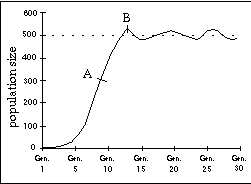
In this graph we see a population increasing, then ____ as it reaches _____.
increasing more; the top of the graph
leveling off; a lack of food
leveling off; carrying capacity
increasing; for more food

Which of these species can be classified as a producer? (Choose at least 1)
shrub
cricket
snake
bird
Which of these species can be classified as a consumer? (choose at least 1)
shrub
cricket
snake
bird

What happened to the buffalo population between 1960-1975?
The population remained stable
The population decreased
The population increased steadily

What happened to the wildebeest population from 1960-1975?
The population remained stable
The population decreased
The population increased steadily
The population increased steadily and then skyrocketed in just a few years

Many bird species migrate twice a year. How does migration allow for a species like Stema paradisaea to increase in population?
It doesn't.
Migrating allows access to more food, water, and nesting grounds.
It provides exercise for the birds to keep them healthy.
Migrating gives the birds an opportunity to meet more mates.
What is the connection between the amount of food available and how much it rains on the Serengeti grasslands?
The more rain there is, the more food for all animals to eat
the rain floods the area and buffalo cannot eat
the rain causes outbreaks of the Rinderpest virus
the lack of rain causes herbivores to eat meat
As greenhouse gases increase, what happens to Earth's temperature?
Increase
Decrease
Stays the Same
No Trend

To determine how much matter is in the tree, Joe uses a device to completely remove water from the tree. After removing the water, he finds that the tree contained 40 kg of matter and the 40 kg of matter is mostly carbon.
What are 4 pieces of evidence to support the claim that CARBON DIOXIDE is where matter comes from?
The mass of the tree increased by 75 kg
40 kg of the matter remaining in the tree was mostly carbon
The investigation lasts 5 years
The soil only decreased by 0.1 kg
Air contains carbon in the form of CO2

Roots are necessary to
absorb water and nutrients from the soil
help insects climb up the trees

When looking at a cross section of the trunk, you can see holes where the xylem and phloem have grown.
True
False

Which organelle is responsible making food (Glucose) using sunlight?
Cell Membrane
Nucleus
Chloroplast
Mitochondria
Select all that are products of Photosynthesis.
Water
Carbon Dioxide
Oxygen
Sunlight (Light Energy)
Glucose (Sugar/food)
How does most of the water needed by the plant get into its leaves?
It enters through the stomata
The roots absorb it and then it travels up the stem
It's made during a chemical reaction in the leaf
The flowers capture water and deliver it to the leaves
Which of the following is the correct equation for PHOTOSYNTHESIS?
light + carbon dioxide + water --> glucose + oxygen
carbon dioxide + sugar + water --> oxygen + light
oxygen + light + water --> carbon dioxide + sugar
carbon dioxide + oxygen + water --> Light+ Sugar

Which organelle from the plant cell is primarily responsible for breaking down glucose to produce ATP?
Mitochondria
Nucleus
Vacuole
Chloroplast

Recall the main funtion of a phloem cell.
To transport nutrients (mainly sucrose) to different parts of a plant.
To transport water to different parts of a plant.
To make energy for the plant via photosynthesis.
To provide structural support to a plant.

A large number of elongated cells that
grow out from the roots. They absorb water and minerals from the soil
via osmosis.
Root Hairs
Stomata
Guard Cells
Pholem
(MULTIPLE CORRECT)
Trees add carbon to the soil when they -
Give glucose to soil fungi
Shed leaves, which fall onto the soil and decompose
Die, fall down, and are decomposed by soil organisms
Complete cellular respiration
Trees store carbon in starches and fiber.
True
False
Cell walls are mostly made up of starches.
FALSE - Cell walls are mostly made up of sugars.
FALSE - Cell walls are mostly made up of fiber.
FALSE - Cell walls are mostly made up of minerals.
True
A kind of fiber -
cellulose
starch
glucose
sucrose


If the carrying capacity of a predator decreases, what will happen to the carrying capacity of the prey?
Will Increase
Will Decrease
Will stay the same
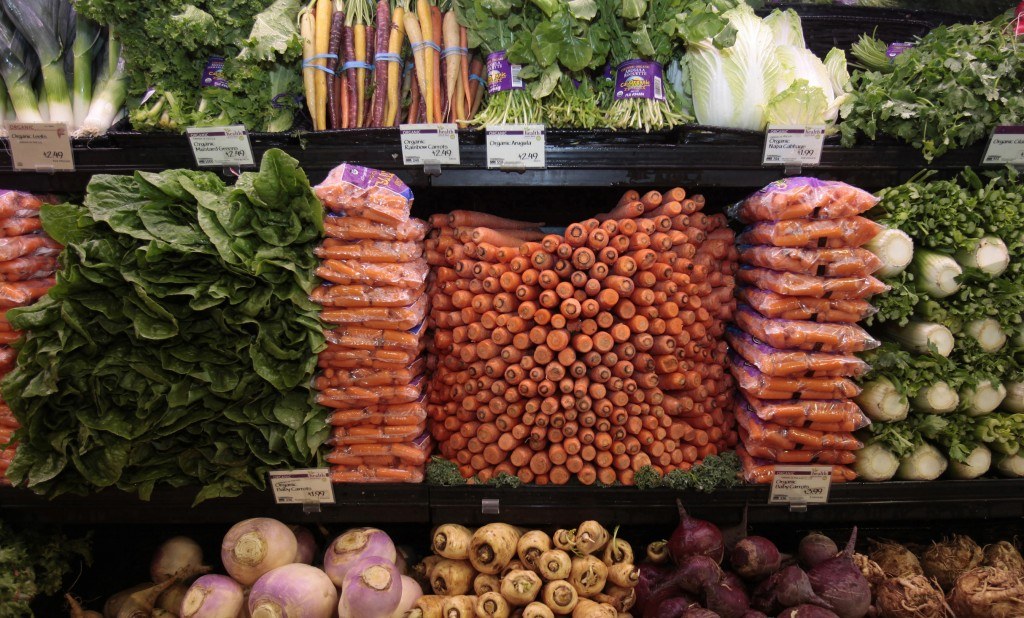

In this Food Web Pyramid, which type of consumer gets only 10% of the energy stored in plants?
Primary Consumer
Secondary Consumer
Tertiary Consumer
Quaternary Consumers
Why do ecologists often show relationships in an ecosystem as a pyramid?
To simplify the complexities of the ecosystem
To analyze feeding relationships
To assess the biodiversity of the ecosystem
To define niche of different organisms in a ecosystem.

