wayground logo

Free Printable Worksheets

Font size

S
M
L
XL
Worksheets

Biology Semester Final Review

Total questions: 73

Worksheet time: 1hrs 8mins

Name
Class
Date
1.
During natural selection, the organisms with the best adaptations..
a)
survive better in their environment
b)
have higher fitness
c)
pass down their traits more often
d)
All of these are correct
2.
Which of the following is NOT part of the process of natural selection?
a)
Variation
b)
Uneven survival
c)
Uneven height
d)
Uneven reproduction
3.
Mutation is...
a)
caused by the choices an organism makes
b)
random
c)
always a good thing
d)
always a bad thing
4.
Changes in the genes (DNA) of a population over generations of time is__________________.
a)
Natural Selection
b)
Specification
c)
Evolution
5.

Which of the following best describes how natural selection results in insects that are pesticide resistant?

a)

When a pesticide is sprayed on a crop, a few insects survive. These insects happen to have a random mutation that makes them resistant to the pesticide. These insects survive and reproduce, eventually resulting in pesticide-resistant population.

b)

When a pesticide is sprayed on a crop, the insects respond by mutating their DNA, making them resistant to the pesticide. Therefore, a pesticide resistant population evolves.

c)

When a pesticide is sprayed on a crop, it causes mutations in the insect DNA. Some of these mutations make the insects pesticide-resistant. These insects now form a pesticide-resistant population.

d)

When a pesticide is sprayed on a crop, it kills the insects, which allows a new species to migrate into the habitat. Some of these species are pesticide resistant, thus a new population of pesticide resistant insects appears.
6.

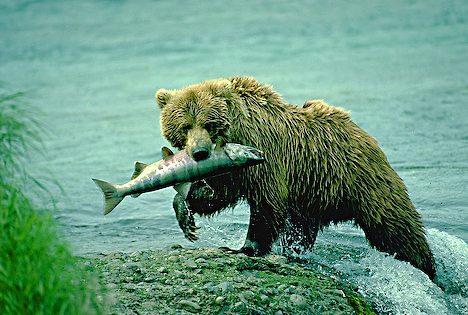
A grizzly bear survives because he is well-adapted to his environment. When he reproduces he passes on those traits to his offspring. This process is called

a)

Natural Selection

b)

Artificial Selection

c)

Mutation

d)

Survival

7.

Where are hereditary traits stored in all organisms?

a)

In the blood

b)

In the brain

c)

In the DNA

d)

In the heart

8.

Why might it be helpful for a species to have a lot of variations?

a)

They can't be seen by predators

b)

If the environment changes, they might be better able to adapt

c)

It is helpful in asexual reproduction

d)

They don't recognize each other

9.

One female salmon can lay hundreds of eggs. Why doesn't the salmon population increase dramatically?

a)

Salmon reproduce asexually

b)

Most offspring do not grow up to reproduce

c)

Salmon eggs don't hatch

d)

Salmon are extinct

10.

Heredity is:

a)

Survival of the fittest

b)

The passing of genetic traits from parent to offspring

c)

Believing in false gods

d)

Unexplained

11.

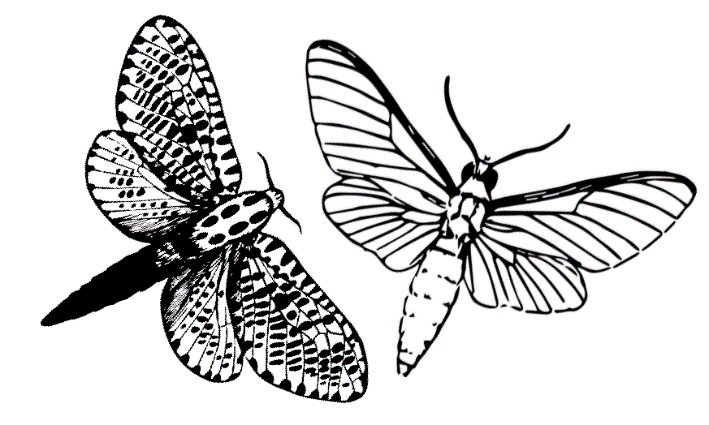
According to natural selection, light colored tree trunks would favor

a)

light colored moths

b)

dark colored moths

c)

red colored moths

d)

red and light colored moths

12.
Which of these is an example of natural selection?
a)
The largest animal in a population will have more opportunities for reproduction.
b)
Several species of organisms work together so that they all succeed.
c)
One species takes all the resources in an environment leaving none for others.
d)
Organism that are best suited to an environment tend to survive and reproduce more often.
13.
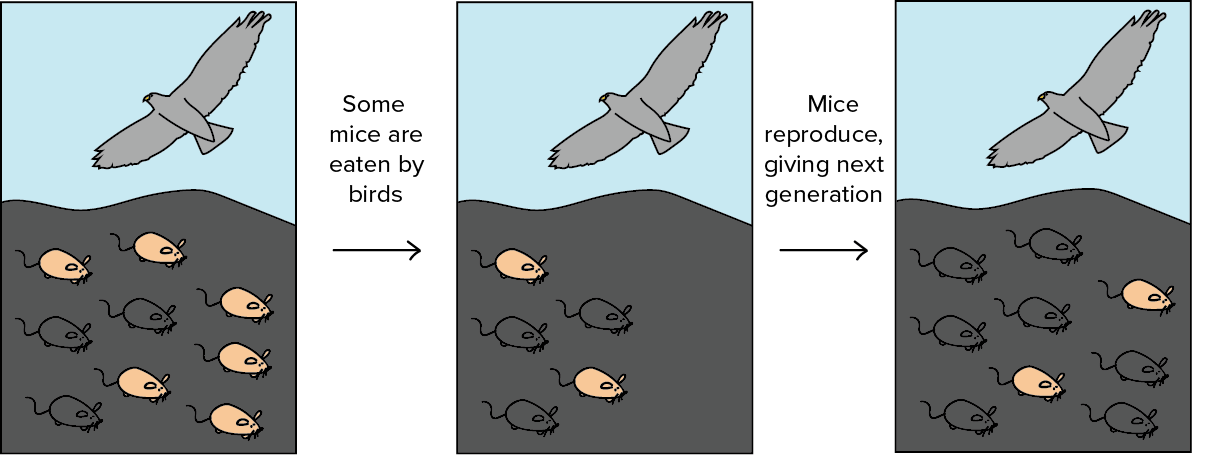
Why is the mouse population changing over time?
a)
The light mice can reproduce more successfully than the dark mice
b)
The hawks eat more dark mice than light mice because the dark mice taste better
c)
The hawks eat more light mice than dark mice because they can see the light mice more easily
d)
The hawks eat more dark mice than light mice because they can see the dark mice more easily
14.
Which organelle performs PHOTOSYNTHESIS?
a)
Chloroplast
b)
Mitochondria
15.
What are the products of photosynthesis?
a)
water and carbon dioxide
b)
oxygen and glucose
c)
oxygen and carbon dioxide
d)
oxygen and water
16.
Which of the following structure is where cellular respiration occurs in the cell?
a)
nucleus
b)
cytoplasm
c)
mitochondria
d)
vacuoles
17.

What is the purpose of cellular respiration?

a)

to break down food into smaller molecules

b)

to create energy in the body

c)

to release energy from sugar molecules

d)

to capture radiant energy from the environment

18.
Which of the following is the correct equation for PHOTOSYNTHESIS?
a)
6CO2 + 6H2O --> 6O+ C6H12O6
b)
6CO+ C6H12O6 + 6H2O --> O
c)
6O2 + 6H2O --> 6CO+ C6H12O6
d)
C6H12O6 + 6O2 ---> 6H2O + 6CO2 
19.
From which molecule does a plant get most of its mass?
a)
carbon dioxide
b)
water
c)
sunlight
d)
soil
20.
What is the correct equation for cellular respiration?
a)
6O2 + C6H12O6 -> 6CO2 + 6H2O + Energy
b)
6O2 + C6H12O6 + Energy -> 6CO2 + 6H2O
c)
6CO2 + 6H2O -> 6O2 + C6H12O6 + Energy
d)
6CO2 + 6H2O + Energy -> 6O2 + C6H12O6
21.
Which biomolecule is a main source of quick energy?
a)
Nucleic Acid
b)
Protein
c)
Lipid
d)
Carbohydrate
22.
Which biomolecule is found in fats, oils, and waxes and is a source of long-term energy
a)
Proteins
b)
Nucleic Acid
c)
Lipids
d)
Carbohydrate
23.
Carbon, Hydrogen, Oxygen and Nitrogen are elements in what biomolecule?
a)
Carbohydrate
b)
Lipid
c)
Protein
d)
Nucleic acid
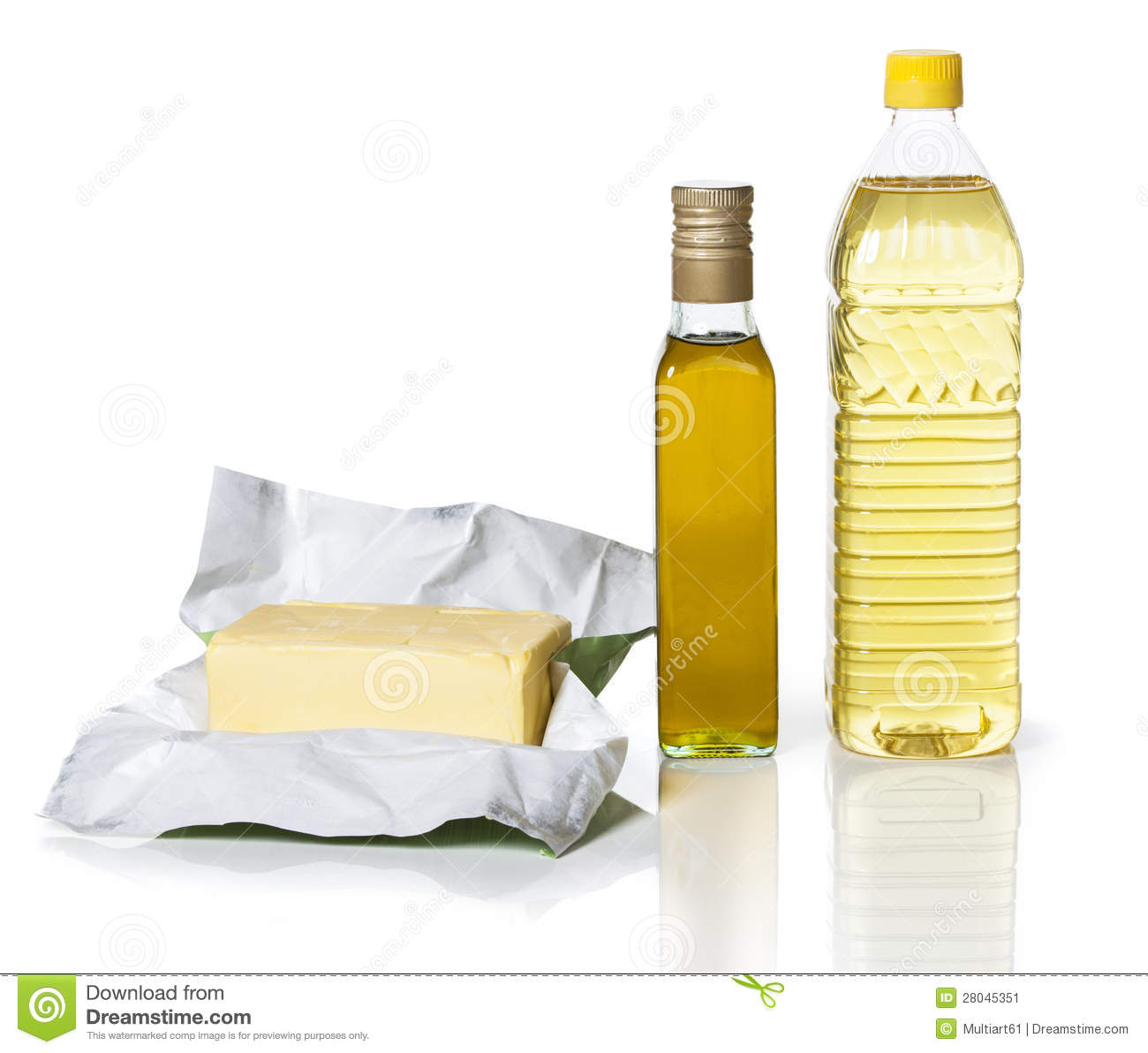
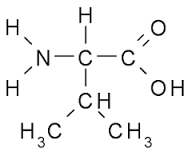
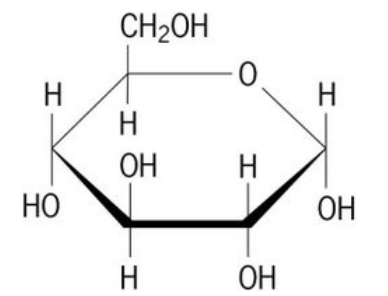
24.
Which biomolecule is this a picture of?
a)
Protein
b)
Nucleic Acid
c)
Lipid
d)
Carbohydrate
25.
What elements are common to all 4 biomolecules?
a)
Carbon, hydrogen, nitrogen
b)
Carbon, Nitrogen, Phosphorus
c)
Carbon, Hydrogen, Oxygen
d)
Carbon, Hydrogen, Phosphorus
26.

Oxygen is a gas produced by ___ and used by ___

a)

photosynthesis; all organisms

b)

photosynthesis; only animals

c)

cellular respiration; all organisms

d)

cellular respiration; only plants

e)

photosynthesis; only plants

27.

True or False: A cow consumes grass that contains carbon (in its proteins, fibers, etc.). That carbon might be exhaled or it might be incorporated into the cow's cells.

a)

False

b)

True

28.

The carbon found in carbon dioxide can be rearranged to form ____ during photosynthesis.

a)

glucose

b)

water

c)

oxygen

d)

none of these is correct

29.

The hydrogen in glucose is rearranged with oxygen to form water during -

a)

photosynthesis

b)

digestion

c)

cellular respiration

d)

decomposition

30.
What percentage of the offspring will have this recessive disease?
a)
0%
b)
25%
c)
50%
d)
75%
31.

What percentage of the FEMALE offspring will be a carrier for this recessive disease?

a)

0%

b)

50%

c)

100%

d)

25%

32.
Looking at this pedigree, how many family members have the disease?
a)
4
b)
7
c)
All
d)
None
33.
How many PAIRS of chromosomes do humans have?
a)
23
b)
46
c)
1
d)
2
34.
I have 1 X chromosome and 1 Y chromosome. What am I?
a)
Male
b)
Female
35.
If a gene is found only on the X chromosome and not the Y chromosome, it is said to be what?
a)
sex-linked trait
b)
polygenic trait
c)
codominant trait
d)
incomplete dominance trait
36.
Both parents in this Punnet square
a)
are homozygous dominant
b)
are homozygous recessive
c)
are heterozygous
d)
have blue eyes
37.
To express the recessive trait you must be
a)
homozygous dominant
b)
heterozygous
c)
alleleerific
d)
homozygous recessive
38.

The goal of transcription is to make RNA.

a)

True

b)

False

39.
The process by which the genetic code of DNA is copied into a strand of RNA is called
a)
translation
b)
transcription
c)
transformation
d)
replication
40.
What type of RNA carries the DNA message out of the nucleus to the ribosomes?
a)
mRNA
b)
tRNA
c)
RNA
d)
DNA
41.
Amino acids are the building blocks of... 
a)
DNA
b)
RNA
c)
Atoms
d)
Proteins
42.
What process is occurring in this photo?
a)
Transcription
b)
DNA unwinding
c)
Translation
d)
Transfer RNA is creating bases
43.
_______ dictates the function of a protein
a)
Shape
b)
Temperature
c)
pH
d)
Time
44.
If you change the shape of a protein, will it work the same/properly?
a)
Yes
b)
No
45.
The structure of proteins can be changed by environmental factors such as temperature or pH.
a)
True
b)
False
46.
Where do mutations occur?
a)
DNA and RNA
b)
DNA 
c)
RNA
d)
mRNA and tRNA
47.
What is the name given to part of a DNA molecule that codes for a protein?
a)
Glucose
b)
Chromosome
c)
Gene
d)
Phosphate
48.

What is an example of a positive feedback mechanism?

a)
b)
49.
Maintaining body temperature is an example of a:
a)
negative feedback loop
b)
positive feedback loop
50.
The term for maintaining internal temperature is: 
a)
Thermoregulation
b)
Thermometer
c)
Homeothermal
d)
Homeostasis
51.
Rapid growth during puberty causes your body to release more and more growth hormones. As you grow, more and more growth hormones are released until puberty is reached, and then the hormones stop.
a)
Positive Feedback Response
b)
Negative Feedback Loop 
52.
If the calcium in your blood decreases below homeostasis levels, a gland in the brain will sense the decrease and send a chemical message to your bones. Your bones will release calcium into the blood, bringing blood calcium levels back up.
a)
Positive Feedback Response
b)
Negative Feedback Loop 
53.
Homeostasis
a)
allows for a wildly fluctuating internal environment
b)
is impossible in vertebrates
c)
is the maintenance of a relatively stable internal environment and often incorporates a form of feedback regulation
d)
is the maintenance of a relatively stable external environment and often incorporates a form of feedback regulation
54.
These two body systems regulate feedback mechanisms.
a)
Skeletal & Muscular
b)
Skeletal & Endocrine
c)
Muscular & Nervous
d)
Endocrine & Nervous
55.
What transports substances around the body?
a)
Blood
b)
Sweat
c)
Tears
d)
Urine
56.
Which diagram represents an organ?
a)
#1
b)
#2
c)
#3
d)
#4
57.
Major organs of the nervous system
a)
Kidneys, nephrons
b)
Stomach, intestines, mouth
c)
Heart, blood vessels, blood
d)
Brain, spinal cord, nerve
58.
Heart, blood vessels, blood
a)
Digestive system
b)
Excretory system
c)
Circulatory system
d)
Immune system
59.
Pituitary gland, pancreas, thyroid, adrenal gland
a)
Digestive system
b)
Integumentary system
c)
Endocrine system
d)
Immune system
60.
The ___________ belongs to the integumentary system.
a)
heart
b)
skin
c)
cranium
d)
spinal cord
61.
Which organ belongs to the urinary system?
a)
bladder
b)
spleen
c)
pineal body
d)
heart
62.

This system helps balance water levels and eliminate dissolved wastes

a)

Digestive System

b)

Urinary System

c)

Respiratory System

d)

Nervous system

63.

This system communicates with the rest of your body via chemical messages

a)

Lymphatic System

b)

Musculoskeletal System

c)

Endocrine system

d)

Nervous system

64.
Bacteria reproduce by binary fission.
a)
true
b)
false
65.

This kind of reproduction results in identical cells.

a)

Binary Fission (asexual)

b)

Conjugation (sexual)

66.
A unicellular organism that does not have a nucleus
a)
fungus
b)
bacteria
c)
biome
d)
virus
67.
All bacteria have DNA. 
a)
true
b)
false
68.

The rate that bacteria develop antibiotic resistance at can be sped up by:

a)

Exposure to lower levels of antimicrobials than prescribed

b)

2.Exposure to broad-spectrum antibiotics (which aren’t specific to a microbe)

c)

3.Overuse of antibiotics in foods/agriculture

d)

4. All of the above

69.

What can we do to reduce the rate of development of antibiotic resistant strains of bacteria

a)

Always finish a course of antibiotics

b)

Only take antibiotics when they are really needed

c)

Take antibiotics whenever it is possible

d)

Reduce the amount of antibiotics given to animals in the farming industry

70.

Bacteria can double in population very quickly. Due to this, we say they exhibit -

a)

Logistic population growth

b)

Exponential population growth

c)

Linear population growth

d)

Negative population growth

71.

Dependent variables are the -

a)

factors in an investigation that you set up.

b)

factors in an investigation that you measure and record as results.

c)

factors in an investigation that you keep the same in every trail.

d)

factors in an investigation that you observe.

72.

A student designed an experiment to investigate a claim that athletes would have lower heart rates than nonathletes during exercise. After the students classified themselves as an athlete or a nonathlete, their resting pulses were determined. Then all the students performed the same exercise for four minutes and their heart rates were determined by recording the pulse rate in beats per minute. The students continued to measure their pulse rates for an additional four minutes. The average heart rate per minute for each group was determined. The data were recorded in a table. Which of the following was a variable held constant in this investigation?

a)

Same exercise

b)

Four minutes of exercise

c)

Athletes vs. nonathletes

d)

Measure heart rates before and after the exercise

73.

To increase reliability and validity of experimental results,

a)

decrease number of repetitions

b)

increase number of independent variables

c)

increase number of trials

d)

decrease measurements