wayground logo

Free Printable Worksheets

Font size

S
M
L
XL
Worksheets

Periodic Table

Total questions: 45

Worksheet time: 2hrs 30mins

Name
Class
Date
1.

Vertical columns on the periodic table are called ___?

a)

groups

b)

periods

c)

rows

d)

families

2.

Which color on the image of the periodic table corresponds with the halogens.

a)

red

b)

black

c)

blue

d)

orange

3.

Which color on the image of the periodic table corresponds with the lanthanides.

a)

red

b)

black

c)

blue

d)

orange

4.

Which color on the image of the periodic table corresponds with the noble gases.

a)

red

b)

black

c)

blue

d)

orange

5.

Which color on the image of the periodic table corresponds with the transition metals.

a)

red

b)

black

c)

blue

d)

orange

6.

Horizontal rows on the periodic table are called ___?

a)

groups

b)

periods

c)

rows

d)

families

7.

Which family of elements reacts violently with water and exposure to oxygen?

a)

alkali metals

b)

alkaline earth metals

c)

lanthanides

d)

actanides

e)

transition metals

8.

The periodic table is mostly comprised of what type of element?

a)

Metals

b)

Nonmetals

c)

Metalloids

9.
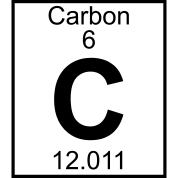
What does the 6 represent?
a)
atomic mass
b)
atomic number
c)
element name
d)
chemical symbol 
10.
What does 12.011 represent?
a)
atomic mass
b)
atomic number
c)
element name
d)
chemical symbol 
11.
What does the C represent?
a)
atomic mass
b)
atomic number
c)
element name
d)
chemical symbol 
12.
These are found on the Periodic Table.
a)
Compounds
b)
Elements
c)
Mixtures
13.
Which group of the periodic table is composed of inert (not reactive)  gases?
a)
alkali metals
b)
alkaline earth metals
c)
halogens
d)
noble gases
14.
Elements which are shiny, conduct electricity and heat are called
a)
metal
b)
nonmetal
c)
metalloid
d)
nonexistent
15.
How many neutrons are in a Gold atom?
a)
79
b)
196
c)
118
d)
275
16.
What's a valence electron?
a)
electrons in the second energy level
b)
electrons in the outermost energy level
c)
the atomic number
d)
electrons in the first level
17.
The positive particles of an atom are 
a)
electrons 
b)
positrons 
c)
neutrons 
d)
protons 
18.
Particles in an atom that are neutral and have no charge are 
a)
negatrons 
b)
electrons 
c)
neutrons 
d)
protons 
19.
The electrons of an atom are found...
a)
in the outer "cloud" surrounding the atom.
b)
in the nucleus of the atom.
c)
in the cloud and in the nucleus.
20.
The subatomic particle with a negative charge is the
a)
electron
b)
proton
c)
neutron
d)
nucleus 
21.
What is the atomic mass equal to?
a)
the number of protons
b)
the number of protons and neutrons
c)
the number of neutrons
d)
the number of protons and electrons
22.
Which element is not a metal?
a)
H
b)
Re
c)
Al
d)
B
23.
Which is a halogen?
a)
Helium
b)
Chlorine
c)
Oxygen
d)
Neptune
24.
Which is an alkali metal?
a)
Magnesium
b)
Iron
c)
Sodium
d)
Europium
25.
A neutron has a charge of
a)
+2
b)
No charge
c)
-1
d)
+1
26.

what is the name of group number 1

a)

halogens

b)

noble gases

c)

alkali metals

d)

alkaline earth metals

27.

what is the name of group number 2

a)

transition metals

b)

halogens

c)

metaloids

d)

alkaline earth metals

28.
CHLORINE
a)
C
b)
Ca
c)
Cl
d)
Cu
29.
CALCIUM
a)
C
b)
Ca
c)
Cu
d)
Cl
30.
CARBON
a)
C
b)
Ca
c)
Cl
d)
Cu
31.
COPPER
a)
C
b)
Ca
c)
Cu
d)
Cl
32.
SILVER
a)
Au
b)
Ag
c)
Al
d)
Ar
33.
SODIUM
a)
S
b)
So
c)
N
d)
Na
34.
POTASSIUM
a)
P
b)
Ka
c)
K
d)
Pt
35.
What is the atomic number of Rubidium?
a)
37
b)
44
c)
45
d)
86
36.
What is the atomic number of Oxygen?
a)
6
b)
7
c)
8
d)
9
37.

Who invented the Periodic Table?

a)

Mendeleev

b)

Bohr

c)

Lewis

d)

Democritus

38.
What is an ion?
a)
A Charged Atom
b)
A Large Atom
c)
A Small Atom
d)
A Cute Atom
39.
When an atom loses a valence electron, it becomes a(n) _____________ ion.
a)
positive
b)
negative
c)
neutral
d)
polyatomic
40.
Negative ions form when atoms _________ valence electrons.
a)
lose
b)
gain
c)
share
41.
the central region of an atom where its neutrons and protons are is its 
a)
nucleus 
b)
electron cloud
c)
core 
d)
center 
42.
What is an isotope? 
a)
A charged atom
b)
An atom with different amounts of neutrons
c)
An atom with different amounts of protons
d)
A neutral atom
43.
How many neutrons does a Sodium 24 isotope have?
a)
12
b)
13
c)
14
d)
15
44.
How many neutrons does a Carbon 13 atom have?
a)
6
b)
5
c)
7
d)
8
45.
How many neutrons does a Calcium 48 isotope have?
a)
16
b)
20
c)
28
d)
12