wayground logo

Free Printable Worksheets

Font size

S
M
L
XL
Worksheets

Chemistry Review

Total questions: 100

Worksheet time: 3hrs 36mins

Name
Class
Date
1.
A testable explanation to a problem that has not yet been tested. 
a)
data
b)
theory
c)
hypothesis
d)
fact
2.
This variable in an experiment is the one being changed by the scientist. 
a)
dependent variable
b)
independent variable
c)
data
d)
control group
3.
Approved eye protection devices (such as goggles) are worn in the laboratory
a)
to improve vision
b)
only if you don't wear glasses
c)
anytime heat, chemicals, or glassware are used
d)
to avoid eye strain
4.
If you do not understand a direction or part of a lab procedure, you should
a)
figure it out as you do the lab
b)
try several methods until something works
c)
skip it and go to the next part
d)
ask your teacher
5.
How many sig figs are there?
100.00
a)
1
b)
3
c)
4
d)
5
6.
How many sig figs are there?
100000000
a)
1
b)
9
c)
10
7.

What is the correct answer to: 6.201 cm + 7.4 cm + 0.68 cm +12.0 cm =

a)

26.281

b)

26.28

c)

26.2

d)

26.3

8.

What is the correct answer for: 1.31 cm x 2.3 cm

a)

3.013

b)

3.01

c)

3.02

d)

3.0

9.
Which state of matter has molecules that move fastest and spread to fill the space they are in?  They do not form any pattern.
a)
solid 
b)
liquid 
c)
gas
10.
What is matter?
a)
a pure substance
b)
anything that occupies space and possesses mass
c)
an element
d)
a compound
11.
Which of the following is not a chemical property? 
a)
rusting 
b)
boiling 
c)
rotting 
d)
burning 
12.
Which one of these is a chemical property?
a)
melting point
b)
boiling point
c)
color
d)
flammability
13.
Which is an example of a physical property?
a)
ability to react with acid
b)
 state of matter
c)
flammability
d)
ability to react with oxygen
14.

What kind of properties can only be observed when a substance changes into a different substance?

a)

physical properties

b)

chemical properties

c)

liquid properties

d)

real properties

15.

The smallest particle of an element.

a)

Element

b)

Molecule

c)

Atom

16.

A substance that cannot be broken down into other substances by chemical or physical means.

a)

Covalent bond

b)

Atom

c)

Element

17.

A combination of two or more atoms

a)

Period

b)

Molecule

c)

Atom

d)

Family

18.

A physical model that depicts the atom as a small positively charged nucleus with electrons in orbit at different levels.

a)

Covalent bond

b)

Ionic bond

c)

Bohr Model

d)

Electron dot diagram

19.

Elements in the same vertical column of the periodic table; also called group

a)

Family

b)

Atom

c)

Element

d)

Metals

20.

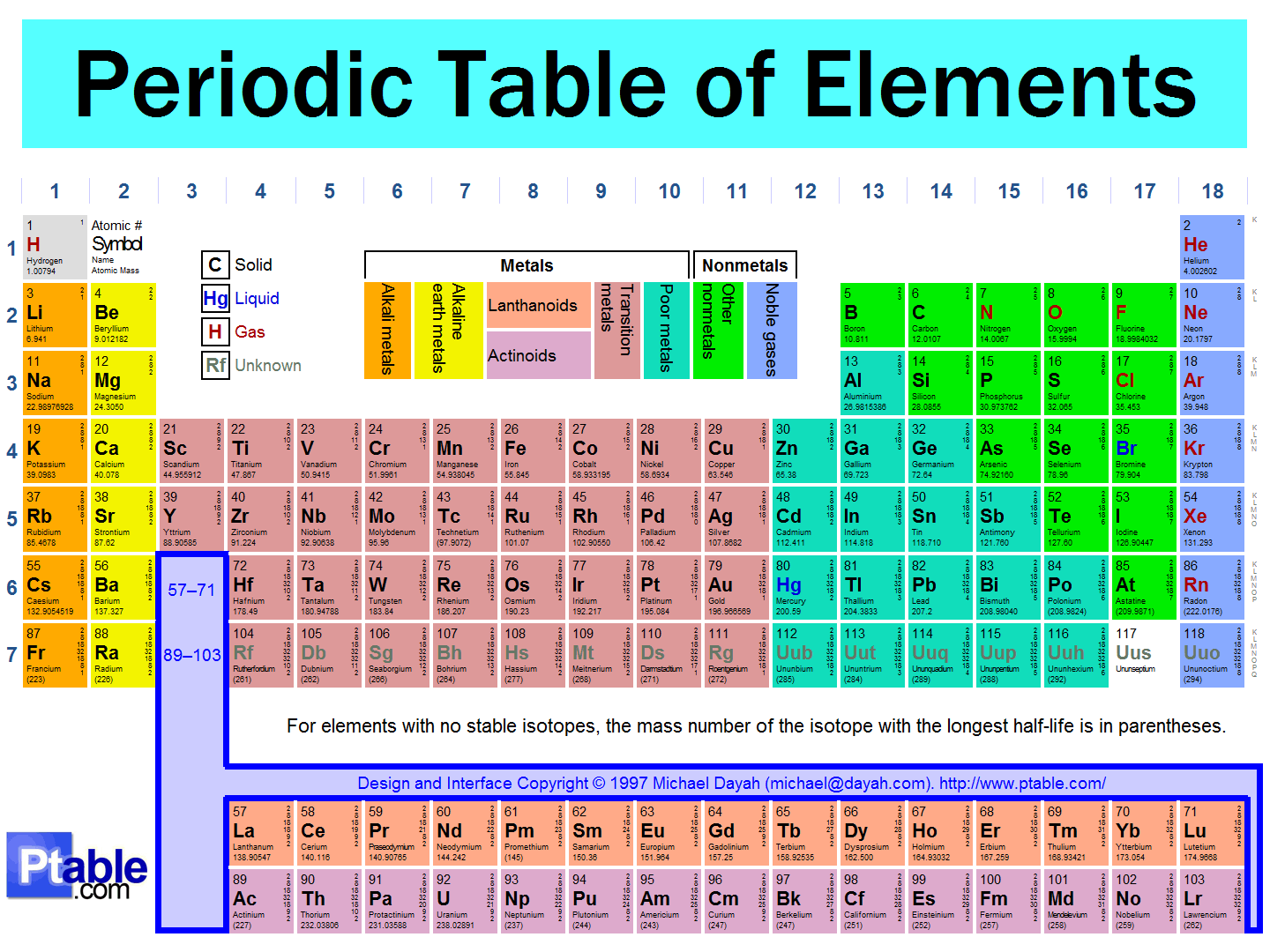
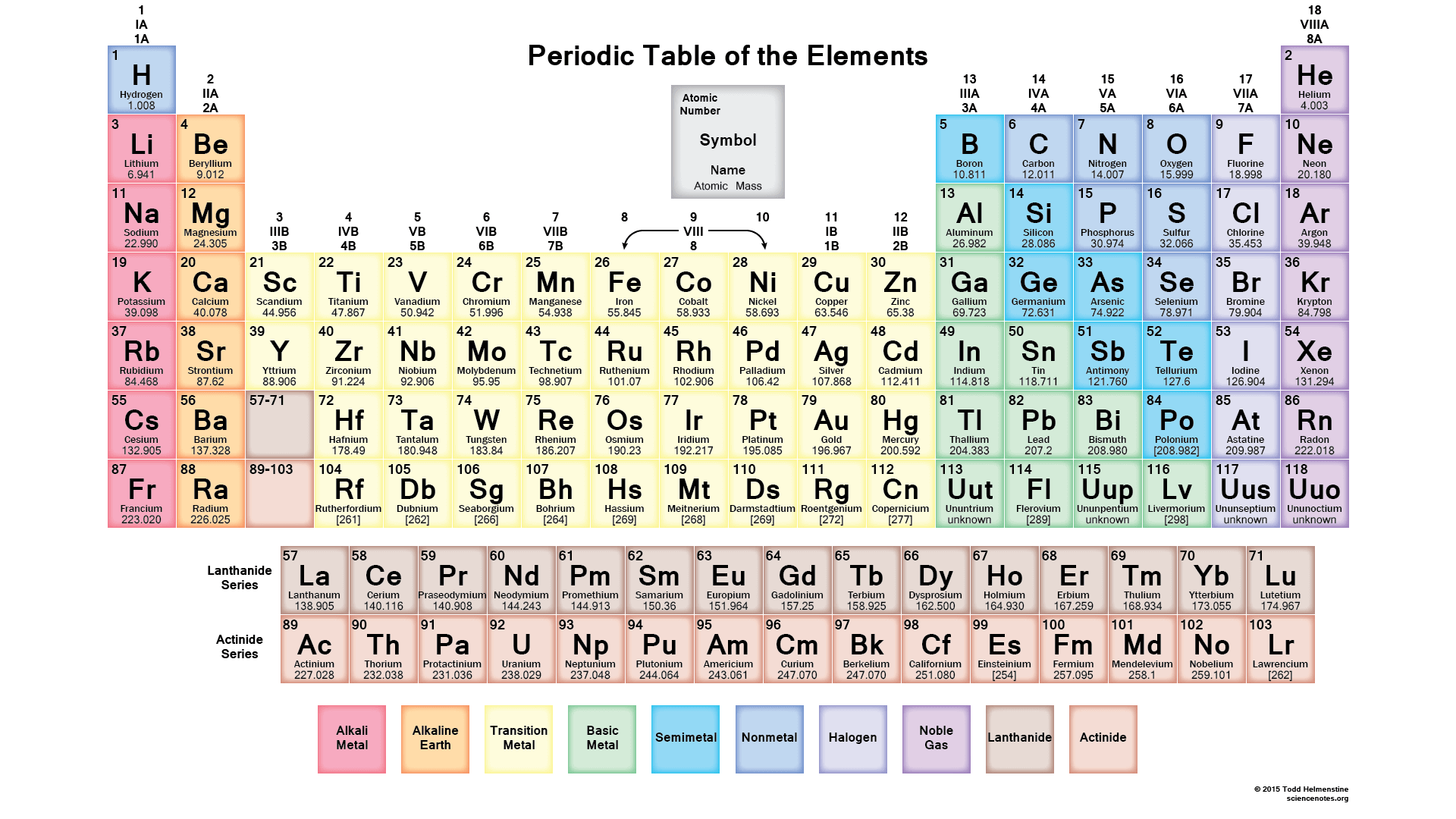
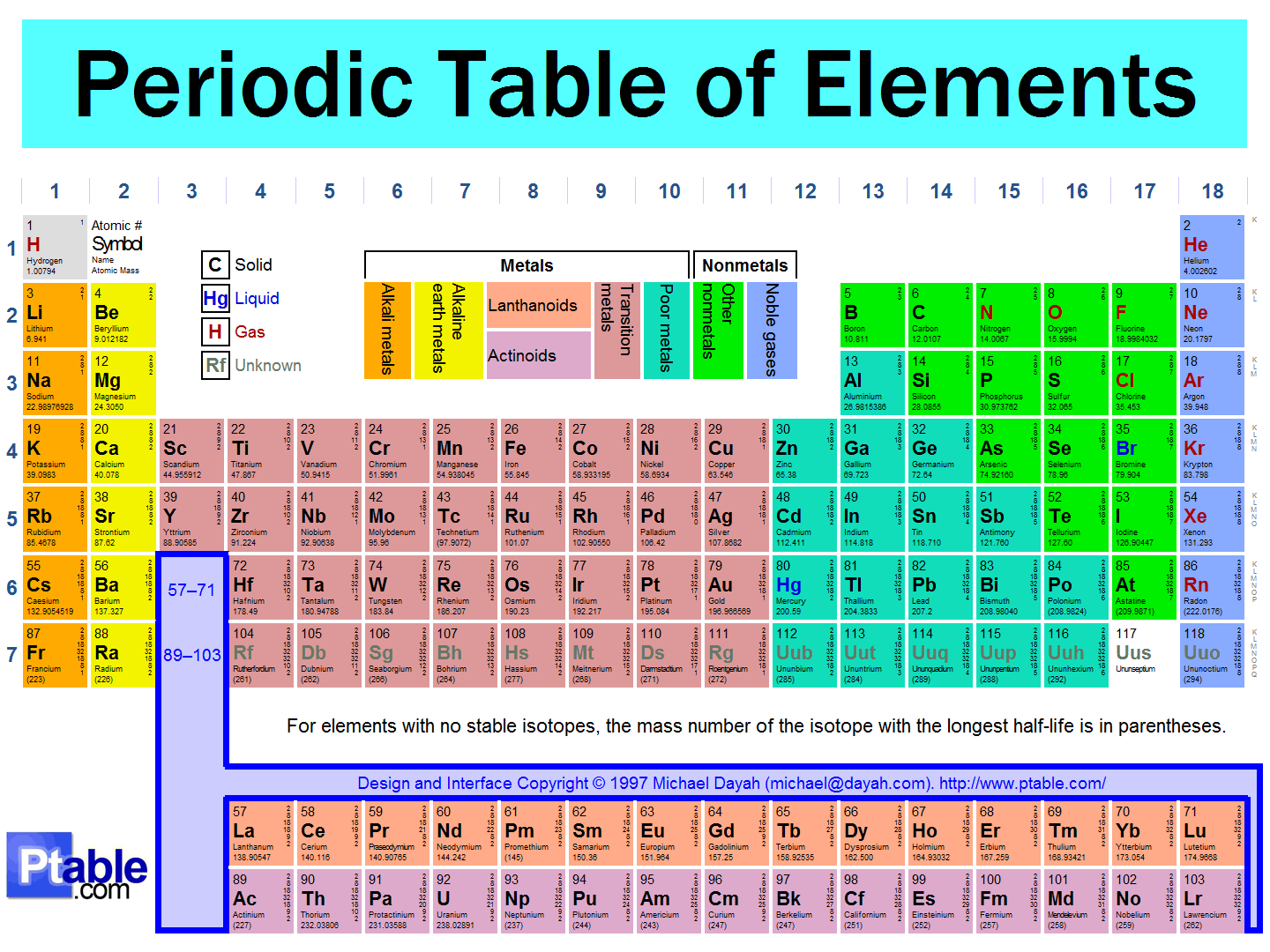
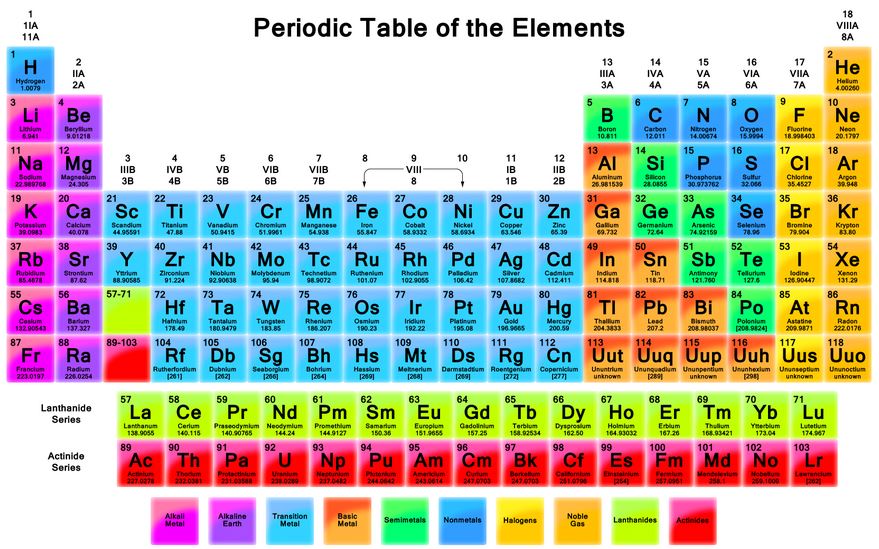
What is the atomic number?

a)

35

b)

18

c)

17

d)

52

21.

What is the atomic mass of Neon?

a)

10

b)

20

c)

30

22.

How many neutrons does calcium have?

a)

20

b)

40

c)

60

d)

0

23.

What would Au (Gold) be categorized as on the periodic table?

a)

Nonmetal

b)

Metal

c)

Transitional metal

d)

Noble gas

24.

What would He (Helium) be categorized as on the periodic table?

a)

Nonmetal

b)

Metal

c)

Noble gas

d)

Transitional metal

25.

The atomic number identifies the number of __________.

a)

electrons

b)

atoms

c)

protons

d)

neutrons

26.

Subatomic particles that have a negative charge

a)

electrons

b)

protons

c)

quarks

d)

neutrons

27.

The number 16 for the atomic element sulfur is the

a)

ionic number

b)

isotope

c)

atomic mass

d)

atomic number

28.

Subatomic particle that has a positive charge

a)

electron

b)

poitron

c)

neutron

d)

proton

29.

The center of an atom is called the ________________.

a)

electron cloud

b)

nucleus

c)

neutrion

d)

nuetron

30.

In what part of an atom can the protons and neutrons be found?

a)

nucleus

b)

neutrine

c)

electron cloud

d)

proton cloud

31.

The vertical (up and down) columns in the Periodic Table are called

a)

groups

b)

towers

c)

periods

d)

atomic numbers

32.
The Modern Periodic Table of Elements is arranged by
a)
atomic mass
b)
atomic number
c)
valence electrons
d)
number of isotopes
33.
Sodium (Na) is found in period 
a)
3
b)
2
c)
4
d)
1
34.
Sodium (Na) is found in group 
a)
1
b)
2
c)
3
d)
4
35.

The horizontal (side to side) rows in the Periodic Table are called

a)

groups

b)

families

c)

periods

d)

atomic numbers

36.

Who discovered that the atom had an small, dense, positively charged center?

a)

Ernest Rutherford

b)

J.J Thomson

c)

Robert Millikan

d)

John Dalton

37.

Place the following atomic models in order, from earliest to latest:


A) Rutherford B) Thomson C) Dalton

a)

B, C, A

b)

C, A, B

c)

A, C, B

d)

C, B, A

38.

Which scientists believed an atom was indivisible? (Choose all correct responses.)

a)

Democritus

b)

Dalton

c)

Thomson

d)

Rutherford

39.

In the atomic model nicknamed the "plum pudding" model, what do the plums represent?

a)

the nucleus

b)

the atom

c)

the electrons

d)

the positive material

40.
Which is the electron configuration for an oxygen atom?
a)
1s22s22p63s23p64s2
b)
1s22s22p4
c)
1s22s22p6
d)
1s22s22p63s23p6
41.
What atom matches this electron configuration?
1s2s2p3s2
a)
Neon
b)
Magnesium
c)
Aluminum
d)
Potassium
42.
Which has the greater EN: 
Cl or Al?
a)
Cl
b)
Al
43.
Which of the following will have a larger radius than Zinc?
a)
Gallium
b)
Aluminum
c)
Magnesium
d)
Strontium
44.
Which of the following will have a higher electronegativity than arsenic (As)?
a)
Carbon (C)
b)
Neon (Ne)
c)
Antimony (Sb)
d)
Germanium (Ge)
45.
Which of the following will have a lower ionization energy than Scandium (Sc)?
a)
Helium (He)
b)
Titanium (Ti)
c)
Calcium (Ca)
d)
Magnesium (Mg)
46.
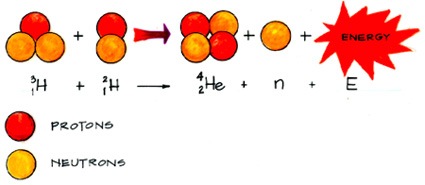
Which process involves the joining of small nuclei?
a)
Beta decay
b)
Alpha decay
c)
Nuclear fission
d)
Nuclear fusion
47.
Which process involves the splitting of large nuclei?
a)
Beta decay
b)
Alpha decay
c)
Nuclear fission
d)
Nuclear fusion
48.
The time taken for half of an amount of radioactive atoms to decay.
a)
Nuclear fusion
b)
Full-life
c)
Dead time
d)
Half-life
49.
Arrange in order of increasing ability to penetrate matter.
a)
Beta, gamma, alpha
b)
Alpha, gamma, beta
c)
Gamma, beta, alpha
d)
Alpha, beta, gamma
50.
Which of the following has a full valence shell?
a)
Oxygen
b)
Neon
c)
Barium
d)
Carbon
51.
Elements on the LEFT side of the periodic table will most likely form:
a)
Positive ions
b)
Negative ions
c)
Neutral Ions
d)
None of these
52.
An ionic bond forms when atoms ___________ electrons.
a)
gain
b)
share
c)
increase
d)
transfer
53.
Which type of bond has an equal sharing of electrons?
a)
Polar Covalent 
b)
Non Polar Covalent
c)
Ionic
d)
Metallic
54.
Which type of bond has an unequal sharing of electrons?
a)
Polar Covalent 
b)
Non Polar Covalent
c)
Ionic
d)
Metallic
55.
If an atom loses two electrons what charge will it have?
a)
+ 2
b)
 - 2
c)
+1
d)
-1
56.
If an atom gains one electron what charge will it have?
a)
-2
b)
-1
c)
+1
57.

True or false? In naming ionic compounds,

the cation is always named first and the anion

second.

a)

True

b)

False

58.

The correct name for LiCl is _______.

a)

lithium monochloride

b)

lithium(I) chloride

c)

monolithium chloride

d)

lithium chloride

e)

monolithium monochloride

59.

The correct name for FeO is _____.

a)

iron oxide

b)

iron (II) oxide

c)

iron (III) oxide

d)

iron (IV) oxide

e)

iron (I) oxide

60.

Which of the following is not the correct

combination of compound name and its formula?

a)

hydrobromic acid; HBr

b)

calcium sulfate; CaSO4

c)

beryllium oxide; BeO

d)

nickel(II) peroxide; Ni2O

e)

ammonium chromate; (NH4)2CrO4

61.

Which of the following formulas is

incorrect?

a)

CaNO3

b)

MgS

c)

AlBr3

d)

Li2O

e)

NaOH

62.

What is the correct Lewis Dot Structure for ammonia NH3

a)
b)
c)
d)
63.

Which is the correct molecular structure for carbon dioxide?

a)
b)
c)
d)
64.
Choose the correct shape for this molecule:
a)
Trigonal planar
b)
Trigonal pyramidal
c)
Tetrahedral
d)
Linear
65.
Choose the correct shape for this molecule:
a)
Trigonal planar
b)
Trigonal pyramidal
c)
Bent
d)
Linear
66.
Choose the correct shape for this molecule:
a)
Bent
b)
Trigonal pyramidal
c)
Trigonal planar
d)
Linear
67.
Choose the correct shape for this molecule:
a)
linear
b)
Trigonal pyramidal
c)
Bent
d)
Tetrahedral
68.
2 NaBr + 1 Ca(OH)2 ----> 1 CaBr2 + 2 NaOH
a)
Synthesis (or combination)
b)
Decomposition
c)
Single displacement
d)
Double displacement
69.
2 NH3+ 1 H2SO4 ----> 1 (NH4)2SO4
a)
Synthesis (or combination)
b)
Decomposition
c)
Single displacement
d)
Double displacement
70.
3 Pb + 2 H3PO4 ----> 3 H2 + 1 Pb3(PO4)2
a)
Synthesis (or combination)
b)
Decomposition
c)
Single displacement
d)
Double displacement
71.
Balance this reaction: ____ Na3PO4 + ____ KOH ---> ____ NaOH + ____ K3PO4
a)
1,3,3,1
b)
1,3,2,1
c)
2,3,3,1
d)
1,1,3,1
72.
Balance this reaction: ____ NaF + ____ Br2 ---> ____ NaBr + ____ F2
a)
3,1,2,1
b)
1,2,3,4
c)
2,1,2,1
d)
1,2,1,2
73.
Which conversion factor should be used for the following question " How many molecules are there in 4.00 moles of glucose, C6H12O6
a)
1 mole = 78.12 g
b)
1 mole = 22.4 L 
c)
1 mol = 6.02x 10²³ particles 
d)
more than one
74.
Which expression below show the correct method of determining the percent composition of Sodium in Na2CO3?
a)
%Na = (22.99g/106g) x 100
b)
%Na = (22.99g/106) / 100
c)
%Na = (45.98g/106g) x 100
d)
%Na = (106/45.98g) x 100
75.
What are the units for molar mass?
a)
grams
b)
amu
c)
grams/mole
d)
liters
76.
How many moles are in 16.94g of water?
a)
16.94 mol H2O
b)
0.9401 mol H2O
c)
305.3 mol H2O
d)
1.063 mol H2O
77.
Find the percent composition of hydrogen in (NH4)2S.
a)
11.8%
b)
41.1%
c)
47.1%
78.
How many particles are in 13.5 grams of Beryllium?
a)
1.5 particles
b)
9 particles
c)
4x10²³ particles
d)
9x10²³ particles
79.
2 NaClO3 (s) --> 2NaCl (s) +3 O2 (g)  
12.00 moles of NaClO3 will produce how many grams of O2?
a)
256 g of O2
b)
576 g of O2
c)
288 g O2
80.
In a lab, a scientist calculate he should produce 12.3 grams of product in his experiment. When he is finished collecting his product it weighs 10.1 grams. What is his percent yield?
a)
82%
b)
0.82%
c)
10.1 %
d)
100%
81.
When 12 moles of O2 reacts with 1.1 mole of C10H8 what is the limiting reactant?  C10H8 + 12 O2 --> 10 CO2 + 4 H2O
a)
Oxygen
b)
C10H8
c)
Water
d)
Carbon Dioxide
82.
2Al + 3H2SO4 -> Al2(SO4)3 + 3H2
How many grams of aluminum sulfate would be formed if 250g H2SO4 completely reacted with aluminum?
a)
0.85 g
b)
290 g
c)
450 g
d)
870 g
83.

How do you convert C to Kelvin (K)?

a)

C + 273

b)

C x 273

c)

C / 273

d)

C + 32 + 273

84.

The 36,000 L balloon section of a small hot air balloon is initially cool at 22°C. Later it is heated to an average temperature of 117°C. What will its new volume be?


Solve the problem.

a)

122 L

b)

10,980 L

c)

47,600 L

d)

3,240,000 L

e)

10,620,000 L

85.
Using Gay-Lussac's law, if the pressure of a gas starts out at 200kPa and increases to 600kPa, what would the initial temperature be if it ended up at 300K?
a)
50K
b)
200K
c)
400K
d)
100K
86.
Boyle's law :  The pressure and volume of a gas show a _____ relationship. 
a)
Inverse 
b)
Direct 
87.

A Helium filled balloon has a volume of 50.0 L at 25oC and 1.08 atm. What volume will it have at 0.855 atm and 10.0oC

a)

66.5 L

b)

37.6 L

c)

60.0 L

d)

55.5 L

88.
What is the molarity of 4 g of NaCl (MM=58.45) in 3,800 mL of solution?
a)
0.018 M
b)
0.0011 M
c)
1.052 M
d)
0.062 M
89.
How many moles of NaCl are present in a solution with a molarity of 8.59 M and a volume of 125 mL?
a)
1074 mol
b)
0.069 mol
c)
1.07 mol
d)
62.7 mol
90.

The amount of solute dissolved in a given amount of solvent.

a)

dilution

b)

concentration

c)

saturated solution

d)

supersaturated mixture

91.
What does it mean to dilute a solution?
a)
lower the concentration of solute per solvent
b)
increase the concentration of solute per solvent
92.
The pH scale is a range from:
a)
1-7
b)
0-14
c)
1-5
d)
1-20
93.
A(n) ______ is a substance with a pH less than 7
a)
Acid
b)
Alkaline
c)
Base
d)
Buffer
94.
A(n) _______ is a substance with a pH greater than 7.
a)
Base
b)
Acid
c)
Buffer
d)
Water
95.

An acid

a)

is a substance that releases H+ ions when dissolved in water

b)

is a substance that does not release any ions when dissolved in water

c)

is a substance that releases OH- when dissolved in water

d)

releases an equal amount of OH- and H+ ions when dissolved in water

96.

What is the pOH of a solution where the [OH-] is 7.3 x 10⁻² M?

a)

-1.14

b)

2.0

c)

1.14

d)

7.3

97.

What is the [H+] if the pH is 4.0?

a)

1.0 x 10⁻¹⁰ M

b)

1.0 x 10⁻⁴ M

c)

1.0 x 10⁻¹⁴ M

d)

1.0 x 10⁻⁷ M

98.
What is the pOH of a solution that has a pH of 2?
a)
10
b)
12
c)
14
d)
1
99.

A sample of iron receives 50.0 J of heat energy that raises the temperature of the iron 25.0°C. If iron has a specific heat of 0.10 J/g°C, what is the mass of the iron sample?

a)

25 g

b)

30 g

c)

20 g

d)

50 g

100.

How many Joules of energy are required to make 100 grams of ice at 0 οC completely melt? The molar heat of fusion of ice is 6.01 kJ/mol.

a)

1.08 J

b)

33.4 J

c)

33,400 J

d)

6010 J