wayground logo

Free Printable Worksheets

NEW

Font size

S
M
L
XL
Worksheets

KingLewey Cells & Tissues

Total questions: 54

Worksheet time: 30mins

Name
Class
Date
1.

What organelle of the cell uses organic compounds to produces energy?

a)

Mitochondria

b)

Golgi Body

c)

Vesicle

d)

Vacuole

2.
This picture represents what type of cell transport?
a)
endocytosis
b)
exocytosis
c)
osmosis
d)
passive transport
3.
Osmosis is the movement of _____ across a membrane.
a)
food
b)
energy
c)
oxygen
d)
water
4.
Which is true about active transport?
a)
It requires energy
b)
it does not require energy
c)
It moves substances down the concentration gradient
d)
it moves material from high to low concentration
5.
The concentration of water is higher in the soil than in plant root cells. Water moves into root cells of a plant by...
a)
Facilitated Diffusion
b)
Simple Diffusion
c)
Active Transport
d)
Osmosis
6.
Molecules diffusing with the concentration gradient through a protein channel is...
a)
Facilitated Diffusion
b)
Simple Diffusion
c)
Active Transport
d)
Osmosis
7.
In a nerve cell, ATP energy is used to pump sodium (Na) out of the cell and potassium (K) into the cell. This is an example of...
a)
Facilitated Diffusion
b)
Simple Diffusion
c)
Active Transport
d)
Osmosis
8.
The cell below is in a _________ solution.
a)
Hypotonic
b)
Hypertonic
c)
Isotonic
9.
The cell below is in a _____________ solution.
a)
Hypertonic
b)
Hypotonic
c)
Isotonic
10.
What type of transport is this?
a)
facilitated diffusion
b)
active transport
c)
diffusion
d)
osmosis
11.
Active transport requires ______, moves materials from __________________, and goes _______ the concentration gradient.
a)
No energy, low to high, against
b)
ATP, high to low, with
c)
ATP, low to high, with
d)
ATP, low to high, against
12.
What structure of the cell forms a frame that holds the cell up in the cytoplasm?
a)
centrioles 
b)
cell wall 
c)
flagella 
d)
cytoskeleton 
13.
What is something that prokaryotic and eukaryotic cells have in common?
a)
They have a nucleus. 
b)
They are multi-cellular. 
c)
They have DNA. 
d)
They have organelles that are membrane-bound.
14.
What macromolecules help to make the cell membrane? 
a)
Proteins 
b)
Carbohydrates 
c)
Phospholipids 
d)
All of the above 
15.
What are the 2 parts of a phospholipid? 
a)
Hydrophobic head, hydrophilic tails 
b)
Hydrophobic heads, hydrophobic tails 
c)
Hydrophilic heads, hydrophobic tails 
d)
Hydrophilic heads, hydrophilic tails 
16.
The nuclear envelope encloses the nucleus and its contents.
a)
True 
b)
False 
17.
Which of the following is correct about the Golgi? 
a)
Digests waste materials 
b)
Protection and Support 
c)
Modifies and packages molecules 
d)
cellular movement 
18.
Molecules using simple diffusion move from 
a)
high to low concentrations 
b)
low to high concentrations 
c)
no concentrations  
d)
both concentrations  
19.

What is a sac-like structure used to store water and nutrients?

a)

Lysosomes

b)

Mitochondria

c)

Vacuoles

d)

Golgi Body

20.

Which organelle is responsible for protein synthesis?

a)

Nucleus

b)

Nucleolus

c)

Lysosomes

d)

Ribosomes

21.
Which of the following is most likely a prokaryote? 
a)
a
b)
b
c)
c
d)
d
22.
Which organelle has its own, special DNA
a)
Mitochondria 
b)
Golgi bodies 
c)
Endoplasmic Reticulum 
d)
Ribosome
23.

Vesicles that carry digestive enzymes for cell clean up are classified as:

a)

Lysosomes

b)

Golgi bodies

c)

Vacuoles

d)

Desmosomes

24.

A cell's surface area grows faster than its volume.

a)

True

b)

False

25.

Came up with fluid mosaic model for plasma membrane.

a)

Watson & Crick

b)

Hershey & Chase

c)

Singer & Nicolson

d)

Simon & Garth

26.

A property of a plasma membrane that allows some substances to cross more easily than others.

a)

Polar Selectivity

b)

Selective Permeability

c)

Homeostatic Fluctuation

d)

Bouncing

27.

Process that forces small molecules across selectively permeable membranes with the aid of hydrostatic pressure.

a)

Osmosis

b)

Facilitated Diffusion

c)

Filtration

d)

Endocytosis

28.

Clump of RNA and Protein where early protein assemblage begins.

a)

Rough ER

b)

Ribosomes

c)

Nucleolus

d)

Nucleus

29.

Used during cell division; responsible for mitotic spindle.

a)

Microtubules

b)

Centrioles

c)

Lysosomes

d)

Vacuoles

30.

Short hair-like projections that help facilitate cellular movement.

a)

Flagella

b)

Cilia

c)

Glycocalyx

d)

Protein

31.

Channel proteins that help facilitate the movement of water molecules across the membrane.

a)

Peripheral Proteins

b)

Osmotic Pumps

c)

Aquaporins

d)

Waterslides

32.

A carrier protein that transports a single molecule across the plasma membrane.

a)

Uniporter

b)

Symporter

c)

Antiporter

d)

Deporter

33.

A carrier protein that transports two molecules across the plasma membrane in opposite directions.

a)

Uniporter

b)

Symporter

c)

Antiporter

d)

Deporter

34.
Which tissue is this?
a)
Simple Squamous
b)
Stratified Squamous
c)
Simple cuboidal
d)
Pseudostratified columnar
35.
Which tissue is this?
a)
Simple squamous
b)
simple columnar
c)
transitional
d)
simple cuboidal
36.
which tissue is this?
a)
Pseudostratified columnar
b)
Stratified Squamous
c)
Simple Columnar
d)
Transitional
37.
Which type of epithelial tissue would allow oxygen to quickly pass through it?
a)
Simple Squamous
b)
Simple Cuboidal
c)
Simple Columnar
d)
Transitional
38.
Which type of muscle tissue would line the intestines?
a)
Smooth
b)
Cardiac
c)
Skeletal
d)
Transitional
39.
What type of Connective Tissue are TENDONS and LIGAMENTS
a)
Dense Connective Tissue
b)
Osseous Tissue
c)
Loose connective Tissue
d)
Cartilage
40.
What type of Connective tissue is found at the ends of bones to reduce friction?
a)
Cartilage
b)
Dense connective tissue
c)
Adipose Tissue
d)
Loose connective tissue
41.
What type of tissue SIGNALS the intestines to move food along?
a)
Nervous Tissue
b)
Blood Tissue
c)
Smooth muscle tissue
d)
Skeletal Muscle Tissue
42.
What is the MATRIX of Blood tissue?
a)
Collagen
b)
Calcium and Salts
c)
Plasma
d)
Fat
43.
What type of muscle tissue is VOLUNTARILY controlled
a)
Skeletal Only
b)
Skeletal and Cardiac
c)
Smooth and Cardiac
d)
Cardiac Only
44.
Identify:
a)
Pseudostratified
b)
Smooth Muscle
c)
Transitional
d)
Stratified Squamous
45.

The principal difference between simple and stratified epithelium is in the number of

a)

Microvilli

b)

Cell layers

c)

Free surfaces

d)

Nuclei per cell

46.
a)

smooth muscle

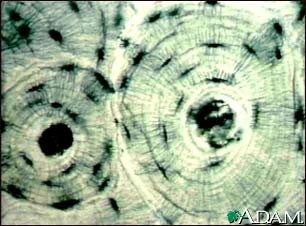
b)

bone

c)

nerve

d)

blood

47.
a)
nerve
b)
elastic cartilage
c)
fibrocartilage
d)
cardiac muscle
48.
What is the function of epithelial cells?
a)
Act as barriers between the external environment, or between organs and fluidfilled cavities
b)
Provide movement by pulling on bones
c)
Provide secretions which help to digest food
d)
Act as the messaging pathway between different areas of the body
49.
Define tissue with regards to anatomy
a)
A group of structurally and functionally related cells that come together to perform common functions
b)
Multiple sheets of thin paper used to clean your nose
c)
A series of different cells in the same area
d)
The smallest structural and functional unit of an organism
50.
What tissue type is this?
a)
Adipose tissue
b)
Cardiac muscle
c)
Nervous tissue
d)
Skeletal muscle
51.
What tissue type is this?
a)
Skeletal muscle
b)
Nervous tissue
c)
Adipose tissue
d)
'Specialised' connective tissue
52.
Which of the following tissues lines the interior and exterior of organs?
a)
Epithelial
b)
Connective
c)
Muscle 
d)
Nervous
53.
Which of the following tissues binds everything together?
a)
Epithelial
b)
Connective
c)
Muscle 
d)
Nervous
54.
Name this tissue
a)
Bone
b)
Cartilage
c)
Blood
d)
Adipose