
Font size
 Worksheets
Angiosperm structure and pollination
Total questions: 31
Worksheet time: 16mins
Pollen grains are produced by ?
the anther
the stigma
the flowers
the leaves
Which group is by far the largest?
conifers
ferns
flowering plants
mosses
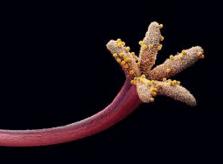
The part of the flower on which the pollen grains land.
carpel
stamen
sepals
stigma
The enlarged base of the carpel that stores the eggs of the plant is the ___.
ovary
ovule
stigma
style

Small leaf-like structures forming an outer circle at the base of a flower.
petals
sepal
stigma
carpel
The stalk that supports or holds up the anther is the
style
filament
ovary
carpel
This stalk supports the stigma.
filament
style
ovary
anther

Why is cross-pollination preferable?
reduces genetic variation
increases genetic variation
quicker because another individual is not required
allows plants to take advantage of a stable environment

Which part produces pollen?
3
4
6
7
What results in seed formation?
Asexual reproduction
Sexual Reproduction
Mitosis
None of the above
Which of the following is not an advantage of seeds?
can become any species of plant depending on the environment they are planted.
Can be spread out over great distances
They can stay dormant for long periods of time
All of the above are advantages
__________________________ is the process of transporting the male gamete from the male flower parts to the female flower parts.
Asexual reproduction
Pollination
Photosynthesis
Vasculation
After fertilization, what does the ovary develop into?
Seed
Fruit
Bud
Flower
What is an Angiosperm?
Nonvascular plants
Vascular seedless plants
Vascular seed plants that produce seeds in cones
Vascular seed plants that produce seeds in flowers
After fertilization, what does the ovule develop into?
Seed
Fruit
Bud
Flower


Pollen will be released by structures labelled with number...
3
4
5
6
7
Select ALL correct matchings of what female flower parts transform into after fertilization.
ovary >>> fruit
ovary >>> seed
ovule >>> seed
ovule >>> fruit
Select ALL that are fruit.
cucumber
pumpkin
pepper
lemon
onion
Wind-pollinated flowers typically have
A scent
Nectar
Small, light and powdery pollen
Large and colourful petals

What type of pollination is shown in this diagram?
Cross pollination
Self pollination
Single pollination
Transfer pollination
To produce new plants using sexual reproduction, they would have to be grown from
Buds
Seeds
Cuttings
Grafts
Inside each pollen grain
tube cell and a germ cell.
pollen sperm
tube sperm
8 haploid cells
Female structures in flowering plants include all EXCEPT ...
carpel
stigma
stamen
style

