
 Worksheets
LEMIDTERMREVIEW
Total questions: 101
Worksheet time: 1hrs 12mins
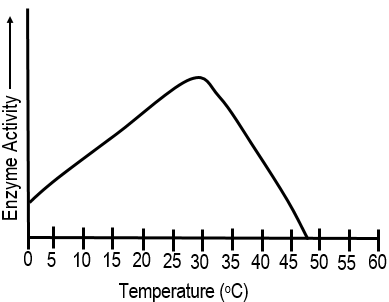
What's the dependent variable?

What helps photosynthesis and respiration reactions occur at a faster rate?
DNA
enzymes
pyruvic acid
carbohydrates


The major function of the cell membrane is _
selective permeability
permeability
impermeability
If a solute is moving down its concentration gradient what does this mean?
It is moving from high concentration to low concentration
It is moving from low concentration to high concentration
It is moving towards an area of opposite charge
It is moving towards an area of the same charge


Identify the substance/molecule that will not diffuse.
Starch
Glucose
Iodine
Identify the substance(s)/molecule(s) that will diffuse.
Starch
Glucose
Iodine

Identify the substance that was added to the outside of the plant cells that caused the change observed.
salt water
fresh water
distilled water
glucose

Identify which molecule is diffusing into the cell.
A
B

Molecule A cannot diffuse. What is a possible reason why?
Molecule A is a macromolecule and it is too large to move.
Molecule A is a building block and it is too large to move.
Molecule A is a building block and it is too small to move.
Molecule A is a macromole and it is too small to move.
Which of the following is a organic macromolecule?
starch
glucose
amino acid
nucleotide base

The following image shows a plant cell in a normal environment. Which picture shows what a plant cell would like if salt was added to the outside?


What is the starch indicator?
Iodine
Bromothymol Blue
Benedict's Solution
Glucose

Which choice accurately describes what happened in steps A and B?
Step A added saltwater so the water diffused out. Step B added freshwater so water diffused in.
Step A added saltwater so the water diffused in. Step B added freshwater so water diffused out.
Step A added freshwater so the water diffused in. Step B added saltwater so water diffused out.
Step A added freshwater so the water diffused out. Step B added saltwater so water diffused in.
What color does the starch indicator turn when it comes in contact with starch?
blue-black
blue
orange-red
yellow


Neither enzyme works at a pH of

A 7-pound baby becomes a 180-pound man
Excretion
Respiration
Metabolism
Growth
A person sweats to keep body temperature at a safe level
Nutrition
Digestion
Homeostasis
Circulation
Waste products are eliminated during perspiration.
Circulation
Homeostasis
Excretion
Metabolism

Which statement provides a possible explanation for this growth pattern?

A living thing that is made up of organ systems.
cell
tissue
organ
organ system
organism
2 or more different kinds of tissues that work together.
cell
tissue
organ
organ system
organism
The smallest unit of a living thing
cell
tissue
organ
organ system
organism
2 or more different kinds of tissues that work together.
cell
tissue
organ
organ system
organism
2 or more organs that work together.
cell
tissue
organ
organ system
organism
Groups of similar cells that work together.
cell
tissue
organ
organ system
organism
1.) They act like gatekeepers, only let certain things in.
2.) Enzyme receptors embedded in the membrane.
Which type of membrane protein would help intake a message from outside of the cell to inside of the cell?
Receptor Protein
Enzymatic Protein
Channel Protein
Junction Protein
ATP Synthase
ATG GGA ACT CCA

3'-GCT-5'
The control center of the cell is the ________
cell membrane
nucleus
mitochondria
chloroplast
Inside the nucleus of cells, you can find ________; the “instructions for life”
nuclear membrane
chromosomes
mitosis
mitochondria
A human haploid cell (gamete, sex cell) has ________ chromosomes; half the number of a human diploid cell
1
10
23
46
Mitosis turns a single parent cell into ____ new cells
0
1
2
4
The diploid chromosome number in the Indian elephant was found to be 2n=56. How many chromosomes would the elephant’s gamete possess?
0
28
56
112
Mitosis creates daughter cells which are genetically identical to the parent cell
True
False

Asexual reproduction like mitosis produces
Two offspring cells with the same genetic material as the parent cell.
Two offspring cells with half genetic material as the parent cell.
Four offspring cells with the same genetic material as the parent cell.
Four offspring cells with half the genetic material as the parent cell.


